Exploring Historic Chinese Clothing: The Hanfu Tradition

When discussing historic Chinese clothing, it is essential to look beyond the globally recognized qipao (cheongsam) and delve into the rich, millennia-old tradition of Hanfu (汉服). As the traditional dress of the Han ethnic majority, Hanfu represents over three thousand years of sartorial evolution, deeply intertwined with Chinese philosophy, social hierarchy, and textile innovation. For cultural enthusiasts, historians, and modern practitioners, understanding the nuances of these garments offers a profound window into the civilization that shaped East Asia.
Core Philosophies and Structural Anatomy
Unlike Western tailoring, which relies on darts, seams, and structured cutting to mold fabric to the human form, historic Chinese clothing is rooted in flat-pattern cutting. Garments were constructed from rectangular panels of woven fabric, minimizing waste and respecting the integrity of the textile. This approach resulted in flowing, unstructured silhouettes that draped elegantly over the body, accommodating diverse body types without the need for precise, restrictive sizing.
The most defining characteristic of traditional Hanfu is the jiaoling youren (交领右衽), or the cross-collar with the right lapel wrapping over the left. This structural element is not merely aesthetic; it is deeply philosophical.
'In traditional Chinese cosmology, the left represents Yang (life, vitality, and the living), while the right represents Yin (death and the spirit world). Wrapping the left side over the right was the universal standard for the living. Conversely, dressing the right over the left was strictly reserved for the deceased during burial rites.' — Victoria and Albert Museum, Chinese Textiles Collection
Furthermore, historic Chinese clothing eschewed buttons in favor of tie-sashes (xidai) and hidden inner ties. This allowed for adjustable fits and created the sweeping, uninterrupted lines prized by ancient poets and painters.
Dynastic Silhouettes: A Timeline of Evolution
The term 'Hanfu' encompasses a vast array of styles that shifted dramatically across dynasties, influenced by climate, trade, and shifting cultural ideologies. Below is a comparative overview of the primary silhouettes that define the major eras of historic Chinese clothing.
| Dynasty (Years) | Defining Garment | Silhouette & Characteristics | Cultural Context |
|---|---|---|---|
| Han (202 BCE – 220 CE) | Shenyi (Deep Robe) | One-piece robe with a curved hem and sweeping sleeves; tightly wrapped. | Establishment of Confucian dress codes; emphasis on solemnity and ritual. |
| Tang (618 – 907 CE) | Qixiong Ruqun | Chest-high pleated skirt paired with a short, wide-sleeved top; sheer shawls. | Cosmopolitan era; Silk Road trade introduced vibrant dyes and relaxed gender norms. |
| Song (960 – 1279 CE) | Beizi (Long Jacket) | Slender, minimalist silhouettes; straight-cut, knee-length jackets worn over skirts. | Neo-Confucianism promoted modesty, intellectualism, and understated elegance. |
| Ming (1368 – 1644 CE) | Aoqun & Mamianqun | Structured, A-line pleated skirts with stand-collared, long-sleeved jackets. | Revival of Han traditions post-Mongol rule; rise of intricate weaving and heavy brocades. |
The Tang Dynasty: Cosmopolitan Flair
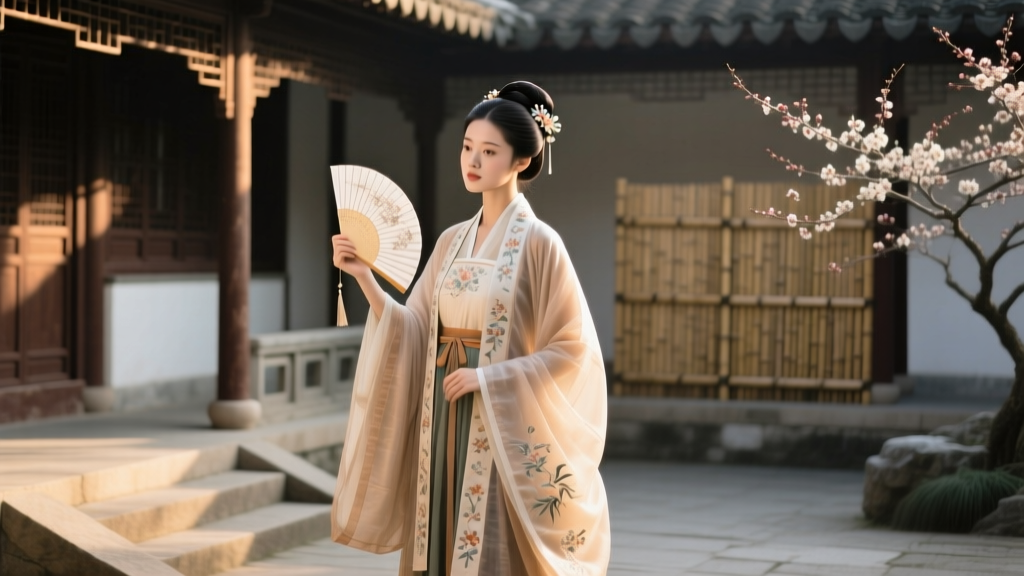
The Tang Dynasty is often considered the golden age of Chinese arts and culture. Historic Chinese clothing from this era was heavily influenced by Central Asian and Persian traders traversing the Silk Road. Women of the Tang court famously wore the qixiong ruqun, tying the skirt high above the bust, often leaving the shoulders and upper chest bare or covered only by a translucent silk shawl (pibo). According to the China National Silk Museum, Tang weavers mastered the complex weft-faced compound twill technique, allowing for the creation of vibrant, polychrome silks featuring exotic motifs like lions, grapes, and lotus flowers.
The Ming Dynasty and the Mamianqun
If the Tang era was defined by exuberance, the Ming Dynasty was defined by structural refinement. The most enduring legacy of Ming historic Chinese clothing is the mamianqun (马面裙), or 'horse-face skirt.' This skirt features two flat, unpleated panels at the front and back, with densely pleated panels on the sides. Originally designed to facilitate horseback riding, the mamianqun evolved into a canvas for exquisite weaving techniques. The flat panels were often heavily embroidered or woven with zhuanghua (woven-in patterns) depicting auspicious symbols, while the pleats remained hidden until the wearer moved, creating a dynamic, flashing effect of color and gold thread.
Textile Science: Weaves and Dyes of Antiquity
To truly appreciate historic Chinese clothing, one must understand the textiles that gave them life. Ancient Chinese weavers were unparalleled in their mastery of silk, but they also utilized ramie and hemp for everyday garments among the working classes.
- Kesi (缂丝 - Cut Silk): A highly specialized tapestry weave where the weft threads are cut and turned back at the edge of each color block. This creates a carved, three-dimensional effect. Kesi was so labor-intensive that it was said 'one inch of Kesi equals one ounce of gold.' It was primarily used for imperial dragon robes and high-ranking court accessories.
- Xiangyunsha (香云纱 - Gambiered Canton Gauze): Originating in the Guangdong province, this unique silk is dyed using the tannin-rich juice of the shulang plant and subsequently coated in iron-rich river mud. The chemical reaction creates a dual-toned fabric—glossy black on one side and matte brown on the other. Prized for its cooling properties and rustling sound, authentic Xiangyunsha remains highly sought after today, often costing upwards of $150 USD per meter.
- Zhuanghua (妆花 - Patterned Brocade): A Ming dynasty specialty from Nanjing, this technique involved weaving supplementary wefts of gold, silver, and colored silk threads into a satin base, allowing for incredibly complex, multi-colored floral and geometric patterns that did not disrupt the smooth face of the fabric.
The Modern Revival: A Collector’s Buying Guide
The 21st century has witnessed a massive cultural renaissance known as the Hanfu Movement (汉服运动). Driven by young Chinese citizens seeking to reconnect with their pre-Qing dynasty heritage, historic Chinese clothing is no longer confined to museums; it is worn on city streets, in subways, and at festivals globally. For collectors and enthusiasts looking to purchase authentic reproductions, navigating the market requires an understanding of quality tiers.
Price Tiers and Quality Markers
When shopping for Hanfu, buyers should look beyond the visual design and scrutinize the fabric composition, historical accuracy of the pattern drafting, and finishing details.
- Fast-Fashion / Costume Grade ($20 – $50 USD): Typically made from polyester chiffon or thin rayon. While visually appealing in photographs, these garments lack the drape, breathability, and historical accuracy of authentic Hanfu. Pattern drafting is often based on modern Western clothing blocks, resulting in awkward fits and incorrect collar angles.
- Studio / Enthusiast Grade ($80 – $250 USD): Reputable Chinese studios (such as Ming Huatang or Shisi) invest heavily in historical research, often referencing artifacts housed in institutions like The Palace Museum in Beijing. These garments utilize natural fibers like mulberry silk, linen, and wool blends. The flat-pattern cutting is historically accurate, and the mamianqun pleats are heat-set or hand-stitched to maintain their structure.
- Artisan / Custom Heritage Grade ($400 – $1,500+ USD): This tier encompasses garments made with heritage textiles like authentic Xiangyunsha, hand-woven Song brocade, or custom Kesi accents. These pieces are often made-to-measure by master tailors and are considered investment pieces or wearable art.
Cultural Protocols for Modern Wearers
Wearing historic Chinese clothing today is an act of cultural appreciation and living history. When assembling an outfit, it is crucial to respect the traditional layering systems. For instance, a sheer Tang dynasty banbi (half-sleeve jacket) should be worn over an inner top, not directly against the skin. Furthermore, ensuring the collar wraps correctly (left over right) is a fundamental sign of respect for the living tradition. Footwear should ideally consist of flat cloth shoes or traditional cloud-head shoes (yuntouxie), avoiding modern high heels which disrupt the historical gait and silhouette.
Conclusion
The study and revival of historic Chinese clothing offer far more than a visual feast; they provide a tactile connection to the philosophies, technological advancements, and artistic triumphs of ancient China. From the sweeping, curved hems of the Han dynasty shenyi to the intricately woven mamianqun of the Ming, these garments are masterclasses in sustainable, zero-waste design and profound cultural symbolism. As the global appreciation for traditional Asian garments continues to grow, preserving the authentic construction and historical context of Hanfu ensures that this magnificent sartorial legacy will endure for generations to come.