Hinata Chinese Dress Styling: Anime-Qipao Fusion Guide 2026

The digital fashion sphere frequently collides with traditional sartorial heritage, birthing unique and highly specific search trends. One of the most fascinating intersections in contemporary alternative fashion is the 'hinata chinese dress' phenomenon. This trend represents a vibrant crossover where the soft, lavender-hued, martial-arts-inspired aesthetics of Japanese anime intersect with the structured, historical elegance of the Chinese qipao (also known as the cheongsam). As we navigate the 2026 fusion fashion landscape, understanding how to style this aesthetic while respecting the profound cultural weight of the traditional Chinese dress is essential for any modern wardrobe.
The Pop-Culture Phenomenon: Decoding the Aesthetic
When modern consumers search for a 'Hinata Chinese dress,' they are typically seeking a specific visual palette and silhouette. The aesthetic draws heavily on soft pastel colorways—specifically lavender, cream, and pale blue—combined with motifs that suggest agility, grace, and subtle martial arts elegance. However, mapping these anime-inspired concepts onto a traditional Chinese garment requires a nuanced understanding of the qipao's history. The modern qipao emerged in 1920s Shanghai as a symbol of female emancipation and modernity, evolving from the loose-fitting Manchu changpao into a tailored, figure-hugging silhouette that celebrated the natural form. Blending this rich history with contemporary pop-culture styling requires a careful balance of reverence and creative expression.
Sartorial Anatomy: What Makes a Qipao Authentic?
Before attempting to style a fusion garment, one must understand the architectural hallmarks of an authentic Chinese dress. According to the textile archives at the Victoria and Albert Museum, the structural integrity of a heritage qipao relies on several non-negotiable elements that distinguish it from mass-market costume replicas.
The Yuanling Collar and Pankou Fasteners
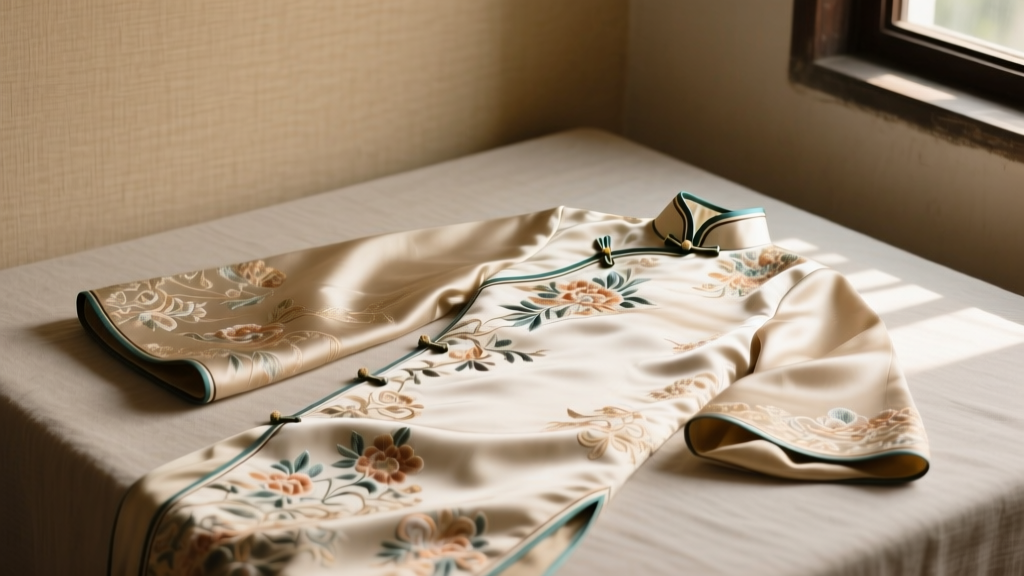
The yuanling (Mandarin collar) is a stiffened, high-standing neckband that frames the face and demands an upright, elegant posture. Securing the dress are the pankou (frog buttons). In authentic garments, these are not merely decorative plastic loops; they are meticulously hand-knotted from silk or cotton cords, often requiring hours of artisanal labor to create complex floral or geometric shapes. In the context of a lavender, anime-inspired dress, artisans might craft pankou knots shaped like lotus flowers or subtle clan-inspired crests to bridge the cultural gap.
The Dajin and Kaicha
The dajin refers to the asymmetrical front flap that sweeps across the chest and fastens at the side. This is historically significant, as right-over-left wrapping is a fundamental tenet of traditional Han and Manchu clothing. The kaicha (side slits) were originally introduced to allow for ease of movement and horseback riding. In modern styling, the height of the kaicha dictates the formality and modesty of the garment, a crucial factor when adapting the dress for convention floors versus urban streetwear.
Material Reality: Cosplay Synthetics vs. Heritage Silks
The biggest pitfall in the anime-fusion dress market is the reliance on cheap synthetics. To elevate your styling, you must understand fabric composition. Below is a comparison of what to look for when sourcing your garment.
| Feature | Heritage / Bespoke Qipao | Fast-Fashion / Cosplay Grade |
|---|---|---|
| Fabric | Mulberry silk, Xiangyunsha (gambiered silk), brocade | Polyester blends, cheap satin, spandex |
| Fasteners | Hand-knotted silk Pankou | Glued faux-knots, hidden zippers |
| Lining | Silk crepe or breathable cotton | Unlined or scratchy nylon |
| Pattern | Woven jacquard or hand-embroidered | Digitally printed sublimation |
| Price Range | $400 - $2,500+ USD | $30 - $85 USD |
Styling Frameworks: Convention Floors to Urban Streetwear
Styling a pastel, anime-inspired qipao for daily wear or conventions requires moving beyond the 'costume' mentality and treating the garment as a piece of high-fashion fusion. Here are actionable frameworks for 2026.
Layering and Modesty Protocols
The high slits of a traditional qipao can be intimidating for daily wear. A highly effective, culturally resonant styling technique is to layer the dress over a mamianqun (horse-face skirt) or a lightweight, pleated midi skirt. This not only provides modesty but creates a stunning textural contrast between the sleek, tailored bodice of the qipao and the flowing movement of the underlying skirt. For cooler weather, layering a cropped, structured leather jacket or a traditional Japanese haori over the lavender silk creates a striking Sino-Japanese streetwear silhouette that honors both aesthetic lineages.
Footwear and Hosiery
Avoid the trap of pairing a heritage silhouette with generic sneakers. To maintain the elegance of the garment while nodding to the 'Hinata' martial-arts aesthetic, opt for traditional embroidered cloth shoes (xiuhuaxie) or modern Mary Janes with a low, stacked heel. If the dress features a higher kaicha, sheer, subtly patterned tights or thigh-high socks with reinforced, modest tops can bridge the gap between anime styling and practical urban wear.
Cultural Sensitivity in Sino-Japanese Fusion
Blending Japanese pop-culture motifs with Chinese sartorial history requires immense cultural respect. The qipao is not a costume; it is a living garment that represents a pivotal era of Chinese feminist history and modernization. The Shanghai History Museum extensively documents how the 1930s qipao was worn by intellectuals, teachers, and activists as a rejection of restrictive traditional bindings and a move toward global modernity.
'When we engage with fusion fashion, we must ensure that the foundational garment is not stripped of its historical dignity. The qipao demands respect in its construction and its wearing.' — Curatorial notes on 20th-century East Asian textile evolution.
Therefore, when adopting the 'Hinata' aesthetic, avoid altering the fundamental right-over-left closure of the dajin, and refrain from adding hyper-sexualized cutouts that violate the garment's original architectural intent. The elegance of the qipao lies in what it conceals and suggests, not what it overtly exposes.
Ethical Sourcing and Price Tiers
If you are looking to invest in a garment that captures the pastel, anime-inspired aesthetic while maintaining authentic Chinese construction, consider the following sourcing tiers:
- Mid-Tier Boutiques ($150 - $350 USD): Look for independent designers on platforms like Etsy or specialized Asian fashion marketplaces who use real silk blends and hand-tied pankou. Many independent creators specialize in 'Hanfu' and 'Qipao' fusion, offering custom lavender and pastel colorways without relying on mass-market factories.
- Heritage Tailors ($800 - $2,000+ USD): For a true investment piece, commission a bespoke qipao from a master tailor in Shanghai, Hong Kong, or specialized diaspora boutiques in New York or London. You can provide your own pastel silk brocade and request subtle, anime-inspired embroidery (such as hidden lotus or geometric clan motifs) integrated into the traditional xiangyunsha silk.
- Rental Services ($50 - $120 USD): For single-use convention events, high-end cosplay and cultural rental services offer authentic, dry-clean-only silk garments, allowing you to wear heritage fabrics without the massive upfront investment or the environmental toll of fast-fashion synthetics.
Ultimately, the 'hinata chinese dress' trend is a testament to the global fluidity of fashion. By grounding your styling choices in the authentic anatomy of the qipao, respecting its Shanghai roots, and thoughtfully integrating modern pastel aesthetics, you can participate in this unique sartorial crossover with both style and profound cultural integrity.