The High Slit Cheongsam: Fabric and Craftsmanship Guide
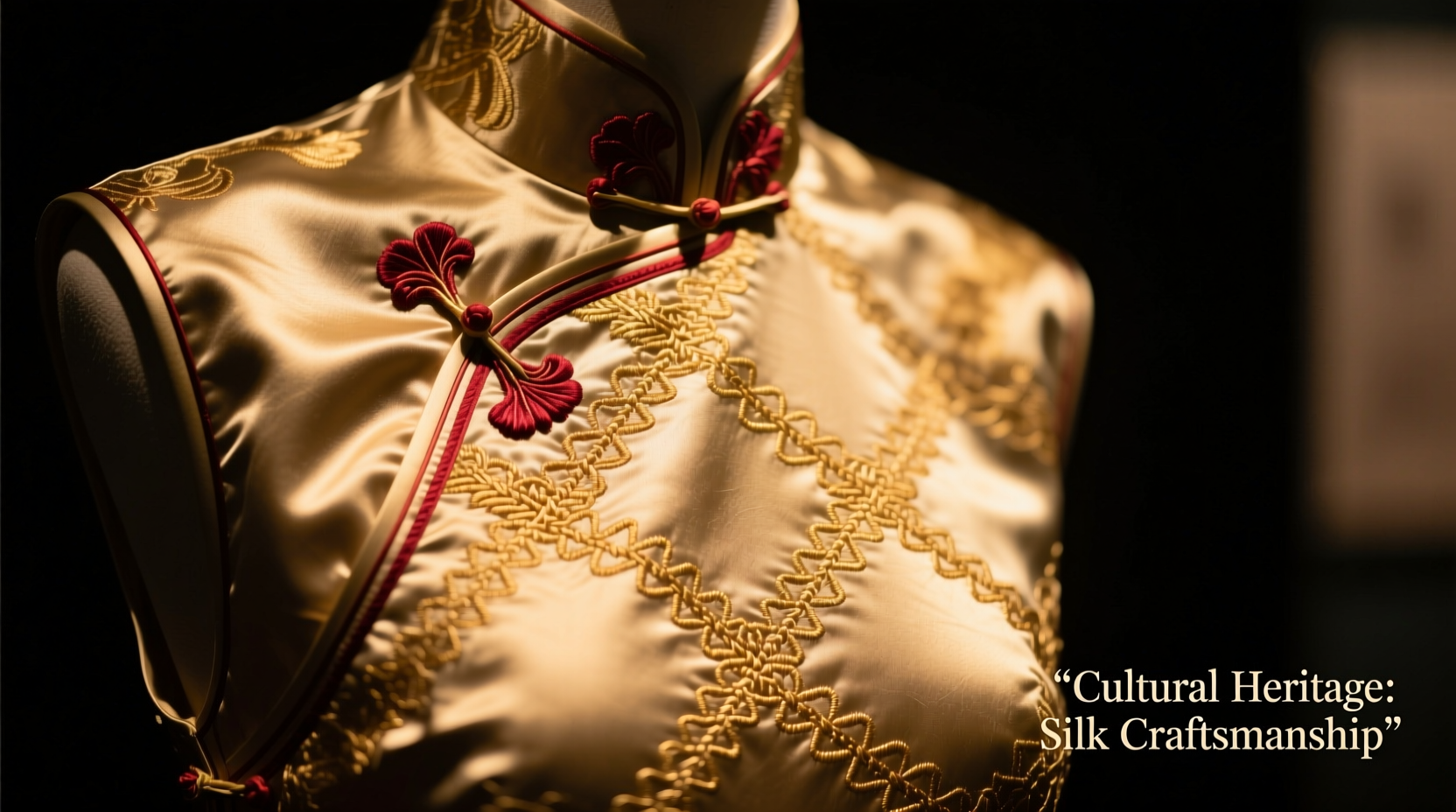
The cheongsam (known in Mandarin as the qipao) is a masterclass in sartorial engineering. While the mandarin collar and intricate frog buttons often draw the eye, it is the kaicha—the side slit—that fundamentally defines the garment's silhouette, movement, and historical evolution. The high slit cheongsam, popularized in the cosmopolitan hub of 1930s Shanghai and later dramatized in 1960s Hong Kong cinema, transformed a modest Manchu riding robe into a global symbol of modern femininity. However, executing a flawless high slit requires profound textile knowledge and bespoke tailoring techniques. This deep dive explores the meticulous fabric selection, structural engineering, and craftsmanship required to create an authentic high slit cheongsam.
The Anatomy of the Kaicha: Engineering the High Slit
In traditional Chinese garment construction, the slit is not merely an afterthought or a simple gap in the seam; it is a highly engineered stress point. The kaicha allows for mobility in a garment that is otherwise tailored closely to the body. When a cheongsam features a high slit—typically reaching the mid-thigh in contemporary and cinematic interpretations—the structural integrity of the garment is severely tested every time the wearer walks, sits, or climbs stairs.
Reinforcement and the Hidden Gusset
Master tailors employ a specialized reinforcement technique at the apex of the high slit. A simple machine stitch will inevitably tear under the tension of the bias-cut fabric. Instead, heritage tailors use a hidden silk gusset or a meticulously hand-stitched bar tack known as daojiao. This triangular or crescent-shaped reinforcement distributes the kinetic tension across a wider area of the fabric, preventing the slit from creeping upward and tearing.
The Inner Lining and the Reverse Hem
A defining characteristic of a bespoke high slit cheongsam is that the reverse side of the fabric must be as immaculate as the front. Because a high slit frequently exposes the inner lining and the reverse of the textile when the wind catches the hem, the inner seam allowance is finished with a hand-rolled hem (gunbian). In premium bespoke pieces, the lining is crafted from lightweight silk habotai or charmeuse, hand-felled to the outer shell so that no visible stitching disrupts the fluid drape of the slit.
Silk, Crepe, and Xiangyunsha: Selecting the Ideal Textile
The behavior of the high slit is entirely dictated by the weight, weave, and drape of the chosen textile. A fabric that is too stiff will cause the slit to jut out awkwardly, while a fabric that is too flimsy will cling to the leg and tangle. According to archives preserved by institutions like the Shanghai History Museum, 1930s Shanghai socialites worked closely with textile merchants to source specific weaves that complemented the newly introduced high slits.
Xiangyunsha (Gambiered Canton Gauze)
Native to the Guangdong province, Xiangyunsha is a highly prized, heritage silk dyed with the juice of the gambier plant and coated in iron-rich river mud. The resulting fabric is crisp, slightly rubbery to the touch, and produces a distinctive rustling sound. For a high slit cheongsam, Xiangyunsha is exceptional because its structural memory holds the A-line or straight drop of the skirt, allowing the slit to stand slightly away from the leg rather than clinging, offering both modesty and dramatic movement.
Silk Crepe de Chine and Weighted Hems
For a more fluid, romantic silhouette, tailors utilize silk crepe de chine. This matte-finished, lightweight silk drapes beautifully over the hips and thighs. However, because it lacks structural rigidity, a high slit in crepe de chine requires a weighted hem. Master tailors will encase tiny, flexible copper or lead weights inside the xiangbian (piping) at the base of the slit. This ensures that when the wearer is standing still, the fabric falls back into place gracefully, maintaining the garment's unbroken vertical line.
Silk Brocade (Zhi Jin) and Winter Tailoring
Heavy woven silk brocades, often featuring metallic threads and intricate floral motifs, are traditionally reserved for winter or wedding cheongsams. Because brocade is incredibly stiff, cutting a high slit into it can result in a rigid, boxy appearance. To counteract this, tailors use a technique called "softening the edge," where the piping along the high slit is made from a contrasting, supple silk satin, allowing the edge to bend more naturally with the wearer's movements.
Fabric Performance Matrix for High-Slit Tailoring
| Fabric Type | Weight & Drape | Slit Behavior | Best Season | Est. Price per Meter (USD) |
|---|---|---|---|---|
| Xiangyunsha (Mud-dyed Silk) | Crisp, structured, medium weight | Stands away from leg; holds shape | Spring / Autumn | $150 - $350 |
| Silk Crepe de Chine | Fluid, matte, lightweight | Wraps around leg; requires weighted hem | Summer | $40 - $90 |
| Silk Charmeuse | Glossy, heavy drape, slippery | Clings to curves; highly sensual movement | Year-round (Evening) | $30 - $70 |
| Zhuanghua (Silk Brocade) | Stiff, heavy, ornate | Rigid; requires soft satin piping | Winter / Bridal | $120 - $400+ |
| Silk Velvet | Plush, light-absorbing, heavy | Drapes heavily; requires reinforced apex | Winter | $80 - $150 |
The Bias Cut Revolution: A 1930s Tailoring Breakthrough
To understand the high slit cheongsam, one must understand the introduction of the bias cut. Prior to the late 1920s, the qipao was cut on the straight grain of the fabric, resulting in a tubular, boxy silhouette that hid the body's contours. As documented in exhibitions by the Hong Kong Museum of History, the influx of Western fashion and the rise of Shanghai's modern tailors led to a revolutionary adaptation: cutting the fabric on the bias (xiecai).
Cutting silk on the 45-degree bias allows the woven textile to stretch and cling to the natural curves of the hips and thighs. This was an absolute necessity for the high slit cheongsam. Without the mechanical stretch provided by the bias cut, a closely fitted skirt with a high slit would pull taut across the thighs when the wearer walked, placing immense, tearing strain on the slit's apex. The bias cut ensures the fabric moves with the body, preserving both the modesty and the structural integrity of the garment.
Bespoke Piping (Xiangbian) and Edge Finishing
The visual framing of the high slit is achieved through xiangbian, the traditional piping technique. In mass-produced garments, the slit is simply folded over and machine-stitched. In bespoke craftsmanship, the edge is encased in a continuous strip of contrasting or matching silk.
- Single Piping (Dan Xiangbian): A thin, delicate line of silk that traces the slit, offering a subtle, modern finish.
- Double/Triple Piping (Shuang/San Xiangbian): Multiple parallel lines of piping that create a geometric, architectural border along the high slit. This requires immense precision, as the curves at the hem and the apex must remain perfectly parallel without puckering.
- The "Cabbage Edge" (Baicaibian): A highly advanced, rare technique where the piping is manipulated to create a slightly ruffled, organic edge along the slit, mimicking the leaves of a cabbage. This is typically reserved for avant-garde or highly artistic bespoke pieces.
Investment and Acquisition: Pricing Bespoke vs. Ready-to-Wear
When acquiring a high slit cheongsam, the price is a direct reflection of the internal engineering and textile provenance. Buyers should be aware of the distinct tiers in the market:
Ready-to-Wear and Fast Fashion ($80 - $250)
Garments in this tier are typically cut on the straight grain to save fabric, utilizing polyester blends or low-grade silk. The high slits are often finished with overlocked (serged) edges that are simply folded up. They lack internal reinforcement, meaning the slits are prone to tearing, and the fabric will not drape fluidly over the legs.
Made-to-Measure Boutiques ($600 - $1,500)
Found in hubs like Shanghai's South Bund Fabric Market or specialized boutiques in Hong Kong and Taipei, these garments offer a middle ground. They utilize genuine silk and are tailored to the client's measurements. The slits are reinforced with basic bar tacks, and the piping is applied with care. However, the internal lining may still be machine-felled rather than hand-stitched.
Heritage Bespoke Master Tailors ($2,500 - $6,000+)
True heritage cheongsams are crafted by master tailors who have apprenticed for decades. As highlighted by textile archives at The Metropolitan Museum of Art's Costume Institute, the finest examples of Chinese dress are treated as wearable architecture. At this tier, the high slit is hand-rolled, the inner lining is hand-felled, the bias cut is calculated to the millimeter, and the pankou (frog buttons) are hand-knotted from the same silk as the garment. These pieces are heirlooms, designed to last generations.
Cultural Protocol and Styling the High Slit
Wearing a high slit cheongsam requires an understanding of both historical context and modern styling protocols. Historically, the 1930s Shanghai slit was relatively modest, rarely rising more than a few inches above the knee. The dramatically high slits seen today are largely a product of 1960s Hong Kong cinematic stylization and contemporary fashion interpretations.
When styling a modern high slit cheongsam, the choice of undergarments is paramount. Traditionalists often pair the garment with silk tap pants or high-cut, seamless undergarments to maintain a clean line. In formal or diplomatic settings, a slightly lower slit is still preferred to adhere to conservative protocols, while the high slit remains a celebrated choice for galas, red-carpet events, and artistic performances. Ultimately, the high slit cheongsam is a testament to the ingenuity of Asian textile artisans, proving that true elegance lies not just in the surface beauty of the silk, but in the hidden, meticulous engineering beneath.