Hanfu Traditional Dress: 2026 Event & Occasion Styling Guide

The global revival of the hanfu traditional dress has transformed it from a historical museum artifact into a vibrant, living wardrobe. Across Asia and the diaspora, wearers are reclaiming over three millennia of Han Chinese sartorial heritage. However, because 'Hanfu' encompasses a vast array of regional, dynastic, and class-specific garments, choosing the correct ensemble for a specific modern event requires nuanced cultural literacy. This comprehensive guide decodes the protocols, fabrics, and styling frameworks necessary to wear the hanfu traditional dress with historical accuracy and contemporary elegance.
Decoding the Hanfu Traditional Dress for Modern Events

Unlike Western formalwear, which largely relies on a singular template (the tuxedo or the evening gown), the hanfu system is deeply tied to cosmology, seasonality, and social ritual. When selecting a hanfu traditional dress for an event, one must consider the Dynastic Era the garment represents. The flowing, bold silhouettes of the Tang Dynasty (618–907 CE) project a different energy than the slender, intellectual elegance of the Song Dynasty (960–1279 CE) or the structured, heavily layered formality of the Ming Dynasty (1368–1644 CE). Understanding these distinctions is the first step in curating an event-appropriate wardrobe.
The Sacred Protocol: Jiaoling Youren (交领右衽)
Before addressing specific events, every wearer must internalize the most critical rule of Han dress: Jiaoling Youren, or the 'crossed collar, right lapel.' In this configuration, the left side of the garment crosses over the right, forming a 'y' shape at the neckline. According to traditional cosmology, the left represents Yang (life, light, the living), while the right represents Yin (death, darkness, the ancestral realm). Therefore, crossing the left over the right is the hallmark of the living. Reversing this (right over left) is strictly reserved for dressing the deceased for burial. As noted by curatorial experts at the China National Silk Museum, maintaining this directional protocol is non-negotiable for living practitioners, regardless of the garment's dynastic origin or the formality of the event.
Event-by-Event Styling Matrix: From Tea Ceremonies to Weddings
To navigate the complexities of modern social calendars, refer to this structural matrix mapping specific occasions to their historically appropriate dynastic styles and core garments.
| Occasion | Dynastic Era | Key Garments | Formality Level |
|---|---|---|---|
| Weddings & Formal Banquets | Ming Dynasty | Aoqun (袄裙), Mamianqun (马面裙) | High / Ceremonial |
| Lunar New Year & Temple Fairs | Tang Dynasty | Qixiong Ruqun (齐胸襦裙), Pibo (帔帛) | Medium-High / Festive |
| Tea Ceremonies & Art Exhibitions | Song Dynasty | Beizi (褙子), Baizhequn (百褶裙) | Medium / Elegant |
| Casual Outings & Travel | Wei/Jin or Ming | Ruqun (襦裙), Bijia (比甲) | Low / Everyday |
Weddings and Formal Banquets (Ming Dynasty Aoqun & Mamianqun)

For high-stakes formal events, the Ming Dynasty silhouette is the gold standard. The defining piece is the Mamianqun (horse-face skirt), a marvel of traditional engineering featuring two overlapping trapezoidal panels with deep side pleats and flat front-and-back facades. This structure allows for graceful movement while maintaining a rigid, architectural front profile. Paired with an Ao (a lined, structured upper jacket with a standing collar or overlapping lapels), the ensemble projects immense dignity. For brides or wedding guests, seek out Mamianqun woven with Zhuanghua (woven flower) brocade, featuring auspicious motifs like phoenixes, peonies, or cloud collars (Yunjian).
Spring Festivals and Temple Fairs (Tang Dynasty Ruqun)
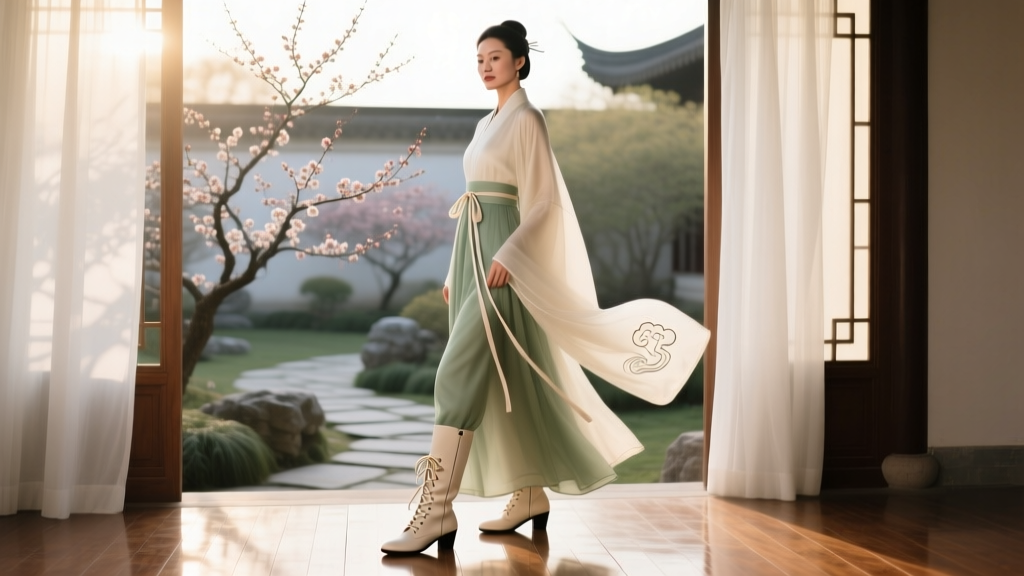
The Tang Dynasty was an era of cosmopolitan openness, and its clothing reflects this vibrant energy. The Qixiong Ruqun (chest-high skirt) is ideal for festive outdoor events like the Lantern Festival or Lunar New Year parades. The skirt is tied high above the bust, creating an elongated, sweeping silhouette that mimics the fluidity of celestial maidens in Dunhuang murals. This style is traditionally accessorized with a Pibo (a long, flowing silk stole draped over the arms), which catches the wind and adds theatrical movement to your festival photography and social presence.
Tea Ceremonies and Art Exhibitions (Song Dynasty Beizi)
When attending intimate, intellectual, or serene gatherings, the understated luxury of the Song Dynasty is paramount. The Beizi is a long, parallel-collared outer jacket that falls below the knee, worn open over a slender inner top and a pleated Baizhequn skirt. Song aesthetics favor muted, nature-inspired palettes—think celadon greens, lotus pinks, and ink-wash grays. The fabrics should drape softly rather than hold stiff shapes. This ensemble aligns perfectly with the quiet mindfulness required for a traditional Gongfu tea ceremony or a quiet afternoon at a calligraphy exhibition.
Fabric Composition and Budgeting Guide

The authenticity of a hanfu traditional dress is heavily dictated by its textile. Modern mass-market producers often rely on stiff polyester organzas that lack the fluid drape of historical silks. When budgeting for your wardrobe, consider these three distinct tiers of investment:
- Tier 1: Entry-Level & Everyday ($30 – $80 USD)
Constructed from cotton-linen blends, rayon, and high-grade polyester. While not historically accurate for nobility, these fabrics are breathable, machine-washable, and perfect for casual travel or first-time wearers testing their sizing. - Tier 2: Event-Ready Mid-Tier ($120 – $350 USD)
This tier introduces genuine mulberry silk, silk-cotton blends, and jacquard-woven synthetic brocades. The drape is significantly improved, and the garments often feature accurate historical patterning derived from museum archives. This is the recommended tier for festival attendance and banquet guest attire. - Tier 3: Heirloom Couture ($500 – $2,500+ USD)
Reserved for brides and serious collectors, this tier utilizes authentic Zhuanghua brocade, real gold and silver supplementary wefts, and hand-embroidered details. Garments at this level are often commissioned from specialized ateliers in Nanjing or Suzhou, utilizing techniques preserved by institutions like the Victoria and Albert Museum's Asian textile archives and local artisan cooperatives.
Accessorizing with Historical Accuracy
A hanfu traditional dress is incomplete without its accompanying accouterments. Footwear should ideally consist of Qiaotou shoes, characterized by their upturned toes, which historically served to catch the hem of long skirts and prevent tripping. Modern leather Mary Janes can suffice for casual wear, but upturned silk slippers elevate the formal look.
Hair styling is equally crucial. While modern wearers often adapt contemporary updos, integrating traditional Zan (single-prong hairpins) or Chai (double-prong pins) crafted from jade, sandalwood, or gilded brass anchors the look in history. For highly formal Ming-style events, a Diji (a specific type of crowned hairpiece) may be worn by married women, though simple jade pins are universally acceptable and elegant.
'The integration of textile, movement, and accessory in Han dress was never purely decorative; it was a physical manifestation of ritual propriety (Li) and social harmony.'
— Curatorial Essays, The Metropolitan Museum of Art
Sourcing Authentic Pieces
When sourcing a hanfu traditional dress, avoid generic costume shops that conflate Hanfu with Qing Dynasty Manchu clothing (such as the Qipao or Cheongsam) or theatrical stage wear. Reputable indie brands on platforms like Taobao—such as Ming Huatang for high-end Ming reproductions, or Shisanyu for accessible Tang and Song styles—have driven the modern revival by strictly adhering to historical cutting patterns (Cairong). For those outside of Asia, specialized global boutiques and dedicated Hanfu community forums provide vetted vendor lists, ensuring your investment supports authentic cultural preservation rather than fast-fashion appropriation.
By respecting the dynastic contexts, adhering to the sacred protocols of the collar, and investing in appropriate textiles, you do more than wear a beautiful garment. You participate in the living, breathing continuity of one of the world's oldest and most profound sartorial traditions.