Hanfu Tang Dynasty: Silhouettes and Styles

The Golden Age of Silk: Clarifying Tang Dynasty Hanfu
When discussing traditional Chinese clothing, a critical distinction must be made between the modern 'Tangzhuang' (a Qing-dynasty derived Manchu jacket popularized in the late 20th century) and authentic Hanfu Tang dynasty styles. The Tang Dynasty (618–907 AD) represents a zenith of Chinese cultural, economic, and artistic power. During this era, the Silk Road facilitated an unprecedented exchange of ideas, textiles, and aesthetics, resulting in a sartorial culture that was bold, cosmopolitan, and remarkably diverse. For modern cultural garment enthusiasts and historians, Tang-style Hanfu is celebrated for its expansive silhouettes, vibrant color palettes, and intricate weaving techniques.
According to the China Silk Museum, Tang dynasty textiles showcase a fusion of indigenous Han Chinese weaving traditions with Central Asian motifs, such as the pearl roundel (lianzhu) and the jeweled flower (baoxianghua). Understanding the varieties of Tang Hanfu requires examining the structural engineering of the garments, the social contexts in which they were worn, and how contemporary revivalists accurately reconstruct these historical silhouettes today.
Core Silhouettes: A Comparative Breakdown of Tang Garments
The Tang wardrobe was not monolithic; it evolved significantly from the early, more conservative periods influenced by the preceding Sui dynasty, to the opulent, voluminous styles of the High Tang under Emperor Xuanzong. Below, we compare the primary garment structures that define the Hanfu Tang aesthetic.
Qixiong Ruqun (Chest-High Skirt) vs. Jiaoling Ruqun (Cross-Collar)
The Qixiong Ruqun (齐胸襦裙) is arguably the most iconic silhouette of the Tang era, predominantly worn by women. Unlike earlier Hanfu styles that tied at the natural waist, the Qixiong Ruqun features a high waistband (yao) that secures the pleated skirt directly above the bust. This creates an elongated, flowing lower silhouette that visually elevates the wearer's proportions. It is typically paired with a Pibo (披帛), a long, sheer silk shawl draped over the arms and shoulders, adding kinetic movement to the outfit.
In contrast, the Jiaoling Ruqun (交领襦裙) maintains the ancient Han Chinese cross-collar structure, tying at the natural waist or hips. The collar crosses left over right (jiaoling youren), a foundational rule of Hanfu that signifies life and civilization, as opposed to the right-over-left style reserved for the deceased. While Qixiong Ruqun projects a romantic, courtly elegance, the Jiaoling Ruqun offers a more grounded, traditional aesthetic suitable for daily wear across various social strata.
Tanling Ruqun (U-Neckline) and the Influence of the Silk Road
A fascinating departure from conservative indigenous dress is the Tanling Ruqun (坦领襦裙), characterized by its wide, U-shaped or heart-shaped neckline that reveals the décolletage. This style reflects the Tang dynasty's openness to foreign influences and its relatively liberated social attitudes toward women. Historical murals from the Mogao Caves and artifacts documented by the Victoria and Albert Museum's Asian textiles collection depict court ladies wearing these daring silhouettes, often layered with a Banbi (半臂), a short-sleeved, waist-length jacket that adds structural contrast to the flowing under-layers.
Yuanlingpao (Round-Collar Robe): Menswear and Gender-Fluid Fashion
The Yuanlingpao (圆领袍) is a round-collared, long-sleeved robe that fastens at the right shoulder. Originally adopted from nomadic steppe cultures for its equestrian practicality, it was fully integrated into the Tang official and daily wardrobe. While primarily worn by men—often paired with a Putou (black headwear) and leather boots—the Yuanlingpao was also famously adopted by Tang women. Cross-dressing and adopting menswear was a fashionable trend among aristocratic women, reflecting the era's progressive gender dynamics and the cosmopolitan nature of the capital, Chang'an.
Data Table: Tang Hanfu Varieties at a Glance
| Garment Name | Chinese Characters | Key Structural Features | Primary Historical Wearer | Modern Market Price (USD) |
|---|---|---|---|---|
| Qixiong Ruqun | 齐胸襦裙 | Chest-high waistband, floor-length pleated skirt, paired with Pibo shawl. | Women (Court & Common) | $45 - $180 |
| Tanling Ruqun | 坦领襦裙 | U-shaped neckline, often layered with Banbi (half-sleeve jacket). | Women (Court & Dancers) | $55 - $200 |
| Jiaoling Ruqun | 交领襦裙 | Cross-collar (right over left), natural waist tie, A-line skirt. | Men & Women (Daily Wear) | $40 - $150 |
| Yuanlingpao | 圆领袍 | Round collar, side slits for mobility, leather belt, right-side fastening. | Men (Officials/Scholars) & Women | $70 - $250 |
| Daxiushan | 大袖衫 | Massive, floor-sweeping sleeves, sheer or brocade fabrics, open front. | High-ranking Court Women | $120 - $400+ |
Fabric, Motif, and Color: The Tang Material Culture
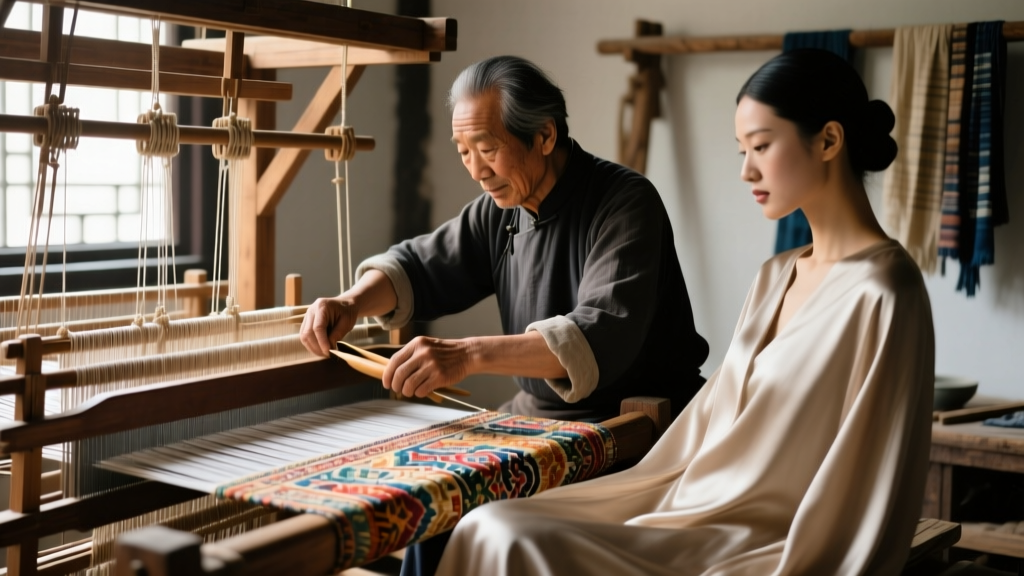
The Tang dynasty was an era of unparalleled textile innovation. The Metropolitan Museum of Art's Asian Art department highlights the mastery of Tang weavers in producing complex polychrome silks. When sourcing or studying authentic Hanfu Tang varieties, the fabric composition is just as vital as the cut.
- Luo (罗) and Sha (纱): Lightweight, gauze-like silks with open weaves, heavily utilized for the Pibo shawl and summer Daxiushan robes to create an ethereal, translucent layering effect.
- Zhijin (织金): Gold-leaf woven brocades. While heavily popularized in later dynasties, Tang artisans pioneered early metallic thread weaving, reserved strictly for imperial and high-court garments.
- Motifs: Unlike the delicate florals of the Song dynasty or the auspicious beasts of the Ming, Tang motifs are bold and symmetrical. The Baoxianghua (a composite lotus/peony floral medallion) and Lianzhu (pearl-bordered roundels enclosing hunting scenes or mythical beasts like the Qilin) are hallmarks of High Tang design, heavily influenced by Sogdian and Sassanid Persian art.
Modern Revival: Sourcing Authentic Tang-Style Hanfu
The contemporary Hanfu movement (Hanfu Yundong) has meticulously reconstructed Tang garments using archaeological findings from sites like the Famen Temple and the Astana Graves in Turpan. For modern buyers, navigating the market requires an understanding of price tiers and material authenticity.
Entry-Level ($35 - $70 USD): Typically constructed from polyester georgette or chiffon. While these offer the correct silhouette and vibrant, digitally printed Tang motifs, they lack the breathability and drape of historical textiles. Brands like Shisan Yu offer accessible entry points for casual wear and photography.
Mid-Tier ($80 - $180 USD): These sets utilize woven jacquard, viscose blends, and tencel. The pleating on the Qixiong Ruqun skirts is heat-set and structurally sound, and the collars feature proper internal reinforcement to maintain the crisp geometry of the Jiaoling or Tanling necklines.
Heritage & Museum-Replica Tier ($250 - $800+ USD): Artisan cooperatives and high-end studios (such as Ming Huatang or Zhongling) produce garments using genuine mulberry silk, traditional Luo gauze weaving, and hand-embroidered goldwork. These pieces are museum-quality reconstructions that honor the immense labor and material wealth of the original Tang dynasty garments.
Styling and Cultural Protocols for the Modern Wearer
Wearing Hanfu Tang varieties today is an act of cultural preservation and respect. To wear these garments correctly, one must adhere to foundational protocols. The most critical rule is Youren (右衽)—the left side of the garment must always cross over the right. This rule applies to the inner layers of the Qixiong Ruqun and the collars of the Yuanlingpao. Reversing this (Zuoren) is traditionally associated with burial garments and is considered highly inauspicious.
Furthermore, the layering of Tang Hanfu requires attention to the undergarments. A proper Qixiong Ruqun setup necessitates a Zhongyi (inner white cotton or silk shirt) to protect the outer silk from body oils and to provide an opaque base beneath sheer fabrics. When styling the hair, modern practitioners often look to the elaborate updos of the High Tang, utilizing wooden or jade Zanzi (hairpins) and Shuhua (decorative combs), avoiding modern plastic accessories to maintain the historical integrity of the silhouette. By understanding the deep historical context, structural diversity, and material culture of the Tang dynasty, wearers can fully appreciate the magnificent legacy of Hanfu Tang varieties.