Hanfu Dress: Regional Variations & Substyles

The Geography of Silk and Hemp: Northern vs. Southern Adaptations
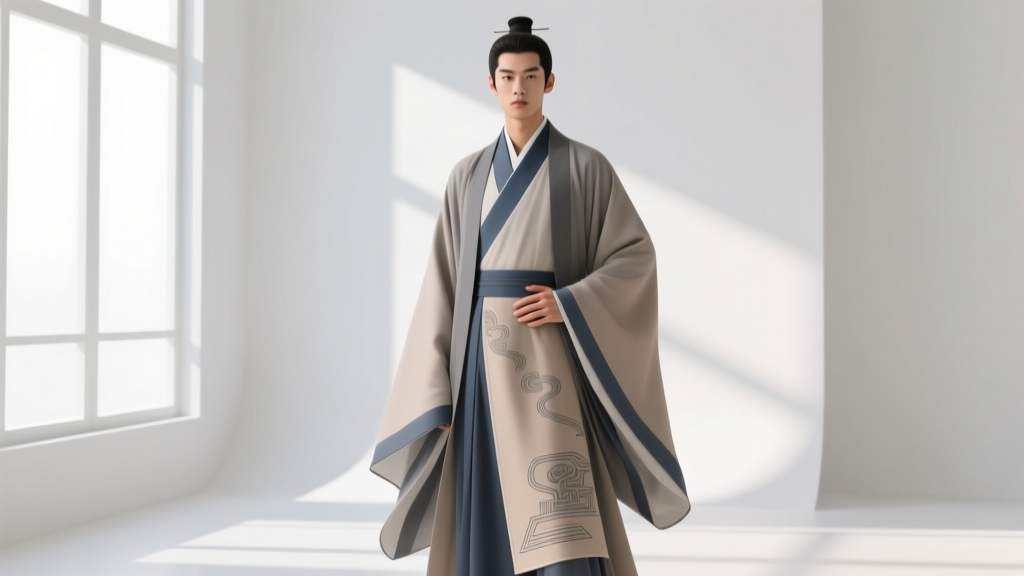
When enthusiasts and historians discuss the hanfu traditional chinese dress, it is a common misconception to view it as a single, monolithic garment. In reality, Hanfu (汉服) represents a vast, living tapestry of sartorial evolution shaped profoundly by China’s diverse geography, climate zones, and regional trade routes. To truly understand Hanfu, one must examine how regional variations dictated fabric choices, silhouette structures, and layering techniques across different dynasties.
In the harsh, freezing winters of Northern China (encompassing regions like Shandong, Hebei, and the Central Plains), historical Hanfu prioritized thermal retention and wind resistance. Northern substyles heavily featured layered Ruqun (jacket-and-skirt ensembles) and the Shenyi (deep robe, which connects the upper and lower garments). Fabrics were often heavier, utilizing densely woven hemp, wool blends, and thick, lined brocades. Sleeves were frequently widened and lined with cotton or silk wadding to trap heat, and high collars were utilized to protect the neck from biting winds.
Conversely, the humid, subtropical climates of Southern China (such as Jiangnan, Guangdong, and Fujian) demanded breathability and moisture-wicking properties. Southern Hanfu substyles favored lighter, unlined garments like the Zhiju (straight-hem robe) and the Beizi (parallel-collar jacket). The crowning achievement of Southern textile adaptation is Xiangyunsha (Gambiered Canton Gauze), a luxury silk native to the Pearl River Delta. Dyed with the juice of the gambier plant and coated in iron-rich river mud, Xiangyunsha is naturally cooling, quick-drying, and resistant to mold—making it the ultimate historical and modern luxury fabric for Southern Hanfu practitioners.
Dynasty-Region Intersections: Three Major Substyles
The modern Hanfu revival movement (Hanfu Yundong) categorizes garments not just by region, but by the intersection of dynasty and regional capital. The three most prominent substyles worn today reflect the distinct cultural hubs of their respective eras.
Tang Dynasty Opulence (The Xi'an and Central Plains Hub)
Centered around the ancient capital of Chang'an (modern-day Xi'an), Tang dynasty Hanfu is characterized by its cosmopolitan flair, vibrant color palettes, and relaxed silhouettes. Influenced by Silk Road trade, Tang styles incorporated Central Asian motifs and wider proportions. The defining garment for women is the Qixiong Ruqun (chest-high skirt), which sits above the bust and is paired with a sheer, wide-sleeved Daxiushan (large-sleeve robe) or a Banbi (half-sleeve vest). This substyle remains highly popular for festival wear and photography, though its voluminous nature makes it less practical for daily urban commuting.
Song Dynasty Minimalism (The Jiangnan and Hangzhou Aesthetic)
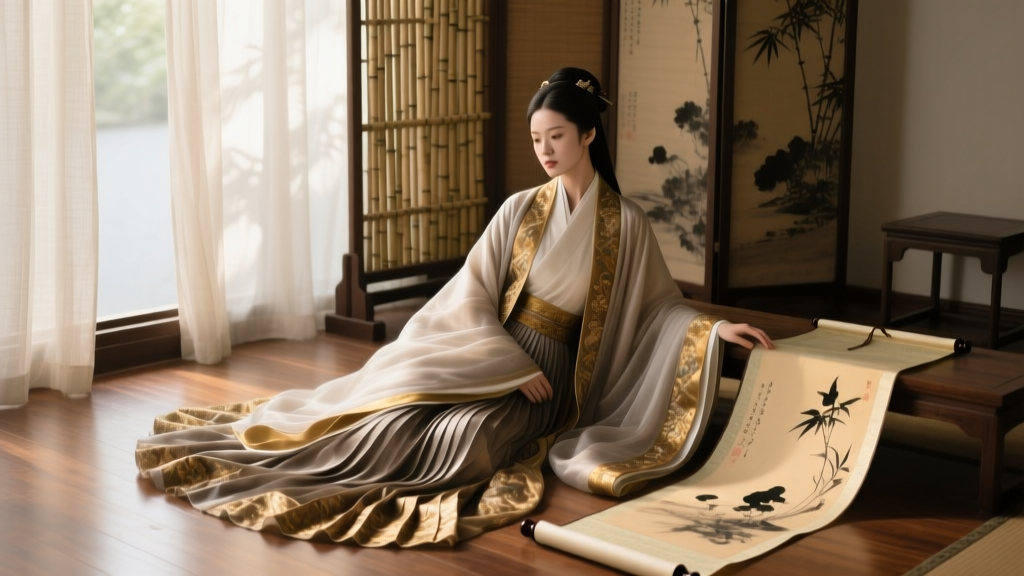
As the political and cultural center of gravity shifted south to Lin'an (modern-day Hangzhou) during the Song dynasty, the aesthetic pivoted toward intellectual minimalism, understated elegance, and refined tailoring. The Beizi became the quintessential outer garment for both men and women. Characterized by a parallel collar, straight lines, and dramatic side slits that reach up to the armpit, the Song Beizi is worn open over a Moxiong (tube top) and a pleated skirt. Song-style Hanfu is the preferred choice for modern scholars, tea ceremony practitioners, and professionals seeking a subtle, elegant daily wear option that integrates seamlessly into contemporary wardrobes.
Ming Dynasty Structure (The Nanjing and Beijing Standard)
The Ming dynasty introduced rigorous tailoring, standing collars (Liling), and intricate metal fastenings. The undisputed icon of Ming Hanfu is the Mamianqun (horse-face skirt). Constructed from two overlapping panels with flat, unpleated fronts and backs, and heavily pleated sides, the Mamianqun allows for immense freedom of movement while maintaining a structured, regal silhouette. The upper garment, typically an Ao (lined jacket) with a cross-collar or standing collar, features the iconic Pipa sleeves—curved and tapered, resembling the traditional Chinese lute. Today, the Ming substyle is the gold standard for winter Hanfu and formal ceremonial wear.
Comparative Matrix: Hanfu Substyles & Sourcing Data
Understanding the regional and historical substyles is crucial for buyers looking to invest in authentic pieces. Below is a comparative guide to help you navigate the market.
| Substyle | Primary Historical Hub | Core Garments | Best Climate | Avg Price Range (USD) |
|---|---|---|---|---|
| Tang Opulence | Xi'an / Central Plains | Qixiong Ruqun, Banbi, Daxiushan | Spring / Summer | $40 - $150 |
| Song Minimalism | Hangzhou / Jiangnan | Beizi, Moxiong, Bai褶 Skirt | Year-round (Layered) | $60 - $250 |
| Ming Structure | Nanjing / Beijing | Ao, Mamianqun, Pifeng | Autumn / Winter | $80 - $400+ |
| Lingnan Summer | Guangzhou / Fujian | Xiangyunsha Ruqun, Zhiju | Humid / Tropical | $150 - $1,200+ |
Modern Artisan Hubs and Buyer's Framework
The contemporary Hanfu market is heavily regionalized, with specific cities acting as epicenters for different tiers of production. When sourcing an authentic hanfu traditional chinese dress, knowing where to look ensures you avoid mass-produced, inaccurate 'costume' grade garments in favor of culturally respectful, historically informed apparel.
- Chengdu (Sichuan): Known as the modern commercial capital of the Hanfu movement. Chengdu is home to hundreds of Hanfu brands specializing in accessible, daily-wear garments. It is the best hub for beginners looking for mid-tier polyester-silk blends and accurate basic silhouettes in the $40–$90 range.
- Suzhou (Jiangsu): The historical heart of Chinese silk weaving. Buyers seeking high-end Song Brocade (Songjin) or intricate Ming-style Zhuanghua (woven gold) textiles must look to Suzhou-based artisan cooperatives. Garments from this region often exceed $300 and are considered investment pieces.
- Guangzhou (Guangdong): The exclusive source for authentic Xiangyunsha. Because the dyeing process requires the specific iron-rich mud of the Pearl River and intense subtropical sunlight, true Gambiered Canton Gauze can only be produced here. Expect to pay a premium ($400+) for certified Xiangyunsha.
According to textile archives at the China National Silk Museum, the preservation of these regional weaving techniques is vital to the integrity of the Hanfu revival. Buyers should always check for material composition tags and seek out brands that collaborate with recognized regional heritage workshops.
Cultural Protocols and Wearing Etiquette
Wearing Hanfu is not merely an aesthetic choice; it is an engagement with deep-seated cultural philosophies. The most critical rule of Hanfu construction and wearing is Jiaoling Youren (交领右衽)—the cross-collar must always wrap with the left side over the right side. Historically, as documented by institutions like the Asian Art Museum, the right-over-left lapel was associated with the living and the civilized world, while left-over-right was strictly reserved for burial garments or considered 'barbaric' by ancient Central Plains standards. Wearing the collar incorrectly is a profound cultural faux pas.
Furthermore, the inner garments (Zhongyi) must never be entirely hidden; a sliver of the white inner collar should always be visible at the neckline to represent purity and layered modesty. As the global interest in Asian traditional garments grows, resources from The Metropolitan Museum of Art and global textile historians continue to emphasize that respecting these structural protocols is the highest form of appreciation for the Hanfu tradition. By understanding the regional nuances—from the breezy silks of the Lingnan coast to the structured brocades of the Northern capitals—wearers can honor the diverse, living history woven into every thread.