Hanfu Meaning: Care Guide for Chinese Garments

Beyond the Translation: The True Hanfu Meaning
When textile enthusiasts and cultural practitioners explore the hanfu meaning, they often discover it extends far beyond a simple literal translation of 'Han clothing.' The term itself is composed of 'Han' (referring to the Han ethnic majority of China) and 'fu' (clothing or attire). However, the deeper hanfu meaning is inextricably linked to traditional Chinese philosophy, cosmology, and the concept of Li (ritual propriety). Understanding this philosophical foundation is not merely an academic exercise; it is the critical first step in properly caring for, storing, and respecting these intricate garments.
Historically, the structural elements of Hanfu were designed to reflect the universe. The jiaoling youren (cross-collar, right lapel) represents the intersection of Yin and Yang, while the yuanxiu (round sleeves) symbolize the heavens, and the fangling (square collar) or straight hemlines represent the earth. When you launder, press, or store a Hanfu garment, you are acting as a custodian of this ancient cosmological architecture. Treating these garments with the appropriate conservation techniques ensures that their structural integrity—and the profound hanfu meaning they carry—is preserved for future generations.
Materiality as Philosophy: Fibers and Their Care Profiles
The traditional materials used in Hanfu were chosen for their alignment with the natural world, a core tenet of the hanfu meaning. Before applying water or heat to your garments, you must identify the fiber composition, as protein and cellulose fibers require vastly different biochemical care.
Silk (Si) and Brocade (Zhi Jin)
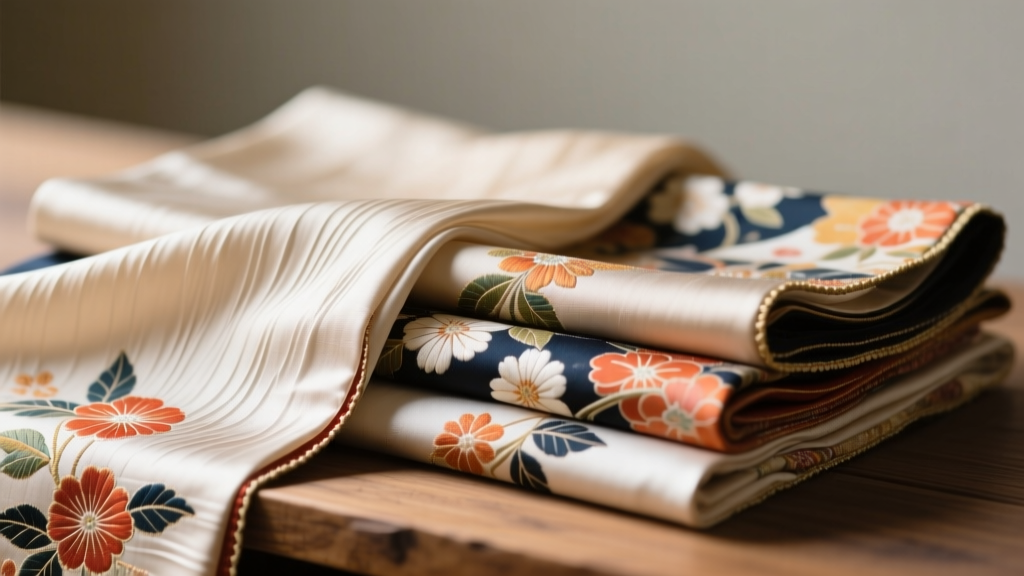
Mulberry silk is the cornerstone of formal Hanfu, such as the Shenyi (deep robe) or ceremonial Zhuanghua brocades. Silk is a protein fiber composed of fibroin, bound by sericin. It is highly sensitive to alkaline environments, which degrade the peptide bonds and cause the fabric to yellow and shatter over time. Silk must never be exposed to standard biological laundry detergents, bleach, or high-heat mechanical agitation.
Ramie (Zhu Ma) and Hemp
Used heavily in summer Ruqun (blouse and skirt sets) and inner garments, ramie and hemp are cellulose fibers. While they possess excellent tensile strength and natural moisture-wicking properties, they are notoriously prone to severe creasing. Ramie requires aggressive steaming to maintain its crisp, structured drape, unlike the gentle handling required for silk.
Architectural Challenges: Cleaning Specific Silhouettes
The hanfu meaning is physically manifested in the complex tailoring of its silhouettes. Modern washing machines and standard ironing boards are entirely unequipped to handle the geometric precision of traditional Chinese pattern cutting.
The Mamianqun (Horse-Face Skirt)
The Mamianqun is perhaps the most structurally complex garment in the Hanfu wardrobe. Characterized by its flat front and back panels with intricate knife-pleats and box-pleats on the sides, this skirt relies on 'pleat memory.' Submerging a Mamianqun in water without proper preparation will cause the pleats to blow out and lose their historical silhouette. Conservation-grade care dictates that Mamianqun skirts should be spot-cleaned when possible. If full immersion is necessary, the pleats must be loosely basted with cotton thread or secured with specialized pleating boards before they ever touch water.
Aoqun (Lined Jacket and Skirt)
Winter Hanfu often features the Aoqun, a lined jacket with a standing collar and琵琶袖 (Pipa sleeves). Because these garments contain inner linings (often cotton or raw silk) and outer shells of heavy brocade, differential shrinkage is a massive risk. The outer shell and inner lining must be dry-cleaned by a specialist familiar with traditional Asian textiles, or gently surface-cleaned using textile sponges and conservation-grade solvents.
The Conservation Protocol: Washing, Drying, and Pressing
To honor the craftsmanship of your garments, adopt a museum-level approach to maintenance. Below is a structured protocol for the most common Hanfu textiles.
| Garment / Fabric | pH Requirement | Wash Method | Drying Protocol | Pressing / Ironing |
|---|---|---|---|---|
| Silk Ruqun (Blouse) | pH 7.0 (Neutral) | Hand soak (15 min) in cool water (20°C) | Flat dry on mesh, out of UV light | Low heat, use a silk press cloth |
| Mamianqun (Poly-blend) | pH 7.0 - 8.0 | Machine wash (delicate) in mesh bag, basted pleats | Hang dry, pleats clipped in place | Medium steam, press pleats individually |
| Mamianqun (Pure Silk) | pH 7.0 (Neutral) | Professional textile dry-clean only | N/A | Professional steaming only |
| Ramie Summer Hanfu | pH 8.0 - 9.0 (Mild Alkaline) | Hand wash or gentle machine cycle | Hang dry while damp to stretch fibers | High heat with heavy steam |
| Zhuanghua Brocade | N/A | Surface clean / Professional Conservation | N/A | Do not iron; use a handheld steamer at a distance |
Step-by-Step Silk Washing Technique
- Preparation: Fill a clean basin with distilled or filtered water at 20°C (68°F). Tap water often contains heavy metals and chlorine that can oxidize silk dyes.
- Detergent Selection: Add a pH-neutral, enzyme-free detergent specifically formulated for protein fibers (such as Orvus paste or a dedicated silk wash). Never use fabric softeners, which coat the fibroin and trap dirt.
- Agitation: Submerge the garment. Gently press the water through the fabric using a plunging motion. Never wring, twist, or scrub the cross-collar edges, as this distorts the bias-cut fabric.
- Rinsing: Drain and refill with cool water until all suds are gone. A final rinse with a teaspoon of white vinegar in a gallon of water can help restore the silk's natural acidic mantle and enhance luster.
- Drying: Roll the garment in a clean, white cotton towel to absorb excess moisture. Unroll and lay flat on a fiberglass mesh screen. Keep away from direct sunlight, as UV radiation rapidly degrades silk proteins and fades natural botanical dyes.
Archival Storage: Preserving the Legacy
Proper storage is where the hanfu meaning transitions from a lived experience to a preserved heritage. Folding Hanfu incorrectly can cause permanent crease lines that eventually lead to fiber splitting, particularly along the sharp folds of the jiaoling (cross-collar).
- Hanging vs. Folding: Heavy garments like the Shenyi or lined Ao should be hung on wide, padded wooden hangers to distribute the weight across the shoulders. Wire hangers will cause 'shoulder horns' and stress the delicate seam allowances. Lightweight Ruqun blouses can be folded, but always pad the folds with acid-free, unbuffered tissue paper to prevent hard creases.
- Environmental Controls: Store your collection in a cool, dark environment with a relative humidity (RH) of 45-55%. Fluctuating humidity causes natural fibers to expand and contract, weakening the weave structure over time.
- Pest Management: Avoid traditional camphor balls or mothballs, which off-gas harsh chemicals that yellow silk and leave a nearly impossible-to-remove odor. Instead, use blocks of untreated cedar wood or dried lavender sachets, ensuring they do not come into direct contact with the textile.
- Protective Enclosures: Wrap individual garments in unbleached, washed muslin or archival-grade Tyvek. Never store silk in plastic dry-cleaning bags, as polyethylene traps moisture and promotes the growth of mildew, which digests protein fibers.
Authoritative Conservation Guidelines
For those managing museum-quality pieces or highly valuable antique Hanfu, it is vital to consult established textile conservation frameworks. The protocols outlined in this guide are heavily informed by global standards in textile preservation.
According to the Victoria and Albert Museum (V&A) Textile Conservation department, limiting light exposure and maintaining stable humidity are the two most critical factors in preventing the embrittlement of historic silk garments. Furthermore, the Metropolitan Museum of Art Textile Conservation Department emphasizes that mechanical stress from improper hanging or folding is a primary cause of structural failure in traditional Asian robes. Finally, the Canadian Conservation Institute (CCI) provides exhaustive guidelines on the dangers of using standard commercial laundry products on heritage textiles, reinforcing the absolute necessity of pH-neutral, non-ionic surfactants for protein-based fabrics.
By aligning your daily care routines with these institutional standards, you ensure that the garments you wear continue to reflect the true, unbroken hanfu meaning—a harmonious bridge between the ancestors of the past and the practitioners of the future.