Hanfu Fabric and Craftsmanship: Weaving Chinese Silk
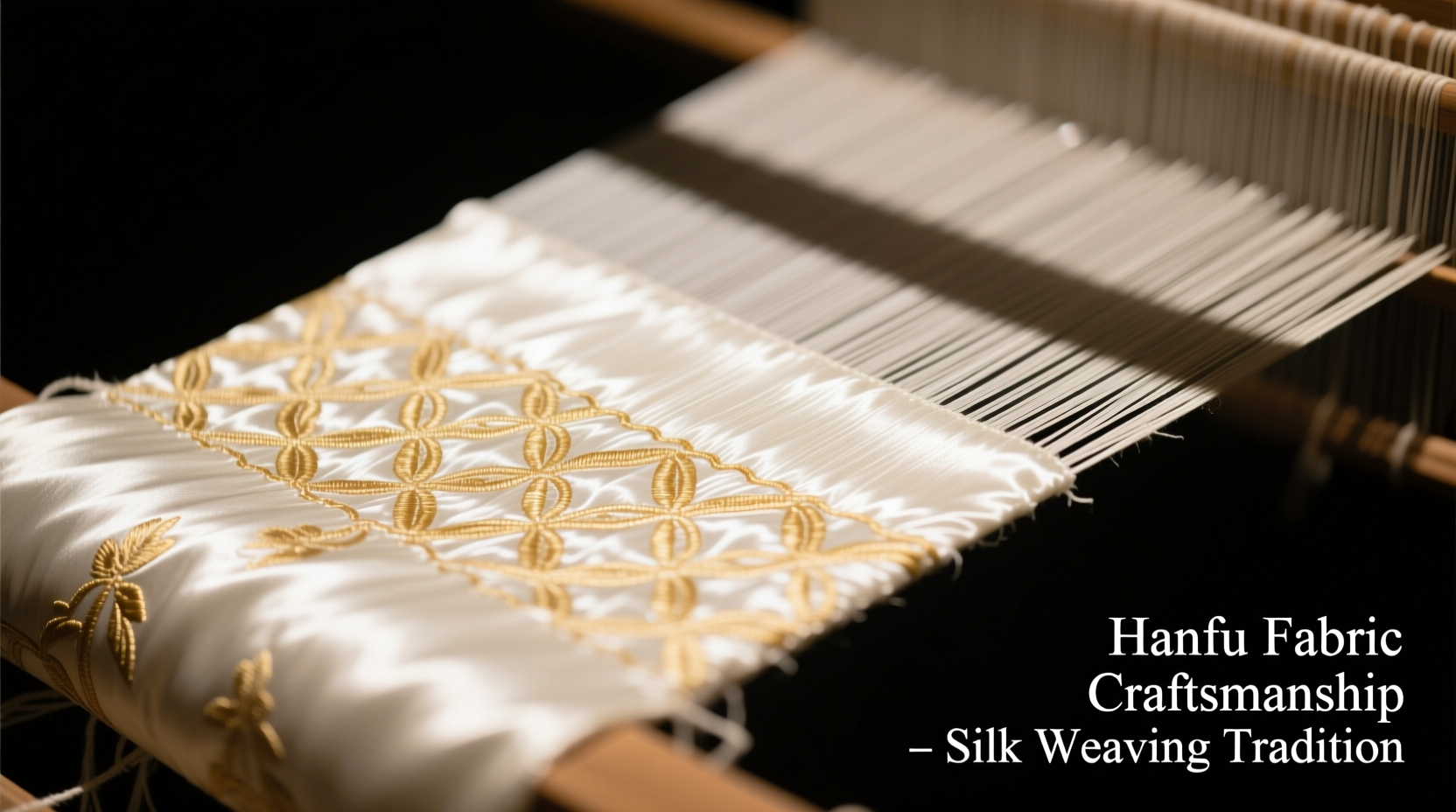
The revival of traditional Han Chinese clothing has sparked a global renaissance in heritage textile arts. While digital archives and search queries sometimes register typographical errors like hhanfu, the correct and universally recognized term is Hanfu (汉服), referring to the historical dress of the Han people spanning over three millennia. Beyond the silhouette, the true soul of Hanfu lies in its fabric and craftsmanship. From the rhythmic clack of wooden looms in Suzhou to the sun-baked dyeing yards of Guangdong, the creation of these garments represents a profound synthesis of agriculture, chemistry, and philosophy.
The Anatomy of Authentic Hanfu Textiles
Historically, the choice of fabric in Hanfu was dictated by climate, social class, and the philosophical principles of Yin and Yang. The foundational textiles can be categorized into three primary families:
- Mulberry Silk (Sang Si 桑丝): The pinnacle of Chinese textile achievement. Cultivated from the Bombyx mori silkworm, authentic mulberry silk is prized for its continuous filament, which allows for incredibly fine, lustrous weaves like Chou (silk tabby) and Duan (satin). It possesses natural thermoregulating properties, keeping the wearer cool in summer and warm in winter.
- Ramie (Zhuma 苎麻): Often referred to as 'China grass,' ramie is a bast fiber that produces a crisp, breathable fabric. Historically worn by scholars and commoners during the sweltering southern summers, high-grade ramie can be woven so finely that it resembles sheer organza, known historically as Xia Bu (summer cloth).
- Hemp and Cotton (Ma 麻 / Mian 棉): While cotton became widespread only after the Ming Dynasty, hemp was the ancient standard for the working class. Today, artisanal hemp-linen blends are utilized in modern Hanfu to provide structural drape and historical authenticity for everyday wear.
The 'Big Three' Brocades and Regional Hubs
When discussing luxury Hanfu, one must understand the 'Big Three' brocades (San Da Jin 三大锦), each representing a distinct regional weaving philosophy and historical era.
Nanjing Yun Brocade (Yunjin 云锦)
Translating to 'cloud brocade,' Yunjin was the exclusive fabric of the imperial court during the Ming and Qing dynasties. Woven on massive, two-story drawlooms requiring two artisans to operate in tandem, Yunjin incorporates real gold and silver threads, alongside peacock feather filaments. According to the Victoria and Albert Museum's textile archives, the complexity of Yunjin is so extreme that weavers produce merely five to six centimeters per day. In modern Hanfu, Yunjin is reserved for ceremonial outerwear and Mamianqun (horse-face skirts) due to its heavy, opulent drape.
Suzhou Song Brocade (Songjin 宋锦)
Originating in the Song Dynasty, this brocade is characterized by its understated elegance, geometric patterns, and muted color palettes. Unlike the flashy Yunjin, Songjin relies on intricate warp-faced structures that create a flat, durable surface. It is highly favored in contemporary Hanfu craftsmanship for making structured jackets (Ao) and scholar's robes, offering a refined, intellectual aesthetic.
Sichuan Shu Brocade (Shujin 蜀锦)
Hailing from Chengdu, Shu brocade is the oldest of the three, dating back to the Han Dynasty. It is celebrated for its vibrant, saturated colors and flowing, naturalistic motifs like lotus flowers and mythical beasts. The China National Silk Museum highlights Shu brocade's unique use of multi-colored warp threads, which creates a rich, iridescent effect that shifts in the light.
Xiangyunsha: The Crown Jewel of Southern Dyeing
No deep dive into Hanfu craftsmanship is complete without examining Xiangyunsha (香云纱), or Gambiered Canton Gauze. Originating in the Pearl River Delta, this fabric is a masterpiece of ecological dyeing. Artisans soak woven silk in the juice of the Dioscorea cirrhosa (a local yam) up to 30 times, sun-drying it between each bath. The silk is then coated in iron-rich river mud from local estuaries. A chemical reaction between the tannins in the yam juice and the iron in the mud creates a unique, dual-toned fabric: glossy black on one side and earthy brown on the other. The result is a water-resistant, insect-repellent silk that rustles softly when walking, earning it the poetic name 'fragrant cloud gauze.' Authentic Xiangyunsha is a protected geographical indication and remains one of the most expensive textiles in the Hanfu market.
Structural Philosophy: Flat Cutting and Sacred Seams
Unlike Western tailoring, which relies on darts and curved seams to sculpt fabric to the body's three-dimensional form, traditional Hanfu utilizes Pingmian Jiancai (平面剪裁), or flat-pattern cutting. The fabric is treated as a two-dimensional canvas that only gains three-dimensional life when worn and draped.
This philosophy is governed by strict cultural protocols:
- Zhongfeng (中缝 - Center Back Seam): Because historical looms were narrow (typically 45-50 cm wide), garments required a center back seam. Even after the invention of wide modern looms, the Zhongfeng is retained as a mandatory structural element, symbolizing moral uprightness and the Confucian ideal of the 'middle way.'
- Jiaoling Youren (交领右衽 - Crossed Collar, Right Lapel): The left side of the garment crosses over the right, securing at the right side of the body. This asymmetry is a defining hallmark of Hanfu. Historically, reversing this (left lapel) was strictly reserved for the deceased or considered a mark of 'barbarian' cultures.
- Jixian (缉线 - Seam Binding): High-end Hanfu features meticulously bound inner seams using silk bias tape, ensuring the garment is as beautiful on the inside as the outside, reflecting the wearer's inner virtue.
The Mamianqun: A Masterclass in Pleating
The Mamianqun (马面裙), or horse-face skirt, is a triumph of Hanfu engineering. Comprising two overlapping panels of fabric that wrap around the waist, the skirt features flat, unpleated sections at the front and back (the 'horse faces'), with dense, knife-pleated sections on the sides. Crafting an authentic Mamianqun requires precise mathematical calculations to ensure the pleats remain perfectly flush when standing, yet fan out elegantly when walking or sitting. Artisans use a combination of steam-setting and silk-thread tacking to permanently fix the pleats without the use of synthetic glues.
Navigating the Modern Market: Authenticity vs. Mass Production
As the Hanfu movement has grown, so has the market's stratification. Buyers must navigate a complex landscape of fast-fashion imitations and genuine artisanal pieces. The Metropolitan Museum of Art's Asian textile collection serves as a vital visual reference for understanding historical drape and weave density, helping modern buyers identify authentic construction.
| Tier | Materials & Construction | Price Range (USD) | Best For |
|---|---|---|---|
| Fast Fashion / Entry | Polyester blends, machine-printed motifs, glued pleats, serged inner seams. | $30 - $80 | Costume events, beginners, photography props. |
| Mid-Tier / Boutique | Real silk blends, woven jacquard, proper seam binding, accurate historical patterns. | $120 - $350 | Daily wear, cultural festivals, serious enthusiasts. |
| Heritage / Artisan | 100% Mulberry silk, Xiangyunsha, hand-woven Song/Yun brocade, hand-tacked pleats. | $500 - $2,500+ | Tea ceremonies, weddings, collectors, heirloom preservation. |
Preservation and Care Protocols
Owning authentic silk Hanfu requires a commitment to traditional garment care. The proteins in silk are highly sensitive to alkaline environments and enzymatic breakdown.
- Washing: Never use standard laundry detergents. Use a pH-neutral silk wash or traditional soapnut (Wuhuanzi 无患子) liquid. Wash by hand in cold water, avoiding any wringing or twisting which will break the continuous silk filaments.
- Drying: Direct sunlight degrades silk proteins and fades natural plant dyes. Garments must be dried flat in the shade, smoothed by hand to minimize ironing.
- Storage: Fold garments along their natural seam lines (Zhongfeng) and wrap them in acid-free tissue paper or unbleached cotton bags. Avoid plastic covers, which trap moisture and promote mildew. Cedarwood blocks are preferred over chemical mothballs to protect the fibers from insects.
'The loom is not merely a tool of production; it is an instrument that translates the rhythm of the seasons into the fabric of human civilization.' — Master Weaver's Proverb, Suzhou Silk Guild.
Understanding the fabric and craftsmanship of Hanfu elevates the garment from a mere costume to a wearable archive of Asian history. By supporting authentic weaving hubs and respecting the structural philosophy of flat cutting, modern wearers become active participants in the preservation of one of the world's most enduring textile traditions.