Hanfu Dynasty Symbolism: Decoding Ancient Chinese Garments

The Philosophy Woven into Silk: An Introduction to Hanfu
To understand traditional Chinese clothing is to read a textile manuscript of philosophy, cosmology, and social order. Hanfu, the historical dress of the Han Chinese people, is not a monolith; it is a living archive that evolved across millennia. When enthusiasts and scholars study a specific hanfu dynasty, they are not merely looking at fashion trends, but at the visual manifestation of that era's prevailing philosophies—from the cosmopolitan exuberance of the Tang to the scholarly restraint of the Song, and the structured hierarchy of the Ming.
At the core of all Hanfu is the principle of Jiaoling Youren (crossed collar, right lapel). The left side of the garment always crosses over the right. In traditional Chinese cosmology, the left represents Yang (life, light, and the living), while the right represents Yin (death, darkness, and the underworld). Wrapping the left over the right symbolizes the triumph of life and civilization over death and chaos. Reversing this is strictly reserved for dressing the deceased for burial.
Tang Dynasty Hanfu: Cosmopolitan Flourishes and Bold Motifs
The Tang Dynasty (618–907 AD) is widely considered the golden age of Chinese arts and culture. Influenced heavily by the Silk Road, Tang clothing absorbed Central Asian, Persian, and Sogdian aesthetics, resulting in garments that were bold, voluminous, and unapologetically vibrant.
The Qixiong Ruqun and Female Expression
The quintessential female garment of this era was the Qixiong Ruqun, a chest-high skirt tied with long, flowing ribbons just below the shoulders, paired with a short, wide-sleeved top and a draped silk shawl (Pibo). Unlike later dynasties that favored modesty and concealment, the Tang court celebrated the female form. The high waistline created an illusion of elongated grace, while the wide, open collars occasionally revealed the décolletage—a reflection of the era's relatively liberal social attitudes toward women.
Color Symbolism in the Tang Court
Tang color palettes were saturated and symbolic. Pomegranate red, derived from the safflower plant, was immensely popular among women, symbolizing vitality, joy, and the warding off of evil spirits. Gold and vibrant yellows were increasingly restricted to the imperial family, laying the groundwork for strict sumptuary laws in later centuries. According to the Metropolitan Museum of Art's archives on Chinese dress, the intricate weft-faced compound twills (Samite) used during this period allowed for complex, repeating floral motifs like the Baoxianghua (treasure flower), which blended lotus, peony, and pomegranate elements to symbolize spiritual perfection and wealth.
Song Dynasty Elegance: Restrained Aesthetics and Scholarly Ideals
As the flamboyant Tang gave way to the Song Dynasty (960–1279 AD), a profound philosophical shift occurred. The rise of Neo-Confucianism emphasized introspection, moral rectitude, and modesty. This intellectual movement drastically altered the silhouette and symbolism of Hanfu.
The Beizi and the Pursuit of Inner Virtue
The defining garment of the Song era was the Beizi, a long, open-front coat with side slits extending from the armpit to the hem. Worn by both men and women over a base layer of inner garments and skirts, the Beizi featured straight, narrow sleeves and a slender, columnar silhouette. The emphasis shifted from the outward display of the body to the elegant drape of the fabric and the quiet dignity of the wearer.
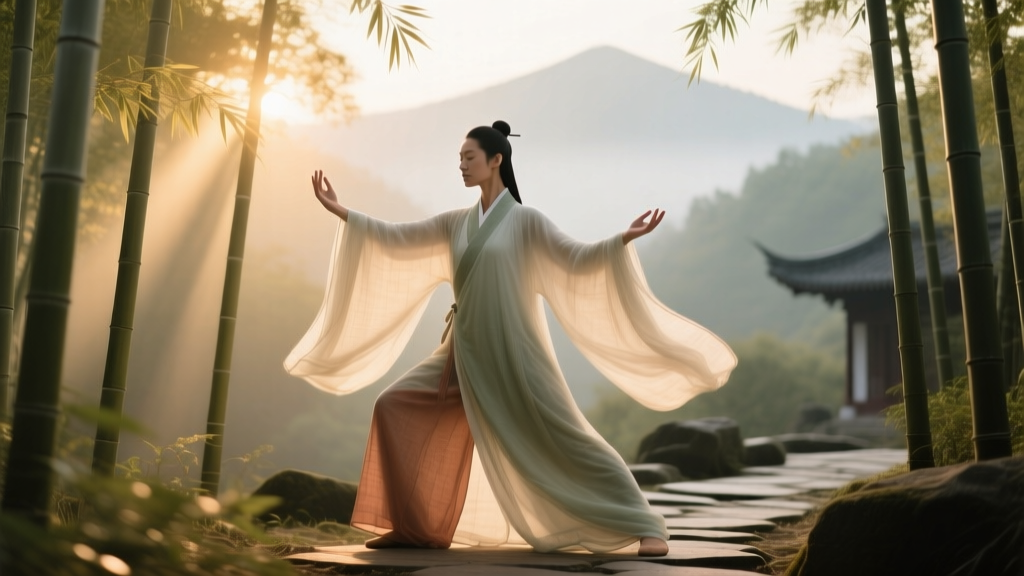
Song colors mirrored the era's reverence for nature and ceramics. Pastel celadons, pale lotus pinks, bamboo greens, and ink blacks were highly prized. Motifs became subtle and naturalistic: solitary plum blossoms braving the winter cold (symbolizing resilience), orchids (representing scholarly purity), and delicate bamboo shoots. The China National Silk Museum notes that Song Dynasty textiles favored lightweight, sheer gauzes and intricate, tone-on-tone damasks that caught the light subtly, reflecting the Neo-Confucian ideal of hidden, inner virtue rather than ostentatious display.
Ming Dynasty Mastery: Structural Rigidity and Auspicious Emblems
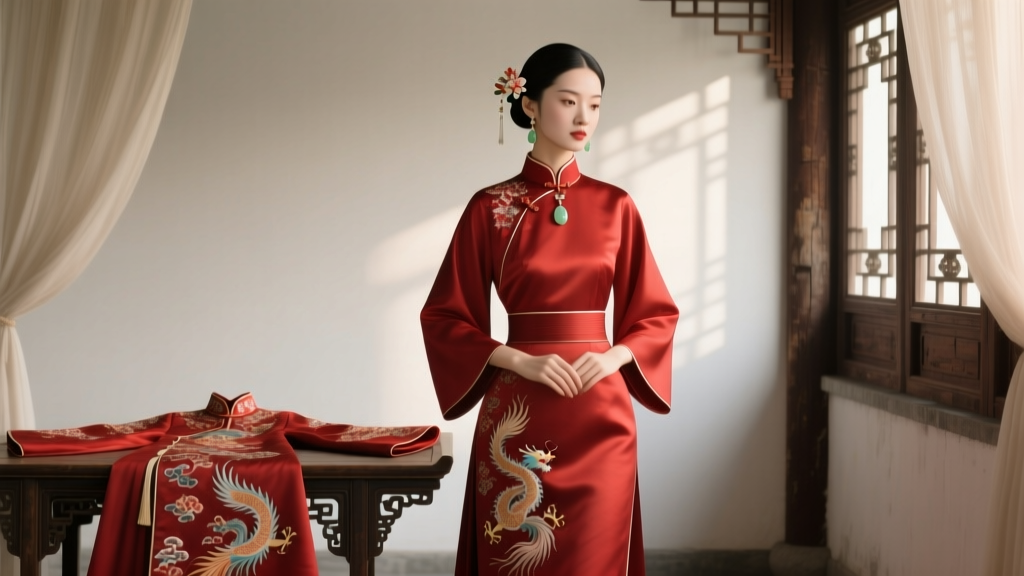
The Ming Dynasty (1368–1644 AD) sought to restore Han Chinese cultural dominance after the Mongol-led Yuan Dynasty. Consequently, Ming Hanfu is characterized by a return to structured, voluminous forms, rigorous tailoring, and an intense focus on auspicious symbolism and social hierarchy.
The Aoqun, Mamianqun, and the Buzi
Women's fashion was dominated by the Aoqun (a lined, long-sleeved jacket worn over a skirt). The most iconic skirt of this era, which remains wildly popular in the modern Hanfu revival, is the Mamianqun (horse-face skirt). Constructed from two overlapping panels of fabric with deep, structured pleats on the sides and flat, unpleated panels at the front and back, the Mamianqun allowed for ease of movement while maintaining a rigid, architectural silhouette when standing still.
For officials and the elite, symbolism was codified through the Buzi (Mandarin square or rank badge) sewn onto the front and back of their robes. These embroidered squares communicated exact bureaucratic rank: civil officials wore auspicious birds (e.g., the Red-Crowned Crane for first-rank officials), while military officials wore fierce beasts (e.g., the Tiger or Qilin). To wear a badge above one's station was a severe criminal offense, making the garment a literal map of the empire's power structure.
Comparative Guide: Hanfu Dynasty Variations at a Glance
Understanding the distinct differences between these eras is crucial for collectors, historians, and modern wearers. Below is a structural breakdown of the three most prominent Hanfu dynasties.
| Dynasty | Key Garment | Silhouette & Cut | Core Symbolism | Authentic Replica Price (USD) |
|---|---|---|---|---|
| Tang (618–907) | Qixiong Ruqun | High-waisted, wide sleeves, draped | Cosmopolitanism, vitality, spiritual abundance | $120 – $350 |
| Song (960–1279) | Beizi | Straight, slender, open-front coat | Neo-Confucian restraint, scholarly elegance | $150 – $400 |
| Ming (1368–1644) | Aoqun & Mamianqun | Structured, pleated, layered | Social order, auspicious emblems, stability | $200 – $800+ |
Sourcing Authentic Hanfu Today: Fabrics, Artisans, and Pricing
The modern Hanfu movement (Hanfu Yundong) has sparked a massive revival, but the market is flooded with historically inaccurate, mass-produced costumes. For those seeking garments with genuine cultural integrity and material quality, it is essential to understand fabric composition and artisan pricing.
- Mass-Market / Entry Level ($30 – $80): Typically made from polyester chiffon or jacquard. While accessible for festivals or photography, these fabrics lack the breathability, drape, and historical accuracy of natural fibers. They are often cut using modern Western darting techniques rather than traditional flat-pattern cutting.
- Mid-Tier / Enthusiast ($150 – $350): Brands in this tier use silk-cotton blends, linen, and basic mulberry silk. The patterning respects traditional flat-cutting (where the fabric is cut in straight lines and folded, wasting more material but allowing for the iconic drape). Embroidery is usually machine-done but follows historical motif templates.
- Artisanal / Museum-Grade ($500 – $2,500+): True artisanal Hanfu utilizes heritage textiles like Xiangyunsha (a Cantonese silk dyed with river mud and薯莨 yam juice, creating a distinctive crackled, waterproof finish) or authentic Song Brocade (Song Jin). These garments are hand-stitched with hidden seams and feature hand-embroidered motifs using silk threads. Brands like Minghua Tang or Shiyang cater to this tier, often requiring months of lead time for custom weaving.
Wearing Hanfu with Cultural Respect in the Modern Era
As Hanfu transitions from historical artifact to living, breathing streetwear in cities like Chengdu, Xi'an, and Hangzhou, wearing it requires an understanding of cultural protocol. Beyond the strict adherence to the Jiaoling Youren (left-over-right) collar rule, one must pay attention to the sleeves and the hem.
Traditional formal Hanfu features exceptionally long sleeves designed to extend past the fingertips. The proper etiquette when greeting an elder or performing a traditional bow (Zuoyi) is to fold the hands in front of the body and allow the sleeves to drape over the hands, concealing them. This gesture signifies humility and the concealment of one's ego. Furthermore, the hemline of a Ming-style skirt should ideally graze the ankles or the floor, requiring the wearer to move with deliberate, measured steps—a physical practice of mindfulness and grace.
'Hanfu is not merely a costume to be worn for a photograph; it is a vessel of etiquette. When you put on the garment, you adopt the posture, the respect, and the philosophy of the ancestors who wove it.' — Modern Hanfu Revival Proverb
Whether you are studying the vibrant silks of the Tang court or the quiet, structured elegance of a Ming Mamianqun, recognizing the deep symbolism woven into every pleat, collar, and thread transforms the act of dressing into a profound dialogue with Asian history.