Hanfu Dress: Fabrics, Weaves & Craft
The Anatomy of Authenticity: Beyond the Silhouette
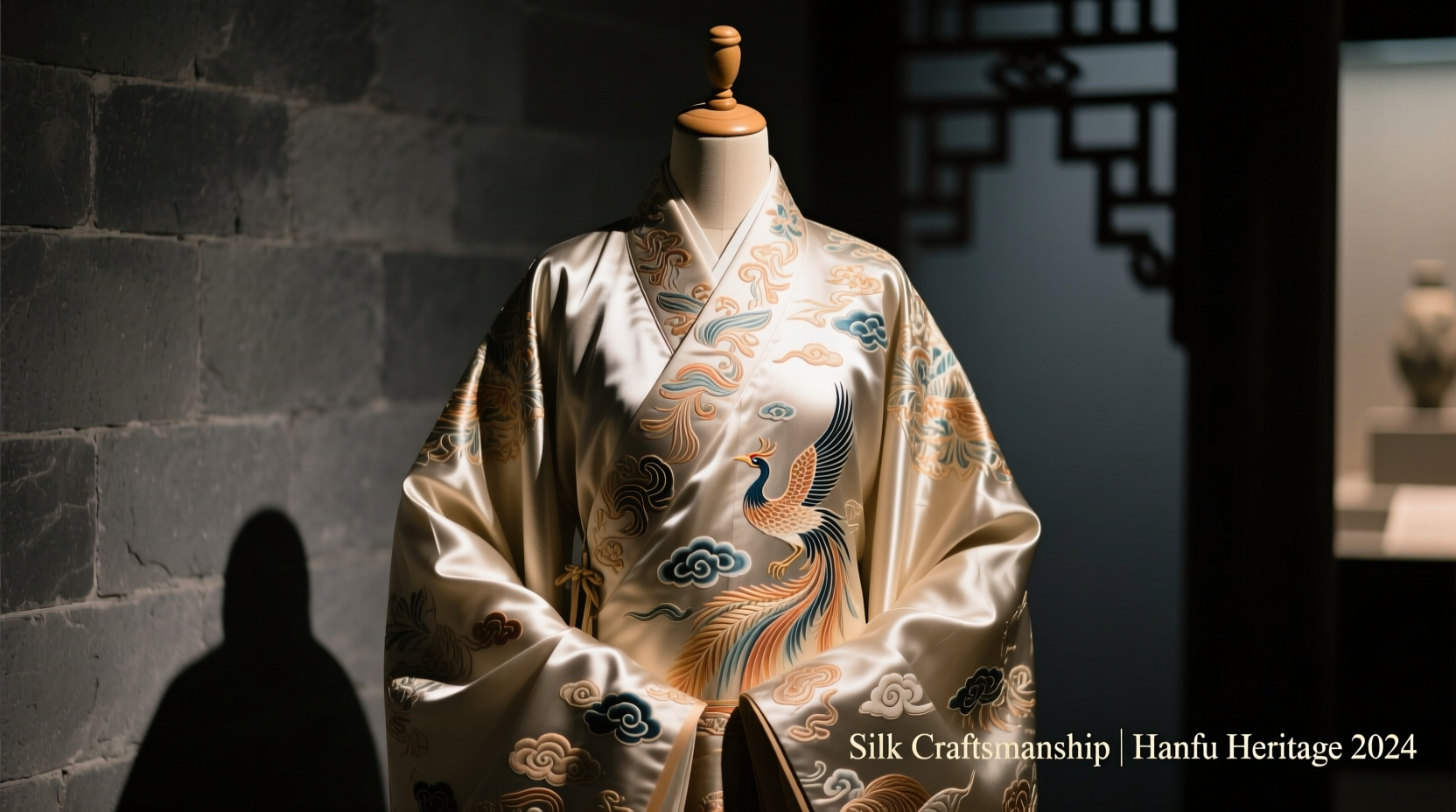
When exploring the renaissance of historical Asian clothing, the chinese traditional hanfu dress stands out not merely for its flowing silhouettes, but for the profound textile engineering that defines it. To the untrained eye, Hanfu (汉服) is recognized by its crossed collars, wide sleeves, and sash ties. However, to textile historians and master weavers, the true essence of Hanfu lies in its fabric composition, structural weaving techniques, and regional embroidery. Understanding the chinese traditional hanfu dress requires looking past the vibrant silhouettes and examining the thousands of years of sericulture and loom technology that make these garments possible.
Unlike Western tailoring, which relies on darts, seams, and bias cutting to force fabric into a three-dimensional mold of the human body, traditional Chinese garment construction is rooted in the philosophy of flat-cutting (平面裁剪). This approach respects the integrity of the woven cloth, treating the fabric as a canvas that drapes naturally over the wearer. Consequently, the quality, weight, and drape of the silk itself become the primary architects of the garment's final form.
Silk Weaves: The Foundation of the Hanfu Wardrobe
The term 'silk' is vastly reductive when discussing historical Chinese textiles. According to The Metropolitan Museum of Art's timeline on Chinese silk, ancient weavers developed highly specialized loom techniques to create fabrics with distinct functional and aesthetic properties. A Hanfu ensemble is typically constructed from a specific weave chosen for the season, the wearer's social standing, and the occasion.
Luo (罗) and Sha (纱): The Breathable Gauzes
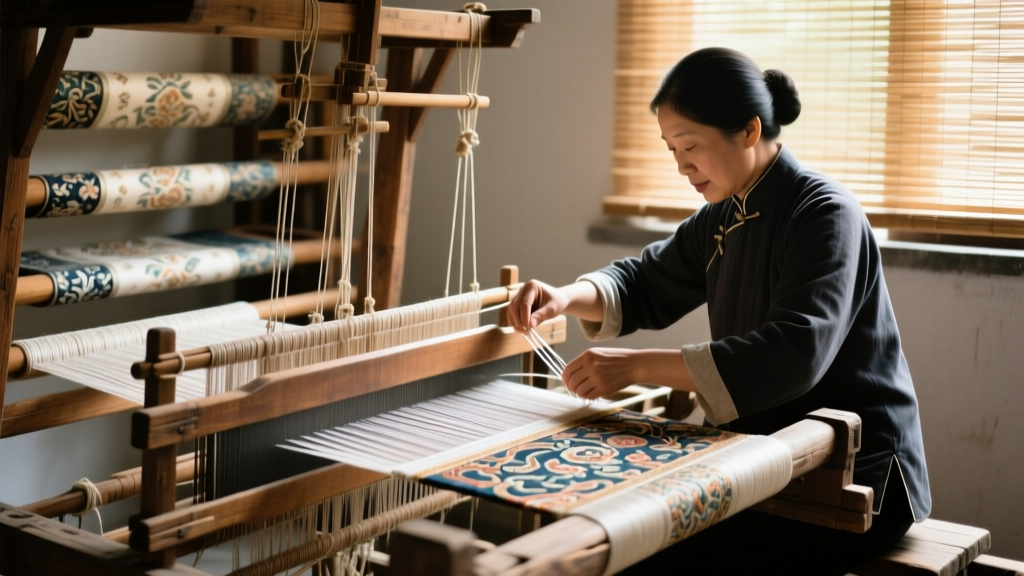
For summer garments, particularly the lightweight Beizi (褙子) jackets of the Song Dynasty or the sheer over-robes of the Tang Dynasty, weavers utilized Luo (gauze) and Sha (crepe gauze). Unlike standard plain weaves, Luo involves a complex warp-twisting technique where warp yarns are twisted around each other before the weft is passed through. This creates a stable, open-mesh fabric that is incredibly breathable yet structurally sound. Authentic Hangzhou Luo is notoriously difficult to weave on modern power looms, requiring specialized Jacquard attachments or traditional draw-looms, making genuine Luo Hanfu highly prized and expensive.
Duan (缎) and Zhuanghua (妆花): The Heavy Satins and Brocades
For winter wear and formal ceremonial attire, such as the Ming Dynasty Mamianqun (horse-face skirt), weavers relied on Duan (satin). Satin weaves feature long 'floats' where the warp or weft yarns skip over multiple intersecting threads, resulting in a lustrous, reflective surface. The pinnacle of this craft is Zhuanghua (brocade), specifically the Yunjin (cloud brocade) of Nanjing. Zhuanghua involves the manual addition of supplementary weft threads—often spun with real gold or peacock feather filaments—creating intricate, discontinuous patterns that look as though they were painted onto the fabric.
Kesi (缂丝): The Tapestry of Cut Silk
Perhaps the most revered of all Chinese textile arts is Kesi, often translated as 'cut silk.' Recognized by UNESCO as an Intangible Cultural Heritage, Kesi is a tapestry weave where the weft threads do not pass entirely across the fabric. Instead, colored wefts are woven only within the boundaries of the specific design, leaving tiny slits between color blocks that resemble the cuts of a carving knife. The old adage states, 'One inch of Kesi, one ounce of gold,' reflecting the months of painstaking labor required to produce a single Kesi-woven Hanfu collar or cuff.
The Four Great Embroideries: Regional Stitchwork
While weaving provides the canvas, embroidery (刺绣) provides the narrative. The decoration of a chinese traditional hanfu dress frequently relies on one of China's Four Great Embroideries, each originating from a distinct geographic and cultural hub.
- Su Embroidery (苏绣 - Suzhou): Renowned for its delicate, needle-painting quality. Su embroidery uses silk threads split into as many as 48 micro-strands, allowing for imperceptible color gradations. It is famous for 'double-sided' embroidery, where the design is perfectly mirrored on both sides of a sheer gauze fabric, a technique often used on Hanfu round fans and sheer sleeve panels.
- Xiang Embroidery (湘绣 - Hunan): Characterized by bold, realistic compositions and a rich color palette. Xiang stitchwork often utilizes specialized stitches to mimic the texture of animal fur, making it the traditional choice for tiger and lion motifs on martial or protective Hanfu garments.
- Shu Embroidery (蜀绣 - Sichuan): Woven into the cultural fabric of the Chengdu region, Shu embroidery features soft, satin stitches and vibrant, contrasting colors. It is heavily applied to the hems and collars of everyday Hanfu, featuring motifs of lotus flowers, koi, and bamboo.
- Yue Embroidery (粤绣 - Guangdong): Distinguished by its use of metallic threads and dense, raised compositions. Yue embroidery frequently incorporates gold and silver bullion thread, creating heavily textured, three-dimensional phoenix and dragon motifs favored in Southern Chinese ceremonial wedding Hanfu.
Flat-Cutting and the Philosophy of Jiaoling Youren
The structural hallmark of the Hanfu is the Jiaoling Youren (交领右衽), or 'cross-collar, right lapel.' In this construction, the left side of the garment crosses over the right, tying at the right waist. This is not merely an aesthetic choice but a profound cultural directive rooted in ancient cosmology, where the left represents life and the right represents death (reversing the lapel was historically reserved for burial garments).
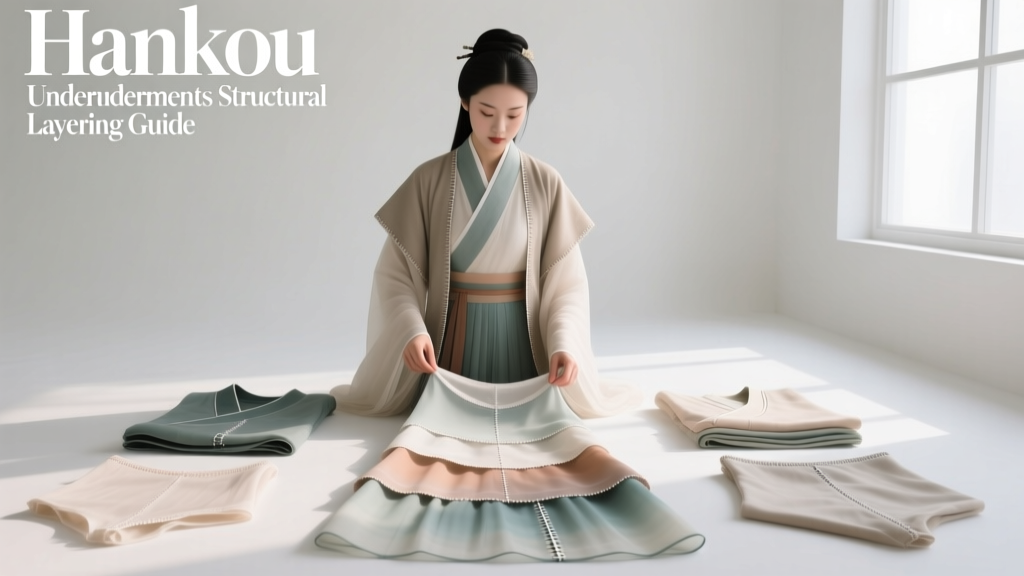
Constructing this collar requires precise geometric flat-cutting. A traditional Hanfu top (Yi or Shan) is cut from a single continuous width of fabric folded over the shoulder, eliminating the shoulder seam entirely. The collar is then applied as a separate bias-cut band. This zero-waste, geometric approach to pattern making means that the width of the traditional silk bolt (usually around 60 to 70 centimeters) dictates the proportions of the sleeves and the body of the garment, creating a harmonious relationship between the loom and the final dress.
Sourcing and Pricing: Navigating the Modern Hanfu Market
As the Hanfu movement has surged in popularity, the market has bifurcated into mass-produced commercial garments and artisan-crafted heritage pieces. For collectors and cultural enthusiasts, understanding the pricing structure is vital to identifying true craftsmanship. Below is a framework for evaluating the cost of a chinese traditional hanfu dress based on material and technique.
| Craftsmanship Tier | Materials & Techniques | Estimated Price Range (USD) | Best For |
|---|---|---|---|
| Commercial / Entry-Level | Polyester blends, digital printing, machine-embroidery, standard plain weaves. | $40 - $120 | Daily wear, cosplay, photography, beginners. |
| Artisan / Mid-Tier | 100% Mulberry silk (Duan/Sha), traditional plant dyeing, basic hand-embroidery, authentic historical patterning. | $250 - $800 | Festivals, cultural events, serious collectors. |
| Heritage / Masterwork | Hand-woven Luo or Kesi, Zhuanghua brocade, Su/Yue hand-embroidery, real gold thread, museum-grade reproduction. | $2,500 - $15,000+ | Museum archives, heirloom investment, high-end ceremonies. |
When sourcing authentic pieces, buyers should look for transparency regarding the silk origin (such as Hangzhou for Luo or Suzhou for embroidery) and seek out ateliers that provide detailed breakdowns of their loom types and dyeing processes. The Victoria and Albert Museum's extensive textile archives serve as an excellent visual benchmark for understanding how historical brocades and gauzes should drape and reflect light, helping buyers distinguish between genuine silk weaves and modern synthetic imitations.
Caring for Woven Heritage
Preserving a high-quality Hanfu requires specialized care that honors its organic origins. Mulberry silk is a protein fiber, highly sensitive to alkaline substances and UV degradation. Garments woven with metallic threads (such as Yue embroidery or Zhuanghua brocade) should never be submerged in water, as the oxidation of the metal will ruin the design. Instead, these pieces must be spot-cleaned or professionally dry-cleaned by specialists familiar with historical textiles. Storage should involve rolling the garments around acid-free archival tubes rather than folding them, as folding can cause permanent stress fractures in the delicate warp-twisted Luo gauzes and Kesi tapestries.
'To wear Hanfu is to wrap oneself in the history of the loom. Every thread is a continuation of a conversation between the silkworm, the weaver, and the ancestors.' — Master Weaver of the Nanjing Yunjin Institute.
Ultimately, the chinese traditional hanfu dress is far more than a historical costume; it is a living archive of Asian textile supremacy. By understanding the intricate weaves, the regional embroideries, and the philosophical flat-cutting techniques that define it, modern wearers do more than don a beautiful garment—they actively participate in the preservation of one of humanity's most sophisticated craft traditions.