Hanfu Craftsmanship: Fabric Deep Dive

When exploring the vast encyclopedia of Asian traditional garments, few sartorial traditions possess the sheer textile complexity and historical continuity of Chinese dress. To truly appreciate these garments, one must look beyond the silhouette and examine the very threads that compose them. Understanding the concept of Hanfu in Chinese (汉服, Hànfú) requires a deep dive into the linguistic, cultural, and highly technical craftsmanship that has defined Chinese weaving for over three millennia.
The Linguistic and Cultural Weight of 'Hanfu in Chinese'
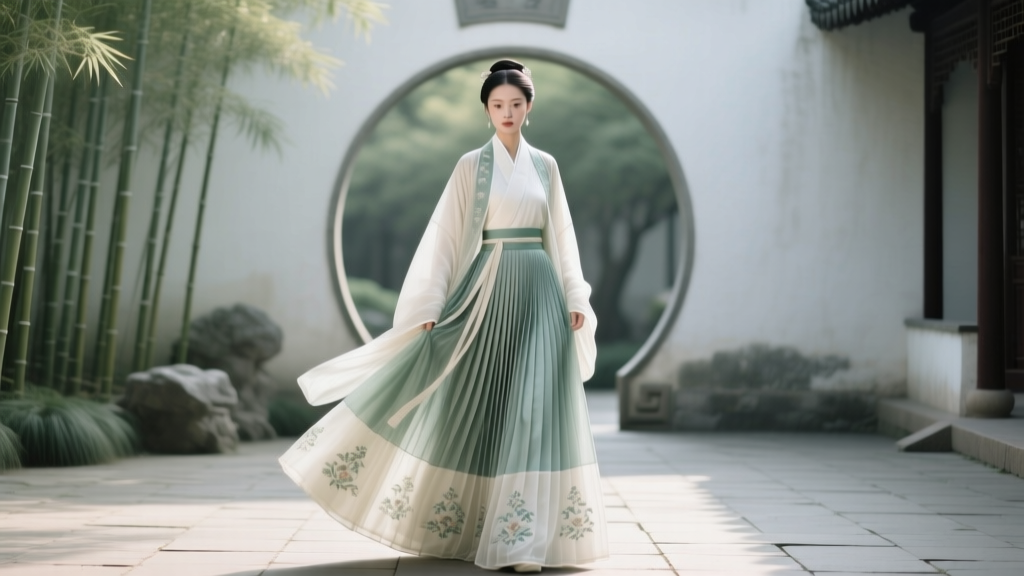
The term 'Hanfu in Chinese' literally translates to the clothing of the Han people. The character 汉 (Hàn) refers to the Han Dynasty (202 BCE – 220 CE), a pivotal era that solidified Chinese cultural identity, while 服 (fú) means clothing or attire. However, Hanfu is not merely a historical costume; it is a complex system of dress governed by cosmological principles, social hierarchies, and profound respect for textile integrity.
Unlike Western tailoring, which emerged from a tradition of cutting and shaping fabric to mimic the three-dimensional contours of the human body, traditional Chinese craftsmanship operates on a fundamentally different philosophy. The fabric itself is considered a sacred product of human labor and natural harmony. Therefore, the craftsmanship of Hanfu prioritizes the preservation of the woven cloth, resulting in a unique structural geometry that has influenced East Asian dress for centuries.
The Loom of Antiquity: Core Textile Techniques
The foundation of any authentic Hanfu lies in its textile. Historical Chinese weavers developed highly specialized loom techniques that remain some of the most complex in global textile history. According to the China National Silk Museum, the mastery of silk weaving during the Song and Ming dynasties reached unparalleled heights of technical sophistication.
Kesi (缂丝): The Carved Silk Tapestry
Kesi, often translated as 'cut silk,' is a tapestry weave technique that creates intricate, unbroken patterns that look as though they were carved into the fabric. Unlike continuous weft brocades, the weaver in Kesi uses small, individual bobbins of colored silk thread, weaving them back and forth only within the specific color areas of the pattern. Where two colors meet, a tiny slit is left in the fabric, giving it a 'carved' appearance.
Crafting a single meter of high-quality Kesi can take an artisan several months. Because of this intense labor, Kesi was historically reserved for imperial dragon robes, high-ranking ceremonial sashes, and mounting precious scroll paintings. Today, authentic Kesi fabric can command prices exceeding $800 USD per meter, making it a luxury investment for bespoke Hanfu commissions.
Luo (罗) and Sha (纱): Engineered Breathability
For summer garments, particularly the lightweight outer robes (pibo) and sheer tops (shan), weavers utilized Luo (gauze) and Sha (sheer silk). These are not simple loose weaves; they are complex warp-twisting techniques. In Luo weaving, adjacent warp threads are twisted around each other in a chain-like pattern before the weft thread is passed through. This creates a highly stable, open-mesh fabric that resists fraying and slipping, providing exceptional breathability while maintaining structural drape. The Metropolitan Museum of Art notes that these sheer silks were highly prized along the Silk Road, demonstrating China's early dominance in climate-adaptive textile engineering.
Regional Weaving Hubs and Signature Fabrics
The craftsmanship of Hanfu is deeply tied to specific regional micro-climates and historical weaving hubs. The water quality, local mulberry cultivation, and generational artisan cooperatives all contribute to the distinct hand-feel of regional silks.
| Region | Specialty Fabric | Historical Peak | Modern Price Range (USD/m) |
|---|---|---|---|
| Suzhou | Song Brocade & Kesi | Song Dynasty | $150 - $800+ |
| Nanjing | Yunjin (Cloud Brocade) | Ming / Qing Dynasties | $200 - $1,200+ |
| Hangzhou | Guan (Crown) Gauze | Tang / Song Dynasties | $80 - $250 |
| Shengze | Standard Mulberry Silk | Ming to Present | $30 - $90 |
Note: Prices reflect authentic, natural-fiber textiles sourced directly from artisan mills, excluding mass-market synthetic 'Hanfu element' fabrics.
Anatomical Craftsmanship: The Geometry of Flat-Cutting
The most defining characteristic of Hanfu construction is Pingmian Caijian (平面裁剪), or two-dimensional flat-cutting. When laid flat on a table, a traditional Hanfu robe forms a perfect geometric cross or T-shape. There are no darts, no curved armholes, and no shoulder seams.
The Jiaoling Youren (Crossed Collar) Protocol
The most iconic Hanfu silhouette features the Jiaoling Youren (交领右衽), meaning a crossed collar with the right lapel. The left side of the garment crosses over the right side and is tied at the right hip. This is not merely an aesthetic choice; it is a profound cultural protocol rooted in ancient Chinese cosmology. As documented in the Book of Rites (Liji) and explored by institutions like the Victoria and Albert Museum, the left-over-right orientation represents the living, the civilized, and the yang principle. Reversing this (right-over-left) was historically reserved for the deceased or considered a mark of 'uncivilized' outer tribes. Wearing a Hanfu with the incorrect lapel orientation is considered a significant cultural faux pas.
The Shenyi and the 12 Panels
The Shenyi (深衣), or 'deep robe,' is a one-piece garment that connects the upper and lower sections. In its most traditional ceremonial form, the lower skirt is constructed from exactly 12 panels of fabric. This is a direct cosmological reference to the 12 months of the lunar year, embedding the wearer within the cycles of time and nature. The flat-cutting method requires the use of gussets (triangular fabric inserts) under the arms to allow for mobility, a brilliant engineering solution that maintains the straight-grain integrity of the woven silk.
Sourcing Authentic Craftsmanship Today
For collectors, cultural practitioners, and enthusiasts looking to acquire authentic Hanfu, distinguishing between traditional craftsmanship and modern mass-production is vital. The modern Hanfu movement has sparked a massive commercial industry, but not all garments reflect true textile heritage.
- Zhengtong Hanfu (Orthodox Hanfu): These garments strictly adhere to historical flat-cutting patterns, utilize natural fibers (mulberry silk, ramie, hemp, or linen), and respect traditional loom widths (typically 50-60cm). Expect to pay between $150 and $600 USD for a complete, high-quality orthodox set from reputable artisan studios.
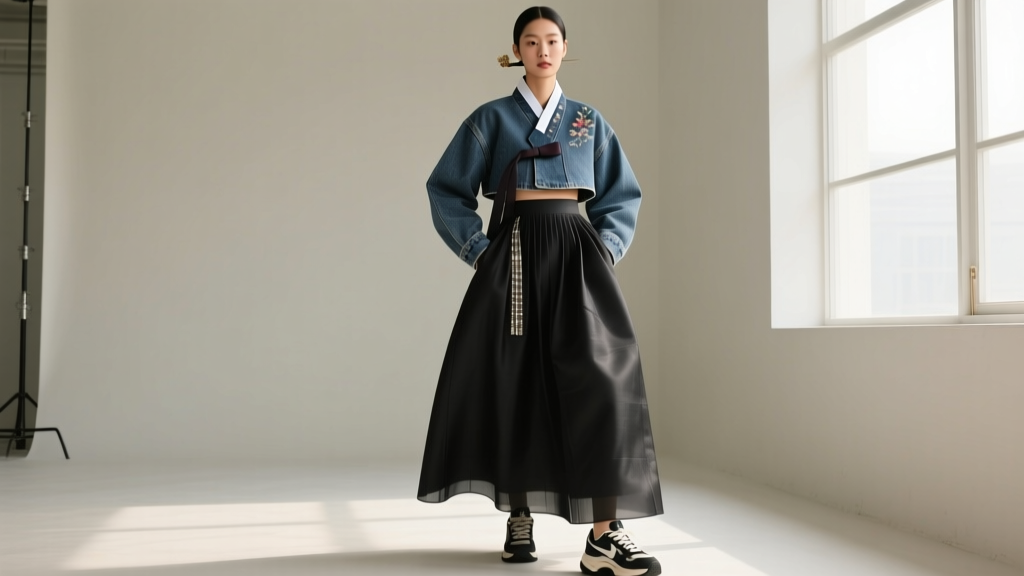
- Hanfu Yuansu (Hanfu Elements): These are modern fashion items inspired by historical aesthetics but constructed using Western 3D tailoring, zippers, and synthetic polyester blends. While affordable ($30 - $80 USD), they lack the structural drape and cultural authenticity of true flat-cut garments.
- Custom Artisan Commissions: For museum-quality replicas utilizing specific historical weaves like Zhuanghua (woven gold) or authentic Luo gauze, buyers must commission directly from master weavers in Suzhou or Nanjing. Lead times often exceed six months, with prices starting at $1,500 USD.
Preserving the Thread
The revival of Hanfu is not just a fashion trend; it is a reclamation of indigenous textile knowledge. By understanding the deep linguistic roots of Hanfu in Chinese and recognizing the staggering technical mastery required to weave Kesi or construct a flat-cut Shenyi, we elevate these garments from mere costumes to masterpieces of human engineering. Supporting artisan cooperatives and prioritizing natural, traditionally woven fibers ensures that the loom of antiquity continues to weave its legacy into the future.