Hanfu China: Regional Variations and Historical Substyles

The Living Tapestry of Hanfu China
The resurgence of traditional Han Chinese clothing, known globally as the Hanfu Yundong (Hanfu Movement), has transformed historical dress from museum relics into a vibrant, living wardrobe. When enthusiasts and scholars discuss hanfu china, they are not referring to a single, monolithic garment. Instead, they are referencing a complex, evolving sartorial system that spans over three millennia. From the sweeping sleeves of the Tang Dynasty to the structured elegance of the Ming, Hanfu is deeply intertwined with China’s diverse geography, climate variations, and philosophical shifts.
To truly understand and wear Hanfu with cultural respect, one must look beyond modern costume interpretations and examine the regional variations and historical substyles that define this rich tradition. According to textile archives at the China National Silk Museum, the evolution of these garments was heavily dictated by local sericulture, regional trade routes, and the distinct climatic needs of Northern versus Southern China.
How Climate and Geography Shaped Silhouettes
China’s vast topography necessitated distinct regional adaptations in traditional dress. In the Northern plains (such as Shandong and Hebei), where winters are harsh and winds are biting, historical Hanfu prioritized thermal retention and modesty. Garments here frequently featured layered ao (padded jackets), high collars, and heavy brocades woven with wool blends or thick mulberry silk. The silhouettes were generally more structured, utilizing stiff fabrics to block the wind.
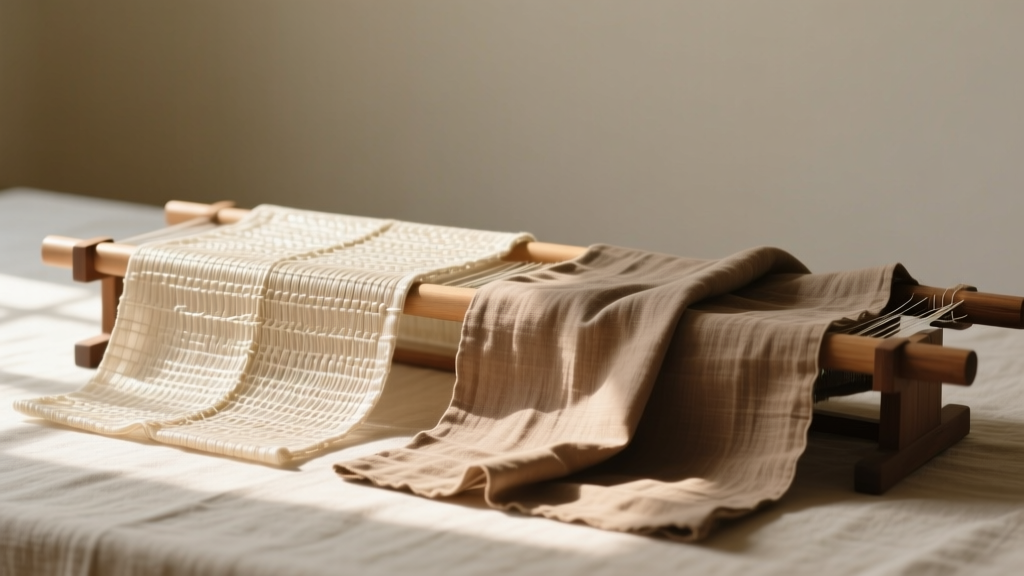
Conversely, in the Southern regions (like Jiangnan, Guangdong, and Fujian), the humid, subtropical climate demanded breathability and fluidity. Southern artisans mastered the creation of Luo (gauze) and Sha (crepe) silks. A prime example of Southern regional mastery is Xiangyunsha (Gambiered Canton Gauze), a premium fabric originating from the Pearl River Delta. Dyed using the tannin-rich juice of the shulang yam and coated in iron-rich river mud, this fabric is naturally cooling, water-resistant, and produces a distinctive rustling sound when worn. Today, authentic Xiangyunsha remains one of the most sought-after and expensive materials for high-end summer Hanfu.
Decoding Major Hanfu Substyles by Historical Era
Modern Hanfu is broadly categorized by the dynasty from which its aesthetic and structural rules are derived. Each era offers a distinct substyle with unique construction methods.
Tang Dynasty (618–907 AD): The Cosmopolitan Silhouette
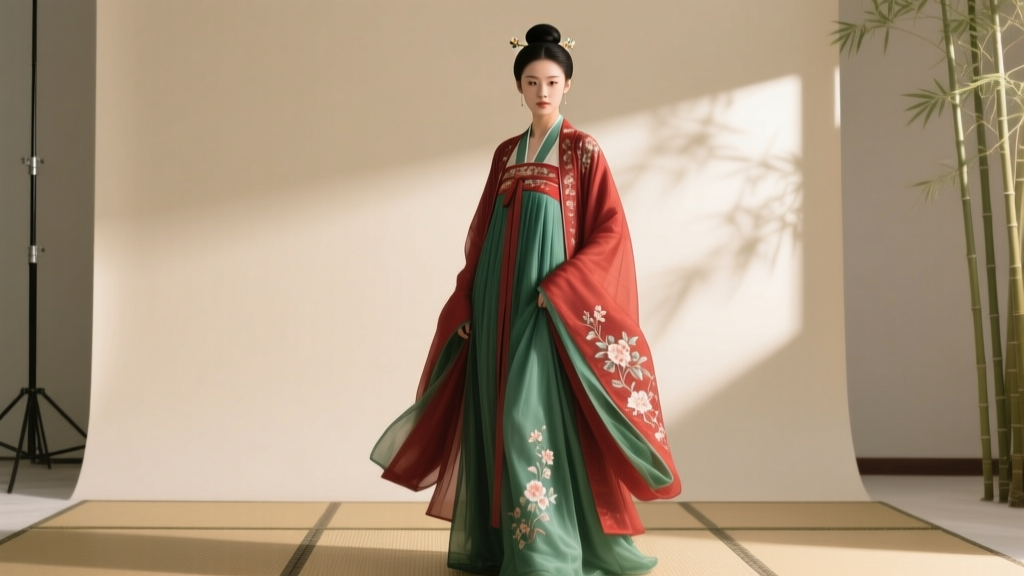
The Tang era represents a golden age of cosmopolitan exchange along the Silk Road. Tang-style Hanfu is characterized by its boldness, vibrant colors, and relaxed fit. The defining garment for women is the Qixiong Ruqun, a chest-high skirt tied above the bust, often paired with a Banbi (half-sleeve jacket) and a Pibo (a long, flowing silk stole draped over the arms). As noted in the Asian textile collections at the Metropolitan Museum of Art, Tang textiles frequently featured large, roundel motifs influenced by Sogdian and Persian weavers, utilizing bright crimsons, golds, and jade greens.
Song Dynasty (960–1279 AD): Minimalism and the Southern Scholar
Shifting away from Tang extravagance, the Song Dynasty embraced neo-Confucian ideals of restraint, intellect, and understated elegance. The Song silhouette is slender, elongated, and highly layered. The quintessential garment is the Beizi, a parallel-collar overcoat with side slits that falls below the knee, worn over a Moxiong (tube top) and a Baizhe Qun (hundred-pleat skirt). Song substyles heavily utilize muted, nature-inspired palettes—celadon, pearl white, and pale lotus pink—and favor intricate, subtle embroidery over bold patterns.
Ming Dynasty (1368–1644 AD): Structure, Modesty, and the Mamianqun
Ming Dynasty Hanfu is arguably the most popular substyle among modern practitioners due to its structural clarity and resemblance to contemporary modest fashion. The hallmark of Ming dress is the Aoqun (a long jacket worn over a skirt). The most iconic component is the Mamianqun (horse-face skirt). Constructed from two overlapping trapezoidal panels, the Mamianqun features flat, decorated front and back panels (qunmen) flanked by deep, knife-like side pleats. This ingenious construction allows for ease of movement while maintaining a dignified, columnar shape when standing still. Ming garments also frequently utilize Zhijin (gold-woven) brocades and feature the Pifeng, a dramatic, wide-sleeved cape.
Modern Regional Hubs: Where to Experience Hanfu Today
The modern Hanfu movement has developed distinct regional flavors across China’s major cultural hubs:
- Xi’an (Shaanxi): As the ancient capital of Chang'an, Xi'an is the epicenter for Tang Dynasty revival. It is common to see locals and tourists wearing grand, sweeping Qixiong Ruqun while walking the ancient City Wall or visiting the Datang Everbright City at night.
- Hangzhou (Zhejiang): Known as China's silk capital, Hangzhou leans heavily into the refined, literati aesthetics of the Song and Ming dynasties. The styling here is often more subdued, focusing on premium silk fabrics and delicate hairpin arrangements.
- Chengdu (Sichuan): Chengdu represents the avant-garde and everyday-wear faction of the Hanfu movement. The city's relaxed culture has fostered a substyle where traditional garments are mixed with modern accessories, and lighter, breathable fabrics are favored for year-round street wear.
Comparative Guide: Hanfu Substyles, Fabrics, and Pricing
For collectors and newcomers looking to invest in authentic garments, understanding the market tiers and regional fabric associations is crucial. The following table outlines the core characteristics and current market pricing for major Hanfu substyles.
| Substyle / Era | Core Garments | Regional / Climate Tie | Average Price Range (USD) |
|---|---|---|---|
| Tang Dynasty | Qixiong Ruqun, Banbi, Pibo | Northwest / Silk Road (Heavy silks, bold brocades) | $40 – $150 |
| Song Dynasty | Beizi, Moxiong, Baizhe Qun | Jiangnan / South (Lightweight gauze, subtle embroidery) | $50 – $200 |
| Ming Dynasty | Ao, Mamianqun, Pifeng | Northern & Central (Structured cottons, Zhijin brocade) | $70 – $350+ |
| Wei-Jin Period | Jiao Ling Ruqun, wide sleeves | Transitional / River Valleys (Flowing linens, raw silks) | $35 – $120 |
Note: Prices reflect mid-tier artisan brands. Mass-market entry-level sets can be found for $20-$40, while bespoke, museum-grade reproductions utilizing heritage looms can exceed $1,000.
Sourcing Authentic Hanfu: Artisan Cooperatives and Brands
The market for Hanfu has exploded, but quality varies drastically. When sourcing authentic pieces, buyers should look for brands that prioritize historical accuracy in pattern cutting and fabric composition. Renowned brands like Minghuatang are celebrated for their meticulous Ming Dynasty reproductions, often studying extant artifacts housed in institutions like the Smithsonian National Museum of Asian Art to replicate the exact weave structures and collar proportions.
For those seeking Southern specialty fabrics, sourcing directly from artisan cooperatives in Guangdong that produce heritage Xiangyunsha is highly recommended. True Gambiered Canton Gauze requires months of sun-drying and mud-coating, meaning authentic pieces carry a premium price tag but offer unparalleled longevity and breathability. Always check the fabric composition tags; authentic Hanfu should utilize natural fibers like mulberry silk, linen, ramie, or high-quality cotton, avoiding the synthetic sheen of cheap polyester.
Cultural Protocols for Wearing Hanfu
Wearing Hanfu is not merely an aesthetic choice; it is an engagement with traditional Chinese etiquette and philosophy. The most fundamental rule of Hanfu construction is Jiao Ling You Ren (cross collar, right lapel). The left side of the collar must always cross over and cover the right side. In traditional Chinese philosophy, the left represents Yang (life, light, and the living), while the right represents Yin (death, darkness, and the spirit world). Reversing this collar (Zuo Ren) is strictly reserved for dressing the deceased for burial and is considered highly inauspicious in daily life.
Furthermore, color symbolism remains relevant. While modern wearers are free to choose any palette, traditional protocols dictate avoiding all-white or all-black ensembles for festive occasions, as these are historically associated with mourning and funerals. Vibrant reds, golds, and deep blues are preferred for weddings, Lunar New Year, and coming-of-age ceremonies (Guan Li and Ji Li).
Finally, Hanfu is traditionally paired with specific updos and hair accessories such as Zan (single-prong hairpins) and Buyao (step-shake hairpins with swaying tassels). Leaving hair completely loose and unkempt is historically inaccurate for adults; even a simple half-updo secured with a wooden or jade hair stick honors the traditional aesthetic and maintains the dignity of the garment.