Hanfu Beginner Guide to Chinese Dress
Defining the Hanfu: More Than Just Ancient Chinese Clothing
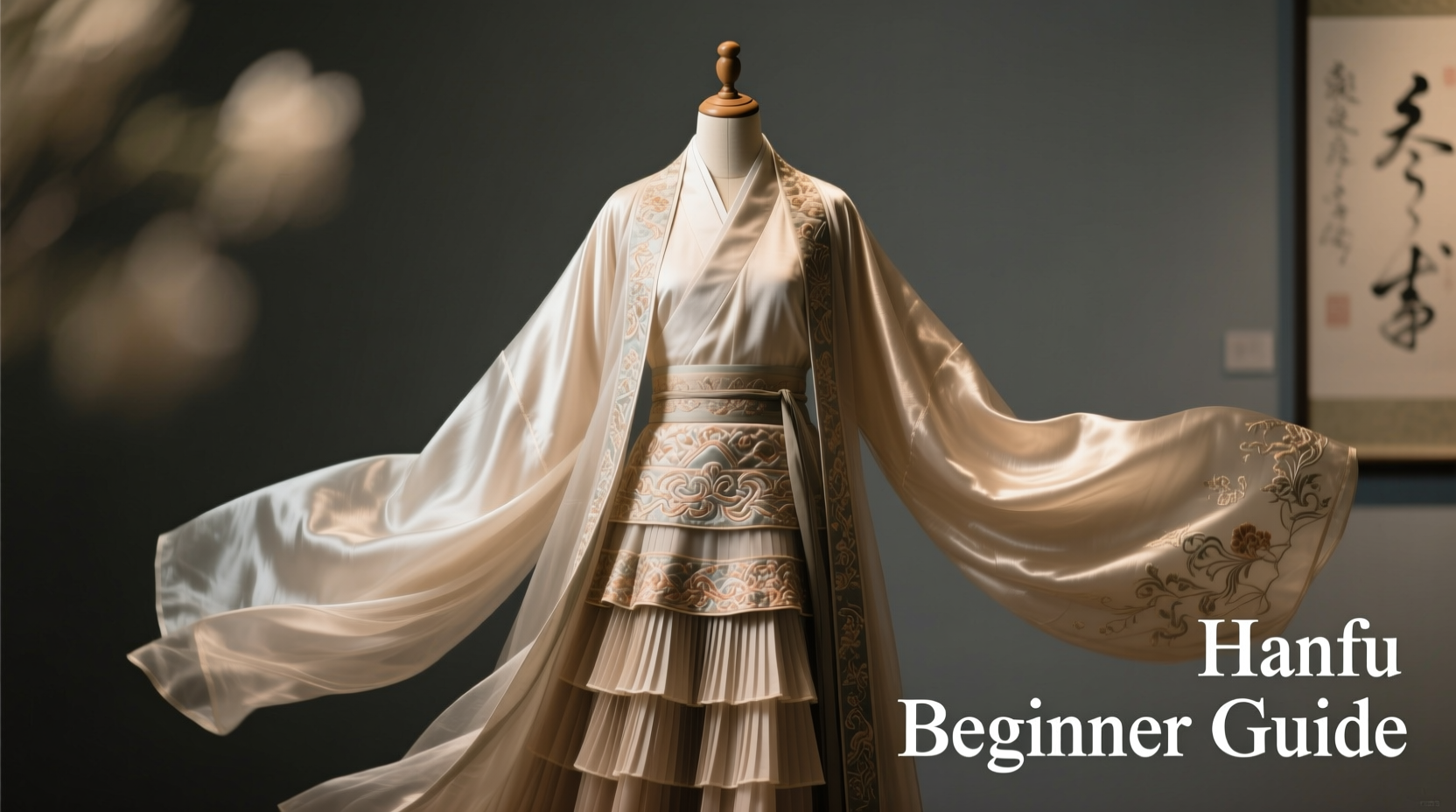
When exploring the rich tapestry of Asian traditional garments, one of the most common questions newcomers and cultural enthusiasts ask is: what is a hanfu? Literally translating to 'Han clothing,' hanfu (汉服) refers to the historical, pre-modern dress of the Han Chinese people. It is not a single, monolithic uniform, but rather a complex, evolving sartorial system that spans over three millennia. From the mythical Yellow Emperor to the twilight of the Ming Dynasty, hanfu served as a visual language denoting social status, philosophical alignment, and cultural identity.
Unlike the Manchu-influenced qipao or tang suit, which became globally recognized in the 20th century, hanfu represents the indigenous clothing traditions of the Han majority. Today, it is experiencing a massive global renaissance, worn not as a costume, but as a living expression of cultural heritage.
The Core Philosophy: Jiaoling Youren
To truly understand what a hanfu is, one must understand its foundational geometry. The most defining characteristic of traditional hanfu is jiaoling youren (交领右衽), which translates to 'intersecting collar with the right lapel.' In this construction, the left side of the garment crosses over the right side, securing at the waist.
This is not merely an aesthetic choice; it is deeply rooted in Chinese cosmology. The left side represents yang (life, light, and culture), while the right represents yin (death, darkness, and nature). By wrapping the left over the right, the wearer symbolically upholds the triumph of civilization and life. Reversing this (left lapel) was historically strictly reserved for dressing the deceased for burial. Understanding this protocol is vital for anyone looking to wear hanfu respectfully today.
Anatomy of the Garment: Essential Components Explained
Hanfu is rarely a single piece of clothing. It is a layered system composed of distinct structural elements. Here are the primary categories you will encounter:
1. The Ruqun (襦裙): Jacket and Skirt
The ruqun is one of the oldest and most enduring hanfu silhouettes, consisting of a top garment (ru) and a wrap-around skirt (qun). It is primarily worn by women, though historical variations exist for men. The skirt is typically secured with long, flowing sashes rather than buttons or zippers. Variations include the qiyao ruqun (waist-high skirt) and the iconic qixiong ruqun (chest-high skirt), which became wildly popular during the Tang Dynasty.
2. The Shenyi (深衣): The Deep Robe
Translating to 'deep clothing,' the shenyi is a full-body robe that connects the upper and lower garments into a single, unified piece. It was heavily favored by scholars and officials during the Han and Song dynasties. The shenyi is cut from multiple panels of fabric, adhering to strict mathematical proportions outlined in ancient texts like the Book of Rites, symbolizing moral integrity and cosmic order.
3. The Mamianqun (马面裙): The Horse-Face Skirt
A staple of the Ming Dynasty and a massive trend in modern hanfu fashion, the mamianqun features flat, unpleated front and back panels (the 'horse faces') with heavily pleated sides. This ingenious construction allows for ease of movement—originally designed for horseback riding—while maintaining a structured, dignified drape when standing still.
A Journey Through Dynasties: How Silhouettes Shifted
Because 'hanfu' covers thousands of years of history, the style shifts dramatically depending on the era. Recognizing these dynastic differences is key to building an authentic wardrobe.
- Wei & Jin (220–420 AD): Characterized by wide, flowing sleeves, open collars, and a romantic, ethereal aesthetic favored by scholars and poets seeking freedom from rigid court protocols.
- Tang (618–907 AD): An era of immense wealth and cosmopolitan exchange. Tang hanfu features vibrant colors, bold patterns, and the qixiong ruqun, which accentuates the silhouette with high-waisted skirts and sheer, draped shawls (pibo).
- Song (960–1279 AD): A sharp turn toward minimalism and intellectual restraint. Song garments favor slender silhouettes, muted pastel or earthy tones, and the beizi, a long, open-front jacket worn over a skirt or trousers.
- Ming (1368–1644 AD): Known for its structured, layered, and dignified aesthetics. The Ming era introduced the widespread use of the mamianqun, standing collars, and intricate woven brocades.
Modern Hanfu Revival: Sourcing and Styling Today
The modern Hanfu Movement (Hanfu Yundong) began in the early 2000s, sparked by citizens like Wang Letian who began wearing historical garments in public spaces to reclaim cultural identity. Today, it is a multi-billion-dollar industry. But where do you start, and what should you expect to pay?
Where to Buy and Price Expectations
Authentic hanfu is primarily sourced through specialized e-commerce platforms like Taobao, or via international boutique retailers that cater to the diaspora. Below is a guide to what you can expect when purchasing your first set.
| Dynasty / Era | Defining Silhouette | Key Garment | Avg. Price Range (USD) |
|---|---|---|---|
| Tang (618–907) | Voluminous, high-waisted, vibrant | Qixiong Ruqun | $45 – $120 |
| Song (960–1279) | Slender, minimalist, understated | Beizi (Long Jacket) | $60 – $150 |
| Ming (1368–1644) | Structured, layered, dignified | Aoqun & Mamianqun | $80 – $300+ |
| Artisan / Custom | Historical reproduction, luxury | Xiangyunsha Silk Sets | $400 – $1,200+ |
Note: Prices vary based on fabric composition. Mass-produced polyester sets are affordable but lack breathability. For authentic wear, seek out raw silk, linen, or ramie.
The Art of the Sash: Tying it Together
Traditional hanfu rarely uses buttons, hooks, or zippers. Instead, garments are secured using fabric ties (jiedai) and wide sashes. The act of tying the sash is a meditative process. The primary waist sash should be tied securely but comfortably, with the ends draped elegantly. For beginners, purchasing a set that includes pre-sewn pleats and hidden modern clasps inside the skirt can make the learning curve much less intimidating while maintaining a historically accurate outward appearance.
Fabric and Material: Beyond Basic Silk
While silk is the most famous Chinese textile, historical hanfu utilized a wide array of materials based on class and climate. Summer garments were frequently made from xiabu (ramie), a highly breathable, stiff linen-like fabric that holds pleats beautifully. For luxury garments, Xiangyunsha (gambiered Canton gauze) is considered the pinnacle of Ming and Qing-era textiles. This intangible cultural heritage fabric is dyed using the juice of the Dioscorea cirrhosa root and coated with iron-rich river mud, resulting in a dark, rustling, water-resistant silk that sounds like rain when the wearer walks.
Authoritative Resources for Further Study
To deepen your understanding of what a hanfu is and its historical context, we recommend consulting the archives of leading cultural institutions. These resources provide invaluable visual references for dynastic cuts, weaving techniques, and color palettes:
- The Metropolitan Museum of Art's Heilbrunn Timeline: Offers exceptional academic overviews of Chinese dress, particularly the evolution of silk and court robes.
- China National Silk Museum: Located in Hangzhou, their digital archives provide high-resolution imagery of excavated textiles, detailing the exact weave structures used in historical hanfu.
- Victoria and Albert Museum's Asian Collections: Features extensive catalogs of Ming and Qing dynasty garments, offering insight into the transition from traditional Han tailoring to later imperial styles.
Final Thoughts on Wearing Hanfu
Understanding what a hanfu is goes far beyond memorizing vocabulary; it is an invitation to engage with a living, breathing philosophy of aesthetics and etiquette. Whether you are donning a lightweight Song dynasty beizi for a summer tea ceremony or wrapping yourself in a structured Ming mamianqun for a winter festival, wearing hanfu is a profound way to connect with the artistry and enduring legacy of traditional Chinese culture.