Hanbok vs Hanfu: East Asian Dress Guide

When exploring the rich tapestry of Asian traditional garments, Western observers and fashion enthusiasts often conflate the distinct sartorial heritages of East Asia. The hanbok vs hanfu comparison is one of the most common points of confusion. While both represent the zenith of their respective cultural dress codes, China’s Hanfu and Korea’s Hanbok are born from entirely different historical lineages, philosophies of construction, and climatic adaptations. This historical and cultural guide deconstructs the architecture, symbolism, and modern revival of both garments, offering a deep dive for collectors, historians, and respectful wearers.
Tracing the Roots: Divergent Lineages of East Asian Dress
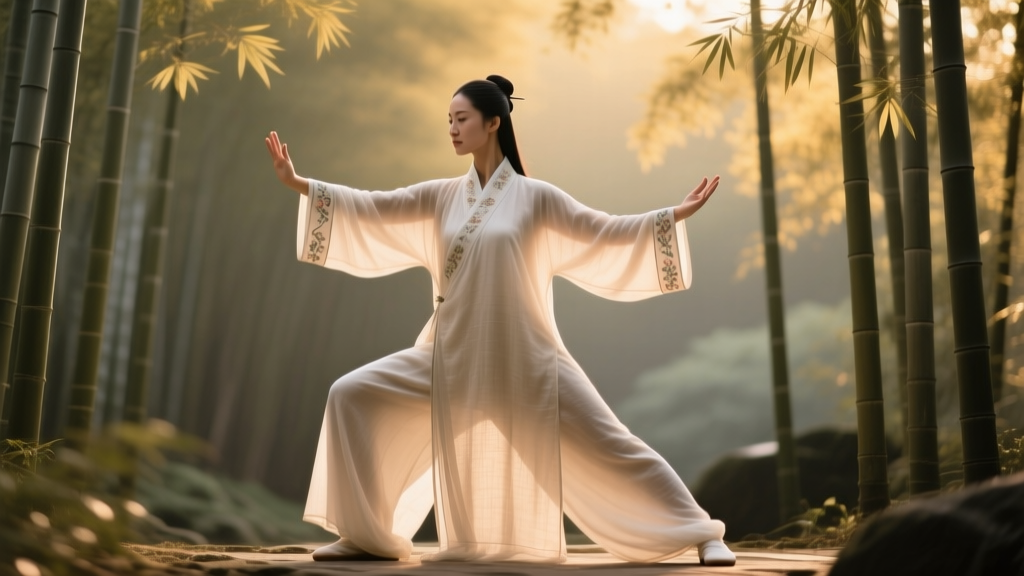
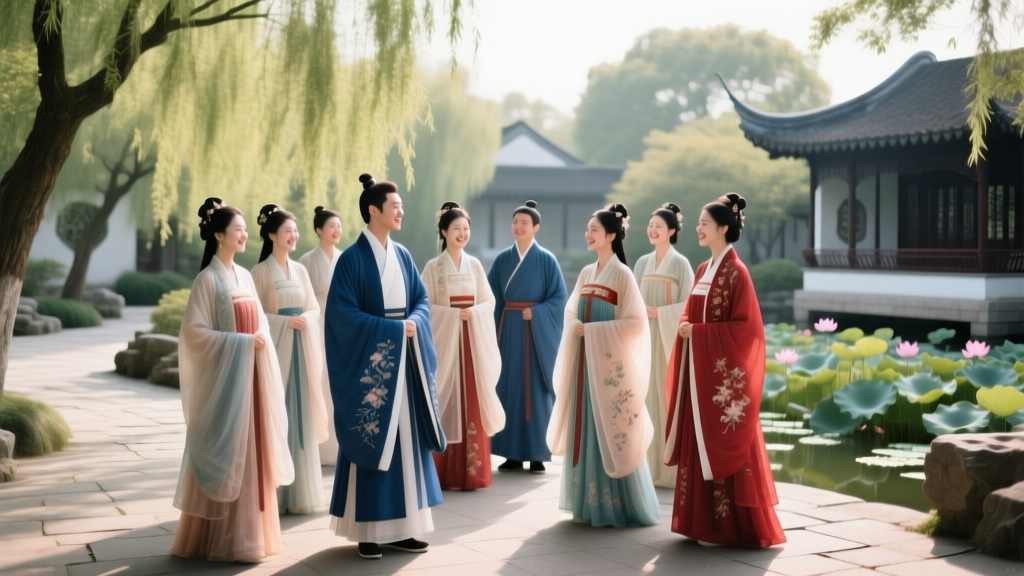
To understand the hanbok vs hanfu distinction, we must look back millennia. Hanfu (汉服), literally meaning 'Han clothing,' traces its origins to the Shang Dynasty (c. 1600–1046 BCE). It evolved over three millennia, heavily influenced by Confucian philosophy, Daoist naturalism, and the strict sumptuary laws of various imperial courts. Hanfu represents the continuous sartorial tradition of the Han Chinese people, characterized by its fluid drape and integration with the natural environment.
Conversely, the Hanbok (한복) of Korea is rooted in the indigenous Scythian-Siberian nomadic traditions of the Eurasian steppes. While it absorbed influences from Chinese Tang Dynasty court dress and Mongolian Empire fashions during the Goryeo period, the foundational structure of the Hanbok—specifically the two-piece ensemble of a top and bottom—was established during the Three Kingdoms period (57 BCE – 668 CE). As documented by the National Folk Museum of Korea, the Hanbok was designed for mobility and the harsh, distinct seasons of the Korean peninsula, prioritizing volume and insulation over the flowing, ground-dragging elegance of Chinese court wear.
Silhouette and Construction: The Architecture of Tradition
The most striking differences between the two garments lie in their pattern-making and structural geometry.
Hanfu: The Philosophy of Flat-Pattern Cutting
Hanfu is constructed using a flat-pattern cutting method that wastes almost no fabric. The fabric is cut in straight lines and folded, relying on the human body to give the garment its three-dimensional shape. The defining feature of Hanfu is the jiaoling youren (交领右衽)—the cross-collar that always wraps left over right. This right-lapel tradition is deeply tied to Confucian concepts of civilization and life; wrapping right over left (zuoren) was historically reserved for the deceased or considered 'barbarian' dress. Key silhouettes include the Ruqun (a short top and high-waisted skirt) and the Shenyi (a deep, full-body robe connecting top and bottom).
Hanbok: Volume, Curves, and the Scythian Influence
Hanbok construction is inherently three-dimensional and volumetric. The female silhouette is defined by the Jeogori (a short, cropped jacket) and the Chima (a full, bell-shaped wrap skirt tied high above the bust). Unlike the flat sleeves of Hanfu, the Hanbok sleeve features a distinct, sweeping curve called the Baerae (배래), modeled after the gentle curve of a traditional Korean roof eave. Furthermore, the Hanbok jacket is secured not by a sash, but by the Ot-goreum (옷고름), a long, asymmetrical ribbon tied into a specific, elegant knot, while the crisp white Dongjeong collar frames the face and provides a stark visual contrast.
Comparative Breakdown: Hanbok vs Hanfu at a Glance
| Feature | Hanfu (China) | Hanbok (Korea) |
|---|---|---|
| Primary Silhouette | Flowing, A-line, floor-length robes or high-waisted skirts | Bell-shaped, voluminous skirts with cropped, structured jackets |
| Collar Style | Cross-collar (left over right), round collar, or standing collar | V-neck cross-collar with a removable white inner collar (Dongjeong) |
| Fastening Method | Fabric ties (Yingluo), sashes, or jade toggles | Long asymmetrical ribbon knot (Ot-goreum) and hidden inner ties |
| Sleeve Construction | Straight, wide, or琵琶 (pipa) shaped sleeves | Curved Baerae sleeves mimicking architectural eaves |
| Historical Footwear | Cloud-toe silk slippers, wooden clogs | Kkotsin (silk shoes with floral embroidery), wooden shoes |
Textiles, Motifs, and Color Symbolism
Fabric choice in both traditions was historically dictated by class, season, and the intricate dyeing technologies of the era. According to the China National Silk Museum, Hanfu relies heavily on the luxurious drape of silk, damask, and brocade. Motifs are deeply symbolic: dragons and phoenixes denote imperial power, while peonies represent wealth, and plum blossoms signify resilience. The colors of Hanfu were strictly regulated by dynasty-specific sumptuary laws, with bright yellow and dragon motifs reserved exclusively for the Emperor.
Hanbok textiles, however, had to adapt to Korea's humid summers and freezing winters. Summer Hanbok is famously crafted from Mosi (ramie), a painstakingly woven, semi-transparent plant fiber that is incredibly breathable and crisp. Winter Hanbok utilizes padded silk and cotton. Korean color symbolism is governed by the Obangsaek theory (the five cardinal colors: blue, red, yellow, white, and black). A classic example is the Saekdong Jeogori, a color-striped jacket worn by children to ward off evil spirits and ensure longevity, a stark contrast to the more monochromatic, gradient-dyed elegance of Chinese literati robes.
The Modern Revival: Buying, Pricing, and Wearing Today
Both garments are experiencing massive cultural revivals, though their modern markets operate differently. The Hanfu Movement (Hanfu Yundong) has transformed the garment from a historical relic into everyday streetwear for Chinese youth. You can purchase entry-level, mass-produced Hanfu sets (often polyester-cotton blends) on platforms like Taobao or specialized global retailers for $40 to $90 USD. For authentic, historically accurate Ming or Song dynasty reproductions utilizing real silk brocade and hand-embroidery, expect to pay between $300 and $800+ USD from specialized artisan workshops.
In South Korea, the Hanbok revival is heavily tied to cultural tourism and formal life milestones. While daily modernized Hanbok (Saenghwal Hanbok) exists, the traditional market is dominated by bespoke tailors and high-end rentals. Renting a high-quality Hanbok in Seoul for a day typically costs $15 to $35 USD. However, commissioning a custom, hand-woven silk Hanbok from a master artisan in the Insadong district will easily range from $800 to over $2,500 USD, reflecting the intense labor required for the Ot-goreum and hand-stitched Baerae curves.
Cultural Protocols: Respectful Styling and Etiquette
Wearing these garments requires an understanding of cultural protocols to avoid inadvertent disrespect. For Hanfu, the left-over-right lapel rule is non-negotiable for the living. Wearing it right-over-left is a profound cultural taboo, as it signifies mourning or death. Additionally, Hanfu should be worn with appropriate under-layers (Zhongyi) to ensure the outer silk does not cling improperly, and hemlines should be managed gracefully to avoid dragging in mud, reflecting the Confucian ideal of personal dignity.
For Hanbok, the etiquette revolves around the preservation of the silhouette and the Ot-goreum. The ribbon must be tied correctly, with the long end flowing over the short end, and it should never be allowed to drag on the ground. When sitting in a Hanbok, women are taught to gracefully gather the voluminous Chima skirt to the side to maintain modesty and prevent crushing the stiff ramie or silk. The Victoria and Albert Museum's Asian collections frequently highlights how the preservation of these intangible styling techniques is just as vital as preserving the physical textiles themselves.
Ultimately, the hanbok vs hanfu discussion is not about which garment is superior, but rather an appreciation of how two neighboring civilizations developed radically different sartorial solutions to express identity, philosophy, and beauty. Whether you are studying the flat-cut elegance of a Ming Dynasty Shenyi or the sweeping, architectural curves of a Joseon Dynasty Chima, both garments stand as masterclasses in the art of cultural dress.