Han Dynasty Hanfu Occasion Guide

The Renaissance of Han Dynasty Elegance
The Han Dynasty (202 BCE – 220 CE) represents a foundational era in Chinese history, yielding profound advancements in philosophy, statecraft, and textile arts. Today, the global Hanfu movement has sparked a profound revival of Han Dynasty hanfu, moving beyond mere historical reenactment into a living, breathing sartorial tradition. Unlike the voluminous, high-waisted silhouettes of the subsequent Tang Dynasty or the structured, horse-face skirts of the Ming, Han Dynasty clothing is characterized by its fluid drape, profound symbolism, and elegant restraint. For modern wearers attending cultural festivals, traditional weddings, tea ceremonies, or academic conferences, selecting the correct Han Dynasty garment requires an understanding of historical construction, fabric composition, and cultural etiquette.
The Architecture of Han Silhouettes: Shenyi and Beyond
To dress appropriately for an event, one must first understand the structural vocabulary of Han Dynasty clothing. The era's sartorial landscape was dominated by the Shenyi (深衣), a deep robe that connected the upper and lower garments into a single, unified piece, symbolizing the harmony of heaven and earth.
Quju (Curved-Hem Robe)
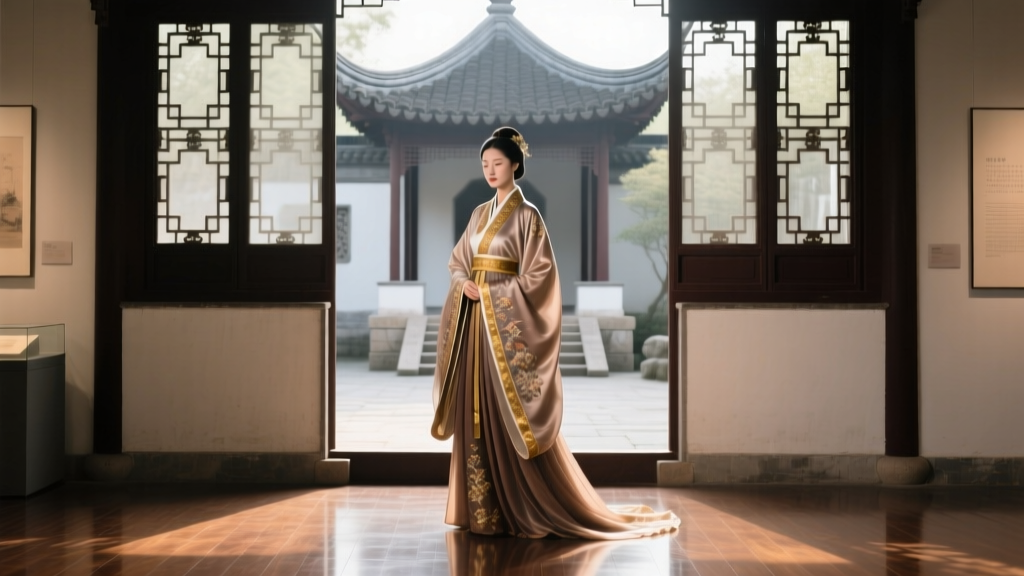
The Quju (曲裾) is perhaps the most iconic and formal silhouette of the Western Han period. Characterized by a hemline that wraps diagonally around the body in a spiral, it creates a striking, layered effect at the back and sides. The wrapping layers (often edged in contrasting silk brocade) denote high formality. According to textile artifacts preserved in the Hunan Museum from the Mawangdui Han Tombs, these robes were heavily layered and required precise wrapping techniques to maintain modesty and structural integrity.
Zhiju (Straight-Hem Robe)
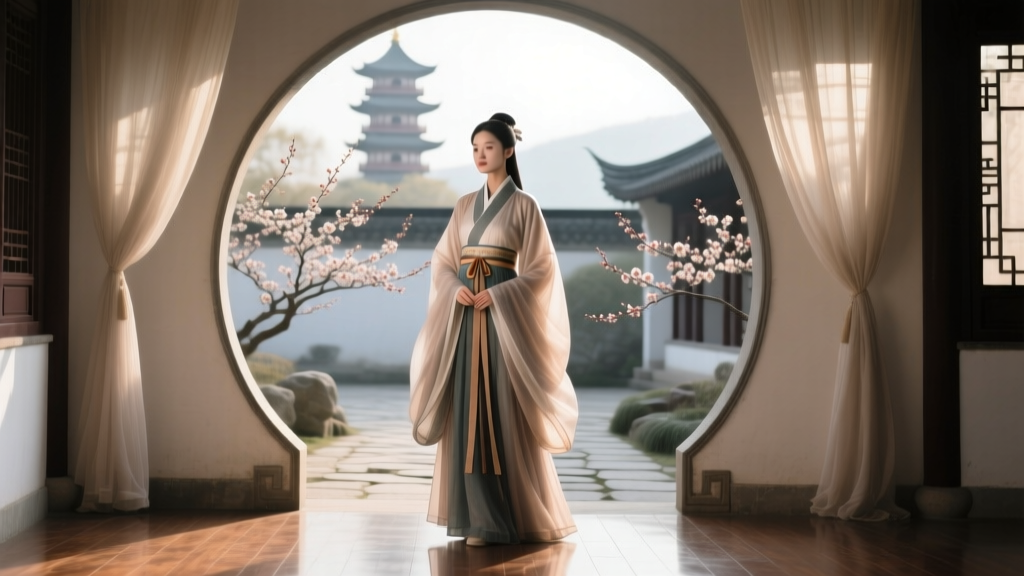
Emerging more prominently in the Eastern Han, the Zhiju (直裾) features a straight, vertical hemline. It is less restrictive than the Quju and was widely worn by both men and women of the scholarly and official classes. It is an excellent choice for modern events requiring mobility, such as outdoor lantern festivals or historical symposiums.
Ruqun and Shuhe
While the Ruqun (襦裙 - a short jacket paired with a long skirt) became more dominant in later dynasties, early Han iterations existed, primarily for women in domestic or less formal settings. Conversely, Shuhe (裋褐), a short tunic worn with trousers, was the daily wear of laborers and commoners. Today, Shuhe is occasionally worn at martial arts demonstrations or rustic, agrarian-themed cultural retreats.
The Event Matrix: Matching Garment to Gathering
Selecting the appropriate Han Dynasty hanfu depends heavily on the formality and nature of your event. Use the matrix below to guide your sartorial choices for 2026's cultural calendar.
| Event Type | Recommended Silhouette | Ideal Fabric & Color Palette | Formality |
|---|---|---|---|
| Traditional Wedding (Bride/Groom) | Quju (Women) / Xuanduan (Men) | Heavy Mulberry Silk, Brocade. Crimson, Black, Gold. | Ultra-Formal |
| Tea Ceremony / Guqin Recital | Zhiju (Straight-hem Shenyi) | Lightweight Silk Gauze, Ramie. Celadon, Ink Blue, Ivory. | Formal / Semi-Formal |
| Hanfu Festival / Parade | Quju or Layered Ruqun | Patterned Silk, Cotton Blends. Vibrant Wuxing colors. | Semi-Formal / Festive |
| Historical Reenactment / Archery | Shuhe (Tunic & Trousers) | Hemp, Heavy Cotton, Ramie. Earth tones, Ochre, Brown. | Casual / Active |
| Ancestral Veneration / Qingming | Zhiju (Unadorned) | Plain Silk or Ramie. Muted White, Slate, Navy. | Solemn / Ritual |
Color Theory and the Five Elements (Wuxing)
When curating a Han Dynasty ensemble, color is never arbitrary. The Han court strictly adhered to Wuxing (Five Elements) cosmology, which correlated colors with elements, seasons, and directions. Understanding this adds a layer of profound cultural resonance to your event attire.
- Black (Water / North / Winter): Considered a supreme color in the early Han Dynasty (which initially claimed the Water element). Highly appropriate for formal evening events or winter solstice gatherings.
- Red (Fire / South / Summer): Symbolizing vitality and joy. Essential for weddings, Lunar New Year celebrations, and coming-of-age ceremonies (Guanli for men, Jili for women).
- Yellow (Earth / Center): Historically reserved for the Emperor and high nobility. Modern wearers should use yellow sparingly or as an accent trim to avoid historical misappropriation of imperial prerogative.
- White (Metal / West / Autumn): Associated with purity but also mourning. While beautiful in silk gauze for autumn poetry readings, avoid head-to-toe white for joyous celebrations.
- Green/Blue (Wood / East / Spring): Representing growth and renewal. Perfect for spring festivals, Qingming, and outdoor botanical events.
Sourcing Authentic Han Dynasty Hanfu in 2026
The market for Hanfu has matured significantly, bifurcating into fast-fashion costume wear and historically informed artisanal tailoring. For serious cultural events, invest in garments that respect historical patterning, specifically the use of flat-cutting techniques that minimize fabric waste and rely on the drape of the textile rather than darts and seams.
Price Tiers and Expectations
- Entry-Level ($60 – $130 USD / 400 – 900 CNY): Mass-produced polyester blends. Suitable for casual festivals or first-time buyers. Look for brands that at least maintain the correct collar overlap and sleeve proportions, even if the fabric lacks historical accuracy.
- Mid-Tier Artisan ($180 – $400 USD / 1,200 – 2,800 CNY): The sweet spot for event-goers. These makers use genuine mulberry silk, raw silk noil, or high-grade ramie. Patterns are derived directly from excavated artifacts, such as those documented by the China National Silk Museum. Expect hand-finished hems and accurate brocade trims.
- Custom Couture ($600 – $1,500+ USD / 4,000 – 10,000+ CNY): Bespoke tailoring utilizing traditional wooden loom-woven brocades (Zhuanghua or Shu brocade). Commissioned for high-end weddings or museum-level exhibitions. Lead times often exceed three months.
Essential Etiquette: The Jiaoling Youren Rule
The most critical rule in wearing any era of Hanfu is the collar orientation. Han Dynasty robes feature a Jiaoling Youren (交领右衽) cross-collar, meaning the left lapel must always cross over the right lapel, forming a 'y' shape at the neckline. This was considered the hallmark of civilization and the living. Conversely, crossing the right lapel over the left (Zuoren) was strictly reserved for dressing the deceased for burial, or by nomadic tribes outside the Han cultural sphere. Wearing a robe right-over-left at a cultural event is a severe faux pas, signaling either profound ignorance or ill intent. Always double-check your collar before stepping out.
Completing the Ensemble: Guan, Hair, and Footwear
A Han Dynasty garment is incomplete without its corresponding accessories. As noted in the sartorial histories compiled by The Metropolitan Museum of Art, headwear and footwear were potent markers of social status and ritual propriety.
Headwear and Hairstyling
For men, the wearing of a Guan (cap or crown) was mandatory for formal public appearances. The Jinze (a simple cloth wrap) or the more structured Liang Guan denote scholarly or official status. In modern contexts, men attending formal events should secure their hair in a topknot and fasten it with a jade or wood hairpin, covered by a historically accurate cap. Women's hairstyles in the Han Dynasty were generally more restrained than the towering constructions of the Tang. Hair was typically swept up into a single or double bun at the nape or crown, secured with bone, jade, or gold hairpins (Zan), occasionally adorned with a simple Buyao (dangling step-hairpin) for festive events.
Footwear
Modern wearers often default to generic cloth shoes, but historical accuracy demands Qiaotou (翘头) shoes—slippers with upturned toes. For women, these were often embroidered with auspicious motifs like clouds or lotuses. For men, leather boots or thick-soled cloth shoes with subtle upturned toes are appropriate. Avoid modern athletic sneakers or visible contemporary footwear, as this instantly shatters the visual integrity of the Han Dynasty silhouette.
Final Thoughts on Cultural Stewardship
Wearing Han Dynasty hanfu in 2026 is an act of cultural stewardship. It requires moving beyond the superficial aesthetics of social media trends and engaging deeply with the philosophy, textile history, and ritual propriety of the era. By selecting the correct Shenyi silhouette, respecting the Wuxing color palette, and adhering to the Jiaoling Youren protocol, you honor the artisans of antiquity and contribute to the dignified continuation of one of Asia's most profound sartorial legacies.