Han Chinese Clothing: Regional Substyles

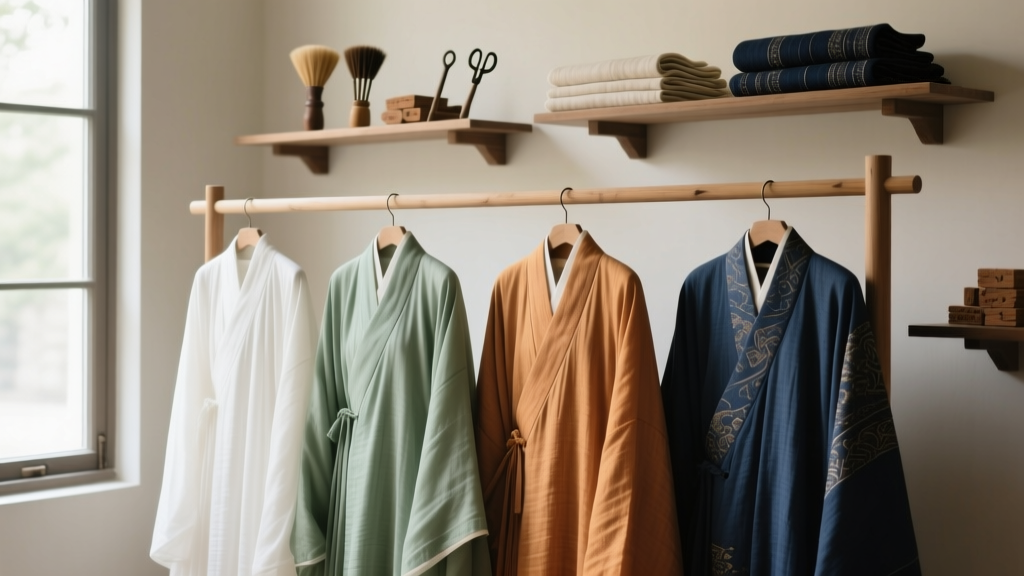
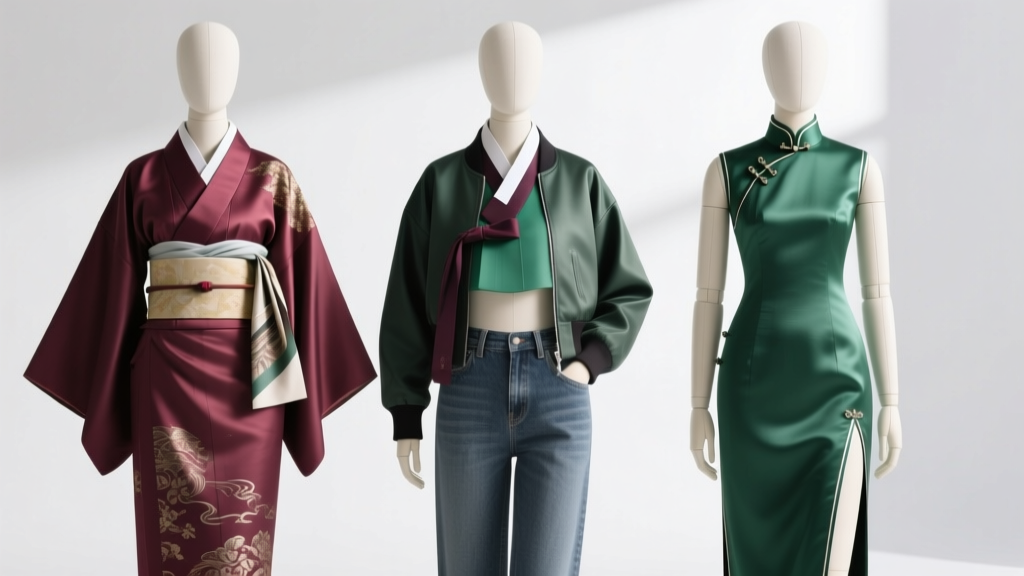
When discussing traditional dress in East Asia, the term Hanfu (汉服) encompasses over three millennia of sartorial evolution. However, treating Han Chinese clothing as a monolith ignores the profound regional variations and substyles dictated by China’s vast geography, diverse climates, and shifting dynastic centers. From the heavy, wind-resistant silhouettes of the northern plains to the gossamer, breathable layers of the southern water towns, Han Chinese clothing is a masterclass in environmental adaptation and cultural expression.
The Geography of Silk and Hemp: Northern vs. Southern Silhouettes
The fundamental construction of Han Chinese clothing relies on flat-cutting (平面裁剪, píngmiàn cáijiǎn). Unlike Western tailoring, which uses darts to conform to the body's three-dimensional curves, traditional Han garments are cut from straight lengths of fabric, creating a flowing, unstructured drape that relies on the wearer's body to give it shape. Yet, how this flat-cutting is applied varies drastically by region.
The Northern Plains: Ming Dynasty Aoqun and the Mamianqun
In the colder, wind-swept provinces of Shandong, Hebei, and Shanxi, the Ming Dynasty (1368–1644) aesthetic remains the most culturally resonant and practically viable. The defining substyle here is the Aoqun (袄裙), a lined or padded jacket paired with a skirt. The centerpiece of northern Han Chinese clothing is the Mamianqun (马面裙), or “horse-face skirt.”
Constructed from two identical overlapping trapezoidal panels, the Mamianqun features flat, unpleated front and back panels (the “horse faces”) with deep, stacked pleats on the sides. This ingenious design allowed for ease of movement—essential for historical equestrian travel and harsh winter winds—while maintaining a modest, structured silhouette. Modern artisans in Cao County, Shandong, have revived this specific regional substyle, utilizing heavy jacquard weaves and wool-blend linings that retail between 300 and 800 RMB ($40–$110 USD).
Jiangnan Water Towns: Song Dynasty Ethereal Elegance
South of the Yangtze River, the humid, subtropical climate of Jiangnan (encompassing Zhejiang and Jiangsu provinces) birthed a radically different sartorial language. The Song Dynasty (960–1279) substyle dominates this region's historical memory, characterized by slender silhouettes, understated colors, and lightweight fabrics.
The quintessential Jiangnan garment is the Beizi (褙子), an open-front outer jacket with side slits extending to the armpit, worn over a narrow pleated skirt or trousers. The side slits provided crucial ventilation in the sweltering southern summers. Artisans in Hangzhou and Suzhou continue to weave the specialized lightweight silks—such as Luo (罗, gauze) and Ling (绫, twill)—required for these garments. Authentic, hand-loomed Song-style Beizi from regional cooperatives are highly prized, often commanding prices from 1,500 to 4,000 RMB ($200–$550 USD) due to the meticulous warp-twisting techniques required to create the breathable gauze.
Substyle Matrix: Comparing Historical Han Chinese Clothing Eras
To understand the regional nuances of Han Chinese clothing, one must map the dominant dynastic aesthetics to their geographical and climatic origins. The following matrix outlines the primary substyles embraced by the modern Hanfu revival movement.
| Dynastic Era | Regional Prominence | Key Garments | Climate Adaptation & Fabric |
|---|---|---|---|
| Tang (618–907) | Central/Northwest (Chang'an) | Qixiong Shanqun (Chest-high skirt), Banbi (Half-sleeve) | Bold, expansive silhouettes; lightweight silks for summer, layered shawls (Pibo) for temperature shifts. |
| Song (960–1279) | Southeast (Jiangnan) | Beizi (Outer jacket), Baixie (Pleated skirt) | Slender, modest cuts; breathable gauze (Luo) and ramie for high humidity and heat. |
| Ming (1368–1644) | North/East (Beijing, Nanjing) | Aoqun (Jacket/Skirt), Mamianqun (Horse-face skirt) | Structured, layered; heavy brocades, padded collars, and wind-resistant overlapping panels. |
Textile Hubs: The Big Three Brocades
The regional identity of Han Chinese clothing is inextricably linked to China's historical textile hubs. The “Big Three” brocades dictate the formality, drape, and regional authenticity of high-end Hanfu.
- Yun Brocade (云锦, Yúnjǐn): Originating in Nanjing, this “cloud brocade” is woven with real gold and silver threads, alongside peacock feather filaments. It is incredibly stiff and heavy, reserved almost exclusively for formal Ming-style ceremonial wear. The Victoria and Albert Museum houses exquisite historical examples that highlight its structural rigidity.
- Shu Brocade (蜀锦, Shǔjǐn): Hailing from Sichuan province, Shu brocade is renowned for its vibrant, high-contrast color palettes and intricate warp-faced weaves. It drapes more fluidly than Yun brocade, making it ideal for Tang and Song substyles.
- Song Brocade (宋锦, Sòngjǐn): Produced in Suzhou, this textile features a softer, more matte finish with subtle, geometric patterns. It is the premier choice for everyday elegance and scholarly garments, reflecting the restrained aesthetic of the Song literati.
For a comprehensive look at the evolution of these weaving techniques, the China National Silk Museum in Hangzhou offers extensive archival data on regional loom technologies.
The Modern Hanfu Movement: Sourcing and Pricing Guide
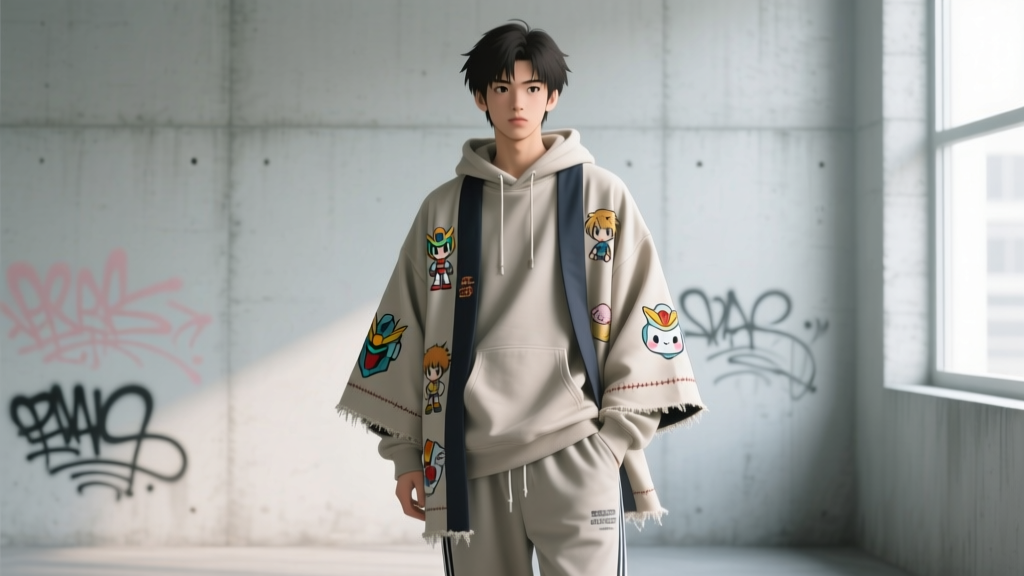
The contemporary Hanfu Movement (汉服运动, Hànfú Yùndòng) has transformed Han Chinese clothing from a historical relic into a living, breathing street fashion. However, navigating the market requires an understanding of regional manufacturing hubs and quality tiers.
Manufacturing Hubs and Price Tiers
- Mass Market (Cao County, Shandong): Cao County produces over 60% of the world's Hanfu. Here, factories utilize polyester blends and digital printing. Prices range from 100 to 300 RMB ($15–$45 USD). While accessible, these garments often lack historical accuracy in collar construction and flat-cutting proportions.
- Mid-Tier Artisans (Guangzhou & Chengdu): Brands in these cities focus on “Hanfu for daily wear” (汉元素, Han elements). They utilize cotton-linen blends and accurate Ming/Song patterns. Expect to pay 400 to 900 RMB ($55–$125 USD).
- Heritage Couture (Suzhou & Nanjing): Custom ateliers utilizing traditional hand-looms, natural plant dyes (like indigo and madder root), and genuine silk. A fully customized, historically accurate Ming dynasty wedding set (Fengguan Xiapei) from a heritage atelier will easily exceed 15,000 RMB ($2,000+ USD).
Cultural Protocols: The Right Lapel and Beyond
When wearing Han Chinese clothing, structural details carry profound philosophical weight. The most critical rule is Jiaoling Youren (交领右衽), meaning “cross-collar, right lapel.” The left side of the garment must always cross over and cover the right side. In traditional Han cosmology, the left represents Yang (life, light, the east), while the right represents Yin (death, darkness, the west). Wrapping the left over the right signifies the triumph of life and order over chaos.
“To wear the left lapel over the right is to dress the living; to reverse it is to dress the deceased or the barbarian.” — Historical Confucian sartorial tenets, as documented in the Smithsonian Asian Art educational archives.
Furthermore, the absence of buttons in early Han Chinese clothing is not a design flaw, but a deliberate feature. Garments were secured with fabric ties (系带, xìdài) and sashes, allowing the clothing to adapt to the wearer's changing body shape over time and ensuring that the flat-cut fabric could be entirely disassembled, washed, and re-woven without damaging structural seams.
Conclusion: A Living Tapestry
Han Chinese clothing is far more than a static museum exhibit; it is a dynamic reflection of China's diverse topography and philosophical heritage. Whether you are drawn to the structured, wind-proof elegance of the northern Mamianqun or the breathable, scholarly grace of the Jiangnan Beizi, understanding these regional substyles is essential for anyone looking to engage with this profound sartorial tradition respectfully and authentically.