The Denim Cheongsam: History, Culture, and Modern Styling
The Genesis of a Sartorial Paradox: Silk Meets Selvedge
The cheongsam (旗袍, qipao) is globally recognized as a symbol of Chinese sartorial elegance, historically synonymous with fluid silk brocades, delicate embroidery, and the cosmopolitan glamour of 1930s Shanghai. Denim, conversely, was born from the rugged utilitarianism of the American working class. The intersection of these two vastly different textiles—the denim cheongsam—represents one of the most fascinating cross-cultural syntheses in modern Asian fashion history. Far from being a mere novelty, the denim qipao is a masterclass in subverting traditional gender and class norms, transforming a garment once reserved for elite banquets into an accessible emblem of contemporary cultural pride.
To understand this fusion, we must look at the evolution of the qipao itself. Emerging in the 1920s as a feminist statement that adapted male scholarly robes for women, the qipao was always a garment of modernity. However, by the late 20th century, it risked becoming fossilized as formal 'costume' wear. The introduction of denim into the cheongsam's lexicon—spearheaded in the 1990s by avant-garde designers and heritage brands experimenting with 'China Chic' (Zhongguo Feng)—stripped the dress of its intimidating formality. It democratized the silhouette, allowing younger generations to reclaim their heritage as everyday streetwear.
Anatomy of the Denim Qipao: Construction and Tailoring Challenges
Translating a garment traditionally crafted from pliable, lightweight silk into a rigid, warp-faced twill weave like denim presents unique challenges for master tailors. The structural integrity of a cheongsam relies on precise flat-pattern cutting, and denim behaves entirely differently under the needle.
The Mandarin Collar (Yuanling) and Darting
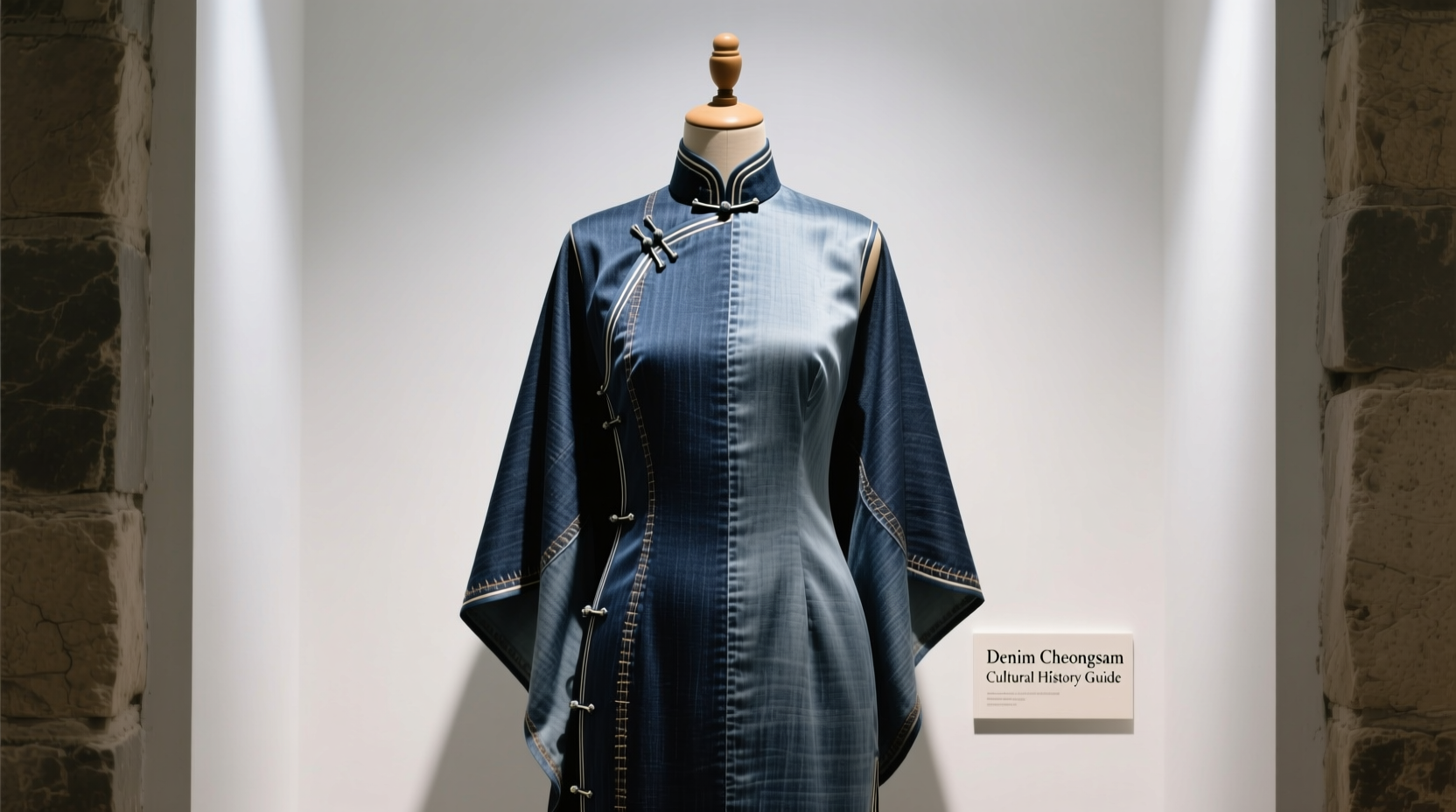
The iconic high Mandarin collar (yuanling) requires a delicate balance of stiffness and comfort. In silk cheongsams, tailors use specialized interfacing to achieve this. In a denim cheongsam, the fabric's natural rigidity—particularly in raw or selvedge denim weighing between 12oz and 16oz—provides excellent structural support. However, unlined raw denim can chafe the neck. Artisans solve this by lining the inner collar with soft cotton or silk bias tape. Furthermore, traditional qipao tailoring relies on minimal Western-style darting, preferring the natural drape of the fabric. Denim lacks this drape, requiring tailors to introduce strategic princess seams and gussets to ensure the garment contours to the body without restricting movement.
The Pankou (Frog Button) Dilemma
The pankou (盘扣), or knotted frog buttons, are the soul of the cheongsam. Traditional silk pankou are entirely too fragile and visually disproportionate when attached to heavy 14oz denim. Contemporary makers of the denim cheongsam have innovated by utilizing heavy-duty brass snap fasteners hidden beneath decorative, oversized cotton-rope knots, or by substituting the pankou entirely with custom-cast metal toggles that echo the industrial heritage of denim workwear while maintaining the visual rhythm of the traditional neckline.
Side Slits (Kaicha) and Selvedge Detailing
The side slits (kaicha) are essential for mobility in a narrow-skirted qipao. Because denim frays aggressively when cut, the slits in a denim cheongsam must be meticulously bound. High-end bespoke makers often utilize the denim's selvedge edge—the tightly woven, self-finished edge of the fabric—as a decorative element along the slits, turning a functional necessity into a hallmark of artisanal quality.
Cultural Evolution: From Shanghai Glamour to Global Streetwear
The cultural resonance of the denim cheongsam extends far beyond its physical construction. In the context of the Guochao (national trend) movement in China and the broader Asian diaspora, wearing a denim qipao is a deliberate rejection of Western-centric fashion hegemony. It signals a desire to engage with traditional Asian garments on one's own terms—blending the rebellious, individualistic spirit of denim with the disciplined, ancestral elegance of the cheongsam.
'The fusion of Western workwear textiles with Eastern sartorial silhouettes does not dilute the tradition; rather, it proves the tradition's resilience and capacity for modern reinvention.' — Curatorial notes from the study of 20th-century Asian fashion adaptations.
Institutions such as the Metropolitan Museum of Art's Costume Institute have extensively documented how the qipao has historically absorbed foreign influences—from Art Deco geometry to Western zippers. The denim cheongsam is simply the latest, most democratic iteration of this ongoing cultural dialogue. Similarly, archives at the Hong Kong Heritage Museum highlight the qipao's transition from 1960s daily wear to a modern canvas for textile experimentation, noting that casual fabrics like cotton and denim were crucial in keeping the garment alive during the late 20th century when Western business suits dominated.
Market Guide: Pricing, Sourcing, and Authenticity
For collectors and enthusiasts looking to acquire a denim cheongsam, the market is segmented by construction quality, fabric origin, and tailoring method. Below is a comparative framework to guide your investment.
| Feature | Traditional Silk Brocade | Artisan Selvedge Denim | Mass-Market Cotton/Denim Blend |
|---|---|---|---|
| Fabric Weight | Lightweight (3-5 oz) | Heavy (12-16 oz) | Medium (8-10 oz) |
| Collar Structure | Interfaced, soft drape | Naturally rigid, structured | Fused interfacing, prone to bubbling |
| Hardware (Pankou) | Hand-knotted silk | Brass toggles / Reinforced knots | Machine-stitched faux knots |
| Price Range (USD) | $300 - $1,500+ | $250 - $800 | $45 - $120 |
| Best For | Formal events, banquets | Daily wear, streetwear, travel | Costume, occasional festival wear |
When sourcing an authentic denim cheongsam, seek out brands based in Shanghai, Hong Kong, or specialized diaspora boutiques that emphasize bespoke or made-to-measure services. A true artisan will take at least 15 distinct measurements, accounting for the lack of stretch in raw denim, to ensure the kaicha (slits) do not pull awkwardly when seated. For those exploring global museum collections on Asian dress, the Victoria and Albert Museum's Asia Collections offer profound insights into how historical garments adapt to contemporary textile markets.
Care and Maintenance: Preserving Indigo and Form
Caring for a denim cheongsam requires a departure from traditional dry-cleaning methods used for silk. Raw indigo denim is a living fabric that fades and molds to the wearer's body over time. To preserve the deep blue hue and the structural integrity of the garment:
- Washing: Avoid machine washing. Soak the garment inside out in cold water with a specialized denim detergent or a mild, pH-neutral soap. Do not agitate.
- Drying: Never tumble dry. The intense heat will destroy the internal collar interfacing and cause severe, irreversible shrinkage. Hang dry in the shade to prevent UV fading of the indigo.
- Storage: Unlike silk, which should be rolled or padded to prevent creasing, heavy denim cheongsams should be hung on wide, wooden hangers to support the weight of the fabric and maintain the shoulder line.
- Fading: Embrace the 'honeycombs' and 'whiskers' that develop at the joints and waist. These fade patterns are unique to the wearer, turning the denim cheongsam into a personalized historical record of your movements.
Conclusion
The denim cheongsam is not a dilution of Asian heritage, but a vibrant continuation of it. By marrying the ancestral silhouette of the qipao with the democratic, enduring spirit of denim, contemporary wearers ensure that this iconic garment remains a living, breathing part of the global fashion landscape. Whether sourced from a bespoke tailor in Shanghai or a heritage streetwear brand in the diaspora, the denim cheongsam stands as a testament to the enduring power of cultural synthesis.