Qipao China: Symbolism and Cultural Meaning
The Historical Canvas: From Manchu Robes to Shanghai Modernity
The qipao (Mandarin) or cheongsam (Cantonese) is far more than a form-fitting dress; it is a sartorial manuscript of Chinese history, philosophy, and social evolution. When exploring qipao China traditions, one must look past the modern, often commercialized silhouette to understand the profound symbolism woven into its fabric, color, and structure. Originating from the loose, floor-length changpao worn by Manchu nobility during the Qing Dynasty (1644–1912), the garment was initially a symbol of ethnic identity and modesty. It was not until the 1920s in Shanghai that the qipao was radically reimagined. Influenced by the 'New Woman' movement and Western tailoring, students and intellectuals adopted the fitted qipao as a symbol of gender equality, modernity, and national pride. Today, understanding the qipao requires reading it as a visual language of blessings, status, and cultural resilience.
Decoding Color Symbolism in Traditional Qipaos
In Chinese culture, color is never merely aesthetic; it is deeply tied to cosmology, the Five Elements (Wuxing), and social protocol. The hue of a qipao communicates the wearer's intent, age, and the occasion's gravity.
- Crimson Red (Hong): The ultimate color of joy, luck, and prosperity. A red qipao, often heavily embroidered with gold thread, is the traditional choice for brides during the tea ceremony and for Lunar New Year celebrations. It wards off negative energy (shaqi).
- Imperial Yellow and Gold: Historically reserved for the Emperor and his immediate family during the Qing dynasty. Today, gold and yellow qipaos signify prestige, wealth, and high social standing, often worn by matriarchs at weddings.
- Jade Green and Teal: Associated with harmony, health, and the wood element in Wuxing philosophy. These shades are favored for spring festivals and by younger women seeking to project elegance and vitality.
- Black and Navy: While Western cultures view black as mourning, in traditional Chinese sartorial codes, deep navy and black silk brocades signify scholarly dignity, maturity, and sophistication. They are frequently worn by older women and academics.
- White: Traditionally the color of mourning and funerals in China. While modern, Westernized brides sometimes wear white qipaos, traditionalists still avoid pure white for joyous occasions, opting instead for ivory or champagne with vibrant embroidery.
Embroidered Motifs: A Visual Language of Blessings
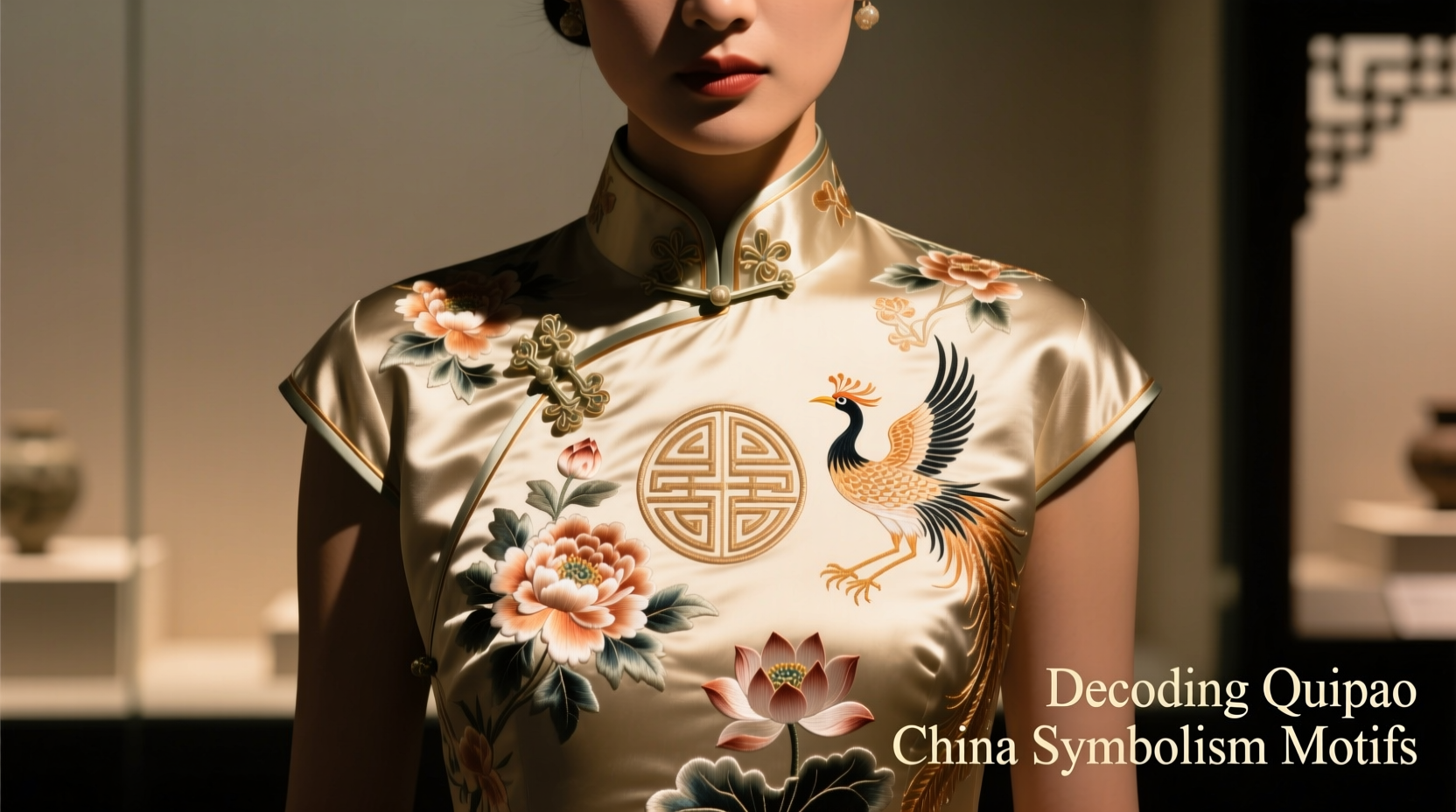
The embroidery on a qipao is a deliberate invocation of specific blessings. Artisans use a technique called panjin (gold couching) or intricate silk floss stitching to render motifs that function as wearable talismans. According to the China National Silk Museum in Hangzhou, the preservation of these motif patterns is vital to understanding regional Chinese folklore.
| Motif | Chinese Name | Symbolic Meaning | Common Occasions |
|---|---|---|---|
| Peony | Mudan | Wealth, honor, and feminine beauty. Known as the 'King of Flowers'. | Weddings, banquets, coming-of-age |
| Lotus | Lianhua | Purity, spiritual enlightenment, and rising above adversity. | Summer events, academic milestones |
| Plum Blossom | Meihua | Resilience, endurance, and hope (blooms in winter snow). | Winter festivals, scholarly gatherings |
| Dragon & Phoenix | Long Feng | Marital balance, imperial power, and yin-yang harmony. | Traditional bridal wear (Kwa/Qipao) |
| Magpie on Plum | Xi Shang Mei Shao | Joy arriving at one's doorstep (a visual pun on 'happiness'). | Engagements, housewarmings |
Structural Symbolism: Collars, Slits, and Pankou
The architecture of the qipao is laden with cultural meaning, balancing modesty with mobility.
The Mandarin Collar (Yuanbao Ling)
The stiff, high-standing collar is a hallmark of the qipao. Historically, it forced the wearer to hold their head high and maintain an upright posture, symbolizing dignity, moral uprightness, and self-respect. A properly fitted collar should allow exactly one finger's width of space between the neck and the fabric, ensuring elegance without restriction.
The Pankou (Frog Fasteners)
The pankou are hand-knotted fabric buttons that secure the collar and diagonal lapel. Far from simple closures, they represent infinity, unity, and the tying of fates. Master artisans spend hours crafting complex knots shaped like butterflies (symbolizing love), chrysanthemums (longevity), or the pipa lute. The number of pankou is also significant; odd numbers are considered yang (masculine/active) and are often used for everyday wear, while even numbers (yin) are sometimes reserved for specific ceremonial contexts, though this varies by region.
The Side Slits (Kaiqi)
Originally, the Manchu changpao featured four slits (front, back, and both sides) to facilitate horseback riding. The modern qipao retains the side slits, which symbolize the balance between tradition (modesty of the covered legs when standing) and modernity (freedom of movement). The height of the slit dictates the garment's formality: knee-high slits are standard for formal events, while higher slits are reserved for casual or contemporary fashion contexts.
The Fabric of Status: Xiangyunsha and Silk Brocade
The material of a qipao speaks volumes about the wearer's heritage and the garment's value. While modern iterations use lace, velvet, or cotton, traditionalists seek out specific heritage textiles.
Xiangyunsha (Gambiered Guangdong Silk): Often called 'soft gold,' this is one of the most luxurious and culturally significant fabrics in China. Dyed with the juice of the dioscorea cirrhosa plant and coated with iron-rich river mud from the Pearl River Delta, the silk develops a dark, lustrous sheen and a distinct rustling sound when worn. The Victoria and Albert Museum notes that heritage textiles like Xiangyunsha represent a crucial intersection of ecology and traditional Chinese craftsmanship. Wearing a Xiangyunsha qipao symbolizes a deep connection to the earth and an appreciation for slow, ancestral artisanship.
Silk Brocade (Zhuanghua and Shu Brocade): Woven with raised, multi-colored patterns, brocade qipaos are heavy, structured, and highly formal. The stiffness of the brocade holds the flat-cut silhouette perfectly, making it the preferred choice for winter weddings and state banquets.
Regional Dialects: Shanghai Glamour vs. Beijing Modesty
Just as China has diverse linguistic dialects, the qipao has distinct regional styles that reflect local values.
- Haipai (Shanghai Style): Born in the cosmopolitan hub of 1920s and 30s Shanghai, this style embraces Western tailoring. It features darting at the bust and waist, a highly fitted silhouette, higher side slits, and lighter fabrics like lace and printed silk. It symbolizes modernity, globalism, and the urban 'New Woman.'
- Jingpai (Beijing Style): Rooted in the capital's more conservative and traditional culture, the Beijing qipao favors the traditional 'flat-cut' method (where the front and back are cut from a single piece of fabric without darts). It is looser, more modest, features lower slits, and heavily utilizes thick, ornate silk brocades. It symbolizes scholarly heritage, dignity, and imperial history.
Sourcing Authentic Qipaos: Price Ranges and Artisans
For collectors and cultural enthusiasts, sourcing an authentic qipao requires navigating a market flooded with mass-produced costumes. True qipaos are investments in craftsmanship. Based on current market data from heritage tailors in Shanghai and Beijing, here is a buyer's framework:
- Ready-to-Wear / Boutique (¥1,500 - ¥4,000 CNY / $200 - $550 USD): Found in reputable heritage boutiques in cities like Suzhou and Shanghai. These offer good quality silk, machine-assisted embroidery, and standard sizing. Ideal for festival wear and cultural events.
- Made-to-Measure (¥5,000 - ¥15,000 CNY / $700 - $2,100 USD): Crafted by specialized tailors who take over 20 distinct body measurements. This tier includes hand-finished pankou, interior silk lining, and custom motif placement. The flat-cutting technique is often employed here to preserve the fabric's integrity.
- Master Artisan / Bespoke Heritage (¥20,000 - ¥50,000+ CNY / $2,800 - $7,000+ USD): Commissioned from recognized intangible cultural heritage inheritors. These garments feature entirely hand-embroidered motifs (taking hundreds of hours), rare Xiangyunsha or antique brocade fabrics, and flawless hand-stitched seams. Archives at the Metropolitan Museum of Art showcase similar historical pieces that define this pinnacle of sartorial art.
Cultural Protocols: Wearing the Qipao with Respect
As the qipao gains global visibility, it is vital to approach it with cultural respect rather than exoticization. The qipao is not a costume; it is a living garment of Chinese heritage. When wearing a qipao, avoid hyper-sexualized styling or pairing it with inappropriate accessories that undermine its dignity. Opt for elegant, closed-toe heels or traditional embroidered cloth shoes. Keep jewelry minimal and refined—jade bangles or pearl earrings complement the garment's neckline without competing with its intricate embroidery. By understanding the profound symbolism of the colors, motifs, and structure, wearers and collectors honor the generations of artisans and women who transformed the qipao into an enduring icon of Asian cultural identity.