Decoding DTI Hanfu: Symbolism in Traditional Chinese Dress
The Visual Language of the Middle Kingdom
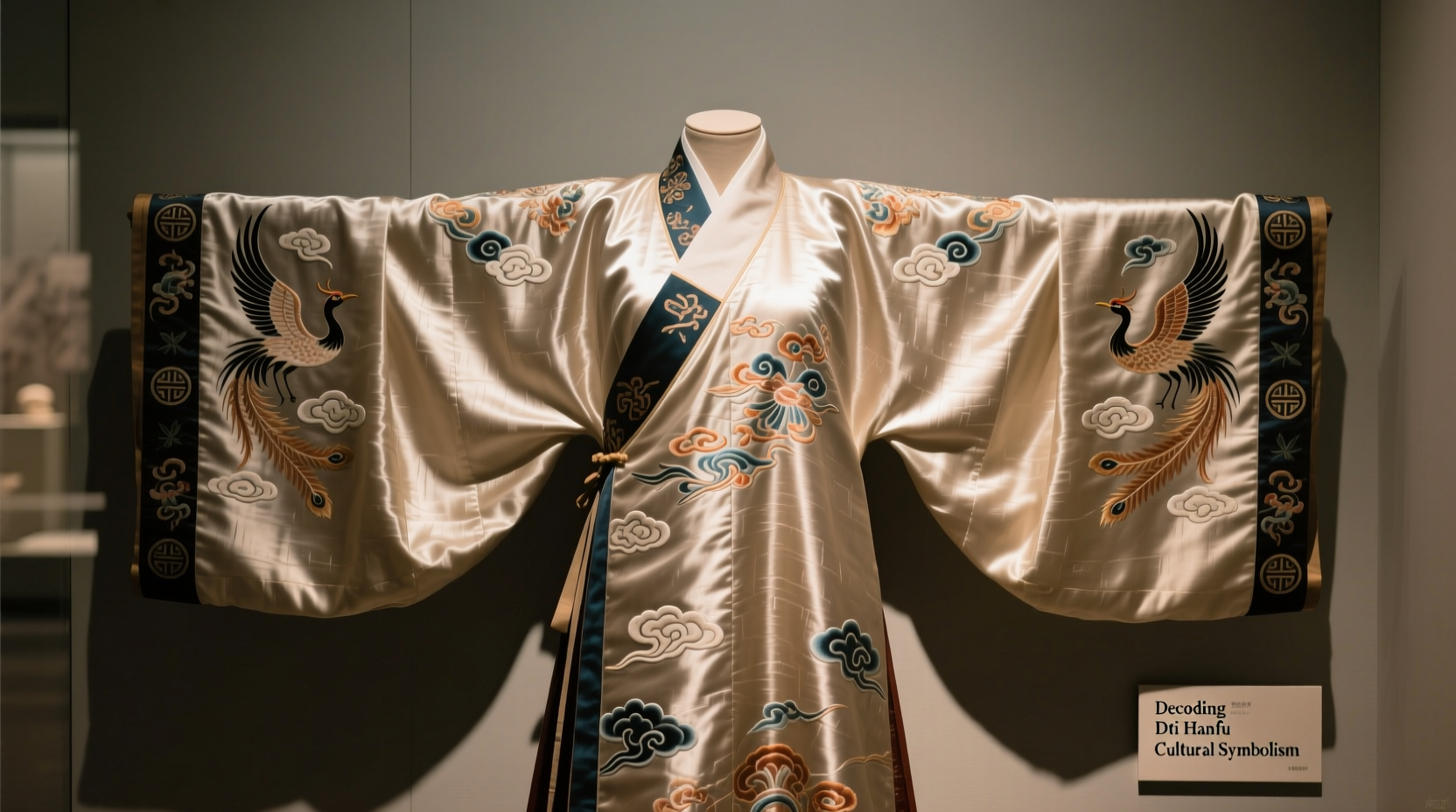
To wear Hanfu is to drape oneself in millennia of cosmic philosophy, social hierarchy, and poetic aspiration. In the contemporary Hanfu revival movement, enthusiasts and collectors frequently seek out historically accurate garments that honor traditional construction and motif placement. When exploring premium revivalist collections, such as those found in DTI Hanfu designs and similar high-fidelity ateliers, one quickly realizes that these garments are not merely fashion statements; they are canvases of cultural memory. The traditional Chinese approach to textile design is governed by an ancient proverb: 'Tu bi you yi, yi bi ji xiang' (Every motif must have a meaning, and every meaning must be auspicious). This principle transforms the flat-cutting (pingmian caijian) silk garments into a living encyclopedia of Chinese symbolism.
The Philosophy of Tu'an: More Than Mere Decoration
In Western fashion history, motifs often serve purely aesthetic or brand-identity purposes. In traditional Chinese dress, Tu'an (traditional motifs) function as a non-verbal language. A pomegranate bursting with seeds is not just a fruit; it is a vocalized wish for 'hundreds of sons and grandsons.' A bat (fu) is a homophone for good fortune (fu), meaning a garment embroidered with five red bats visually invokes the 'Five Blessings' (longevity, wealth, health, virtue, and a natural death). Modern artisans reproducing Ming and Song dynasty garments meticulously research these homophonic and visual puns, ensuring that the symbolic integrity of the garment remains intact for the modern wearer.
Imperial vs. Civilian: The Hierarchy of Mythical Beasts
During the Ming Dynasty (1368–1644), the state strictly regulated the use of animal motifs to maintain social order. While the five-clawed dragon (Long) was strictly reserved for the Emperor, the imperial court granted lesser, yet highly prestigious, mythical beast motifs to high-ranking officials and military generals as marks of imperial favor. Today, high-end revivalist brands and DTI Hanfu collections often recreate these spectacular robes for cultural festivals and ceremonial wear.
| Motif Name | Visual Characteristics | Historical Rank & Symbolic Meaning |
|---|---|---|
| Mang (Python) | Dragon-like, but with four claws instead of five. | Granted to top-tier civil/military officials. Symbolizes supreme authority just below the Emperor. |
| Feiyu (Flying Fish) | Dragon head, fish tail, often with wings or fins. | Worn by the Jinyiwei (Embroidered Uniform Guard) and high nobility. Represents martial prowess and imperial protection. |
| Douniu (Griffin/Bullfighting) | Dragon-like with curved horns and a more bovine snout. | Awarded to mid-to-high ranking military commanders. Symbolizes bravery and unyielding strength. |
| Bai Ze (Mythical Lion) | A lion-like beast with a horn, often surrounded by flames. | Worn by military officers. The Bai Ze knows all languages and protects against supernatural harm. |
Understanding these distinctions is crucial for cultural respect. Wearing a five-clawed dragon robe to a casual gathering is historically inaccurate and culturally jarring, whereas a beautifully woven Feiyu robe is a celebrated nod to Ming martial aesthetics. Institutions like the Metropolitan Museum of Art's Asian Art Department house extant examples of these Ming dynasty silks, providing the foundational research that modern pattern-makers use to draft authentic Zhuanghua (brocade) weaves.
Botanical Symbolism: The Poetry of the Mamianqun
The Mamianqun, or 'horse-face skirt,' is the cornerstone of Ming-style Hanfu and remains the most popular garment in the modern revival. Characterized by its flat front and back panels with heavily pleated sides, the skirt offers a broad, flat canvas for elaborate weaving. The symbolism here shifts from martial hierarchy to literati poetry and moral virtue.
The Three Friends of Winter
A frequent motif on high-quality Mamianqun skirts is the Sui Han San You (Three Friends of Winter): Pine, Bamboo, and Plum Blossom. Because these three plants thrive or bloom during the harsh winter months, they symbolize resilience, moral integrity, and steadfastness in the face of adversity. When you purchase a skirt featuring these motifs, you are wearing a Confucian ideal of scholarly virtue.
The Four Seasons and Directional Harmony
Botanical motifs are also tied to cosmic harmony. The Peony (Mudan) represents wealth and the prosperity of summer; the Lotus (Lianhua) represents purity and spiritual enlightenment, rising unsullied from the mud; the Chrysanthemum (Juhua) represents autumn, longevity, and the quiet dignity of the scholar-official who retreats from corrupt politics. Artisans at the China National Silk Museum frequently highlight how Ming weavers integrated these seasonal blooms into the horizontal 'lan' (decorative borders) of the skirt, grounding the wearer in the cyclical harmony of nature.
The Yunjian (Cloud Collar): Mapping the Cosmos
No discussion of Hanfu symbolism is complete without the Yunjian, or cloud collar. Draped over the shoulders and fastened at the neck, this accessory is a masterpiece of structural symbolism. The classic Yunjian features four Ruyi (as-you-wish) cloud-shaped heads pointing in the four cardinal directions.
Between these four heads are often eight smaller points, representing the Bagua (Eight Trigrams) of Daoist cosmology. When a woman wears a Yunjian over her Aoqun (jacket and skirt), she symbolically places herself at the center of the universe, harmonizing the earthly realm with the celestial sphere. The intricate embroidery on a genuine silk Yunjian often features butterflies (symbolizing joy and marital bliss) or phoenixes (representing the Empress or the ultimate feminine virtue of grace).
Buying Guide: Fabrics, Pricing, and Authenticity
For those looking to acquire symbolically rich Hanfu, understanding fabric composition and price ranges is essential to avoid cheap, culturally disconnected costumes. Premium brands and DTI Hanfu collections prioritize traditional weaving techniques over digital printing.
- Machine-Woven Jacquard/Brocade: Entry-level authentic revival skirts. The motifs are woven into the fabric, not printed. Price Range: $60 - $120 USD.
- Zhuanghua (Traditional Brocade): Woven on specialized looms, often incorporating metallic threads (historically gold-wrapped horsehair, now synthetic or real silver/gold alloys). Price Range: $150 - $350 USD.
- Kesi (Silk Tapestry): The pinnacle of Chinese silk weaving, where the weft threads are cut and turned back at the edge of each color block, creating a carved, sculptural effect. Bespoke Kesi jackets or collars are investment pieces. Price Range: $800 - $2,500+ USD.
- Hand-Embroidered Su Xiu (Suzhou Embroidery): Featuring split-silk threads that capture the gradient of a single flower petal. Price Range: $400 - $1,000+ USD.
For verified historical textile references and conservation standards, the Victoria and Albert Museum's Chinese Textiles collection remains an invaluable digital resource for buyers wishing to compare modern revivalist weaves against extant Ming and Qing dynasty artifacts.
Cultural Etiquette: Wearing Symbolism Respectfully
Owning a symbolically rich garment requires an understanding of how to wear it. The most critical rule in Hanfu is Jiao Ling You Ren (Left lapel over right). The left side of the collar must always cross over the right side, forming a 'y' shape at the chest. In traditional Chinese cosmology, the left is associated with Yang (life, light, the living), while the right is associated with Yin (death, darkness). Crossing the right over the left (You Ren Zuo) is strictly reserved for dressing the deceased for burial or is a historical marker of 'barbarian' tribes. Wearing it incorrectly is considered highly inauspicious and disrespectful.
Furthermore, color symbolism dictates occasion. While modern Western brides wear white, traditional Chinese mourning attire utilizes raw, unhemmed white hemp. Therefore, wearing an all-white, unembellished Hanfu set to a joyous occasion like a wedding or Lunar New Year can be culturally jarring. Conversely, red and gold, heavily embroidered with peonies and double-happiness (Shuangxi) motifs, are the ultimate expressions of joy and matrimonial blessing.
Conclusion: A Living Heritage
The resurgence of interest in DTI Hanfu and similar historically grounded designs represents a profound reconnection with Asian heritage. By learning to read the Tu'an—from the martial prowess of the Feiyu to the quiet resilience of the winter plum blossom—wearers transform from passive consumers into active custodians of a 5,000-year-old visual language. True appreciation of Hanfu lies not just in the drape of the silk, but in the profound, auspicious meanings woven into every single thread.