A Cultural Guide to Man Hanfu: History, Styles, and Etiquette
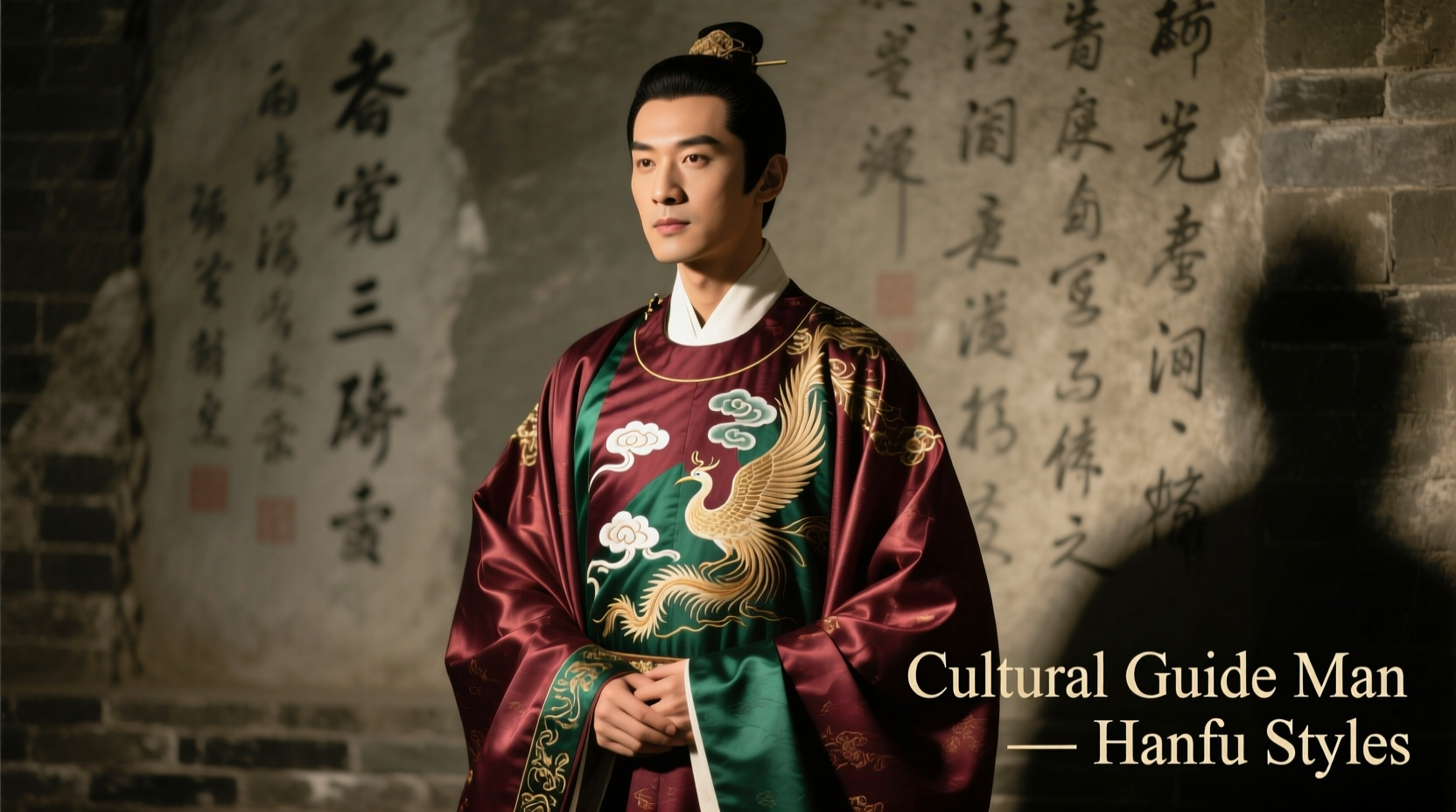
When discussing traditional Chinese clothing, the global consciousness often defaults to the Qing-dynasty qipao or the modern tangzhuang. However, the true ancestral dress of the Han Chinese people is Hanfu (汉服). For men, the man hanfu encompasses a vast, sophisticated wardrobe that evolved over three millennia, reflecting shifts in philosophy, statecraft, and textile technology. This guide explores the historical depth, structural anatomy, and modern revival of men’s Hanfu, offering a comprehensive resource for cultural enthusiasts and collectors.
Core Construction Principles of Man Hanfu
Unlike Western tailoring, which relies on darts, shoulder seams, and three-dimensional draping to conform to the body’s contours, traditional Hanfu is rooted in flat pattern cutting. The fabric is cut in straight lines and folded, creating a garment that is essentially two-dimensional when laid flat but transforms into a flowing, structured silhouette when worn and belted.
Three foundational rules govern the construction of authentic man hanfu:
- Jiaoling Youren (交领右衽): The intersecting collar must always cross left over right (meaning the right lapel is on top, securing over the left side of the body). This is a profound cultural marker of Han civilization. Reversing this (left-over-right) is strictly reserved for dressing the deceased.
- Hidden Fastenings: Traditional Hanfu avoids visible buttons. Instead, it utilizes internal and external fabric ties (xi and dai) to secure the garment, allowing for adjustable fits and a seamless exterior aesthetic.
- Continuous Sleeves: The sleeves are often cut as a single continuous piece with the bodice, eliminating the armhole seam entirely. This requires immense widths of fabric and creates the characteristic graceful drape of the guangxiu (wide sleeve).
Dynastic Evolution: A Timeline of Menswear
The silhouette of the man hanfu shifted dramatically across dynasties, influenced by climate, foreign trade, and imperial decrees. Below is a structural comparison of key historical eras.
| Dynasty | Signature Garment | Key Characteristics | Primary Fabrics |
|---|---|---|---|
| Han (202 BCE–220 CE) | Shenyi (Deep Robe) | One-piece robe connecting top and bottom; curved hems; massive, sweeping sleeves. | Hemp, Ramie, early Silk. |
| Tang (618–907 CE) | Yuanlingpao (Round-Collar) | Influenced by Central Asian nomads; round collar, side slits, worn with boots and leather belts. | Polychrome silk weaves, brocade. |
| Song (960–1279 CE) | Lanshan (Scholar's Robe) | Minimalist, elegant, narrow sleeves; black trim on white or pale garments; emphasis on intellectual modesty. | Plain-weave silk, fine linen. |
| Ming (1368–1644 CE) | Daopao & Feiyufu | Voluminous, structured pleats; wide sleeves; elaborate woven badges (buzi) denoting rank. | Mulberry silk, Xiangyunsha, heavy brocade. |
According to archival textile research preserved by the China National Silk Museum, the Ming dynasty represents the zenith of Hanfu complexity, introducing intricate side-pleating systems that allowed for immense freedom of movement while maintaining a regal, bell-like silhouette.
Three Essential Silhouettes for the Modern Wearer
For those looking to understand or acquire a man hanfu today, the market is dominated by three historically significant styles that have been adapted for contemporary wear.
1. The Daopao (道袍) - The Scholar's Robe
Despite its name translating to 'Taoist robe,' the Daopao was the standard daily wear for Ming dynasty scholars and officials. It features a cross-collar, wide sleeves, and a distinctive internal pleating system on the side seams (anbai). These hidden pleats expand when the wearer walks or sits, providing exceptional modesty and comfort. It is typically worn with a soft cloth belt or a jade-adorned leather sash.
2. The Yuanlingpao (圆领袍) - The Official's Standard
Originating in the Tang dynasty, the round-collar robe is a staple of masculine Hanfu. It fastens at the right shoulder with a button or tie and features side slits for horseback riding. Modern practitioners often wear the Yuanlingpao as an outer layer over a cross-collar inner shirt (zhongyi), pairing it with structured leather boots and a putou (traditional headwear).
3. The Zhiduo (直裰) - Monastic and Casual Wear
The Zhiduo is similar to the Daopao but features open side seams without the hidden pleats, revealing the trousers beneath. Historically associated with monks and later adopted by literati for relaxed, at-home wear, it offers a lighter, more breathable option for summer months.
Textiles and Materiality: What Makes Authentic Hanfu?
The authenticity of a man hanfu is deeply tied to its textile composition. While modern mass-market options rely on polyester, traditionalists seek out heritage fabrics.
Ramie (夏布 - Xia布): A bast fiber woven from the Chinese nettle plant. Ramie is stiff, highly breathable, and possesses a natural, slubbed texture. It is the premier choice for summer Zhiduo and inner garments, prized for its historical accuracy and cooling properties.
Xiangyunsha (香云纱): Often called 'soft gold,' this is a highly specialized silk dyeing technique originating from Guangdong province. The silk is dyed with the tannin-rich juice of the Shuliang yam and then coated in iron-rich river mud. The resulting fabric is dark, water-resistant, and makes a distinctive rustling sound when worn. The The Metropolitan Museum of Art frequently highlights similar mud-dyed silk techniques in their Asian textile conservation wings, noting the incredible durability of the tannin-iron chemical bond.
Navigating the Market: Price Tiers and Sourcing
Acquiring a high-quality man hanfu requires understanding the tiered market, which ranges from mass-produced costumes to artisan-crafted garments.
- Entry-Level ($30 - $70 USD): Typically made from polyester-cotton blends or chiffon. While affordable and easy to wash, these lack the drape and breathability of natural fibers. Best for casual cosplay or first-time experimentation.
- Mid-Tier ($80 - $180 USD): The sweet spot for serious enthusiasts. These garments utilize linen, raw silk, and high-grade cotton. Construction details, such as reinforced collars and proper internal ties, are historically accurate. Brands in this tier often collaborate with heritage weaving cooperatives.
- High-End & Bespoke ($250 - $800+ USD): Reserved for pure mulberry silk, hand-loomed brocades, and authentic Xiangyunsha. These pieces are often custom-tailored to the wearer’s exact measurements, featuring hand-stitched hems and woven rank badges.
Cultural Etiquette and the Hanfu Yundong
The modern wearing of Hanfu is inextricably linked to the Hanfu Yundong (Hanfu Movement), a grassroots cultural revival that began in the early 2000s. Pioneers like Wang Letian, who famously wore Hanfu in public in Zhengzhou in 2003, sparked a nationwide re-evaluation of Han cultural identity.
When wearing a man hanfu today, cultural protocols remain vital. The most critical rule is the right-over-left lapel. As noted by cultural historians and institutions like the Asian Art Museum, the presentation of the collar is a profound signifier of life and civilization. Additionally, proper posture—keeping the back straight and hands clasped in front of the waist (the gongshou salute)—complements the architectural lines of the robe.
'Hanfu is not merely a costume of the past; it is a living dialogue between modern Chinese youth and their ancestors, stitched together through the discipline of flat-cutting and the philosophy of harmony.' — Contemporary Hanfu Textile Symposium, 2022.
Whether donning a Ming-style Daopao for a tea ceremony or a Tang-style Yuanlingpao for a festival, the man hanfu offers a profound, tactile connection to the intellectual and aesthetic heritage of Asian antiquity.