The Chinese Traditional Wedding Dress: A Beginner's Guide

Decoding the Chinese Traditional Wedding Dress
For many brides and cultural enthusiasts, the Chinese traditional wedding dress represents a profound connection to ancestry, marital harmony, and centuries of textile artistry. However, navigating the world of Chinese bridal wear can be overwhelming for beginners. The term "traditional" is actually a fluid concept, encompassing historical revivals, regional Cantonese customs, and even modern cinematic adaptations that have become contemporary staples.
Whether you are planning a multicultural wedding, attending a traditional tea ceremony, or simply studying Asian sartorial history, understanding the distinctions between the Qungua, Xiuhefu, and Hanfu is essential. This guide breaks down the construction, cultural protocols, and market realities of Chinese bridal wear.
The Three Pillars of Chinese Bridal Silhouettes
Unlike the Western white gown, which dominates a single aesthetic, Chinese bridal wear offers three distinct silhouettes, each with its own historical lineage and regional stronghold.
1. The Qungua (裙褂) and Longfenggua (龙凤褂)
Originating from the Qing Dynasty and deeply rooted in Cantonese (Guangdong) culture, the Qungua is a structured, two-piece ensemble consisting of a fitted jacket (gua) and a pleated or A-line skirt (qun). The most prestigious iteration is the Longfenggua (Dragon-Phoenix Jacket), heavily embroidered with metallic threads.
The defining metric of a Qungua is its embroidery density, which dictates both its price and its formality. According to textile archives at the Victoria and Albert Museum, the couching of gold and silver threads requires immense structural backing, giving the garment a stiff, armor-like quality that commands respect during the traditional tea ceremony.
- Xiaowu (小五福): 30% embroidery density. The red silk base is highly visible.
- Zhongwu (中五福): 50% density. A balanced mix of red silk and metallic motifs.
- Dawu (大五福): 70% density. The gold and silver threads begin to dominate the silhouette.
- Gua Hou (褂后): 90% density. Reserved for high-status weddings, with only glimpses of red.
- Gua Huang (褂皇): 100% density. The pinnacle of the craft. The red silk is entirely obscured by gold and silver embroidery, taking a single master artisan up to a year to complete.
2. The Xiuhefu (秀禾服)
While it looks historically ancient, the Xiuhefu is actually a modern invention. It was popularized by the 2001 television drama Juzi Hong Le (Tangerine Red), where the protagonist, Xiuhe, wore a loosely fitted, A-line garment inspired by Qing-era Han folk clothing. Today, it is arguably the most popular Chinese traditional wedding dress for modern brides due to its forgiving fit, flowing sleeves, and romantic aesthetic.
Unlike the structured Qungua, the Xiuhefu features a softer silk or satin base, often utilizing vibrant multicolored silk thread embroidery rather than heavy metallic gold. It is typically paired with a Mamianqun (horse-face skirt) or a pleated A-line skirt, making it highly comfortable for long wedding days.
3. Hanfu Bridal Attire and the Fengguan Xiapei (凤冠霞帔)
The Hanfu revival movement has brought historical Ming Dynasty (1368–1644) bridal attire back into the mainstream. The ultimate symbol of Ming bridal wear is the Fengguan Xiapei (Phoenix Crown and Rosy Cape). As detailed by The Metropolitan Museum of Art's Ming Dynasty historical overview, this ensemble was once restricted to royalty and noblewomen before sumptuary laws relaxed, allowing common brides to wear a simplified version on their wedding day—a tradition known as "borrowing nobility for a day."
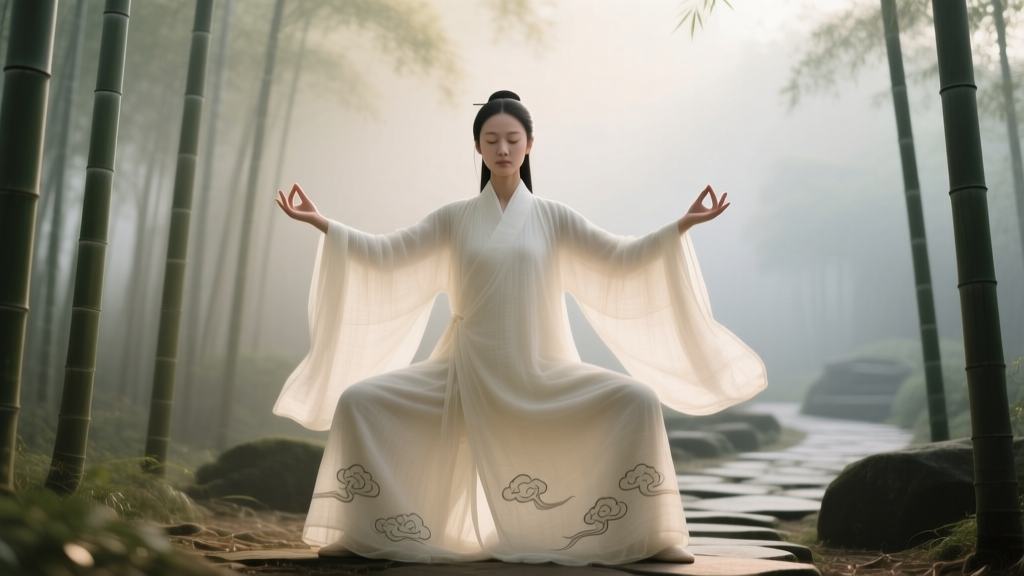
The Hanfu bridal silhouette features wide, sweeping sleeves, a cross-collared robe (Yuanlingpao or Daxiushan), and the iconic Xiapei—a heavily embroidered, V-shaped sash that drapes over the shoulders and anchors at the hem with a jade or gold weight.
The Textile Mechanics: Su Embroidery and Panjin Couching
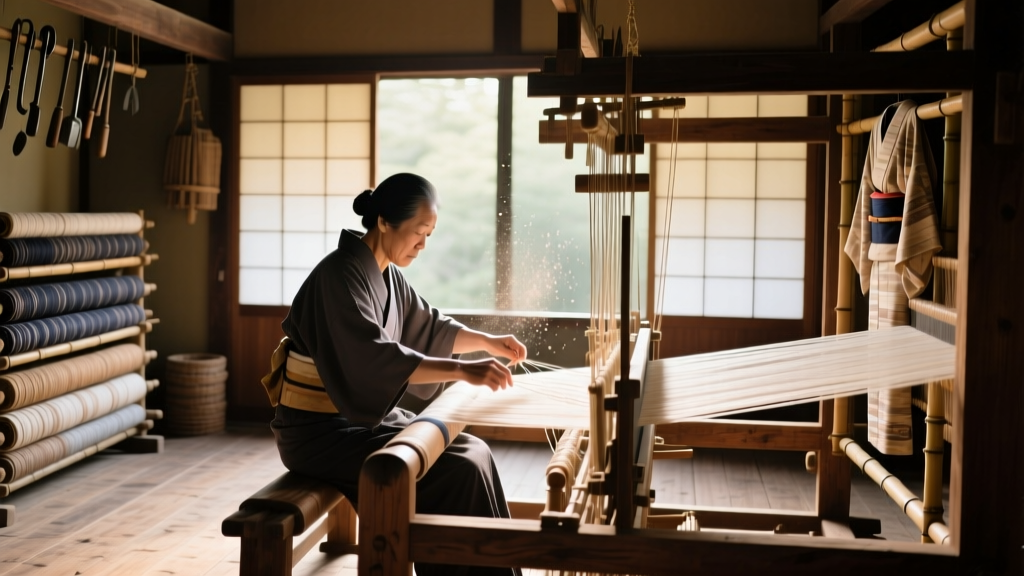
To truly appreciate a Chinese traditional wedding dress, one must understand the mechanics of its creation. The China National Silk Museum highlights the dominance of Su Xiu (Suzhou Embroidery) in high-end bridal wear. Su embroidery is renowned for its split-silk technique, where a single thread is divided into up to 48 finer strands, allowing for hyper-realistic shading in floral and avian motifs.
However, for the metallic brilliance of the Qungua, artisans use Panjin (盘金), or gold thread couching. Because pure gold and silver threads are too brittle to pass through the fabric with a needle, they are laid on the surface of the silk satin and "couched" down with tiny, nearly invisible stitches of red or yellow silk. This technique creates a raised, three-dimensional relief that catches the light brilliantly, symbolizing the illumination of the couple's future.
Comparative Framework: Choosing Your Silhouette
Selecting the right garment depends on your regional heritage, body type, and the specific wedding events (e.g., tea ceremony vs. banquet). Use this comparison chart to guide your decision:
| Feature | Qungua (Longfenggua) | Xiuhefu | Ming-Style Hanfu |
|---|---|---|---|
| Silhouette | Structured, boxy, fitted jacket | Flowing, A-line, relaxed fit | Voluminous, wide sleeves, layered |
| Primary Embroidery | Gold/Silver Panjin couching | Multicolor silk thread | Silk thread with metallic accents |
| Cultural Origin | Cantonese / Qing Dynasty | Modern cinematic / Folk Qing | Historical Revival / Ming Dynasty |
| Best For | Formal Tea Ceremonies | Photoshoots, Banquets, Comfort | Cultural purists, Grand Entrances |
| Weight | Heavy (due to metallic thread) | Light to Medium | Medium (layered fabrics) |
Market Navigation: Pricing, Rentals, and Bespoke Timelines
Acquiring a Chinese traditional wedding dress requires careful budgeting and timeline management. The market is sharply divided between mass-produced garments and artisanal masterpieces.
Pricing Tiers (Estimates in USD & RMB)
- Rental Market ($200 - $800 / ¥1,500 - ¥5,500): Most brides opt to rent high-quality Qunguas or Xiuhefus for the day. This is highly recommended for the Gua Hou or Gua Huang tiers, which are prohibitively expensive to purchase but widely available in premium bridal boutiques in Guangzhou, Shanghai, and Singapore.
- Off-the-Rack Machine Embroidered ($300 - $1,200 / ¥2,000 - ¥8,500): Ideal for brides on a budget or those needing a garment for a casual pre-wedding event. These are typically made of polyester blends with computerized embroidery. They lack the luster and drape of pure silk.
- Hand-Embroidered Silk ($2,500 - $6,000 / ¥18,000 - ¥45,000): A custom-tailored Xiuhefu or a mid-tier Qungua (Zhongwu/Dawu) featuring genuine Su embroidery and silk satin. Expect a lead time of 3 to 5 months.
- Bespoke Masterpiece ($12,000 - $25,000+ / ¥85,000 - ¥180,000+): A true Gua Huang or historically accurate Ming Hanfu woven with peacock feathers and pure gold leaf threads. Lead times range from 8 to 14 months.
Buying Advice for Beginners
If purchasing, always verify the fabric composition. True traditional garments use Zhi Duan (织缎), a heavy, lustrous silk satin that provides the necessary structural integrity to hold heavy embroidery without warping. Avoid garments labeled simply as "brocade" if they lack a silk content tag, as synthetic brocades will not drape correctly and can cause overheating during summer tea ceremonies.
Auspicious Motifs: Reading the Bridal Canvas
A Chinese traditional wedding dress is not merely decorative; it is a wearable talisman. Every motif stitched into the silk carries specific auspicious meanings, designed to bless the union.
"In Chinese textile tradition, a motif is never chosen purely for its aesthetic value. It must possess a phonetic or symbolic link to prosperity, longevity, or fertility." — Curatorial Notes on Asian Textiles.
- Dragon and Phoenix (Longfeng): The ultimate symbol of Yin and Yang. The dragon represents the groom (Yang, power, success), while the phoenix represents the bride (Yin, grace, virtue). Together, they signify perfect marital balance.
- Bats (Fu): The Chinese word for bat (fu) is a homophone for "good fortune." Five bats surrounding a longevity character represent the "Five Blessings" (health, wealth, virtue, long life, and a natural death).
- Peony (Mudan): Known as the "King of Flowers," the peony symbolizes wealth, honor, and feminine beauty. It is a staple in Xiuhefu designs.
- Pomegranate: Because a pomegranate contains hundreds of seeds, it is a subtle but powerful symbol of fertility and the blessing of many children.
- Lotus: Rising unsullied from muddy waters, the lotus represents purity, spiritual awakening, and a harmonious household.
Embracing the Living Tradition
The Chinese traditional wedding dress is not a relic of the past; it is a living, evolving textile art form. Whether you choose the structured, metallic brilliance of a Cantonese Qungua, the romantic flow of a modern Xiuhefu, or the historical grandeur of a Ming Dynasty Hanfu, you are participating in a continuum of craftsmanship that honors both ancestral heritage and the auspicious beginning of a new family lineage. Approach your selection with an appreciation for the artisans' labor, and your bridal attire will serve as a magnificent, culturally resonant heirloom for generations to come.