Chinese Traditional Suit Care: Tangzhuang & Zhongshan Guide

Decoding the 'Chinese Traditional Suit': Beyond the Monolith
When Western consumers and textile enthusiasts search for a 'Chinese traditional suit,' they are often met with a visual monolith that obscures a deeply nuanced sartorial landscape. In reality, this umbrella term generally encompasses two entirely distinct garments with vastly different historical origins, construction methods, and care requirements: the Tangzhuang (唐装) and the Zhongshan suit (中山装). Understanding which garment you own is the critical first step in its preservation.
The Tangzhuang, often worn at weddings, Lunar New Year celebrations, and international cultural summits, is a modern adaptation of the Qing dynasty Magua (horse jacket). It is characterized by its Mandarin collar, front closures, and intricate silk brocade fabrics. Conversely, the Zhongshan suit—frequently mislabeled in the West as the 'Mao suit'—was introduced by Dr. Sun Yat-sen in the 1920s as a modern, nationalist alternative to both Western business suits and Qing court dress. It is a highly structured, tailored garment typically crafted from worsted wool or heavy cotton twill, featuring four symmetrical pockets and a stiff stand-up collar. Treating a delicate silk Tangzhuang with the same maintenance protocols as a structured wool Zhongshan suit will result in irreversible textile damage.
The Pankou Protocol: Preserving Hand-Knotted Fasteners
The defining hardware of the Tangzhuang is the Pankou (盘扣), or frog fastener. Unlike stamped metal buttons found on Western tailoring, authentic Pankou are hand-rolled from silk bias strips. According to textile conservation records at the Metropolitan Museum of Art, elaborate knotting techniques in Qing dynasty court jackets served not merely as functional closures, but as intricate status markers denoting rank and occasion. Modern artisan Pankou are often stuffed with cotton yarn or flexible copper wire to maintain their complex floral, geometric, or zodiac shapes.
Caring for these fasteners requires extreme diligence. The chemicals used in standard commercial dry cleaning can dissolve the internal stiffening agents, causing the knots to collapse and the silk loops to fray. Furthermore, you must never iron directly over Pankou. The concentrated heat of an iron will scorch the delicate silk threads and melt synthetic stiffeners used in contemporary reproductions. When storing your Tangzhuang, always ensure the Pankou are fully fastened; leaving them unbuttoned for months in a closet will cause the silk loops to stretch and lose their tension, rendering the jacket impossible to close securely.
Fabric Architecture: A Material-by-Material Matrix
The structural integrity of your Chinese traditional suit dictates its cleaning and storage matrix. Below is a comprehensive guide to handling the most common textiles utilized in these garments.
| Garment Type | Primary Fabric | Cleaning Protocol | Ironing & Steaming | Storage Requirement |
|---|---|---|---|---|
| Tangzhuang (Standard) | Silk Brocade / Jacquard | Professional Dry Clean Only | Low heat, use cotton pressing cloth | Padded hanger, breathable cotton bag |
| Tangzhuang (Heritage) | Xiangyunsha (Mud Silk) | Cool water, pH-neutral silk wash | Steam lightly, no direct iron contact | Flat fold with acid-free tissue paper |
| Zhongshan Suit | Worsted Wool / Gabardine | Dry clean sparingly, brush often | Medium steam, use a tailor's ham | Wide wooden hanger, cedar-lined closet |
| Summer Changshan | Raw Silk / Linen Blend | Hand wash cold, lay flat to dry | High steam while slightly damp | Roll, do not fold, to prevent creasing |
Xiangyunsha: Caring for the 'Soft Gold' of Guangdong
High-end, heritage Tangzhuang suits are occasionally crafted from Xiangyunsha (香云纱), often translated as 'mud silk' or 'fragrant cloud silk.' This textile is a masterpiece of Guangdong provincial heritage. The silk is dyed with the tannin-rich juice of the Dioscorea cirrhosa (shouliang) yam and subsequently coated with iron-rich river mud, resulting in a dark, lustrous sheen and a unique, slightly leathery texture. The China Silk Museum in Hangzhou emphasizes that the alkaline nature of standard laundry detergents will strip the yam tannins and permanently ruin the mud-coating. Xiangyunsha suits must only be spot-cleaned with a damp cloth or washed in cool water with a specialized, pH-neutral silk wash. They must never be wrung or twisted, and should always be dried in the shade, as direct UV exposure degrades the mud-silk bond.
Stain Triage: Emergency Care for Brocade and Wool
Accidents during festive banquets or tea ceremonies are common. How you react in the first five minutes determines the survival of the textile.
- Water Spotting on Silk Brocade: Tap water contains minerals that leave permanent rings on silk jacquard. If splashed, immediately mist the entire panel of the jacket with distilled water to ensure even drying, then blot gently with a microfiber cloth.
- Oil Stains on Wool Zhongshan Suits: Do not rub. Apply a generous mound of cornstarch or talc-free baby powder to the oil spot. Allow it to sit for 12 hours to absorb the lipid molecules, then brush away with a soft-bristled horsehair garment brush.
- Sebum on Stand-Up Collars: The stiff Mandarin collars of both suits sit directly against the neck, absorbing body oils and sweat. For cotton or wool blends, use a specialized enzymatic collar cleaner. For silk Tangzhuang, a gentle dab of a 50/50 white vinegar and distilled water solution can lift oils without stripping the acidic dyes used in traditional brocades.
Cultural Preservation: Airing, Storing, and Respecting the Garment
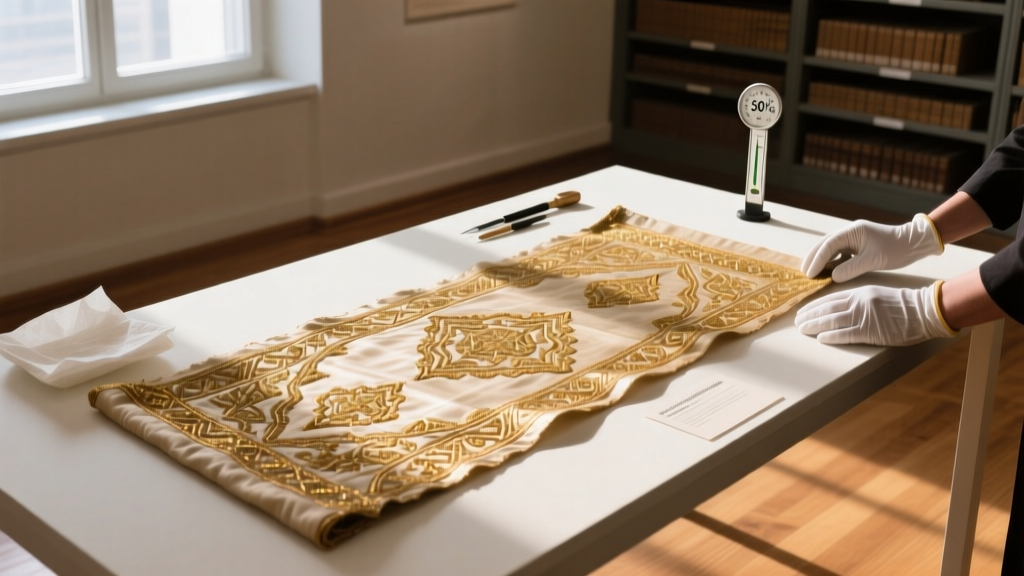
In traditional Chinese sartorial culture, the concept of Liàng Yī (晾衣), or 'airing the clothes,' is a vital maintenance ritual. The Victoria and Albert Museum's Asian textile conservation guidelines echo this practice, noting that storing garments immediately after wearing traps moisture and invites mold, particularly in silk linings. After wearing your Chinese traditional suit, hang it in a well-ventilated, shaded area for 24 hours to allow ambient moisture and odors to dissipate before returning it to your wardrobe.
When it comes to long-term storage, the hanger you choose is paramount. A Zhongshan suit features internal canvas structuring and padded shoulders that mimic European bespoke tailoring; it requires a wide, contoured wooden hanger to prevent the shoulder pads from collapsing. A Tangzhuang, lacking this internal structure, should be hung on a padded, fabric-covered hanger to prevent the delicate silk from stretching at the shoulder seams. For heirloom pieces, wrap the suit in unbleached, acid-free cotton muslin. Never use plastic dry-cleaning bags, as they off-gas chemicals that will yellow silk brocade and degrade wool fibers over time. By treating your Chinese traditional suit not merely as clothing, but as a living artifact of Asian textile history, you ensure its structural and cultural longevity for generations to come.