Chinese Traditional Robes: Comparing Hanfu Styles & History
The Anatomy of Chinese Traditional Robes: Core Philosophies
When discussing Chinese traditional robes, one must look beyond the modernized silhouettes of the 20th-century qipao and delve into the millennia-old sartorial system known as Hanfu (汉服). Unlike Western tailoring, which relies on darts, seams, and three-dimensional draping to contour the body, historical Chinese garment construction is rooted in pingmian caijian (平面裁剪), or flat-pattern cutting. This philosophy treats the textile as a sacred, unbroken canvas, honoring the weave and minimizing waste.
The foundational rule governing nearly all Chinese traditional robes is jiaoling youren (交领右衽)—the cross-collar, right-over-left lapel. This structural mandate, established during the Zhou Dynasty (c. 1046–256 BCE), was deeply tied to Confucian cosmology, where the left (yang) respectfully covers the right (yin). To reverse this (left-over-right) was historically reserved solely for the deceased or considered a marker of 'barbarian' steppe cultures.
Ruqun (襦裙) and the Mamianqun (马面裙) Revolution
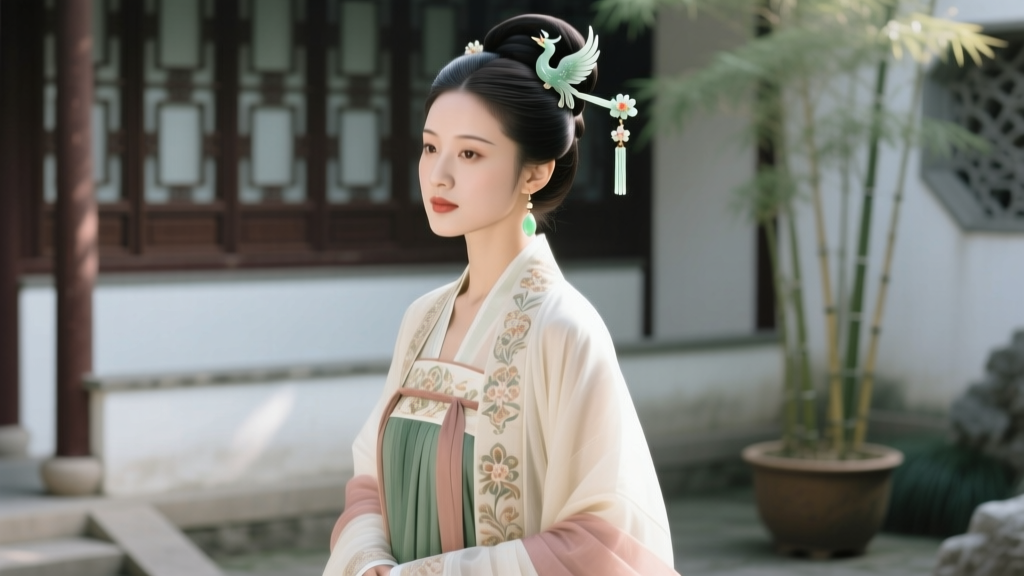
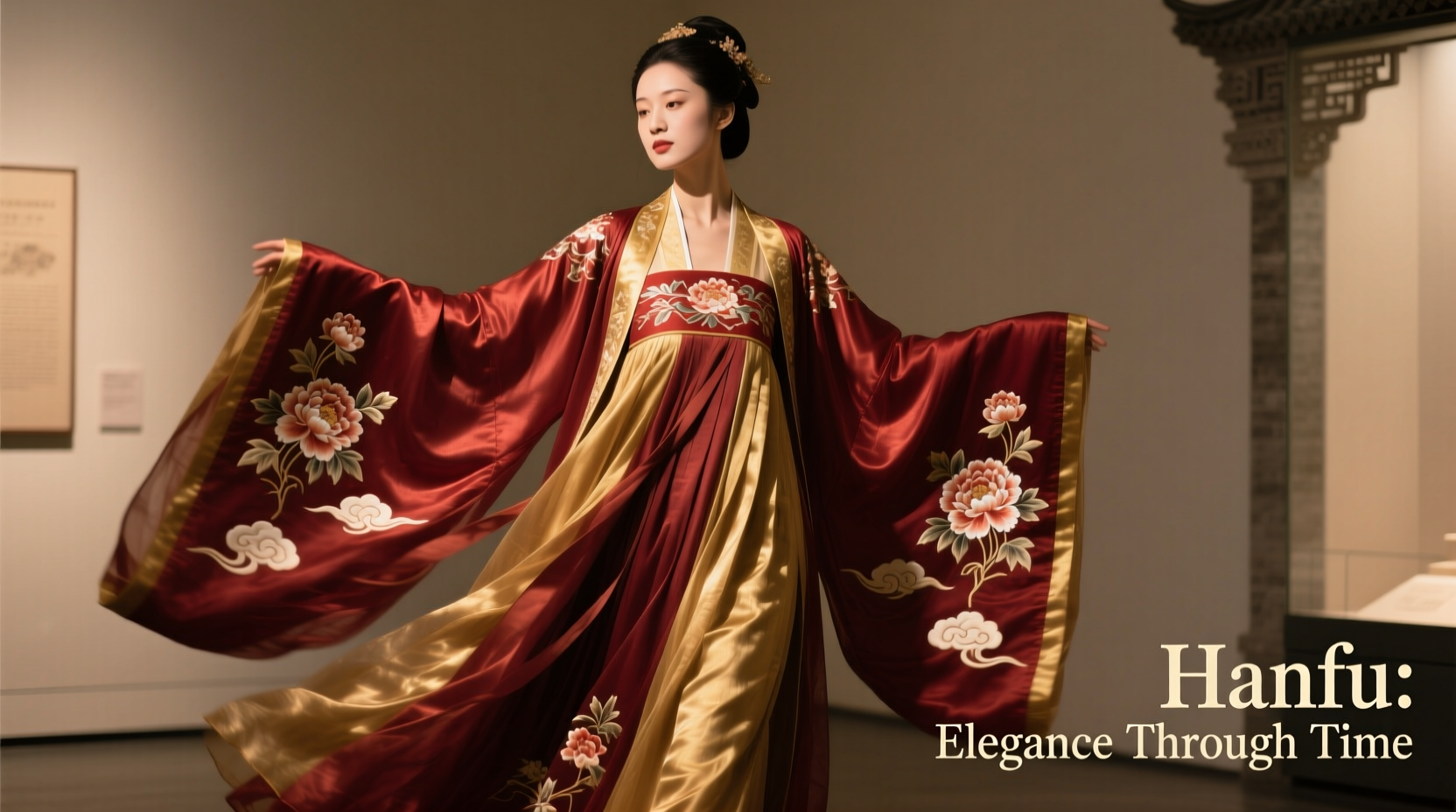
The Ruqun system represents the most enduring two-piece silhouette in Chinese history, comprising an upper garment (ru 襦) and a wrap-around skirt (qun 裙). While the Tang Dynasty (618–907 CE) popularized the Qixiong ruqun (齐胸襦裙)—a chest-high skirt tied with silk sashes that created an elongated, ethereal silhouette—the Ming Dynasty (1368–1644 CE) introduced a more structured, modest aesthetic that dominates the modern Hanfu revival.
The Architecture of the Mamianqun
The Ming-era Mamianqun, or 'horse-face skirt,' is currently the most ubiquitous garment in the contemporary Chinese traditional robes market. Its construction is an engineering marvel:
- Flat Panels (Guangmian 光面): Two flat, unpleated panels at the front and back, often heavily embroidered with auspicious motifs like dragons, phoenixes, or lotus flowers.
- Pleated Sides (Zhe 褶): Typically featuring 4 to 6 pairs of deep, knife-pleats on each side that expand dynamically during movement.
- Overlapping Waistband: Secured by extended cotton or silk ties, allowing the skirt to wrap securely without buttons or zippers.
Authentic Ming-style Mamianqun replicas woven from heavy silk brocade can range from $300 to $1,200 USD, while modernized, machine-pleated polyester versions for daily wear are widely available on e-commerce platforms for $45 to $90 USD.
Shenyi (深衣): The Deep Robe Connection
While the Ruqun separates the upper and lower body, the Shenyi (深衣) translates literally to 'deep robe,' representing a one-piece garment where the top and bottom are cut separately but sewn together at the waist to symbolize the unity of heaven and earth. According to the Book of Rites (Liji), the Shenyi must adhere to strict geometric and moral symbolism, often utilizing exactly 12 fabric panels to represent the 12 months of the lunar year.
Quju vs. Zhiju
During the Han Dynasty (202 BCE – 220 CE), the Shenyi evolved into two distinct varieties:
- Quju (曲裾): The 'curved-hem' robe. The hemline spirals around the body in a helical pattern, creating a sweeping, conical silhouette that pools elegantly on the floor. It was highly favored by Han Dynasty noblewomen.
- Zhiju (直裾): The 'straight-hem' robe. Falling vertically to the ground, this variation was more practical for daily wear and eventually became standard for male scholars and officials.
Yuanlingpao (圆领袍): The Round-Collar Imperial Robe
Not all Chinese traditional robes adhere to the cross-collar mandate. The Yuanlingpao (圆领袍), or round-collar robe, emerged as a synthesis of indigenous Han aesthetics and the practical equestrian wear (Hufu) of nomadic steppe confederations. Characterized by a circular neckline, side slits for horseback riding, and often fastened with cloth knot-buttons (pankou), the Yuanlingpao became the definitive official uniform of the Tang, Song, and Ming dynasties.
'The integration of the round-collar robe into the Tang imperial wardrobe demonstrates how Chinese traditional robes were never static; they were highly permeable, absorbing the functional genius of neighboring Silk Road cultures while maintaining strict Confucian hierarchical color codes.' — Curatorial notes on Tang Dynasty textiles, The Metropolitan Museum of Art.
In the Ming Dynasty, the Yuanlingpao was strictly codified. A scholar-official's robe would feature a 'mandarin square' (buzi 补子) on the chest and back, depicting specific birds (for civil officials) or beasts (for military officers) to denote exact bureaucratic rank.
Comparative Matrix: Navigating Robe Varieties
| Garment Type | Dynasty Peak | Structural Silhouette | Primary Occasion | Modern Price Range (USD) |
|---|---|---|---|---|
| Ruqun (襦裙) | Tang / Ming | Two-piece (Top + Skirt) | Daily wear, Festivals | $60 - $250 |
| Shenyi (深衣) | Han | One-piece, sewn waist | Ceremonial, Scholarly | $120 - $400 |
| Yuanlingpao (圆领袍) | Tang / Ming | One-piece, round collar | Formal, Official, Streetwear | $150 - $600 |
| Beizi (褙子) | Song | Open-front long jacket | Layering, Casual Elegance | $80 - $300 |
Intangible Heritage: Xiangyunsha and Song Brocade
The true value of high-end Chinese traditional robes lies in the textile. Mass-market Hanfu relies heavily on synthetic jacquards, but serious collectors and cultural practitioners seek out Intangible Cultural Heritage (非物质文化遗产) fabrics.
Xiangyunsha (香云纱): Gambiered Canton Gauze
Originating from Guangdong province, Xiangyunsha is a highly prized silk textile dyed using the tannin-rich juice of the薯莨 (Shuliang) yam, then coated in iron-rich river mud and baked in the sun. The resulting fabric is waterproof, rustles with a distinctive papery sound, and features a deep, lustrous black-brown hue. A genuine Xiangyunsha Ming-style robe can easily command prices between $1,500 and $4,000 USD due to the labor-intensive, weather-dependent dyeing process documented by institutions like the China National Silk Museum.
Song Brocade (宋锦)
Renowned for its complex, multi-layered weave and matte finish, Song Brocade is structurally robust, making it ideal for heavy outer robes and structured jackets (ao). Unlike the highly reflective Yunjin (cloud brocade) of Nanjing, Song brocade offers a subdued, scholarly elegance preferred by contemporary artisans recreating Song Dynasty (960–1279 CE) literati garments.
Acquisition, Sourcing, and Cultural Protocols
For international buyers and enthusiasts looking to acquire authentic Chinese traditional robes, navigating the market requires an understanding of both terminology and cultural protocol.
- Sourcing: While platforms like Taobao and AliExpress offer entry-level garments, serious buyers should seek out specialized ateliers (e.g., Ming Huatang or Shishi) that base their patterns on extant artifacts housed in the Palace Museum or the Shandong Museum.
- Sizing: Because traditional flat-cutting does not use Western bust/waist ratios, sizing is largely determined by height and shoulder width. Sleeves are measured from the center-back of the neck to the wrist, accommodating the dramatic drop-shoulder construction.
- Cultural Protocol: When wearing Hanfu for cultural events, ensure the collar is strictly right-over-left. Avoid wearing garments adorned with imperial five-clawed dragon motifs (long) to historical reenactments, as these remain culturally sensitive symbols of absolute monarchy, whereas four-clawed dragons (mang) or floral motifs are universally appropriate.
Understanding the vast ecosystem of Chinese traditional robes requires recognizing them not as costumes, but as a living, breathing continuum of engineering, philosophy, and art. Whether donning a pleated Mamianqun for a modern city commute or a sweeping Shenyi for a coming-of-age ceremony, the wearer participates in a dialogue that spans over three thousand years of human history.