Chinese Men Traditional Wear: Hanfu vs Changshan

The Evolution of Male Silhouettes in Chinese History
When exploring chinese traditional men's wear, enthusiasts, historians, and contemporary wearers must navigate a complex tapestry of dynastic shifts, ethnic integrations, and philosophical ideologies. Unlike Western tailoring, which historically emphasized the structural contour of the human body through darts and seams, traditional Chinese garments prioritize the drape, flow, and symbolic geometry of the fabric. The evolution of menswear in China is broadly categorized into two major sartorial epochs: the indigenous Han-dominated silhouettes (Hanfu) and the Manchu-influenced garments of the Qing dynasty (Changshan and Magua), culminating in the modern syntheses seen today.
Understanding these varieties requires more than a superficial glance at embroidery; it demands an appreciation of textile engineering, lapel protocols, and the socio-political weight of specific motifs. This guide provides a comprehensive comparison of traditional Chinese menswear, offering actionable insights for collectors, cultural practitioners, and those seeking authentic garments for ceremonies or daily wear.
Hanfu: The Scholar's Daopao and Martial Feiyu Fu
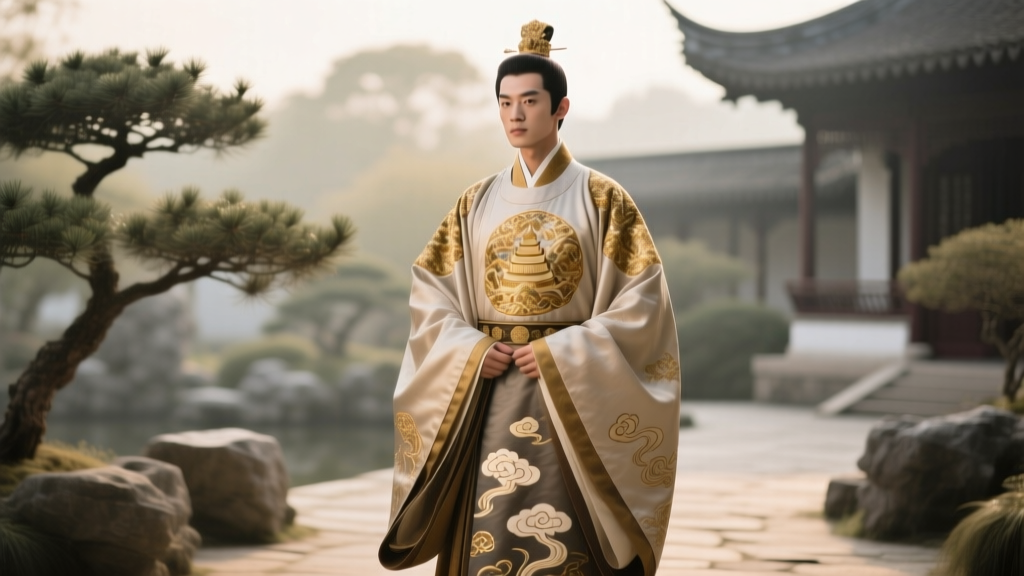
Hanfu (汉服) refers to the historical dress of the Han Chinese, spanning from the mythical Yellow Emperor to the late Ming Dynasty (1368–1644). For men, the silhouette is characterized by voluminous sleeves, flowing skirts, and, most importantly, the cross-collar. Two of the most prominent varieties in the modern Hanfu revival are the Daopao and the Feiyu Fu.
The Daopao (道袍): Structure and Modesty
Despite its literal translation as 'Taoist robe,' the Daopao was the standard daily and semi-formal wear for Ming Dynasty scholars and literati. Its defining feature is the anbai (暗摆), or 'hidden swing.' Unlike robes with simple side slits, the Daopao features intricate internal pleating and fabric panels sewn to the inside of the side seams. This structural innovation allows for a wide stride while ensuring that the wearer's inner garments remain completely concealed, adhering to Confucian ideals of modesty and propriety.
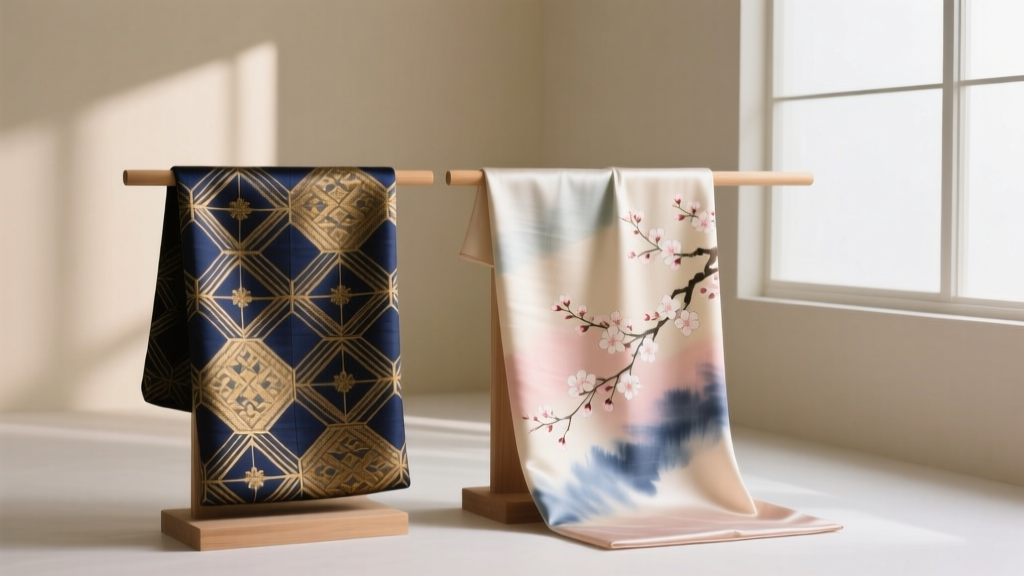
Authentic Ming-style Daopao are crafted from materials like mulberry silk, linen, or high-grade cotton. Artisan weavers in Suzhou still produce Song brocade (宋锦) specifically for these garments, featuring subtle, tone-on-tone geometric patterns rather than loud, ostentatious motifs.
The Feiyu Fu (飞鱼服): Martial Elegance
Originally a ceremonial uniform granted by the Jiajing Emperor to the Jinyiwei (Embroidered Uniform Guard), the Feiyu Fu is characterized by its 'flying fish' motif—a dragon-like creature with a fish's tail and wings. Today, it is a highly sought-after style for formal Hanfu events. The collar is typically a round collar (圆领) worn with a structured leather or silk belt, and the garment often features horse-hoof cuffs or wide, dramatic sleeves depending on the specific regional reconstruction.
Construction and the Rule of Youren
The most critical rule in wearing Hanfu is jiaoling youren (交领右衽), meaning the left side of the collar must cross over the right side. As documented by The Metropolitan Museum of Art's Heilbrunn Timeline of Art History, this rightward lapel was a defining marker of Han civilization, distinguishing the living from the deceased. Wrapping the right side over the left (zuoren) is strictly reserved for burial garments and is considered highly inauspicious in living culture.
Changshan and Magua: The Manchu Influence
The establishment of the Qing Dynasty (1644–1912) by the Manchu people brought a radical shift to Chinese menswear. The mandatory Tifa Yifu edict forced Han men to adopt Manchu hairstyles and clothing. This era birthed the Changshan (长衫, long shirt) and the Magua (马褂, riding jacket).
The Anatomy of the Changshan
The Changshan features a mandarin collar (stand collar) and a central or right-side closure fastened with pankou (hand-knotted silk frog buttons). Unlike the wide, draped sleeves of the Hanfu, the Changshan sleeve is narrower and ends in a distinct 'horse-hoof' cuff (马蹄袖) in formal court variations, designed to be flipped back for archery and flipped down to protect the hands from the cold. For daily civilian wear, the sleeves were flat and fitted. According to the Victoria and Albert Museum's Chinese Collections, Qing-era menswear also introduced the buzi (rank badge), a square embroidered patch on the front of the outer jacket denoting the wearer's civil or military rank.
Textile Engineering: Xiangyunsha Silk
High-end Changshan garments were often made from Xiangyunsha (香云纱), or Gambiered Canton gauze. This intangible cultural heritage fabric is dyed using the juice of the Dioscorea cirrhosa tuber and coated with iron-rich mud from the Pearl River Delta. The resulting fabric is waterproof, naturally cooling, and produces a distinctive rustling sound when walked in, making it a premier choice for summer Changshan.
Comparative Analysis: Hanfu vs. Qing-Era Garments
To understand the practical differences between these major styles, consider the following structural and cultural comparison:
| Feature | Hanfu (Daopao) | Changshan / Magua | Modern Tangzhuang |
|---|---|---|---|
| Era of Origin | Ming Dynasty (1368–1644) | Qing Dynasty (1644–1912) | Modern Synthesis (2001+) |
| Collar Style | Cross-collar (Jiaoling) | Mandarin / Stand collar | Mandarin with frog buttons |
| Lapel Protocol | Left over Right (Youren) | Central or Right overlap | Central overlap |
| Sleeve Silhouette | Wide, flowing (Paoxiao) | Fitted, horse-hoof cuff | Standard tailored cuff |
| Primary Modern Use | Ceremonial, Hanfu Revival, Festivals | Martial Arts, Historical Reenactment | Lunar New Year, Weddings, Diplomacy |
| Avg. Price (USD) | $60 - $450 | $80 - $300 | $50 - $250 |
The Modern Tangzhuang: A Contemporary Synthesis
Often mistakenly referred to in the West as a 'Tang Suit,' the Tangzhuang (唐装) is not from the Tang Dynasty. It is a modern hybrid created in the late 20th century, gaining global prominence when world leaders wore them at the 2001 APEC Summit in Shanghai. The Tangzhuang merges the Manchu mandarin collar and frog buttons with Western-style set-in sleeves and shoulder pads, tailored from modern brocade fabrics. While not historically 'traditional' in the ancient sense, it has become a staple of contemporary Chinese festive wear for men, particularly during Lunar New Year and wedding tea ceremonies.
Sourcing Authentic Garments: Price Ranges and Artisans
Acquiring authentic Chinese traditional men's wear requires navigating a market flooded with cheap, synthetic costumes. Here is a practical buying framework for serious collectors and wearers:
- Entry-Level Hanfu (150 - 400 CNY / $20 - $55 USD): Available on platforms like Taobao from reputable entry-level brands (e.g., Shisanyu). Expect polyester-cotton blends and machine-embroidered motifs. Suitable for casual festivals.
- Mid-Tier Artisan Hanfu (800 - 2500 CNY / $110 - $350 USD): Brands like Minghuatang specialize in historically accurate Ming Dynasty reconstructions. Garments are woven from genuine mulberry silk, wool, or high-grade linen, featuring accurate internal anbai structures.
- Bespoke Changshan & Tangzhuang (1500 - 5000 CNY / $200 - $700 USD): For authentic tailoring, buyers should seek out heritage tailors in Shanghai or Beijing. A bespoke Xiangyunsha silk Changshan requires precise measurements and hand-knotted pankou buttons, which alone can take an artisan several days to craft.
When examining frog buttons (pankou), look for tight, dense knotting. Mass-produced garments use glued or loosely stitched synthetic cords, whereas authentic artisan buttons are tightly wound silk that will not fray or lose their shape over time.
Cultural Etiquette and Wearing Protocols
Wearing traditional garments carries cultural weight. The Smithsonian National Museum of Asian Art emphasizes the importance of context when displaying and wearing historical dress. For modern wearers, etiquette dictates that Hanfu should be worn with appropriate undergarments (such as a white zhongyi) to ensure the collar layers correctly. Footwear should ideally be cloth boots or simple leather shoes; pairing a Ming Dynasty Daopao with modern athletic sneakers disrupts the sartorial harmony.
Furthermore, motifs matter. While dragons (long) and flying fish (feiyu) were historically restricted to imperial and noble classes, wearing them today in the context of cultural appreciation and Hanfu revival is widely accepted. However, wearing garments adorned with specific funerary motifs or adopting the 'right-over-left' lapel remains a severe cultural faux pas. By respecting these structural and symbolic boundaries, wearers honor the living legacy of Chinese textile history, transforming clothing from mere costume into a profound dialogue with the past.