Chinese Traditional Jacket: 2026 Event & Styling Guide

Decoding the Chinese Traditional Jacket for Modern Events
When navigating the rich tapestry of Asian formalwear, the Chinese traditional jacket stands out as a versatile, deeply symbolic garment that bridges centuries of sartorial evolution. Whether you are attending a Lunar New Year banquet, participating in a traditional tea ceremony, or seeking an elegant statement piece for a contemporary gala, understanding the nuances of Chinese outerwear is essential. In 2026, the global appreciation for heritage garments has surged, moving beyond costume-like interpretations toward authentic, artisan-crafted pieces that honor regional textile traditions.
This comprehensive event guide will help you decode the various styles of Chinese jackets—from the Qing dynasty Magua to the Ming-inspired Ao—ensuring you dress with cultural respect, historical accuracy, and impeccable style for any occasion.
A Historical Timeline: From Imperial Courts to Modern Summits
To wear a Chinese traditional jacket with confidence, one must first understand its lineage. The garments we recognize today are primarily descended from two distinct historical periods, alongside modern syntheses:
- The Ming Dynasty (1368–1644): Characterized by the Ao (a lined or padded jacket) and Pifeng (a cloak-like outer jacket), often featuring standing collars and intricate woven brocades. These are highly popular in the modern Hanfu revival movement.
- The Qing Dynasty (1636–1912): Introduced Manchu-influenced silhouettes, including the Magua (a short riding jacket worn over robes) and the Qipao jacket. These pieces introduced the iconic pan kou (knotted frog buttons) and flat-cut tailoring.
- The Modern Tangzhuang (2001–Present): Contrary to its name, the Tangzhuang (唐装) is not from the Tang Dynasty. It was specifically designed for the 2001 APEC Summit in Shanghai, blending the Western set-in sleeve with the traditional Qing Magua collar and knot buttons. Today, it remains a staple for festive family gatherings.
For a deeper dive into the evolution of these textiles, the Victoria and Albert Museum's Asian Collections offers extensive archives on Qing dynasty silk weaving and court dress construction, highlighting the meticulous craftsmanship that defines these garments.
The Event Matrix: Matching Jacket Styles to Occasions
Selecting the correct Chinese traditional jacket depends heavily on the formality, cultural context, and season of your event. Use the matrix below as your 2026 styling blueprint.
| Event Type | Recommended Jacket Style | Ideal Fabric & Motif | Color Protocol |
|---|---|---|---|
| Lunar New Year / Family Reunion | Tangzhuang or Magua | Silk Brocade; Peony or Coin motifs | Crimson, Gold, Jewel Tones |
| Traditional Wedding (Tea Ceremony) | Ming-style Ao or Qing Qipao Jacket | Shu Brocade; Phoenix/Dragon motifs | Red, Crimson, Deep Maroon |
| Formal Gala / Banquet | Modern Pifeng or Beizi | Xiangyunsha (Gambiered Silk), Satin | Emerald, Navy, Obsidian, Plum |
| Tea Gathering / Cultural Festival | Cotton/Linen Tang Suit | Slub Cotton, Ramie; Bamboo/Orchid | Earth tones, Jade, Ivory |
Lunar New Year & Family Reunions: The Tangzhuang and Magua
For Spring Festival celebrations, the Tangzhuang is the undisputed champion of festive wear. Its relaxed fit accommodates layers, making it perfect for winter banquets. Men typically wear a dark, brocade Magua over a contrasting changshan (long robe), while women often opt for a tailored Tangzhuang featuring the li ling (standing collar). When shopping for these pieces, look for jacquard weaves where the pattern is woven into the fabric rather than printed, ensuring a subtle, luxurious sheen under banquet lighting.
Traditional Weddings & Tea Ceremonies: The Ao and Xiapei
In the contemporary Hanfu wedding movement, brides and grooms are increasingly turning to the Ming dynasty Ao (jacket) paired with a Mamianqun (horse-face skirt). A wedding Ao is typically heavily embroidered with pan jin (gold-wrapped thread) depicting auspicious motifs like the dragon and phoenix (longfeng). For the tea ceremony, a slightly less formal, unlined silk jacket in vermilion or lotus pink is preferred, allowing for ease of movement while pouring tea for elders. According to textile historians at the Metropolitan Museum of Art's Asian Art Department, the use of specific auspicious motifs on wedding outerwear was strictly codified during the Ming era, a tradition that modern brides respectfully revive today.
Formal Banquets & Galas: The Modern Pifeng
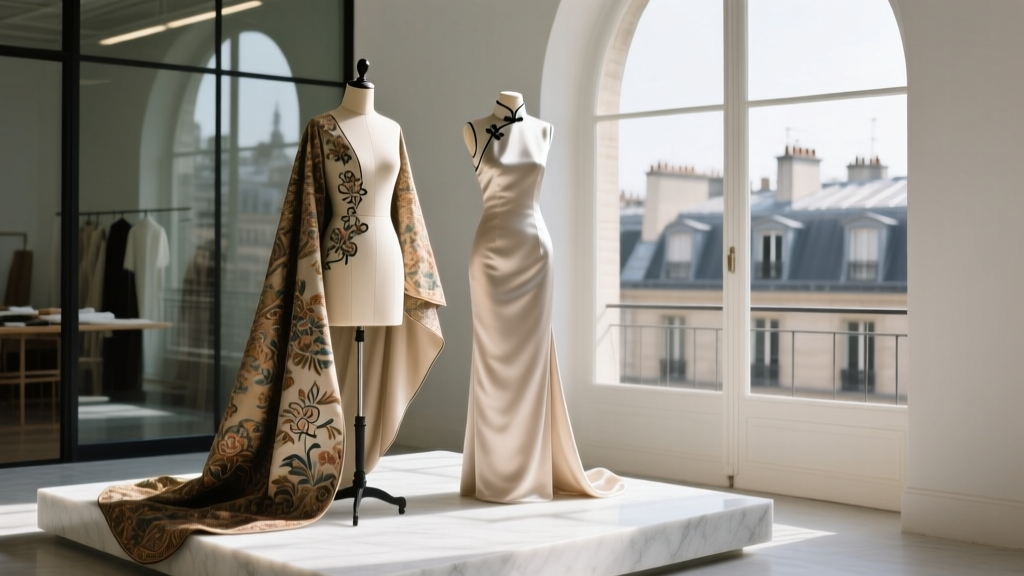
If you are attending a black-tie event or a high-end cultural gala, the Pifeng (a traditional cloak or cape-like jacket) offers unparalleled elegance. Draped over a modern slip dress or a sleek silk tunic, a floor-length Pifeng crafted from Xiangyunsha (gambiered canton gauze) provides a dramatic, architectural silhouette. This fabric, dyed with薯莨 (shuliang) yam juice and river mud, features a distinctive crackled texture and a rich, dark patina that appeals to modern minimalist aesthetics while remaining deeply rooted in Lingnan heritage.
Fabric, Construction, and the Art of the Pan Kou
The true hallmark of a high-quality Chinese traditional jacket lies in its construction and hardware. Unlike Western tailoring, which relies on darts and shoulder seams to create a three-dimensional shape, historical Chinese garments utilize a flat-cutting method. The fabric is cut in continuous planes, meaning the grain line runs seamlessly from the hem, across the shoulder, and down the sleeve. This not only preserves the integrity of elaborate woven patterns but also creates a graceful, fluid drape that moves with the wearer.
The Pan Kou (Frog Buttons)
The pan kou (盘扣) is far more than a functional fastener; it is a canvas for artisan expression. Handcrafted from silk cords, these knotted buttons can take an artisan hours to complete.
- Geometric Knots: The standard 'Yi' (一字) knot is used for everyday and menswear jackets.
- Floral and Fauna Knots: Intricate designs shaped like plum blossoms, butterflies, or swallows are reserved for womenswear, bridal jackets, and high-formal occasions.
- Hollow vs. Solid: Master artisans create hollow knots that allow the fabric's underlying pattern to show through, a technique highly prized by collectors.
'A master tailor does not merely sew a jacket; they engineer the tension of the pan kou so that it fastens securely without pulling the delicate silk brocade out of alignment.' — Master Tailor Proverb, Suzhou Textile Guild.
Sourcing and Pricing: What to Expect in 2026
As the demand for authentic heritage wear grows, the market has bifurcated into mass-produced fast fashion and artisan-crafted investment pieces. When sourcing a Chinese traditional jacket, understanding these tiers will help you allocate your budget effectively.
- Mass-Market / Festival Wear ($40 – $120 USD / 300 – 850 RMB): Typically made from synthetic blends or printed polyester. The pan kou are often machine-stitched or glued. Suitable for casual Lunar New Year parties or costume events, but lacks breathability and historical accuracy.
- Mid-Tier / Boutique Artisan ($250 – $600 USD / 1,800 – 4,500 RMB): Crafted from genuine mulberry silk, Song brocade, or high-grade linen. Features hand-tied pan kou and proper flat-cut tailoring. Ideal for weddings, tea ceremonies, and formal dinners.
- Bespoke / Heritage Couture ($1,500 – $5,000+ USD / 10,000+ RMB): Commissioned from master tailors in Suzhou, Hangzhou, or Shanghai. Utilizes intangible cultural heritage fabrics like Xiangyunsha or hand-loomed Shu brocade. Embroidery is done by hand using traditional Su Xiu (Suzhou embroidery) techniques. These are heirloom-quality garments.
For those seeking authentic mid-tier and bespoke pieces, visiting the silk hubs of Suzhou or utilizing verified artisan cooperatives affiliated with the British Museum's Asian textile preservation networks can provide access to legitimate craftspeople who are keeping these ancient weaving techniques alive.
Cultural Etiquette and Styling Protocols
Wearing a Chinese traditional jacket requires an understanding of cultural protocols to ensure respect and appropriateness.
The Rule of the Lapel: Historically, the most critical rule in Han Chinese dress is jiao ling you ren (交领右衽)—meaning the left side of the garment must cross over the right side. The right lapel should always be on the inside, close to the body. In traditional Chinese culture, reversing this (left inside, right outside) was strictly reserved for dressing the deceased for burial. While modern Tangzhuang jackets often use center-front closures, if you are wearing a cross-collared Ao or Beizi, ensuring the correct lapel overlap is a vital sign of cultural literacy.
Color Symbolism: While red is universally auspicious for weddings and New Year, avoid wearing all-white or all-black ensembles to joyous family events, as these colors are traditionally associated with mourning. Conversely, for solemn events or funerals, a plain, unadorned dark jacket in navy, black, or muted grey is the respectful choice, completely devoid of shiny brocades or metallic embroidery.
Modern Pairing: In 2026, styling a Chinese traditional jacket does not require a head-to-toe historical look. A Ming-style Ao pairs beautifully with modern, high-waisted wide-leg trousers or a sleek midi skirt. A brocade Magua can be worn open over a crisp white button-down shirt and tailored trousers for a sophisticated East-meets-West business banquet look. The key is to let the jacket serve as the focal point, honoring its intricate craftsmanship while grounding it in contemporary elegance.