Chinese Hanfu: Care and Maintenance Guide

The Resurgence and Responsibility of Hanfu Care
The global renaissance of the Chinese traditional hanfu (汉服) has brought centuries of sartorial elegance back into everyday life, festivals, and ceremonial spaces. However, owning a hanfu is not merely about wearing it; it is about acting as a steward of textile heritage. Unlike modern fast fashion, authentic hanfu garments are constructed using specific flat-cutting techniques, intricate pleating, and delicate natural fibers that demand specialized care. Whether you own an everyday cotton ruqun (襦裙) priced around $40 or a museum-grade, hand-embroidered silk aoqun (袄裙) valued at over $1,500, improper maintenance can irreversibly damage the fabric's structural integrity and historical silhouette.
Understanding the Textile Heritage
Historically, Chinese textiles were governed by sumptuary laws and regional climates. The fibers used—ranging from lustrous mulberry silk in the Jiangnan region to breathable ramie in the humid south—each possess unique chemical properties. Silk is a protein fiber, highly sensitive to alkaline substances and UV degradation. Ramie and linen are cellulose fibers, robust but prone to hard creasing. Understanding these material differences is the first step in preserving your Chinese traditional hanfu for future generations.
The Hanfu Fabric Care Matrix
Before washing any garment, always check the manufacturer's label, but use the following matrix as your foundational guide for traditional fabrics.
| Fabric Type | Wash Method | Water Temp | Iron/Steam Temp | Storage Note |
|---|---|---|---|---|
| Mulberry Silk (桑蚕丝) | Hand wash only / Dry clean | Cold (Max 30°C) | Low heat (with press cloth) | Stuff sleeves with acid-free tissue; keep away from light. |
| Ramie/Linen (苎麻/亚麻) | Hand wash or gentle machine | Cool to Warm | High heat (while damp) | Roll rather than fold to prevent permanent crease marks. |
| Cotton (棉) | Machine wash (gentle cycle) | Cold to Warm | Medium to High heat | Standard folding; watch for color bleeding in indigo dyes. |
| Xiangyunsha (香云纱) | Hand wash ONLY (no wringing) | Cold | Steam only (no direct iron) | Hang in breathable garment bag; requires high humidity. |
| Synthetic Chiffon/Poly | Machine wash (mesh bag) | Cold | Low heat / Steam | Hang to prevent static and snagging. |
Washing Protocols by Garment Type
The construction of a Chinese traditional hanfu dictates how it interacts with water and agitation. Flat-cut sleeves and overlapping collars require specific handling to prevent stretching and dye transfer.
Caring for the Ruqun (襦裙) and Aoqun (袄裙)
The ruqun (a short jacket paired with a long skirt) and the aoqun (a lined or thicker jacket with a skirt) are staple silhouettes. When washing these sets, never wash the top and bottom together if they feature contrasting colors, as traditional dyes (and even modern commercial dyes used in hanfu manufacturing) can bleed in water. Use a pH-neutral detergent specifically formulated for silk or delicate fibers. Standard alkaline laundry detergents will strip the natural sericin from silk fibers, causing them to become brittle and lose their luster. Submerge the garment, gently agitate with your hands, and let it soak for no more than 5 to 10 minutes.
Preserving the Pleats of the Mamianqun (马面裙)
The mamianqun, or horse-face skirt, is an iconic Ming Dynasty silhouette characterized by its flat front and back panels with intricate side pleats. Agitation in a washing machine will destroy these pleats. To clean a mamianqun:
- Fill a basin with cold water and a drop of pH-neutral detergent.
- Submerge the skirt and gently press the water through the fabric. Do not twist or wring the skirt, as this will distort the pleat geometry.
- Rinse thoroughly with cold water until the water runs clear.
- Gently press out excess water by rolling the skirt in a clean, dry microfiber towel.
Specialty Textiles: Handling Xiangyunsha and Embroidery
The Gambiered Canton Gauze (香云纱)
Xiangyunsha is one of the most luxurious and expensive textiles in Chinese heritage, often costing upwards of $300 to $800 per yard. Originating from the Pearl River Delta, it is dyed using the juice of the Dioscorea cirrhosa tuber and coated with iron-rich river mud, creating a distinctive two-toned, crackled patina. According to conservation guidelines from the China National Silk Museum, Xiangyunsha must never be machine washed, dry-cleaned with harsh chemicals, or wrung out. It requires gentle hand washing in cool water. The mud-coated side should be handled with extreme care to preserve its unique textured finish.
Protecting Intricate Embroidery
Many formal hanfu garments feature dense Suzhou or Shu embroidery. When washing embroidered pieces, turn the garment inside out to protect the threads from friction. If a snag occurs, never pull the thread. Instead, use a fine needle to gently coax the snagged thread back to the reverse side of the fabric.
Drying, Ironing, and Steaming Techniques
Direct sunlight is the enemy of natural dyes and silk proteins. UV exposure will cause rapid fading and fiber degradation. Always dry your Chinese traditional hanfu in a well-ventilated, shaded area.
When it comes to removing wrinkles, steam is superior to direct heat. A handheld garment steamer is an essential tool for any hanfu enthusiast. For silk garments, hold the steamer a few inches away from the fabric to prevent water spotting. If you must use a traditional iron, always use a cotton press cloth between the iron and the hanfu, and iron on the reverse side of the fabric to protect the weave and any metallic embroidery threads from melting or scorching.
Archival Storage and Moth Prevention
Proper storage is critical, especially for seasonal garments like the heavy, lined winter ao or delicate summer ramie banbi (半臂 - half-sleeve vest).
Folding Without Breaking Fibers
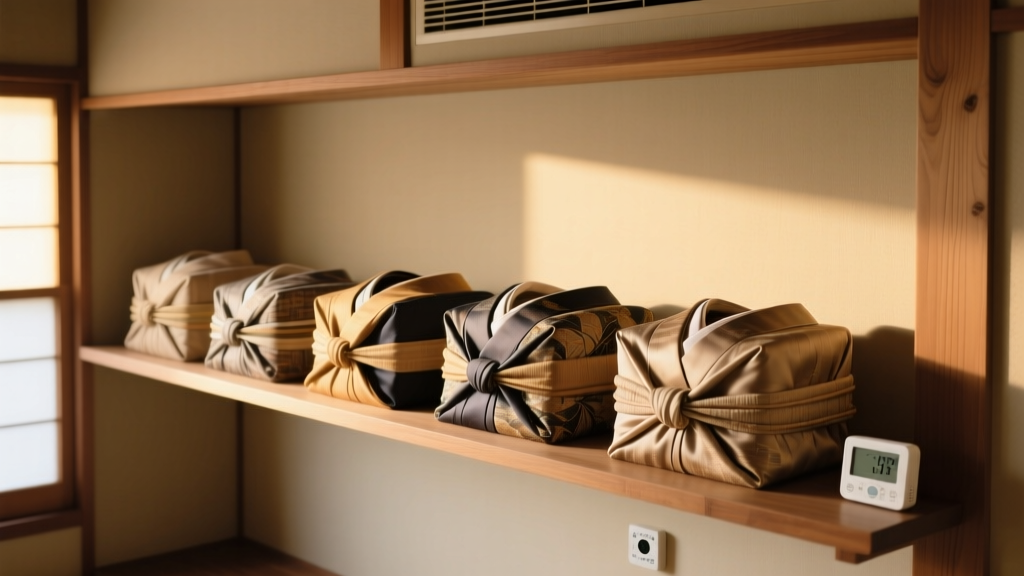
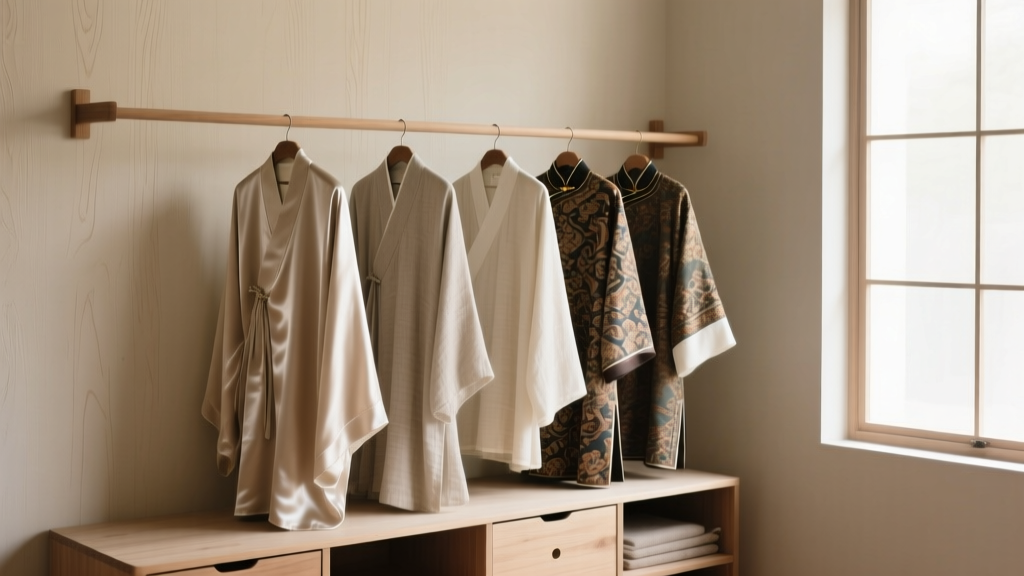
Sharp folds can cause permanent stress fractures in silk fibers over time. The Victoria and Albert Museum recommends using acid-free tissue paper to stuff sleeves, collars, and bodices before folding. This creates gentle curves rather than hard creases. For heavily pleated garments like the mamianqun, hanging is preferred. Use wide, padded hangers to support the waistband without creating shoulder or waist dimples.
Natural Moth Deterrents
Protein fibers like silk and wool are highly susceptible to clothes moths and carpet beetles. Avoid chemical mothballs (naphthalene or paradichlorobenzene), as their toxic fumes can degrade silk and leave an overpowering odor that is nearly impossible to remove. Instead, utilize natural alternatives such as cedarwood blocks, dried lavender sachets, or traditional Chinese camphor wood (樟木) chests, which naturally repel insects while imparting a subtle, culturally authentic fragrance.
Authoritative Conservation Resources
For collectors and enthusiasts seeking to deepen their understanding of textile preservation, the following institutions offer invaluable resources:
- The Metropolitan Museum of Art (Costume Institute): Offers extensive guidelines on the archival storage and environmental control of historical Asian textiles.
- China National Silk Museum (Hangzhou): The premier authority on the history, weaving techniques, and conservation of Chinese silk, including specialized fabrics like Xiangyunsha and Kesi (cut silk).
- Victoria and Albert Museum (V&A): Provides excellent public guides on cleaning, displaying, and storing delicate historical garments and embroideries.
By treating your Chinese traditional hanfu with the respect and specialized care it deserves, you ensure that these beautiful garments remain vibrant, wearable testaments to Asian cultural history for decades to come.