Chinese Traditional Hair Style: Care & Accessory Guide

The Architecture of Elegance: Beyond the Visual
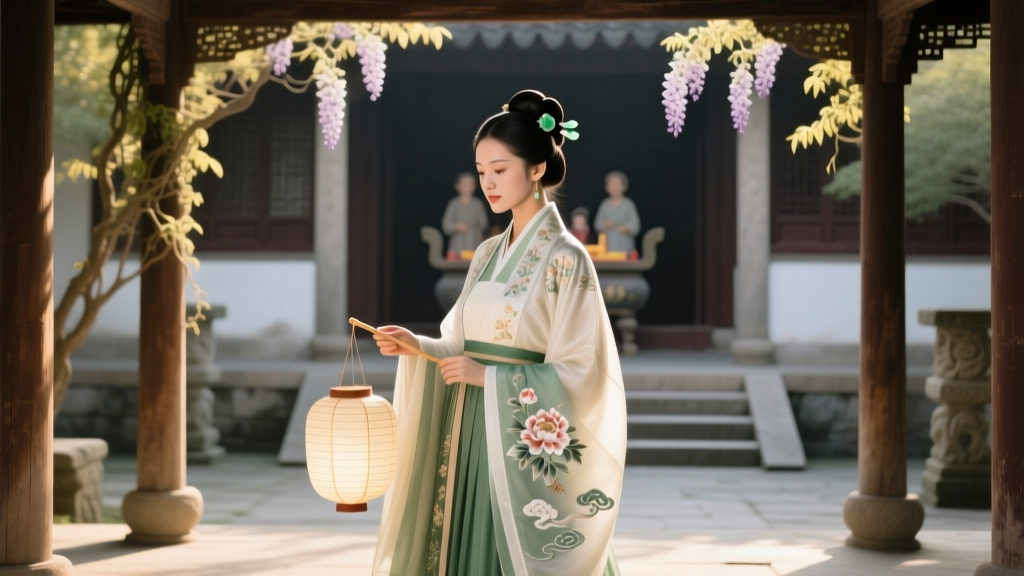
The Chinese traditional hair style (传统发型 - chuántǒng fàxíng) is far more than an aesthetic choice; it is a complex architectural feat that balances gravity, tension, and historical symbolism. Whether you are a dedicated Hanfu enthusiast, a cultural performer, or a bride preparing for a traditional ceremony, achieving the perfect fàjì (发髻 - hair bun) requires an intimate understanding of both hair biology and artifact conservation. Unlike modern styling, which often relies on heat and chemical aerosols, traditional Chinese hair care and accessory maintenance prioritize longevity, material integrity, and scalp health.
In this comprehensive care and maintenance guide, we explore the ancient rituals of hair preparation, the meticulous conservation of precious metal and jade hairpins, and the modern protocols for preserving delicate textile hairpieces. By treating your styling tools as cultural artifacts, you ensure that your practice remains both authentic and sustainable.
The Foundation: Historical Cleansing and Conditioning Rituals
Before a single pin is placed, the hair itself must be prepared using methods that have been refined over millennia. Traditional Chinese hair care avoids harsh sulfates, focusing instead on natural, pH-balanced botanical treatments that provide the necessary grip and luster for intricate updos.
Fermented Rice Water (淘米水 - Táo Mǐ Shuǐ)
Historically documented in texts dating back to the pre-Qin era, fermented rice water remains a cornerstone of traditional hair care. The Yao women of Huangluo, famous for their floor-length, pitch-black hair, still utilize this method today. To prepare an authentic rinse, soak unpolished rice in water for 30 minutes, strain, and allow the liquid to ferment at room temperature for 24 to 48 hours. The resulting slightly acidic solution (pH 5.0-5.5) is rich in inositol, a carbohydrate that repairs damaged hair cuticles and provides the natural 'drag' required to keep heavy buns from slipping, eliminating the need for modern texturizing sprays.
Camellia Oil (茶油 - Chá Yóu) for Sealing and Luster
Once cleansed, the hair must be sealed. During the Ming and Qing dynasties, high-born women applied cold-pressed Camellia seed oil to their hair ends and scalp. According to research highlighted by the Smithsonian National Museum of Asian Art regarding historical cosmetic trade routes, Camellia oil was prized for its high oleic acid content and lightweight molecular structure. Apply just two to three drops to damp hair before styling. It acts as a natural humectant, preventing the hair from snapping under the tension of tight wrapping techniques while imparting a glass-like sheen that mimics the appearance of polished black silk.
Preserving the Hardware: Maintenance of Hairpins and Coronets
The true weight and beauty of a Chinese traditional hair style lie in its hardware: the zān (簪 - single-prong pin), chāi (钗 - double-prong pin), and the highly complex bùyáo (步摇 - step-sway dangling pin). These items are often crafted from heterogeneous materials, making their cleaning and storage a delicate conservation effort.
The Ethics and Care of Tian-tsui (点翠)
Historically, the most prized imperial hair accessories featured tian-tsui, an art form utilizing the iridescent blue feathers of the kingfisher bird. Because this practice is now ethically and legally restricted, modern artisans create stunning replicas using dyed goose feathers, silk threads, or enamel. Never use water, ultrasonic cleaners, or liquid polish on tian-tsui or its modern feather/silk alternatives. Moisture will cause the organic dyes to bleed and the silk threads to fray. Use a soft, dry makeup brush to gently sweep away dust, and store these pieces in rigid, acid-free boxes to prevent the delicate springs from being crushed.
Material-Specific Conservation Guide
To maintain the structural integrity and historical value of your collection, follow this material-specific maintenance matrix:
| Material | Historical Context | Cleaning Protocol | Storage Requirements | Market Value (Modern/Antique) |
|---|---|---|---|---|
| Hetian Jade | Ming/Qing Zān | Wipe with a damp microfiber cloth. Avoid all chemicals and ultrasonic baths which can fracture internal fissures. | Wrap in unbleached cotton or silk. Keep away from extreme heat. | $80 (Replica) - $5,000+ (Antique) |
| Silver-Gilt (Gold Wash) | Tang/Song Chāi | Clean with a dry silver cloth. Do NOT use liquid silver dip, which will strip the microscopic gold wash layer. | Store in anti-tarnish zip bags with silica gel packets. | $150 - $2,500 |
| Sandalwood / Peach Wood | Everyday Combs | Brush with a dry bristle brush. Recondition annually with a drop of food-grade mineral oil. | Keep in a breathable wooden box; avoid plastic which traps moisture and causes mold. | $30 - $250 |
| Pearl & Coral Inlay | Qing Dynasty Coronets | Dust only. Pearls are highly porous and will dissolve or lose their nacre if exposed to acidic cleaners or perfume. | Store flat in padded compartments. Never hang, as silk threading stretches and breaks over time. | $300 - $10,000+ |
Managing Silk Ribbons, Nets, and Faux Hairpieces
Achieving the voluminous silhouettes of the Tang dynasty or the elaborate double-buns of the Han dynasty often requires structural padding and faux hairpieces (假发 - jiǎfà). Modern Hanfu practitioners frequently use silk hair nets (发网 - fàwǎng) and synthetic or human hair padding to anchor heavy metal accessories.
Washing and Drying Silk Textiles
Silk ribbons and nets must be washed in cold water using a pH-neutral baby shampoo or specialized silk wash. Never wring or twist the silk, as this breaks the continuous protein filaments. Instead, press the water out between two clean towels and lay the item flat to dry away from direct sunlight, which will yellow the fibers and degrade the tensile strength required to hold heavy bronze or brass pins.
Sanitizing Hair Padding
Structural hair pads absorb scalp oils and environmental humidity. After every 3-4 wears, lightly mist the padding with a 70% isopropyl alcohol solution to sanitize and deodorize without saturating the core. Allow it to air dry completely in a well-ventilated area before placing it back into your storage drawer. Storing damp padding will result in mildew, which can permanently stain both the hairpiece and your natural hair.
Modern Mechanics: Securing the Fàjì Without Damage
The most common mistake modern wearers make when attempting a Chinese traditional hair style is relying on tight elastic bands. Elastics create severe tension alopecia at the crown and snap easily under the weight of a jade jiulong (nine-dragon) coronet.
'The elegance of the traditional bun lies in its internal tension, not external binding. The hair should be woven and pinned upon itself, utilizing the friction of the hair cuticles rather than the constriction of rubber.' — Curatorial notes on historical grooming practices, Victoria and Albert Museum Chinese Collections.
The Figure-Eight Pinning Technique
To secure a heavy bun without damage, utilize the traditional figure-eight wrapping method. Twist the hair into a rope, fold it back onto itself, and weave the tail through the base. When inserting a zān (single pin), always scoop a small section of scalp-hair near the base of the bun before pushing the pin through the center of the bun and out the other side. This anchors the pin to the root-hair rather than just the bun itself, distributing the weight of heavy jade or metal ornaments evenly across the scalp.
Sourcing Authentic Accessories and Conservation Resources
When building a collection of traditional hair accessories, provenance and material authenticity are paramount. For those seeking museum-grade inspiration and historical accuracy, the Metropolitan Museum of Art's Heilbrunn Timeline of Art History offers exceptional visual archives of Chinese metalwork and jade carving techniques from the Tang and Song dynasties. These resources are invaluable for identifying the correct motifs—such as the lotus, phoenix, and peony—and ensuring your purchased pieces reflect genuine historical craftsmanship rather than mass-produced, anachronistic costume jewelry.
For daily wear, invest in high-quality sandalwood combs and brass-alloy replicas from established artisan cooperatives in Jingdezhen or Suzhou. Reserve your delicate, antique, or high-end artisan bùyáo for controlled environments like studio photography or formal ceremonies. By respecting the materials and mastering these historical maintenance techniques, you elevate your styling practice from mere costuming to the active preservation of a profound cultural legacy.