Chinese Traditional Hair Pins: 2026 Modern Styling Guide

The Renaissance of Chinese Traditional Hair Pins
The global resurgence of Hanfu and traditional Chinese aesthetics has brought centuries-old accessories back into the contemporary spotlight. Among the most intricate and culturally significant of these accessories are Chinese traditional hair pins. Far from being mere decorative objects, these pins represent a complex language of social status, marital status, and regional artistry. For the modern wearer, understanding the structural engineering, historical context, and cultural protocols of these ornaments is essential for styling them with authenticity and respect. Whether you are pairing a delicate jade hairpin with a sleek Qipao or securing an elaborate Ming-dynasty inspired updo for a Hanfu gathering, this comprehensive guide will help you navigate the world of traditional Chinese hair ornaments.
The Anatomy of Heritage: Zan, Chai, and Buyao
To style these pieces effectively, one must first understand their distinct structural categories. Traditional Chinese hairpins are not a monolith; they are engineered for specific hair types, weights, and cultural occasions.
Zan (簪): The Single-Pronged Anchor
The Zan is a single-pronged hairpin used primarily to secure the main structure of a bun or twist. Historically carved from wood, bone, jade, or precious metals, the Zan relies on tension and the wrapping technique of the hair to stay in place. For modern wearers with thick or slippery hair, artisans often carve subtle grooves or textures into the shaft of wooden or jade Zan to increase friction. The decorative head of a Zan can range from a simple polished jade cabochon to an intricate gold filigree phoenix.
Chai (钗): The Double-Pronged Symbol
The Chai features a double-pronged base, resembling a modern split-pin or hair fork. This design allows it to grip larger sections of hair more securely than a single prong. Culturally, the Chai holds deep romantic and marital significance. In classical Chinese poetry and literature, a Chai was often broken in half, with each lover keeping one prong as a pledge of fidelity and a promise of reunion. Today, the Chai is highly favored for securing heavy, braided crowns in Hanfu styling.
Buyao (步摇): The Step-Shake Ornament
Translating literally to 'step-shake,' the Buyao is a spectacular hairpin featuring dangling ornaments, chains, or tassels that sway with the wearer's movements. Peaking in popularity during the opulent Tang Dynasty (618–907 CE), the Buyao was designed to enforce graceful, measured movements; if a woman walked too hastily or erratically, the pin would tangle and clatter. Modern reproductions often utilize lightweight alloys and silk tassels to replicate this kinetic beauty without the heavy strain on the scalp.
Shu (梳): The Decorative Comb
While technically a comb, the Shu is worn with the teeth inserted into the hair and the highly decorated spine visible. Often crafted from sandalwood or lacquer, these are used as finishing touches to smooth the front sections of an updo.
Material Composition and Ethical Sourcing
The material of a hairpin dictates not only its price but its appropriate styling context. According to the Victoria and Albert Museum, Chinese jewelry and hair ornaments have historically served as a portable store of wealth, utilizing precious metals and rare stones.
The Shift from Tian-tsui to Modern Enamel
One of the most famous, yet controversial, traditional techniques is Tian-tsui (点翠), the art of inlaying metalwork with the iridescent blue feathers of the kingfisher bird. Due to modern animal welfare laws and conservation efforts, authentic kingfisher feathers are no longer used. Today's master artisans employ ethical alternatives such as Dianchou (wrapping with dyed silk threads), dyed goose feathers, or high-quality cold enamel (cloisonné) to achieve the same striking azure brilliance. When sourcing, always verify that vendors explicitly state the use of ethical, cruelty-free alternatives.
Jade: Nephrite vs. Jadeite
Jade remains the most revered material in Chinese culture, symbolizing purity, moral integrity, and protection. Historical pins primarily used Hetian nephrite, known for its creamy, mutton-fat luster. In contrast, modern pins frequently feature Burmese jadeite, prized for its translucent, vibrant emerald greens. As noted by The Metropolitan Museum of Art, Ming Dynasty hairpins frequently combined gold filigree with inset gemstones, a technique that modern high-end jewelers continue to replicate for luxury buyers.
Price Guide and Material Comparison
Understanding the market is crucial for collectors and stylists alike. Below is a framework for evaluating Chinese traditional hair pins in the current market.
| Material / Style | Historical Peak Era | Modern Price Range (USD) | Best Styling Application |
|---|---|---|---|
| Carved Sandalwood / Resin | Song / Ming | $15 - $45 | Daily Hanfu wear, casual Qipao |
| Sterling Silver Filigree | Qing Dynasty | $80 - $250 | Formal events, bridal styling |
| Ethical Enamel (Cloisonné) | Ming / Qing | $120 - $400 | Festivals, photography, stage |
| Authentic Hetian Nephrite | Antiquity - Present | $500 - $5,000+ | Heirloom pieces, high-end galas |
| Silk-Wrapped Buyao (Dianchou) | Tang Dynasty | $60 - $180 | Tang-style high buns, cosplay |
Modern Styling Frameworks for Daily Wear
Integrating heritage accessories into modern wardrobes requires balancing visual weight and historical accuracy. The China National Silk Museum frequently highlights how textile and accessory pairings must align with the silhouette of the garment.
Pairing Pins with Hanfu Silhouettes
When styling Hanfu, the pin must match the dynasty's specific aesthetic language:
- Tang Dynasty (Opulence): Pair voluminous, high-swept buns with multiple Buyao and large floral Shu combs. The goal is maximum visual impact, utilizing gold tones and vibrant enamel.
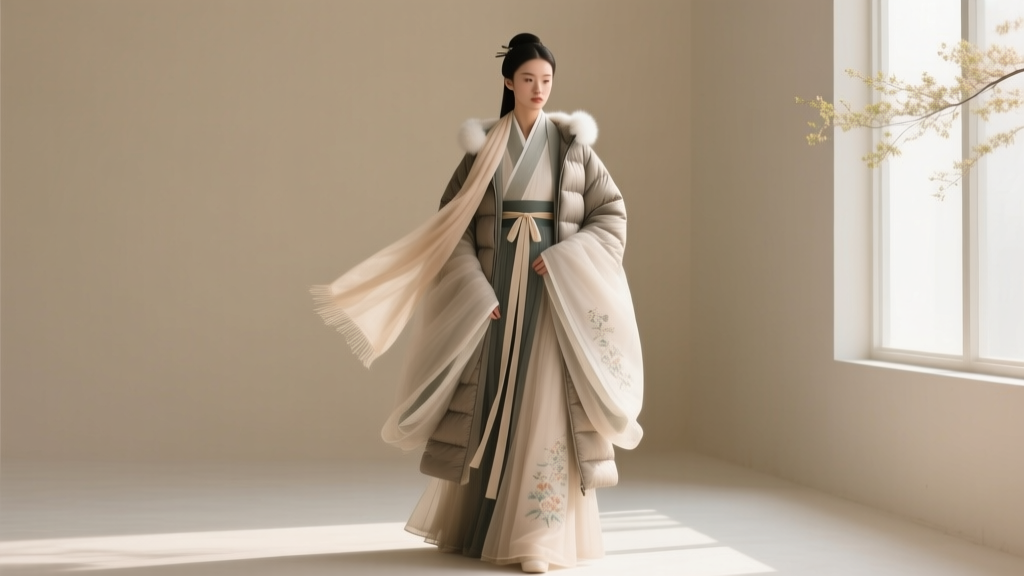
- Song Dynasty (Minimalism): Song aesthetics favor understated elegance. Use a single, high-quality pearl or jade Zan to secure a low, twisted chignon. Avoid dangling elements; focus on the purity of the material.
- Ming Dynasty (Structure): Ming styling often involves the Diji (狄髻) or structured hair covers. Silver and gold hairpins with intricate filigree heads, often featuring auspicious motifs like peaches or bats, are inserted symmetrically around the base of the bun.
Elevating the Qipao and Western Minimalism
For the modern Qipao (Cheongsam), the hair is typically styled in a sleek, low bun or a sophisticated French twist. A single, horizontal jade Zan piercing through the center of a low bun creates a striking, mature silhouette that honors the 1930s Shanghai aesthetic without looking costumey.
Remarkably, traditional hairpins can also elevate Western minimalist fashion. A heavy, textured wooden or dark jade Chai can be used to secure a messy, modern updo paired with a tailored blazer or a backless evening gown. The contrast between the ancient, organic texture of the pin and the sharp, modern lines of Western tailoring creates a sophisticated, cross-cultural statement.
Cultural Etiquette and Placement Rules
Wearing traditional garments and accessories carries inherent cultural weight. Observing proper etiquette demonstrates respect for the living traditions of the Han Chinese and other ethnic groups.
The Jiji Ceremony and Coming of Age
Historically, the Jiji (笄礼) was the coming-of-age ceremony for Han Chinese women, typically held at age 15. During this rite, a young woman's hair, previously worn in braids or loose, was gathered into a bun and secured with a Zan for the first time, signaling her eligibility for marriage and her entry into adult society. While the strict adherence to this age has faded, the symbolic act of 'pinning the hair' remains a powerful metaphor for maturity and responsibility in Chinese literature and cultural memory.
Mourning and Sumptuary Protocols
It is equally important to know when not to wear ornate hairpins. In traditional Chinese mourning protocols, all flashy jewelry, gold, and vibrant enamel hairpins are removed. Mourners would replace them with plain, uncarved wood, bone, or white metal pins to reflect grief and humility. Furthermore, Ming Dynasty sumptuary laws strictly dictated which materials and motifs (like the five-clawed dragon or specific phoenix designs) could be worn by commoners versus the imperial court. While these laws no longer exist, understanding them adds a layer of profound appreciation when viewing antique pieces in museums or selecting high-end artisan reproductions.
Sourcing Authentic Artisan Hairpins
For those looking to invest in authentic, high-quality pieces, seek out specialized artisan cooperatives rather than mass-market costume shops. The city of Jingdezhen remains the premier destination for high-fired enamel and ceramic-inlaid hairpins, while Suzhou is renowned for its silk-thread wrapping and metal filigree. When purchasing online, look for vendors who provide detailed macro-photography of the prong construction, clearly state their material sourcing (especially regarding jade authenticity and ethical feather alternatives), and offer historical context for their designs. By supporting these master artisans, you help ensure that the engineering and beauty of Chinese traditional hair pins continue to thrive in the modern era.