Chinese Traditional Flowers: Silk & Hanfu Art

The Language of Petals: Floral Motifs in Chinese Textile History
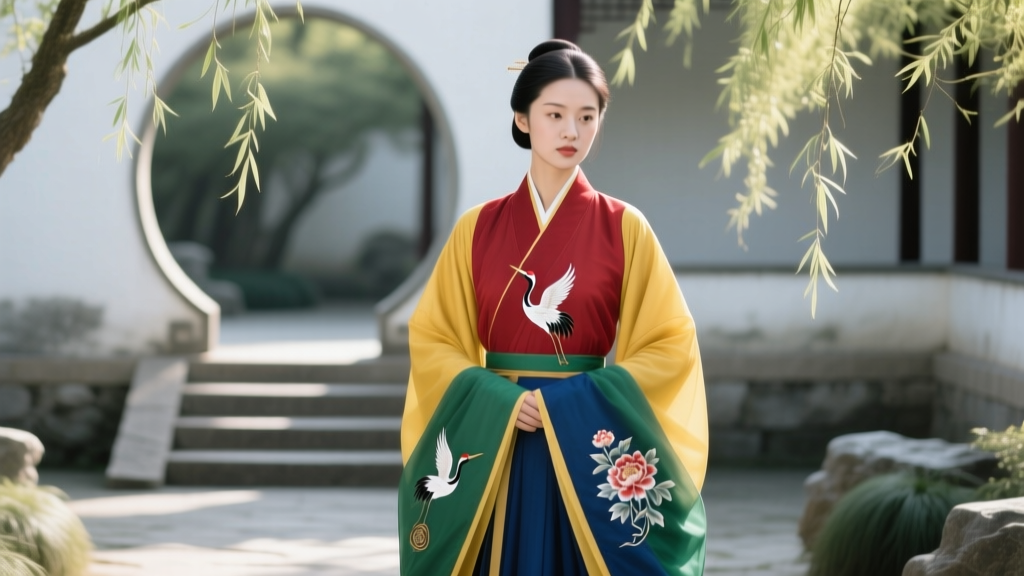
In the rich tapestry of Asian sartorial heritage, few elements are as meticulously coded and universally revered as Chinese traditional flowers. Far from mere decoration, floral motifs on historical garments served as a visual language, communicating the wearer's social rank, moral virtues, and the specific season of a ceremony. From the sweeping hems of Ming dynasty Mamianqun (horse-face skirts) to the form-fitting elegance of 1930s Shanghai Qipaos, the integration of botanical motifs requires a mastery of sericulture, dyeing, and needlework that has been refined over millennia.
Understanding the craftsmanship behind these blooms requires looking past the finished garment and into the looms and embroidery frames of master artisans. The application of Chinese traditional flowers is not a monolith; it varies drastically based on regional techniques, fabric composition, and the intended cultural protocol of the wearer. Today, as the Hanfu movement experiences a global renaissance, distinguishing between mass-market printed florals and heritage-level woven or embroidered botanicals is essential for collectors, historians, and cultural enthusiasts.
The Four Great Embroideries: Techniques Behind the Blooms
The rendering of Chinese traditional flowers on silk relies heavily on China's historic embroidery hubs. The 'Four Great Embroideries' (Su, Shu, Xiang, and Yue) each interpret floral motifs through distinct regional lenses, utilizing specialized stitches that dictate the texture, light reflection, and longevity of the garment.
Suzhou Embroidery (Su Xiu): The Pinnacle of Silk Realism
Originating in Jiangsu province, Su Xiu is celebrated for its photorealistic rendering of florals. Artisans practicing this craft will split a single strand of mulberry silk thread into 1/16th, 1/32nd, or even 1/48th of its original thickness—a technique known as pi si. This micro-threading allows for imperceptible color gradients on a single peony petal, mimicking the natural blush of the flower. The pinnacle of this craft is shuangmian xiu (double-sided embroidery), where a lotus blossom appears identical and perfectly finished on both sides of a translucent silk organza screen or garment panel, with all knot ends hidden within the threads.
Shu, Xiang, and Yue: Regional Floral Expressions
While Suzhou favors delicate realism, Sichuan's Shu Xiu utilizes thicker threads and vibrant, high-contrast colors, often employing a unique halo-stitch to give chrysanthemums a textured, almost three-dimensional depth. Hunan's Xiang Xiu is famous for its ink-wash aesthetic, rendering plum blossoms in monochromatic greys that mimic traditional brush paintings. Meanwhile, Guangdong's Yue Xiu incorporates gold and silver thread couching (panjin), outlining southern florals like the kapok flower with metallic brilliance, historically favored for theatrical costumes and bridal Longfeng gua (dragon-phoenix jackets).
Botanical Symbolism: A Weaver's Guide to Chinese Traditional Flowers
When commissioning or curating authentic garments, one must align the floral motif with its cultural and seasonal context. Wearing a winter bloom at a midsummer banquet, or a symbol of scholarly reclusion at a wedding, breaches traditional sartorial etiquette. Below is a structural guide to the core botanical lexicon.
| Flower Motif | Hanzi / Pinyin | Season | Cultural Symbolism | Traditional Garment Application |
|---|---|---|---|---|
| Peony | 牡丹 (Mǔdān) | Spring | Wealth, honor, and imperial grace | Formal Ming-style Aoqun, bridal Qipao, ceremonial outerwear |
| Lotus | 莲花 (Liánhuā) | Summer | Purity, spiritual enlightenment, harmony | Summer Ruqun, Buddhist ceremonial robes, maternity wear |
| Chrysanthemum | 菊花 (Júhuā) | Autumn | Longevity, scholarly resilience, nobility | Literati robes, autumn Banbi (half-sleeve jackets), elder's attire |
| Plum Blossom | 梅花 (Méihuā) | Winter | Endurance, hope, unyielding spirit | Winter Doupeng (cloaks), inner linings, scholar's casual wear |
| Orchid | 兰花 (Lánhuā) | Spring | Refinement, modesty, elegant virtue | Subtle jacquard weaves on Qipao, literati inner garments |
From Loom to Garment: Integrating Florals into Hanfu and Qipao
The method of applying Chinese traditional flowers to fabric is just as critical as the motif itself. The transition from raw silk to finished garment involves complex structural decisions that affect the drape, weight, and historical accuracy of the piece.
Hanfu: Woven Brocades and Border Placement
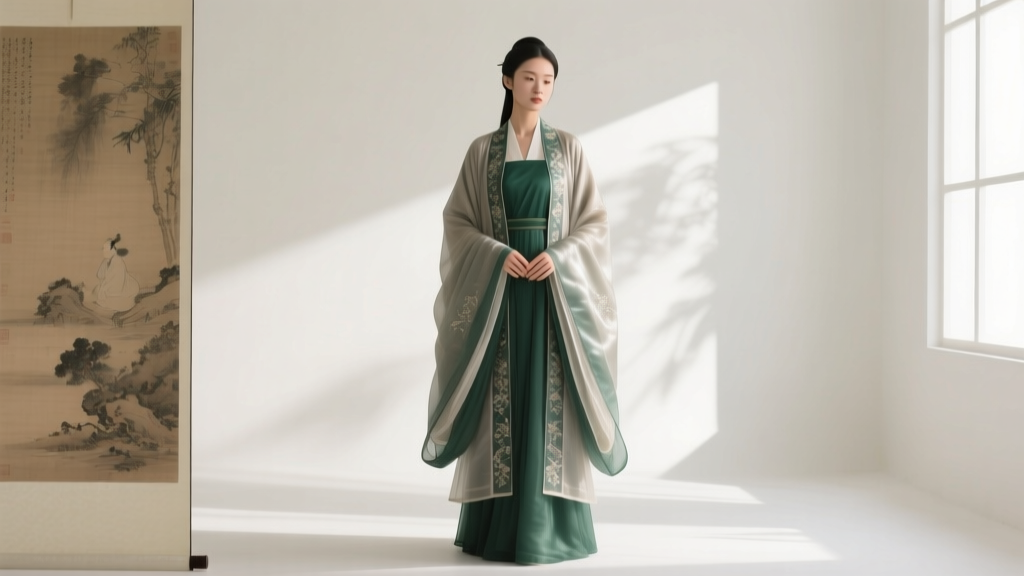
In traditional Hanfu construction, particularly during the Ming Dynasty, florals were rarely embroidered across the entire main body of the fabric. Instead, they were woven directly into the silk using Zhuanghua (brocade) or Kesi (cut silk tapestry) techniques. Kesi is a painstakingly slow tapestry weave where the weft threads are turned back at the edges of the floral color blocks, creating tiny slits that give the illusion of carved silk. On a Mamianqun, Chinese traditional flowers are heavily concentrated on the lan (the decorative borders at the hem and waist), allowing the heavy, gold-woven peonies to anchor the skirt's swing without compromising the breathability of the main silk panels.
Qipao: The Evolution of the Floral Cheongsam
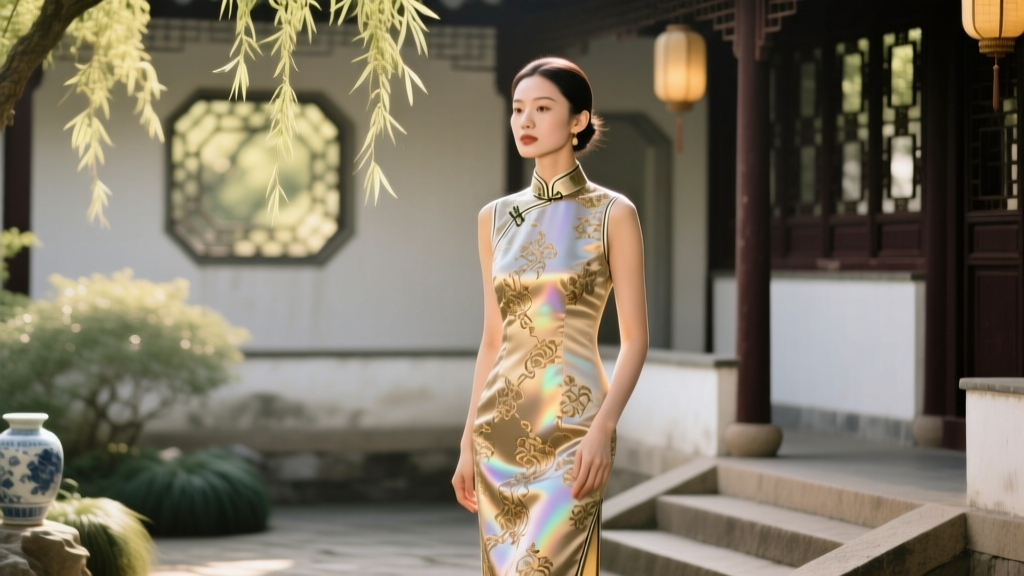
The Qipao (or Cheongsam) of the 1920s and 1930s shifted the paradigm of floral application. Moving away from heavy brocades, Shanghai tailors favored lightweight crepe de chine and Xiangyunsha (gambiered Guangdong silk). Xiangyunsha is dyed using the tannin-rich juice of the薯莨 (Shuliang) yam and sealed with iron-rich river mud, resulting in a dark, rustling fabric that often features subtle, tone-on-tone floral jacquards. For evening wear, artisans applied delicate Su Xiu orchids or plum blossoms asymmetrically across the shoulder and down the side seam, following the natural curve of the garment's pankou (knotted button) closures.
'The peony is the king of flowers, but the plum blossom is the bone of the scholar. To wear the silk is to wear the season.' — Proverbial wisdom from Jiangnan textile guilds.
Sourcing Authentic Floral Silk: A Buyer's Framework
For collectors and enthusiasts looking to acquire garments featuring authentic Chinese traditional flowers, navigating the market requires an understanding of textile economics and artisan labor. The price disparity between heritage craftsmanship and fast-fashion approximations is vast.
- Hand-Embroidered Su Xiu Qipao / Hanfu: Expect to pay between $1,500 and $6,000+ USD. True hand-embroidery features a distinct sheen and slight textural elevation. The reverse side of the fabric will show a near-perfect mirror of the floral pattern (in high-grade pieces) or neat, structured carrying threads (in standard single-sided pieces).
- Woven Song Brocade (Song Jin) Fabric: Authentic mulberry silk brocade woven on traditional draw-looms costs $120 to $400 USD per meter. The floral patterns are integrated into the warp and weft, meaning the design is visible on both sides of the fabric, though the reverse will show inverted colors.
- Machine-Embroidered Mass-Market Hanfu: Priced between $40 and $150 USD. While visually appealing from a distance, machine embroidery uses synthetic rayon or polyester threads that lack the prismatic light-refraction of mulberry silk. The reverse side will be backed with stiff paper or heavy synthetic stabilizers, altering the natural drape of the silk.
Preserving the Craft: Modern Artisans and Institutions
The survival of these intricate floral techniques relies on institutional preservation and a new generation of master weavers. Organizations like the China National Silk Museum in Hangzhou actively maintain living archives of historical draw-looms and sponsor apprenticeships in Kesi and Su Xiu. Globally, institutions such as the Metropolitan Museum of Art's Asian Textile Collection and the Victoria and Albert Museum's Chinese Textiles archive provide vital scholarly access to extant Ming and Qing dynasty garments, allowing modern Hanfu makers to study the exact stitch density and thread twist of historical florals.
When you wear a garment adorned with Chinese traditional flowers, you are not merely wearing a pattern. You are participating in a continuous, living dialogue between the mulberry tree, the river mud, the artisan's needle, and centuries of philosophical thought. Whether selecting a subtle jacquard lotus for a summer tea ceremony or a gold-couched peony for a wedding, understanding the deep craftsmanship behind the bloom ensures these ancient traditions continue to flourish in the modern wardrobe.