Chinese Traditional Dresses: A Deep Dive into Fabric & Craft

The Loom of History: Textile Foundations of Chinese Traditional Dresses
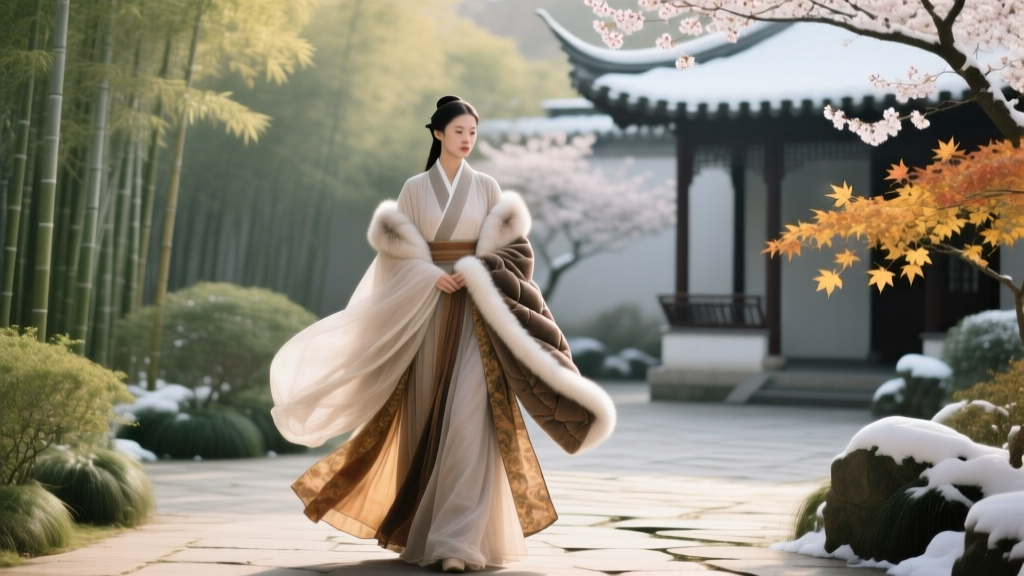
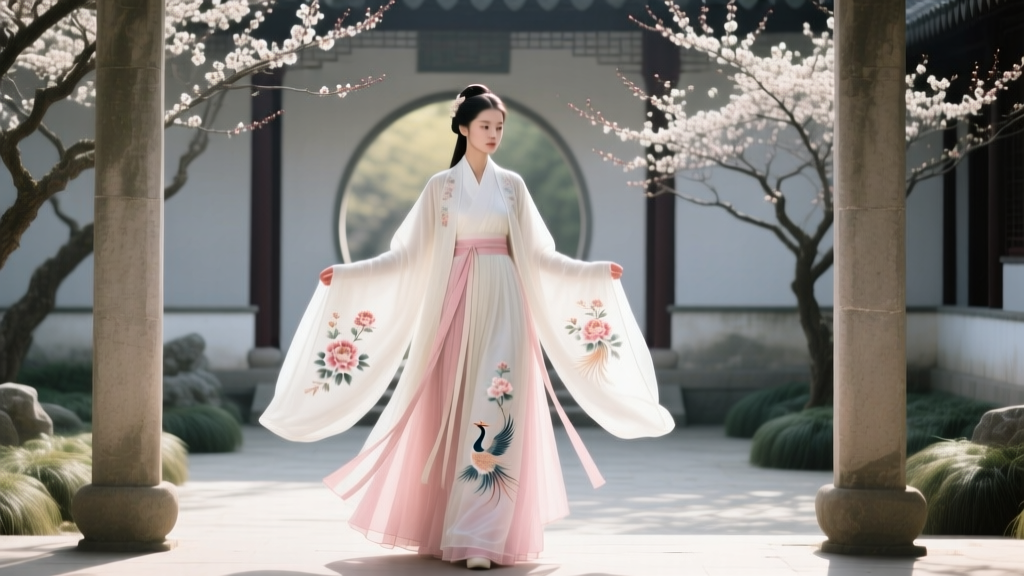
When discussing Chinese traditional dresses, it is a common misconception to view them as a monolith. The sartorial landscape of China spans millennia, encompassing the flowing, geometric lines of Hanfu (汉服), the structured elegance of the Qipao (旗袍), and the intricate pleating of the Mamianqun (horse-face skirt). However, the true soul of these garments does not lie merely in their silhouettes, but in the masterful craftsmanship, regional textile alchemy, and structural engineering that define their creation. To understand Chinese traditional dresses is to understand the loom, the dye vat, and the needle.
According to the Metropolitan Museum of Art's Heilbrunn Timeline of Art History, China's mastery of sericulture (silk farming) dates back to the Neolithic period, fundamentally shaping global trade and domestic dress codes. The transition from raw fiber to imperial brocade involves techniques that remain closely guarded heritage practices today.
Decoding the Weaves: Regional Silk Variations and Their Drape
The drape, weight, and acoustic rustle of a garment are dictated by its weave. Artisans across different provinces have developed highly specialized weaving techniques that directly influence how Chinese traditional dresses behave in motion.
Nanjing Yunjin (Cloud Brocade)
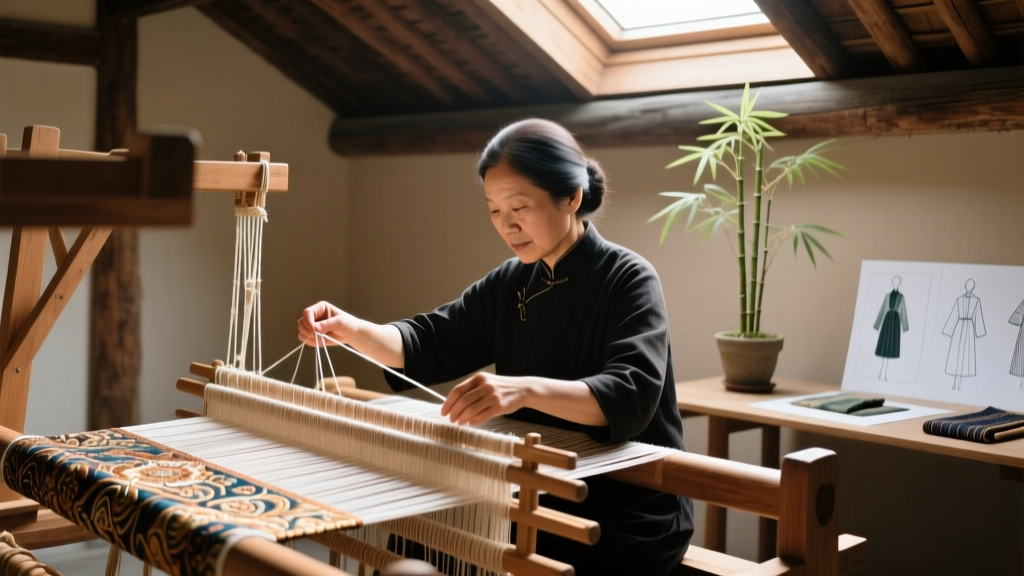
Originating in Nanjing, Yunjin (云锦) is historically reserved for imperial dragon robes and high-ceremony garments. The name translates to "cloud brocade" due to its lavish use of peacock feather filaments and gold leaf threads. Weaving Yunjin requires a massive, multi-story drawloom operated simultaneously by two artisans: one controlling the warp threads from above, and another passing the shuttle below. A single day of labor yields merely five to six centimeters of fabric, making authentic Yunjin Chinese traditional dresses exceptionally rare and valuable.
Suzhou Kesi (Cut Silk Tapestry)
Kesi (缂丝) is a tapestry weave where the weft threads are packed tightly only in the pattern areas, leaving the background warp exposed or creating tiny, deliberate slits between color blocks. This technique allows for hyper-realistic, painterly designs. When held to the light, a Kesi Mamianqun or Beizi (jacket) appears almost translucent, with the pattern seemingly floating within the fabric matrix.
The Alchemy of Xiangyunsha (Gambiered Canton Gauze)
Hailing from Guangdong, Xiangyunsha (香云纱) represents a triumph of natural chemical engineering. The silk gauze is repeatedly dyed in the tannin-rich juice of the Dioscorea cirrhosa (shuliang) tuber, then coated in iron-rich river mud. A complex chemical reaction between the tannins and iron creates a dark, lustrous, and water-resistant finish on one side, while the reverse remains a rich copper-brown. Highly prized for summer Qipao and Hanfu, Xiangyunsha is naturally cooling, antimicrobial, and develops a beautiful patina over years of wear.
Embroidery as Narrative: The Four Great Traditions
Surface ornamentation on Chinese traditional dresses is rarely purely decorative; it is deeply symbolic, conveying wishes for longevity, marital harmony, or scholarly success. The Victoria and Albert Museum notes that regional embroidery styles evolved in tandem with local aesthetics and available materials. The "Four Great Embroideries" of China dictate the regional character of formal garments.
| Tradition | Region | Defining Characteristics | Common Garment Applications |
|---|---|---|---|
| Su (苏绣) | Suzhou, Jiangsu | Impossibly fine threads (sometimes split into 1/48th of a strand); famous for double-sided embroidery where the image is identical on both sides. | Delicate Hanfu collars, bridal Qipao, handkerchiefs. |
| Shu (蜀绣) | Sichuan | Soft, satin-stitch heavy; utilizes vibrant, contrasting colors. Frequently features local motifs like pandas, koi, and lotus flowers. | Everyday artisan Hanfu, decorative shawls, children's festive wear. |
| Yue (粤绣) | Guangdong | Dense, raised textures often incorporating gold and silver metallic threads. Highly vibrant, with motifs of dragons, phoenixes, and lychees. | Opera costumes, ceremonial Mamianqun, wedding jackets. |
| Xiang (湘绣) | Hunan | Realistic, painterly shading utilizing over 700 distinct thread colors. Renowned for its lifelike depictions of tigers and landscapes. | Statement Qipao panels, formal Tangzhuang jackets. |
Structural Engineering: Flat-Cutting vs. Form-Fitting
The construction philosophy of Chinese traditional dresses reveals a profound cultural relationship with the human body and the textile itself.
Hanfu: The Geometry of Zero Waste
Historical Hanfu relies on a flat-pattern cutting system. Fabric is cut in straight, geometric lines—rectangles and trapezoids—minimizing waste and preserving the integrity of the woven motifs. The iconic jiaoling youren (cross-collar, right lapel) is achieved not through complex darts, but through precise wrapping and the use of sashes. The Mamianqun (horse-face skirt) is a marvel of this geometry, utilizing overlapping flat panels and precise knife-pleating that relies entirely on the weight and bias of the silk to create a flaring silhouette when the wearer walks.
The Qipao: A Synthesis of East and West
The modern Qipao (Cheongsam), which crystallized in 1920s and 1930s Shanghai, represents a structural departure. While it retains traditional elements like the pankou (hand-knotted frog buttons) and the mandarin collar, its internal architecture was revolutionized by Western tailoring. Artisans introduced bias cutting, bust darts, and side slits to create a form-fitting silhouette that accommodated movement. A bespoke 1930s-style Qipao requires the artisan to match the brocade pattern perfectly across the side seams and the overlapping front flap—a feat of mathematical precision.
"In the 1637 encyclopedia Tiangong Kaiwu (The Exploitation of the Works of Nature), Song Yingxing detailed the exacting temperature controls required for reeling silk, noting that the tension of the thread was as vital as the breath of the weaver. This reverence for the material remains the bedrock of Chinese sartorial craftsmanship today."
Authenticity and Acquisition: A Buyer’s Guide to Artisan Garments
For collectors and cultural enthusiasts, navigating the market for Chinese traditional dresses requires a discerning eye. The proliferation of mass-market, synthetic "ancient style" (Gu Feng) garments can obscure the work of genuine heritage artisans. Below is a framework for understanding price points and material authenticity.
Market Pricing and Value Matrix
| Tier | Materials & Construction | Estimated Price Range (USD) | Best For |
|---|---|---|---|
| Mass-Market | Polyester blends, machine embroidery, factory flat-cutting. | $30 – $90 | Cosplay, casual festivals, beginners. |
| Artisan Hanfu | 100% Mulberry silk, jacquard weaves, hand-finished pleating, subtle Su embroidery accents. | $250 – $800 | Cultural events, serious collectors, daily luxury wear. |
| Bespoke Qipao | Imported Song brocade or Xiangyunsha, custom-drafted pattern, hand-knotted Pankou, pattern-matched seams. | $800 – $2,500 | Weddings, formal galas, heirloom investments. |
| Heritage Masterpiece | Authentic Nanjing Yunjin or Kesi tapestry, woven-to-shape, master artisan embroidered. | $3,000 – $10,000+ | Museum acquisition, high-end bridal, generational heirlooms. |
Identifying Authentic Silk and Craftsmanship
When evaluating Chinese traditional dresses, rely on sensory and structural markers. Authentic mulberry silk possesses a soft, pearlescent luster that shifts in the light, unlike the harsh, uniform glare of polyester. When rubbed between the fingers, real silk generates a slight warmth and a distinct acoustic "crunch" known as scroop. Furthermore, inspect the pankou (buttons) on a Qipao or the inner seams of a Hanfu; artisan garments will feature hand-rolled edges and meticulously tied knots, whereas mass-produced items will use stiff, machine-stitched synthetic loops.
To support the continuation of these living traditions, buyers are encouraged to purchase directly from recognized artisan cooperatives, such as those affiliated with the China National Silk Museum in Hangzhou, or from verified heritage brands in Suzhou and Nanjing that employ certified inheritors of intangible cultural heritage techniques. Investing in authentic craftsmanship ensures that the loom of history continues to weave into the future.