Chinese Traditional Dress: Hanfu, Qipao & Tang Suit Compared
The Myth of a Monolith: Decoding Chinese Traditional Dress
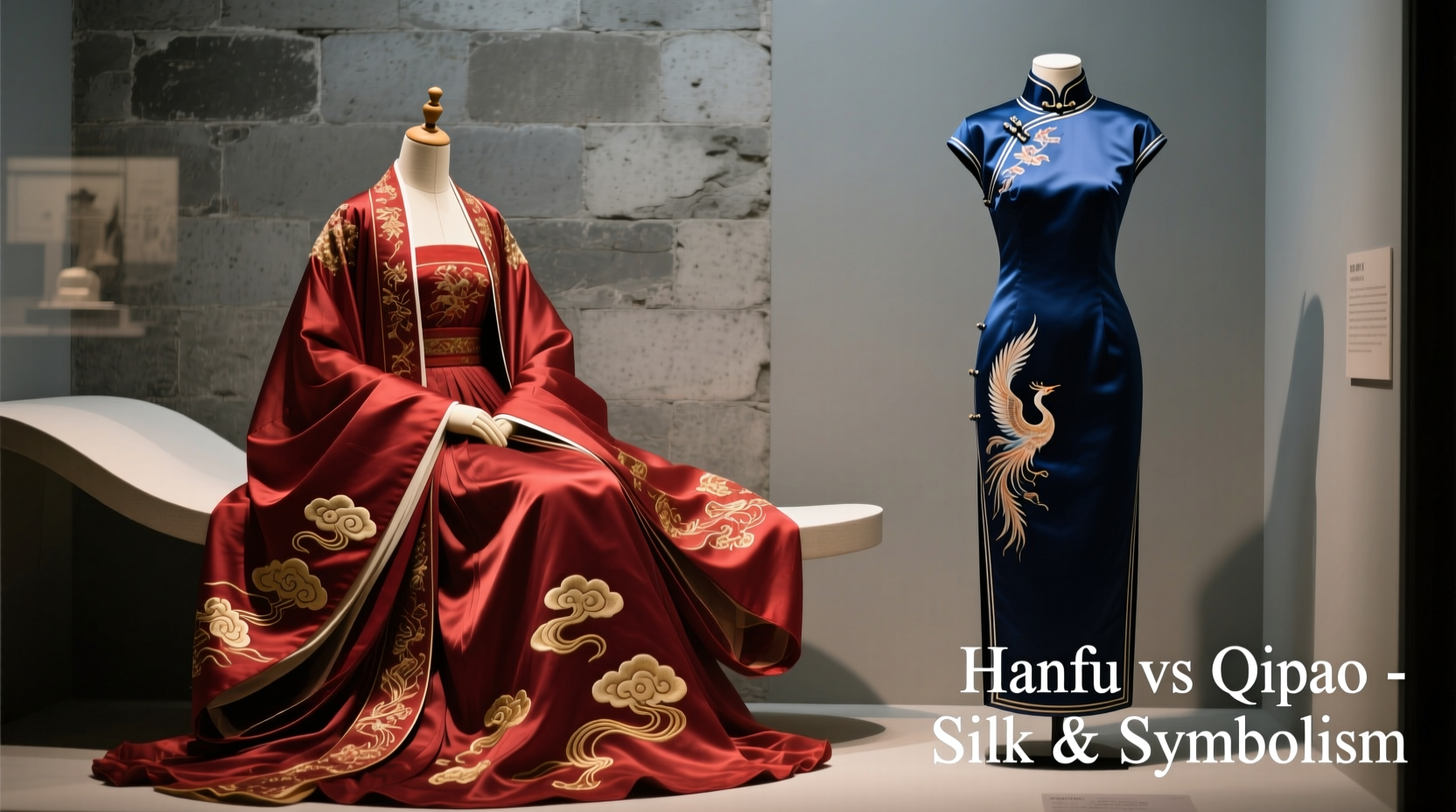
When Western audiences search for 'chinese traditional dress', they are often met with a singular, homogenized image: the form-fitting, high-collared silk gown. However, the sartorial history of China is not a monolith. It is a complex tapestry woven across thousands of years, multiple dynasties, and distinct ethnic groups. To truly understand the traditional garments of China, one must deconstruct the three primary pillars that dominate contemporary cultural representation and global diaspora fashion: the ancient Hanfu, the modernist Qipao (Cheongsam), and the diplomatic Tangzhuang (Tang Suit).
This comprehensive comparison explores the structural anatomy, historical origins, and modern buying protocols for each garment system, providing a definitive framework for collectors, cultural enthusiasts, and heritage fashion practitioners.
Hanfu: The Millennia-Old Foundation of Han Identity
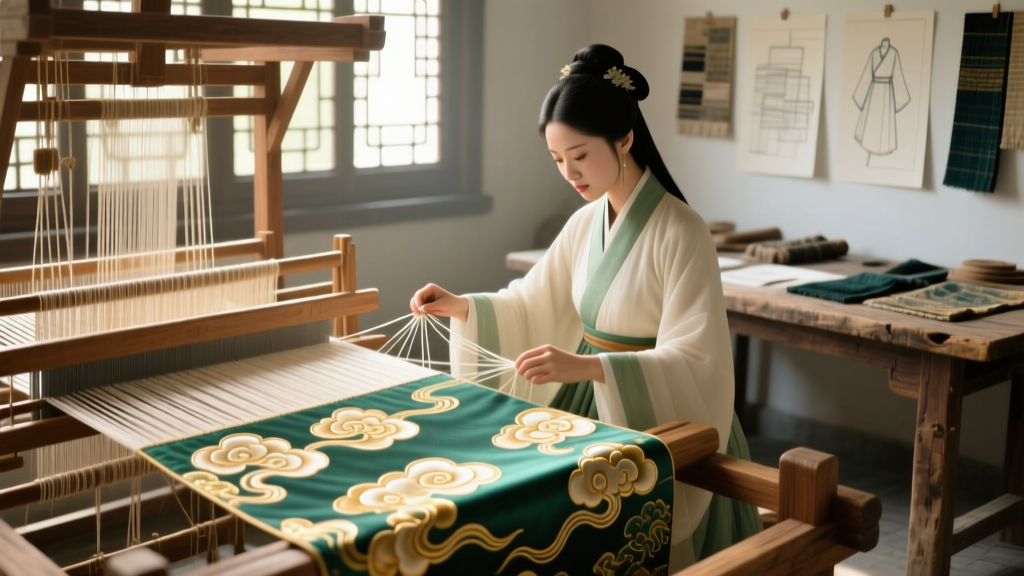
Hanfu (汉服) translates literally to 'Han clothing'. It represents the traditional dress of the Han Chinese people, encompassing a vast timeline from the mythical Yellow Emperor (c. 2700 BCE) through the end of the Ming Dynasty (1644 CE). Unlike the tailored, body-conscious garments of later eras, Hanfu is defined by its fluid, un-tailored, and volumetric construction, relying on the drape of the fabric rather than darts or seams to create a silhouette.
Construction and Silhouette: Jiaoling Youren and Ruqun
The most critical defining feature of Hanfu is jiaoling youren (交领右衽)—the crossed collar where the left lapel crosses over the right lapel, securing at the right side of the body. According to the Metropolitan Museum of Art's Heilbrunn Timeline of Art History, this rightward closure was a profound marker of civilization and Han identity; reversing it (left over right) was strictly reserved for mourning rites or associated with nomadic 'barbarian' tribes.
Hanfu is generally categorized into two primary structural systems:
- Ruqun (襦裙): A two-piece ensemble consisting of a short top or jacket (ru) and a long, pleated wrap skirt (qun). The skirt is typically secured high on the waist, sometimes just below the bust in the Tang Dynasty variation, creating an elongated, ethereal silhouette.
- Shenyi (深衣): A one-piece 'deep robe' where the upper garment and lower skirt are cut separately but sewn together at the waist. The curved-hem shenyi of the Han Dynasty features a dramatic, spiraling hemline that wraps around the body, requiring vast yardage of silk.
The Qipao (Cheongsam): Shanghai Glamour and Sartorial Evolution
If Hanfu represents ancient antiquity, the Qipao (旗袍) represents the dynamic, cosmopolitan collision of East and West. Known in Cantonese and Western contexts as the Cheongsam, the Qipao emerged in the 1920s in Shanghai. It was born from a desire among progressive Chinese women to adopt a singular, egalitarian garment akin to the male scholar's robe, rejecting the restrictive two-piece jackets and skirts of the late Qing era.
Anatomy of a Qipao: Pankou, Slits, and Darting
Early 1920s Qipaos were loose, A-line garments that obscured the body's contours. However, by the 1930s and 1940s, Shanghai tailors integrated Western darting techniques, transforming the Qipao into the form-fitting icon recognized today. The structural hallmarks include:
- Mandarin Collar (Yuanling): A stiff, stand-up collar that frames the face and demands an upright posture.
- Pankou (盘扣): Intricate, hand-knotted silk frog closures that serve both functional and highly decorative purposes. Master artisans can spend up to 40 hours knotting complex floral or zodiac motifs for a single bespoke gown.
- Side Slits (Kaicha): Originally designed to allow ease of movement and access to pockets in the underlying trousers, the slits were raised dramatically in the 1930s to reveal the leg, aligning with global Art Deco and flapper-era aesthetics.
'The evolution of the qipao from a modest, loose-fitting garment to a symbol of modern, liberated Chinese womanhood is one of the most fascinating intersections of indigenous tailoring and Western structural influence in 20th-century fashion.' — Curatorial archives, Victoria and Albert Museum.
Tangzhuang: The Misnamed 'Tang Suit' of the Diaspora
Walk into any Chinatown gift shop or diaspora cultural festival, and you will likely encounter the Tangzhuang (唐装), commonly translated as the 'Tang Suit'. Despite its name, this garment has absolutely no historical connection to the Tang Dynasty (618–907 CE).
The Tangzhuang is actually a modern hybrid. It evolved from the Magua (马褂), a traditional riding jacket worn by the Manchu elite during the Qing Dynasty. The modern iteration was popularized globally during the 2001 APEC Summit in Shanghai, where world leaders were photographed wearing matching silk Magua-style jackets. To make the garment more palatable and marketable to a global audience, Chinese designers coined the term 'Tang Suit', leveraging the global recognition of 'Chinatown' (Tangren Jie, or 'Street of the Tang People'). It features a stand collar, relaxed boxy fit, and prominent frog closures, typically woven with auspicious motifs like the round shou (longevity) character.
Comparative Analysis: Which Garment Fits the Occasion?
Understanding the cultural protocol and structural differences is vital for appropriate wear and sourcing. Below is a comparative breakdown of the three primary garments.
| Garment System | Era of Origin | Defining Construction | Cultural Protocol & Occasion | Average Bespoke Price (USD) |
|---|---|---|---|---|
| Hanfu (Ruqun/Shenyi) | Antiquity to 1644 CE | Flat-pattern cutting, crossed collar (right over left), vast silk yardage, no darts. | Cultural festivals, tea ceremonies, traditional weddings, Hanfu movement daily wear. | $250 - $800+ |
| Qipao (Cheongsam) | 1920s Shanghai | Western darting, Mandarin collar, side slits, Pankou frog closures, bias-cut silk. | Formal banquets, red-carpet events, modern weddings, high-society galas. | $600 - $3,500+ |
| Tangzhuang (Tang Suit) | Qing Dynasty / 2001 | Boxy, relaxed fit, stand collar, brocade fabrics, center-front or asymmetric closures. | Lunar New Year celebrations, casual diaspora gatherings, diplomatic gifts. | $100 - $400 |
Sourcing and Buying Guide: Navigating Price and Authenticity
When investing in Chinese traditional dress, the market is saturated with mass-produced, synthetic costumes that misrepresent the structural integrity of the garments. True heritage garments require specific fabric compositions and tailoring techniques.
Price Tiers and Fabric Realities
- The Mass-Market Tier ($30 - $90): Typically constructed from polyester brocade or synthetic satin. These garments lack breathability and structural memory. While acceptable for theatrical performances or single-use costume parties, they do not reflect the drape required for authentic Hanfu or the sheen necessary for a Qipao.
- The Artisan Replica Tier ($150 - $500): Specialized workshops, heavily researched by institutions like the China National Silk Museum, produce historically accurate Hanfu using genuine mulberry silk, linen, and ramie. These garments utilize traditional flat-patterning and natural plant dyes.
- The Bespoke Haute Couture Tier ($1,000 - $5,000+): Reserved for master-tailored Qipaos in Shanghai and Hong Kong. At this level, the garment is cut entirely on the bias, requiring the tailor to stretch and mold the silk directly onto the client's body using steam and an iron, eliminating the need for excessive seams. The pankou knots are hand-rolled silk, and the lining is pure crepe de chine.
Identifying Authentic Silk Brocade
For Tangzhuang and winter Qipaos, heavy brocade is the standard. Authentic Chinese silk brocade (such as Song Brocade or Yun Brocade) features a complex Jacquard weave where the pattern is structurally integrated into the fabric, not merely printed on top. When held to the light, an authentic brocade will show a distinct reversal of the pattern on the reverse side, and the fabric will possess a heavy, fluid drape rather than a stiff, papery crunch.
Respecting the Living Tradition
The landscape of Chinese traditional dress is not a static museum exhibit; it is a living, breathing practice. The contemporary Hanfu revival movement, driven largely by Gen Z and millennial demographics in China, has transformed Hanfu from a theatrical costume into everyday streetwear. Similarly, the Qipao continues to evolve, with modern designers experimenting with denim, lace, and deconstructed silhouettes. By understanding the profound structural and historical differences between Hanfu, Qipao, and Tangzhuang, enthusiasts and collectors can engage with these garments not merely as fashion, but as vital threads in the fabric of global cultural heritage.