Chinese Traditional Costume: 2026 Name Guide
Decoding the Terminology: Beyond the Word 'Costume'
When international buyers search for a Chinese traditional costume name, they often encounter a maze of overlapping terms, historical inaccuracies, and theatrical misrepresentations. The word 'costume' itself is a Western translation artifact; in Chinese sartorial culture, these garments are referred to as fuzhuang (clothing) or by their specific historical nomenclature. In 2026, the global market for traditional Chinese apparel has matured significantly, driven by the domestic Hanfu Yundong (Hanfu Movement) and a renewed international appreciation for heritage textiles. To shop intelligently, you must first identify the exact garment you are seeking, as the construction, cultural protocols, and price points vary drastically between a 3,000-year-old Han dynasty robe and a 1920s Shanghai jazz-era dress.
Hanfu (汉服): The Pre-Qing Sartorial Revival
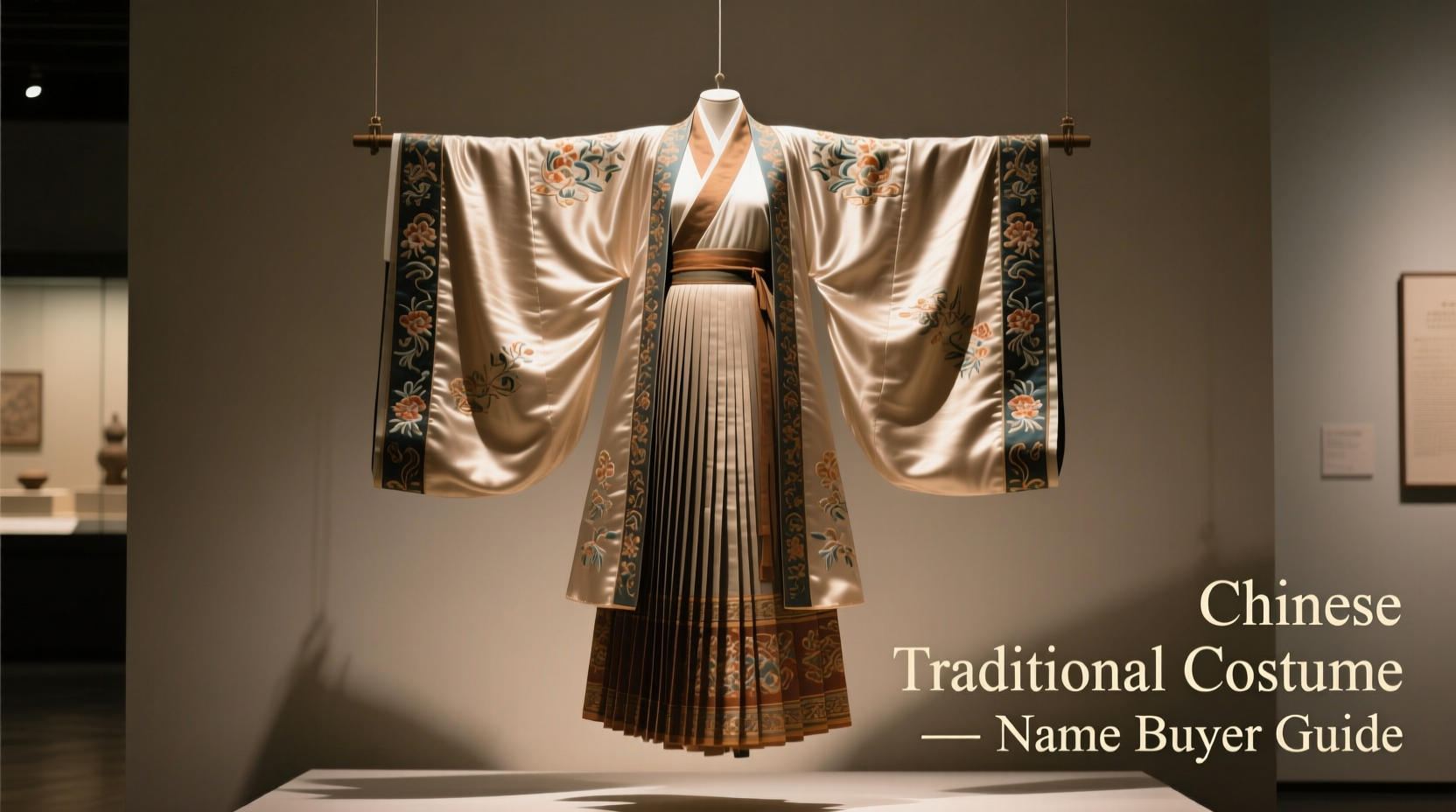
Hanfu refers to the historical clothing system of the Han Chinese, spanning from the legendary Yellow Emperor to the mid-17th century (before the Qing dynasty's mandate to adopt Manchu dress). If your search for a Chinese traditional costume name is rooted in flowing sleeves, intersecting collars, and sweeping skirts, Hanfu is the correct term.
Key Construction Elements to Verify
Authentic Hanfu adheres to strict structural rules. The most critical is jiaoling youren (intersecting collar, right gusset), where the left side of the collar crosses over the right. Reversing this is traditionally reserved for the deceased. Sleeves (xiu) are typically cut in a continuous curve with the bodice, lacking the shoulder seams found in Western tailoring. When shopping, inspect the flat-cut pattern; genuine Hanfu is constructed from rectangular loom-width panels, minimizing fabric waste and creating a distinct, draped silhouette that conforms to the body through wrapping and tying, rather than darts and zippers.
The Mamianqun (Horse-Face Skirt) Phenomenon
Currently dominating the 2026 market is the Mamianqun, a wrap skirt featuring flat front and back panels with heavily pleated sides. Originating in the Song and Ming dynasties, modern iterations utilize advanced jacquard looms to replicate historical zhuanghua (brocade) patterns. When buying a Mamianqun, ensure the pleats are heat-set or hand-stitched at the waistband to prevent 'pleat explosion' during movement.
Qipao (旗袍): The Modern Silhouette
Often mistakenly called a 'cheongsam' in Western markets (a Cantonese transliteration), the Qipao is the iconic, form-fitting dress that emerged in 1920s Shanghai. It represents a fusion of traditional Manchu banner robes (qipao literally translates to 'banner robe') with Western tailoring techniques like bust darts and set-in sleeves.
Jingpai vs. Haipai Construction
Buyers must understand the two primary regional styles. Jingpai (Beijing style) is more conservative, featuring an A-line silhouette, heavier brocades, and lower slits, often favored for formal state functions. Haipai (Shanghai style) is highly tailored, utilizing lighter silks, higher kaiqi (side slits), and a figure-hugging cut that requires precise bespoke measurements. Authentic Haipai Qipao will feature hand-rolled edges and intricate pankou (knotted frog buttons) that serve as functional closures, not merely decorative appliques.
Tangzhuang (唐装) & Xin Zhongshi: Contemporary Hybrids
Another frequent result when searching for a Chinese traditional costume name is the Tangzhuang. Despite the name implying the Tang dynasty, this jacket actually derives from the late-Qing Magua (riding jacket) and was popularized globally during the 2001 APEC summit. It is characterized by a stand-up collar and knotted buttons, usually woven with auspicious motifs like longevity characters. In 2026, the market has also seen the explosion of Xin Zhongshi (New Chinese Style), which integrates Hanfu collars or Qipao buttons into modern, daily-wear garments like blazers and denim jackets.
2026 Sourcing Guide: Where to Buy Authentically
Sourcing authentic garments requires navigating both digital and physical landscapes. For Hanfu, the epicenter of production is Cao County in Shandong province, which produces over 40% of the world's Hanfu. However, for premium, historically accurate pieces, buyers should look to established digital boutiques on Taobao or Tmall, such as Shisan Yu (十三余) for accessible, story-driven designs, or Zhongling (钟灵记) for meticulous Ming dynasty reproductions. International buyers can utilize sourcing agents like Superbuy or CSSBuy to navigate these domestic platforms.
For Qipao, the gold standard remains bespoke tailoring. In Shanghai, historic establishments like Longfeng (龙凤) offer master-level tailoring, though wait times can exceed three months. For international buyers, diaspora tailors in cities like Vancouver, New York, and London offer excellent custom services, utilizing imported mulberry silks and genuine horn or jade buttons.
Material Verification: Fabrics to Look For
The value of traditional Chinese garments is inextricably linked to textile heritage. According to the China National Silk Museum, the preservation of intangible weaving techniques is a cornerstone of modern garment valuation. When shopping, look for these specific materials:
- Xiangyunsha (Gambiered Canton Gauze): A premium silk dyed with yam juice and river mud, resulting in a dark, crackled, water-resistant fabric. It is highly prized for luxury Qipao and commands top-tier pricing.
- Song Brocade (Song Jin): Originating from Suzhou, this fabric features intricate, multi-colored geometric and floral patterns woven with supplementary wefts. It is the standard for high-end Hanfu outerwear.
- Kesi (Cut Silk): A tapestry weave where the weft threads are cut and turned back at the edges of color blocks, creating a carved, translucent effect. Genuine Kesi is incredibly labor-intensive and often used for premium pankou buttons or ceremonial Hanfu collars.
Buyer's Matrix: Price Tiers & Expectations
Understanding the financial commitment is crucial. The following table outlines the 2026 market rates for authentic garments, excluding fast-fashion 'costume' replicas made of polyester.
| Garment Name | Historical Era | Entry-Level (Machine/Mass) | Mid-Tier (Boutique/Artisan) | Bespoke / Museum Grade |
|---|---|---|---|---|
| Hanfu (Ruqun Set) | Tang / Song / Ming | $45 - $90 USD | $120 - $350 USD | $500 - $1,500+ USD |
| Mamianqun (Skirt) | Ming Dynasty | $35 - $70 USD | $80 - $200 USD | $300 - $800 USD |
| Qipao (Haipai) | 1920s - Present | $150 - $300 USD | $400 - $900 USD | $1,200 - $5,000+ USD |
| Tangzhuang (Jacket) | Late Qing / Modern | $60 - $120 USD | $150 - $400 USD | $600+ USD |
Final Fitting Protocols and Cultural Respect
When acquiring these garments, proper fitting is essential to honor their structural integrity. Hanfu relies on the tension of the waist ties (jidai); tying them too loosely will cause the collar to gape, while tying them too tightly disrupts the drape of the skirt. For Qipao, the fit should be close but not restrictive; you should be able to sit comfortably and cross your legs without the fabric pulling at the pankou closures. As institutions like the Victoria and Albert Museum note in their textile archives, traditional Chinese dress is designed to interact with the body in motion, creating a dynamic silhouette that static mannequins fail to capture. By understanding the precise Chinese traditional costume name and its corresponding construction, buyers can invest in living heritage rather than disposable theatrical wear, supporting the artisans who keep these ancient looms and tailoring needles active in the 21st century.