Chinese Traditional Costume: A Historical and Cultural Guide

The Roots of Sartorial Identity: Defining Chinese Traditional Costume
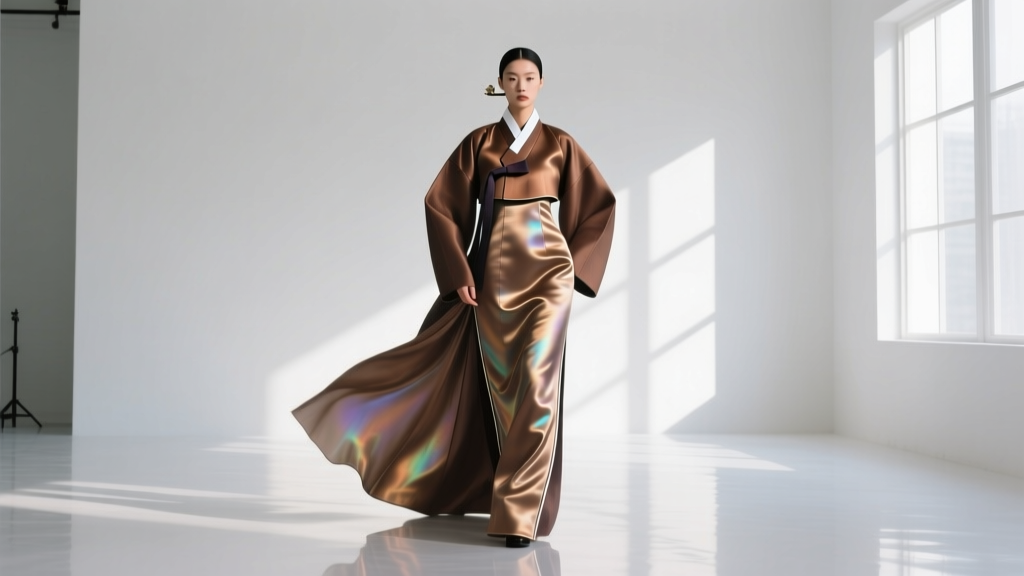
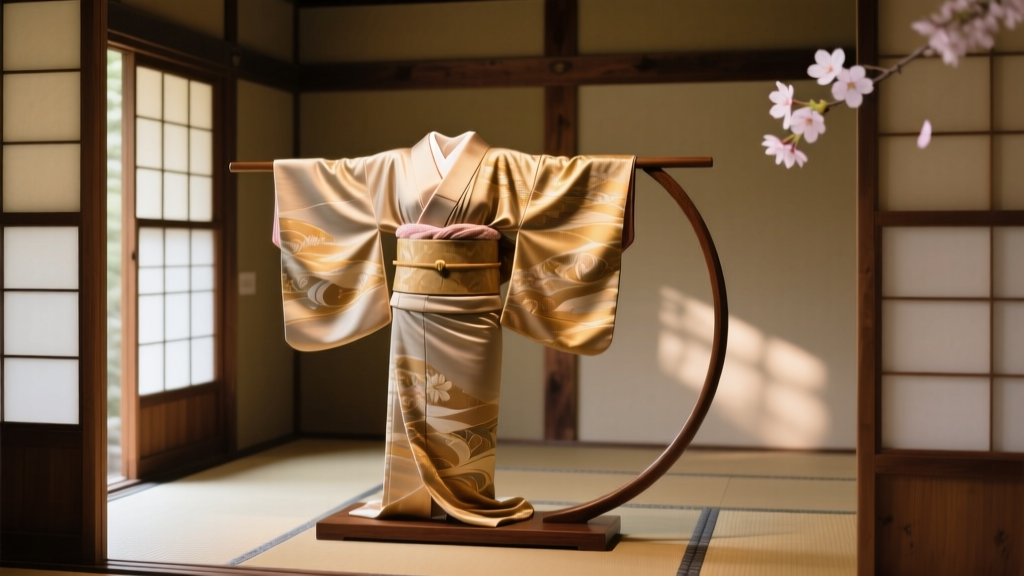
The concept of Yiguan (clothing and headwear) has served as a profound marker of civilization, philosophy, and social order in China for over three millennia. When discussing Chinese traditional costume, it is crucial to recognize that there is no single monolith. Instead, it is a dynamic tapestry woven from the indigenous traditions of the Han majority, the sartorial mandates of conquering dynasties, and the cosmopolitan exchanges of the Silk Road. From the flowing, unstructured silhouettes of ancient antiquity to the sharply tailored forms of the 20th century, these garments are physical manifestations of Chinese cosmology, ethics, and aesthetic evolution.
Hanfu (汉服): The Foundation of Han Civilization
Hanfu refers to the historical dress of the Han Chinese, spanning from the mythical era of the Yellow Emperor (c. 2700 BCE) through the Ming Dynasty (1644 CE). Unlike Western tailoring, which cuts fabric to fit the three-dimensional contours of the body, traditional Hanfu relies on flat, geometric cutting. The fabric is draped, tied, and layered, allowing the garment to flow with the wearer's movements and adapt to different body types.
The Philosophy of Jiaoling Youren (交领右衽)
The most defining characteristic of Hanfu is the jiaoling youren, or the cross-collar with the right lapel wrapping over the left. In traditional Chinese cosmology, the left represents Yang (life, the sun, the east), while the right represents Yin (death, the moon, the west). Wrapping the left side over the right honors the living. Reversing this (left lapel over right) was strictly reserved for dressing the deceased for burial or was associated with "barbarian" tribes. This profound philosophical rule remains a critical protocol for modern Hanfu enthusiasts.
Key Silhouettes: Ruqun, Shenyi, and Mamianqun
- Ruqun (襦裙): A two-piece ensemble consisting of a short upper garment (ru) and a long wrap-around skirt (qun). It was predominantly worn by women across multiple dynasties, with waistlines fluctuating from the hips to high above the bust during the Tang Dynasty.
- Shenyi (深衣): A one-piece, full-body robe that conceals the body deeply, adhering to Confucian ideals of modesty and propriety. It was heavily favored by scholars and officials.
- Mamianqun (马面裙): The "horse-face skirt," originating in the Song and Ming dynasties. Characterized by its flat, unpleated front and back panels (the "horse faces") and heavily pleated sides, this skirt is currently experiencing a massive renaissance in modern Chinese street fashion, often paired with contemporary blouses or traditional jackets.
The Qing Dynasty Shift: Manchu Influences and the Qizhuang
The establishment of the Qing Dynasty in 1644 by the Manchu people brought a seismic shift to Chinese traditional costume. The Qing court enforced the Tifa Yifu edict, mandating that Han Chinese men adopt the Manchu queue hairstyle and their style of dress, known as Qizhuang. This introduced garments like the Changpao (long robe) and the Magua (a short, riding jacket with a mandarin collar and frog closures). These garments were characterized by their straight, tubular silhouettes, narrow sleeves with horseshoe-shaped cuffs (matixiu), and the extensive use of ornate border trims and embroidery.
The Republican Era and the Birth of the Qipao (Cheongsam)
Following the fall of the Qing Dynasty in 1911, Chinese society underwent rapid modernization. In the 1920s, the bustling, cosmopolitan hub of Shanghai became the birthplace of the modern Qipao (known in Cantonese as Cheongsam). Originally a loose, modest, and boxy Manchu garment, the Qipao was radically transformed by Shanghai tailors who incorporated Western sartorial techniques.
Construction and Tailoring of the Modern Qipao
By the 1930s, the Qipao had evolved into a form-fitting silhouette that celebrated the natural curves of the female body. Tailors introduced Western-style bust and waist darts, set-in sleeves, and the iconic kaicha (side slits) that allowed for ease of movement while offering glimpses of the leg. The garment is traditionally fastened with pankou—intricate, hand-knotted fabric frogs that serve as both functional closures and decorative motifs. According to exhibitions curated by The Metropolitan Museum of Art, the Qipao represents a perfect synthesis of Eastern aesthetic sensibilities and Western structural tailoring, making it one of the most recognizable garments in global fashion history.
Material Culture: Silk, Brocade, and Embroidery
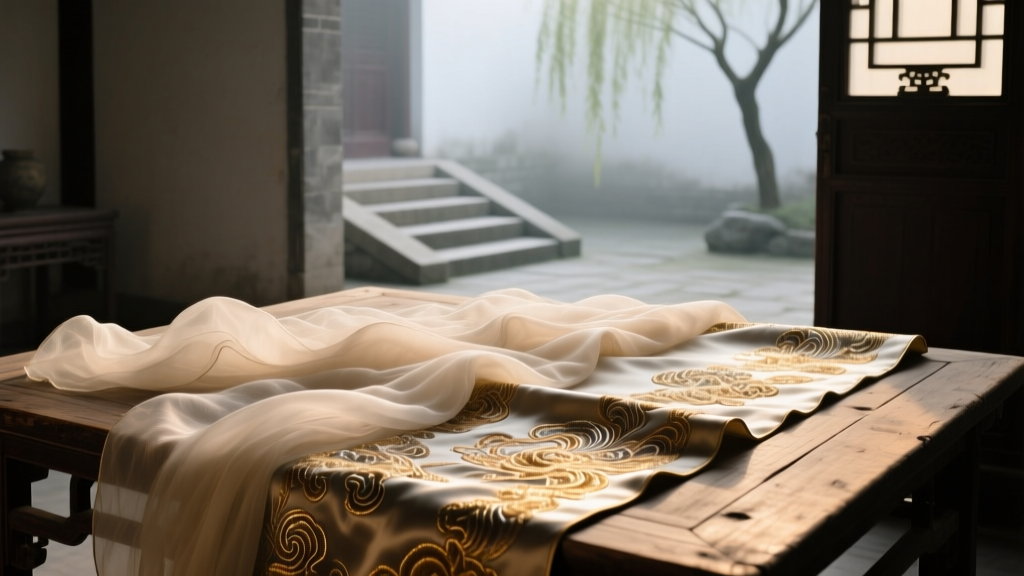
The soul of Chinese traditional costume lies in its textiles. China's mastery of sericulture (silk production) dates back to the Neolithic period. The "Three Famous Brocades" of China remain highly prized by artisans and collectors today:
- Yun Brocade (Nanjing): Known for its use of real gold and silver threads, creating a cloud-like, luminous effect. Historically reserved for imperial dragon robes.
- Shu Brocade (Sichuan): Characterized by its vibrant colors and durable, tightly woven structure, often featuring geometric and floral motifs.
- Song Brocade (Suzhou): Softer and more delicate, frequently used for mounting scroll paintings and crafting high-end scholar's robes.
Additionally, the Kesi (cut silk) tapestry technique, where weft threads are woven only where a specific color is needed, creates a carved, three-dimensional effect that is highly valued in museum collections, such as those preserved by the Victoria and Albert Museum.
Comparative Guide: Hanfu vs. Qipao vs. Tang Suit
To navigate the landscape of Chinese traditional dress, it is helpful to understand the distinct categories that exist in the modern cultural consciousness.
| Garment | Era of Origin | Key Structural Features | Modern Cultural Context |
|---|---|---|---|
| Hanfu | Antiquity – 1644 CE | Cross-collar, flat cutting, tied sashes, flowing sleeves. | Worn during traditional festivals, coming-of-age ceremonies, and by the youth-driven Hanfu revival movement. |
| Qipao (Cheongsam) | 1920s (Modern form) | Form-fitting, mandarin collar, side slits, pankou buttons. | Standard formalwear for diplomatic events, weddings, and high-society galas; globally recognized as Chinese formal dress. |
| Tang Suit (Tangzhuang) | 2001 (Modern invention) | Manchu-style jacket, mandarin collar, pankou, often red/gold. | Popular during Lunar New Year and political summits (e.g., APEC); often worn by older generations or children. |
Acquiring Authentic Garments: Price Ranges and Artisan Sources
For collectors, cultural practitioners, and fashion enthusiasts, understanding the market for Chinese traditional costume is essential. Prices vary wildly based on fabric composition, tailoring methods, and historical accuracy.
Hanfu Market
- Mass-Market / Fast Fashion: $30 – $80 USD (200 – 600 RMB). Typically made from polyester blends, machine-embroidered, and sold via e-commerce platforms like Taobao. Suitable for casual wear or photography, but lacks historical accuracy in cutting.
- Mid-Tier / Historical Reconstruction: $150 – $400 USD (1,000 – 3,000 RMB). Brands in this tier use natural fibers (mulberry silk, linen, ramie) and base their patterns on excavated textile artifacts. Institutions like the Smithsonian National Museum of Asian Art frequently highlight the importance of textile preservation, which these mid-tier brands often reference for accurate motif reproduction.
- Bespoke / Artisan: $800 – $3,000+ USD. Hand-woven silks, authentic Kesi tapestry, and natural plant dyeing techniques.
Qipao Market
- Ready-to-Wear: $100 – $300 USD. Factory-made, often utilizing stretch fabrics and printed synthetic silks. The patterning may not perfectly align at the seams.
- Bespoke Shanghai Tailoring: $1,500 – $5,000+ USD. A true bespoke Qipao requires multiple fittings. The tailor will hand-stretch the silk over the curves of the body using a traditional iron, eliminating the need for excessive darts and ensuring the brocade motifs flow seamlessly across the pankou closures and side slits.
Cultural Protocols for Wearing Traditional Attire Today
Wearing Chinese traditional costume requires an understanding of cultural etiquette to avoid unintended faux pas. First and foremost, always ensure the jiaoling youren (right lapel over left) rule is followed when wearing Hanfu. Wearing it backward is considered highly inauspicious and deeply disrespectful, as it mimics funeral attire.
Furthermore, when wearing a Qipao to a formal event, the length of the garment dictates its formality. A floor-length or calf-length Qipao is appropriate for weddings and galas, while knee-length or shorter variations are suited for casual or cocktail settings. Finally, the motifs embroidered on the garment carry weight: dragons and phoenixes are traditionally reserved for brides and grooms or signify immense authority, while peonies (wealth), plum blossoms (resilience), and cranes (longevity) are universally appropriate and deeply respected in daily wear.
"To wear the garments of the ancestors is not merely an act of cosplay, but a physical reconnection with the philosophical and aesthetic lineage of a civilization. It is a living, breathing archive." — Textile Historian's Note on the Hanfu Revival
By understanding the intricate construction, historical shifts, and profound symbolism embedded in these garments, wearers and collectors can engage with Chinese traditional costume not just as fashion, but as a vital piece of global cultural heritage.