Every Chinese Traditional Clothing Name & 2026 Styling Guide

Decoding the Lexicon: Beyond a Single Chinese Traditional Clothing Name
When navigating the rich tapestry of Asian heritage fashion, enthusiasts and stylists often find themselves searching for a specific Chinese traditional clothing name after spotting a striking silhouette on the street or in media. However, reducing thousands of years of sartorial evolution to a single term does a disservice to the region's profound textile history. From the flowing, cross-collared robes of the Han dynasty to the meticulously tailored, high-collared dresses of 1930s Shanghai, each garment carries distinct construction rules, regional variations, and cultural protocols.
As we move through 2026, the global appetite for heritage dressing has shifted from costume-like reproduction to sophisticated, everyday integration. Modern wearers are no longer just asking what a garment is called; they are asking how to style it, where to source authentic textiles, and how to honor its origins without treating it as a relic. This guide decodes the essential terminology, construction details, and contemporary styling frameworks for China's most iconic garments.
The Hanfu Renaissance: Ruqun, Aoqun, and Modern Layering
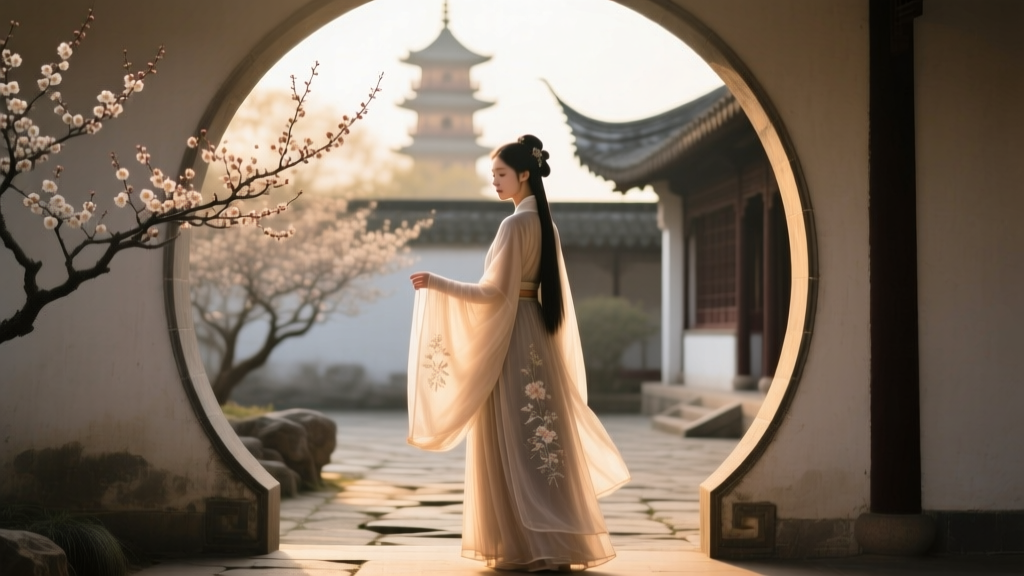
The term Hanfu (汉服) translates literally to 'Han clothing,' referring to the historical dress of the Han ethnic majority. It is not a single garment, but an entire sartorial system characterized by the jiaoling youren (cross-collar, right lapel over left), wide sleeves, and the absence of buttons in favor of sashes and ties.
Ruqun (襦裙) and Aoqun (袄裙)
When identifying a two-piece Hanfu ensemble, you are likely looking at a Ruqun (a short jacket or blouse paired with a long skirt) or an Aoqun (a lined, heavier jacket paired with a skirt, popular during the Ming Dynasty). The structural hallmark of these tops is the flat cutting method; the fabric is cut in straight lines without Western-style darts, relying on the drape of the silk or linen to accommodate the body's contours.
2026 Styling Tip: To integrate a Ming-style Aoqun into a modern winter wardrobe, swap the traditional inner garments for a fine-gauge merino wool turtleneck. Pair a structured, brocade Ao (jacket) with tailored wide-leg wool trousers instead of the traditional skirt for a striking, architectural silhouette that respects the garment's volume while adapting to contemporary urban mobility.
The Mamianqun (马面裙): The Horse-Face Skirt
Perhaps the most viral Chinese traditional clothing name in recent global fashion discourse is the Mamianqun, or 'horse-face skirt.' Originating in the Song and Ming dynasties, this skirt features flat, unpleated front and back panels (the 'horse faces') with deeply pleated sides. Historically, the flat panels were heavily embroidered with auspicious motifs like dragons, phoenixes, or floral scrolls, while the pleats allowed for ease of movement, particularly for horseback riding.
- Fabric Composition: Authentic modern reproductions utilize silk jacquard, heavy crepe, or woven brocade. Avoid cheap polyester imitations that lack the necessary weight to make the pleats swing correctly.
- Price Range: Entry-level synthetic blends start around $45 USD, while authentic silk-jacquard pieces from specialized ateliers range from $120 to $350 USD.
- Modern Styling: The Mamianqun is incredibly versatile. In 2026, street-style icons are pairing pleated silk Mamianqun with cropped leather moto jackets and chunky loafers, creating a high-low contrast that grounds the historical piece in modern edge.
The Qipao (旗袍): From 1920s Shanghai to Contemporary Couture
Often known in the West as the Cheongsam (a Cantonese pronunciation of 'long dress'), the Qipao is the most globally recognized Chinese garment. However, its evolution is deeply tied to the social liberation of women in the early 20th century. Originally a loose, boxy garment worn by Manchu women during the Qing Dynasty, it was radically transformed in 1920s and 30s Shanghai.
Construction: Beijing School vs. Shanghai School
Understanding the Qipao requires knowing its two main tailoring schools. The Beijing School retains more traditional, structured elements, often featuring an A-line silhouette, heavier brocades, and elaborate, hand-knotted pankou (frog buttons). The Shanghai School, conversely, absorbed Western tailoring techniques in the 1930s, introducing darts, set-in sleeves, and form-fitting silhouettes that celebrate the natural curve of the body.
'The true artistry of a bespoke Qipao lies not in how tightly it fits, but in the precision of the pankou and the seamless alignment of the brocade pattern across the side slits (kaitu).' — Archives of the Metropolitan Museum of Art's Costume Institute.
2026 Styling Tip: The modern Qipao has evolved beyond formalwear. Look for 'daily Qipaos' (日常旗袍) made from breathable linen, cotton-lawn, or washed silk. These feature lower mandarin collars and shorter lengths. Style a knee-length linen Qipao with a silk slip underneath, paired with minimalist leather mules and a structured bamboo handbag for a sophisticated, warm-weather ensemble.
Tangzhuang (唐装) and the Modern Menswear Silhouette
Despite its name, which translates to 'Tang Dynasty Suit,' the Tangzhuang is not from the Tang Dynasty at all. It is a modern derivation of the Qing Dynasty Magua (a horse-riding jacket worn by Manchu men), blended with Western tailoring elements. It gained massive international recognition after world leaders wore them at the 2001 APEC summit.
The Tangzhuang is characterized by its mandarin collar, symmetrical front opening, and knotted buttons. While often associated with older generations or festive New Year wear, a new wave of heritage-focused menswear designers are reclaiming the silhouette.
Styling for the Modern Man: To avoid looking like you are wearing a stage costume, opt for a Tangzhuang cut from matte, textured fabrics like raw silk, heavy linen, or Xiangyunsha (gambiered mud-silk). Pair a charcoal, unlined Tangzhuang over a crisp white poplin shirt, leaving the top two buttons undone, and match it with dark selvedge denim and suede Chelsea boots.
Quick Reference Matrix: Garment Names, Eras, and Styling Profiles
| Native Name | Era / Origin | Key Construction Feature | Modern Styling Application | Avg. Price (USD) |
|---|---|---|---|---|
| Hanfu (汉服) | Various (Han to Ming) | Cross-collar, right lapel, sash ties | Layered over modern turtlenecks; belted for waist definition | $80 - $400+ |
| Mamianqun (马面裙) | Song / Ming | Flat front/back panels, pleated sides | Paired with cropped knitwear or leather jackets | $60 - $350 |
| Qipao (旗袍) | Republic Era (1920s+) | Mandarin collar, pankou, side slits | Worn as a tunic over wide-leg trousers or as daily linen dresses | $150 - $2,000+ |
| Tangzhuang (唐装) | Qing (Magua derivative) | Symmetrical front, knotted buttons | Worn open as a light jacket over denim and casual shirting | $70 - $500 |
Sourcing Authentically: Artisans, Cooperatives, and Price Guides
As the demand for these garments grows, so does the market for mass-produced, culturally inaccurate knockoffs. Sourcing authentic pieces requires an understanding of regional textile hubs and artisan cooperatives. For instance, true Xiangyunsha (香云纱), a luxurious silk dyed with yam juice and river mud, is exclusively produced in the Shunde district of Guangdong province. The China Silk Museum in Hangzhou remains a vital resource for verifying the provenance of historic weaving techniques like Kesi (silk tapestry) and Song-style brocades.
When shopping online or visiting boutiques, look for sellers who provide detailed breakdowns of their fabric composition and construction methods. Authentic Hanfu makers will specify the dynasty their patterns are based on (e.g., 'Ming Dynasty Aoqun replica') and will use natural fibers. For bespoke Qipaos, expect a multi-fitting process; the Victoria and Albert Museum's Asian collections highlight the intricate, three-dimensional flat-patterning required to make a traditional Qipao fit flawlessly without Western darts.
Ultimately, learning every Chinese traditional clothing name is about more than vocabulary; it is about recognizing the living history woven into every pleat, collar, and knot. By styling these garments with intention and respect, modern dressers ensure these ancient silhouettes continue to evolve beautifully in the contemporary world.