Chinese Traditional Clothing: A Historical & Cultural Guide
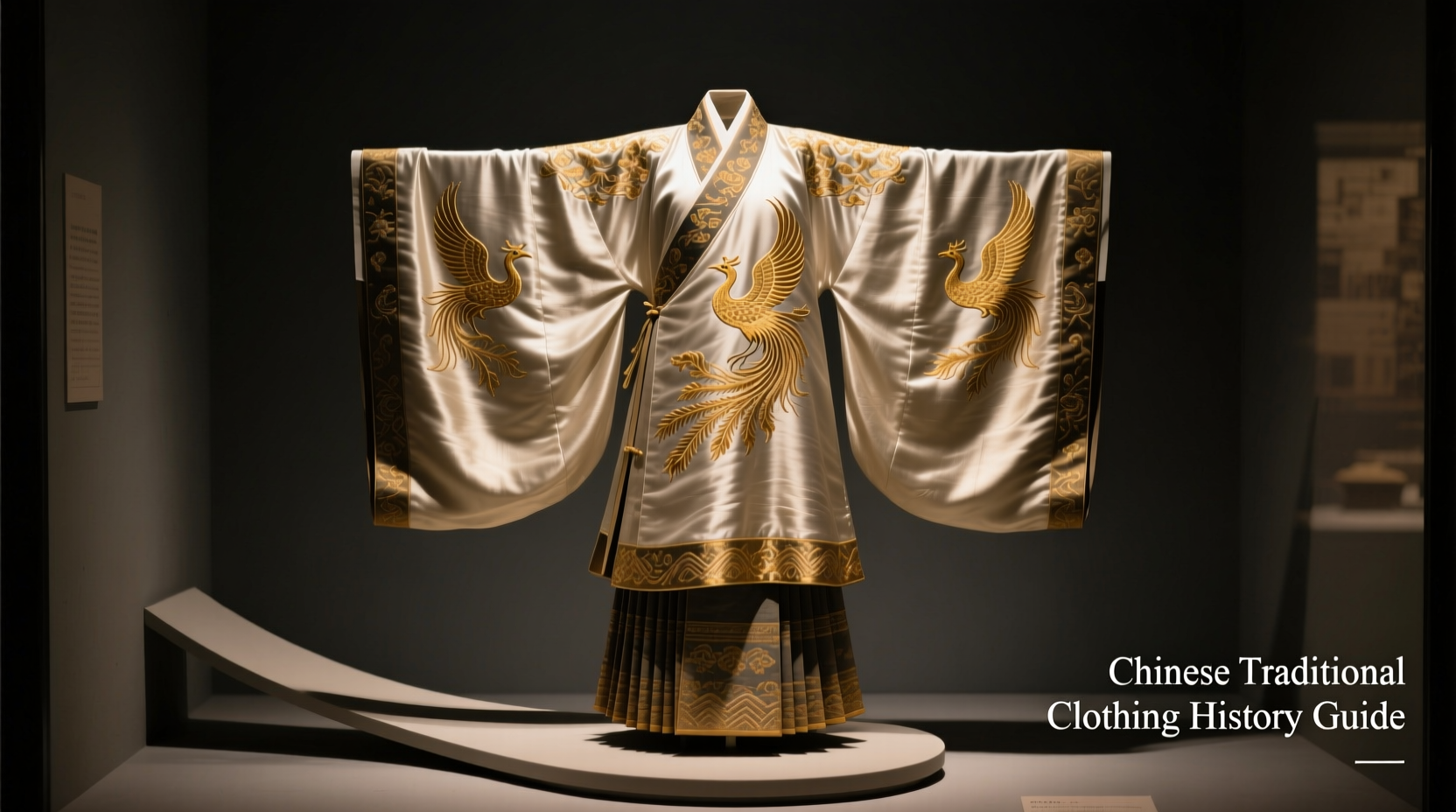
Chinese traditional clothing represents one of the most continuous and influential sartorial lineages in human history. Far from being a monolith, the phrase encompasses a vast ecosystem of garments that evolved across millennia, reflecting shifting dynastic philosophies, trade along the Silk Road, and complex social hierarchies. Today, the global resurgence of interest in these garments—spearheaded by the grassroots Hanfu movement and the enduring elegance of the Qipao—has transformed historical dress into a living, breathing cultural practice. This guide explores the structural philosophy, dynastic evolution, and modern acquisition of Chinese traditional clothing.
The Philosophy of the Cut: Flat-Pattern Construction
To understand Chinese traditional clothing, one must first abandon the Western paradigm of tailoring. While European dressmaking historically relied on darts, gussets, and curved seams to sculpt fabric around the three-dimensional human form, traditional Chinese garment construction is rooted in Pingmian Caijian (flat-pattern cutting).
Garments were constructed from rectangular panels of woven fabric, often utilizing the entire width of the loom to minimize waste. The fabric was not meant to cling to the body; rather, the body served as an armature from which the textile draped. This philosophy elevated the textile itself—its weave, dye, and embroidery—to the primary medium of artistic expression. Furthermore, the defining characteristic of Han Chinese clothing is the Jiaoling Youren (cross-collar, right lapel). The left side of the garment crosses over the right, securing at the waist with silk sashes. Historically, reversing this to Zuoren (left lapel) was strictly reserved for the deceased or associated with neighboring nomadic cultures, making the direction of the lapel a profound marker of cultural identity and cosmological order.
Dynastic Evolution: Tracing the Silhouette Through Time
The evolution of Chinese dress is inextricably linked to the rise and fall of its dynasties, each imprinting its own aesthetic and political values onto the national wardrobe.
Han and Tang: The Foundations of Hanfu
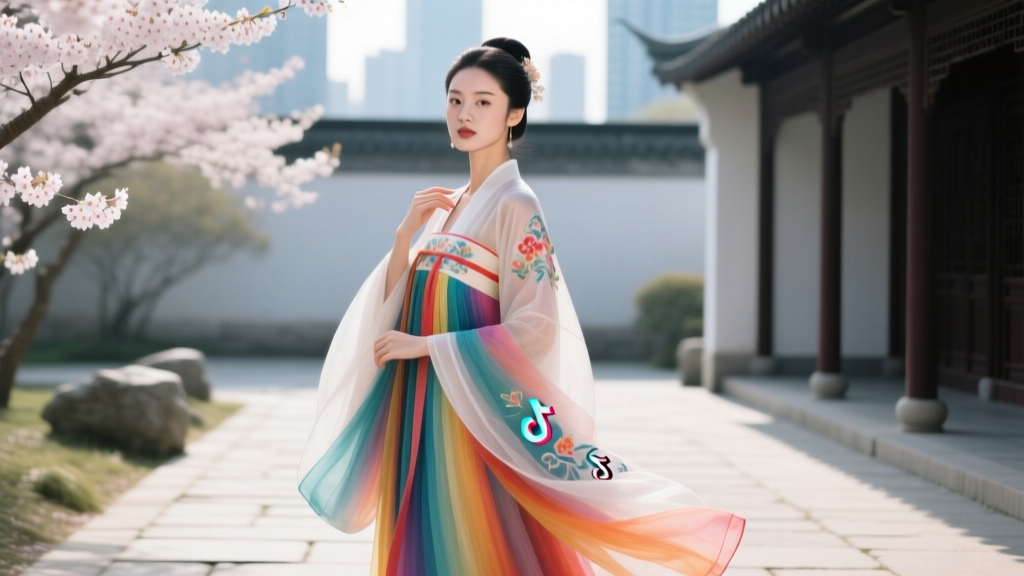
The Han Dynasty (202 BCE – 220 CE) codified the Shenyi (deep robe), a one-piece garment that connected the upper yi (jacket) and lower chang (skirt), symbolizing the unity of heaven and earth. Centuries later, the Tang Dynasty (618–907 CE) introduced unprecedented cosmopolitan flair. Influenced by trade with Central Asia, Tang women adopted the Ruqun (a short, cross-collared blouse paired with a high-waisted, flowing skirt), often utilizing lightweight silks, sheer shawls, and vibrant, contrasting color palettes that defied the more conservative eras that followed.
Ming Dynasty: The Pinnacle of Tailoring
The Ming Dynasty (1368–1644) represents the zenith of classical Hanfu tailoring. This era popularized the Aoqun (a lined, high-collared jacket worn over a skirt) and the iconic Mamianqun (horse-face skirt). The Mamianqun is a masterclass in structural engineering: it features two overlapping flat front panels and heavily pleated sides. The flat panels allowed for intricate, unbroken embroidery, while the side pleats provided ease of movement. Today, the Ming-era Mamianqun is the most widely reproduced garment in the modern Hanfu revival.
Qing Dynasty and the Birth of the Qipao
The Qing Dynasty (1636–1912), established by the Manchu people, mandated the wearing of Qizhuang (Manchu dress) for officials and elites. This introduced the Chenpao (long robe) and the ubiquitous use of Pankou (knotted fabric buttons). Following the fall of the empire, the 1920s in Shanghai saw the birth of the modern Qipao (or Cheongsam). Tailors merged the traditional Manchu long robe with Western darting, set-in sleeves, and a high Mandarin collar, creating the figure-hugging silhouette recognized globally today.
Core Garments Decoded: A Structural Comparison
| Garment Name | Era of Origin | Key Structural Features | Modern Context & Usage |
|---|---|---|---|
| Ruqun | Han / Tang | Cross-collared blouse, high-waisted wrap skirt, wide sleeves. | Popular in summer; favored for its ethereal, flowing drape. |
| Daopao | Ming | Full-length men's robe, side slits, hidden inner panels for modesty. | Worn by men in formal cultural ceremonies and tea arts. |
| Mamianqun | Ming | Wrap skirt, flat overlapping fronts, deep side pleats. | Highly versatile; frequently styled with modern knitwear and blouses. |
| Qipao | 1920s Republic | Mandarin collar, asymmetrical pankou closures, side slits, darts. | Standard formalwear for weddings, banquets, and diplomatic events. |
| Tangzhuang | Modern (Qing roots) | Short jacket, Mandarin collar, frog closures, Western shoulder seams. | Often worn during Lunar New Year or by older generations. |
Textiles and Motifs: Reading the Fabric
The cultural weight of Chinese traditional clothing is heavily carried by its textiles. The Victoria and Albert Museum's Chinese textile archives highlight the historical supremacy of Chinese sericulture. While silk (especially Hangzhou satin and Sichuan Shu brocade) was reserved for the elite and ceremonial use, commoners historically wore garments woven from ramie, hemp, and later, cotton.
Motifs were never merely decorative; they formed a visual language of auspicious wishes. The peony represented wealth and honor; the crane symbolized longevity; the bat was a visual pun for fortune (as fu for bat and fu for fortune are homophones in Mandarin). Dragon and phoenix motifs were strictly regulated by sumptuary laws, with the five-clawed dragon exclusively reserved for the Emperor.
Sourcing Authentic Pieces: A Buyer’s Framework
For collectors, cultural practitioners, and enthusiasts, navigating the market for Chinese traditional clothing requires an understanding of production tiers. The Metropolitan Museum of Art's Asian Art collection serves as an excellent visual benchmark for historical accuracy when evaluating modern reproductions.
1. Entry-Level and Festival Wear ($40 – $120 USD)
Mass-produced Hanfu and Qipao found on global e-commerce platforms or in tourist districts. These garments often utilize polyester blends, machine-printed motifs, and lack historical accuracy in collar angles or pleat structures. They are suitable for casual cosplay, Lunar New Year festivals, or photography, but lack the breathability and drape of natural fibers.
2. Mid-Tier Daily Hanfu & Boutique Qipao ($150 – $400 USD)
This tier includes reputable Taobao brands and specialized overseas boutiques. Garments are constructed from mulberry silk, linen, or high-grade cotton. Ming-style Mamianqun in this tier feature proper woven jacquard patterns rather than surface prints. Qipao at this price point often offer made-to-measure services, ensuring the pankou (frog closures) are hand-knotted and the side slits are properly reinforced.
3. Heritage and Artisanal Reproductions ($500 – $2,000+ USD)
Commissioned from master tailors and artisan cooperatives, these pieces are museum-grade. They feature hand-loomed silks, natural indigo or plant-based dyeing, and intricate Su embroidery (Suzhou embroidery) that can take hundreds of hours to complete. According to resources from the Smithsonian National Museum of Asian Art, preserving these intangible heritage techniques is vital, and purchasing from certified artisan workshops directly supports the continuation of these ancient crafts.
Cultural Protocol and Contemporary Respect
Wearing Chinese traditional clothing today is an act of cultural participation. When donning Hanfu, adhering to the Jiaoling Youren (left over right) rule is paramount to show respect for living traditions. Furthermore, understanding the distinction between historical Hanfu and the Manchu-influenced Qipao or Tangzhuang helps dismantle the Western tendency to homogenize Asian dress. Whether draping a Ming dynasty robe or fastening the intricate knots of a Shanghai Qipao, the wearer is engaging with a profound, unbroken dialogue between the ancestors and the modern world.