Care Guide: Chinese Traditional Clothing Female Garments
Preserving the Elegance of Historical Chinese Dress
The global renaissance of Hanfu and the timeless appeal of the Qipao have brought chinese traditional clothing female silhouettes into modern wardrobes. However, maintaining these exquisite garments requires far more than standard laundry practices. From the intricate knife pleats of the Ming dynasty Mamianqun (horse-face skirt) to the delicate bias-cut silk charmeuse of a 1930s Shanghai Cheongsam, historical Chinese textiles demand specialized care. According to textile conservationists at the China National Silk Museum, the protein structure of traditional mulberry silk is highly susceptible to alkaline degradation, meaning modern commercial detergents can permanently destroy historical replicas and artisan-crafted pieces. This comprehensive care guide provides actionable, culturally respectful protocols for washing, storing, and preserving your collection.
Decoding Textile Compositions in Women's Historical Dress
Before applying any water or cleaning agents, you must identify the precise fabric composition of your garment. Traditional Chinese textiles utilize a wide array of natural fibers, each with distinct chemical properties.
Xiangyunsha (Gambiered Canton Gauze)
Originating from the Pearl River Delta, Xiangyunsha is a luxury silk dyed using the tannin-rich juice of the Dioscorea cirrhosa (shuliang) yam and coated with iron-rich river mud. This creates a stunning dual-toned fabric—deep black on one side and rich brown on the other. Care Rule: Never use alkaline soaps or baking soda on Xiangyunsha. The alkaline environment will break the tannin-iron chemical bond, causing the black coating to peel and fade irreversibly. Spot clean only with a damp cloth and pH-neutral silk wash.
Song Brocade (Songjin) and Zhuanghua
Often used for structured jackets (Ao) and ceremonial collars, these heavy brocades feature complex weave structures and metallic threads. As noted by the Metropolitan Museum of Art's Heilbrunn Timeline, historical metallic threads were often made of gilt paper or animal membrane wrapped around a silk core. Submerging these fabrics in water will cause the metallic elements to tarnish, oxidize, or disintegrate. These garments must be professionally dry-cleaned by a textile conservator.
Zhuma (Ramie) and Linen Blends
Common in summer Ruqun (blouse and skirt sets) and Hanfu undergarments, ramie is a bast fiber that is highly durable and naturally resistant to bacteria. Unlike silk, ramie can withstand gentle machine washing in a mesh bag on a cold, delicate cycle, though hand-washing is always preferred to maintain the fabric's natural luster.
Washing Protocols: Hand-Washing vs. Professional Conservation
For washable silks like Charmeuse, Crepe de Chine, and Habotai, hand-washing is the only safe home method. You must use a specialized, pH-neutral detergent (between 6.5 and 7.0 pH). Enzyme-based stain removers and biological detergents contain proteases, which are designed to break down proteins. Because silk is a natural protein fiber (fibroin), enzyme cleaners will literally digest your garment, leading to micro-tears and fabric thinning.
- Preparation: Fill a clean basin with cold water (never exceeding 20°C / 68°F).
- Dissolve: Mix a few drops of pH-neutral silk wash into the water before introducing the garment.
- Agitation: Submerge the garment and gently press the water through the fibers. Never twist, wring, or scrub the silk, as wet silk loses up to 20% of its tensile strength.
- Rinsing: Drain and refill with cold water. Add a tablespoon of white vinegar to the final rinse to neutralize any residual alkalinity and restore the silk's natural sheen.
- Drying: Roll the garment in a clean, dry cotton towel to absorb excess moisture. Lay flat on a drying rack away from direct sunlight, which causes rapid photodegradation and yellowing of silk proteins.
Protecting Panjin (Goldwork) and Suzhou Embroidery
Heavily embroidered pieces, particularly those featuring Panjin (couching gold thread) or intricate Suzhou silk floss embroidery, should never be fully submerged. Water can cause the silk floss to bleed and the metallic couching threads to snap. Instead, use a specialized textile sponge lightly dampened with distilled water and a drop of conservation-grade surfactant to gently lift surface soils.
The Mamianqun (Horse-Face Skirt) Pleat Preservation Technique
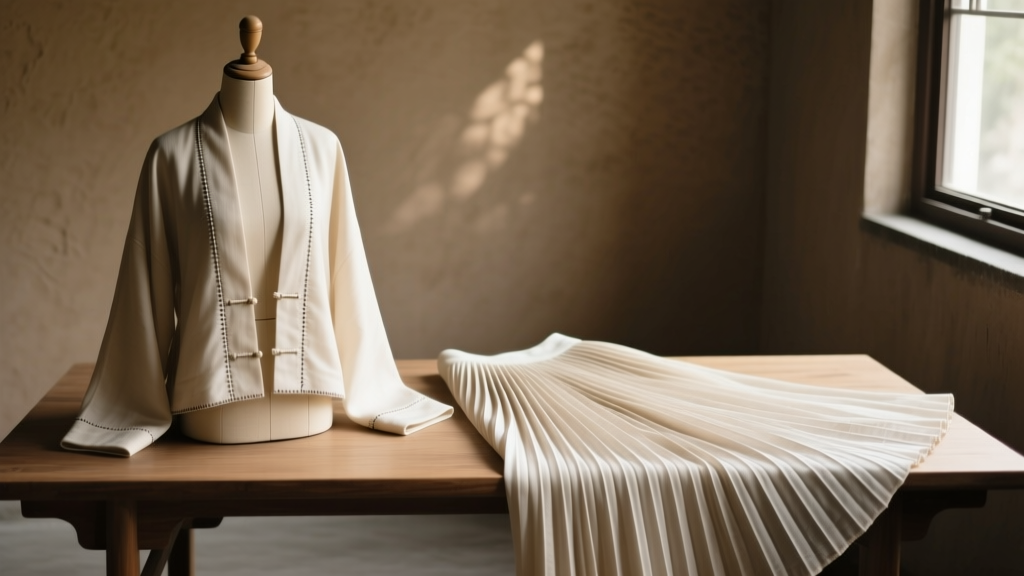
The Mamianqun is a hallmark of Ming and Qing dynasty dress, characterized by its flat front and back panels with sharply pleated sides. Maintaining these structural pleats during cleaning is one of the most challenging aspects of Hanfu care. If washed without preparation, the pleats will 'bloom' and lose their sharp, knife-pleated geometry.
The Basting Method: Before washing, use a needle and soft cotton basting thread to loosely stitch the pleats together in their folded position (a technique known as shoufeng). Wash the skirt gently while basted. Once rolled in a towel to remove excess water, lay the skirt flat. Using a pressing cloth and a steam iron set to the 'Silk' setting, press the pleats firmly while they are still slightly damp. Allow the skirt to dry completely before carefully snipping and removing the basting threads. This ensures the pleats remain razor-sharp.
Archival Storage Methods for Qipao and Hanfu
Improper storage causes more damage to historical garments than wearing them. The structural differences between Hanfu and Qipao dictate entirely different storage approaches.
Storing the Bias-Cut Qipao
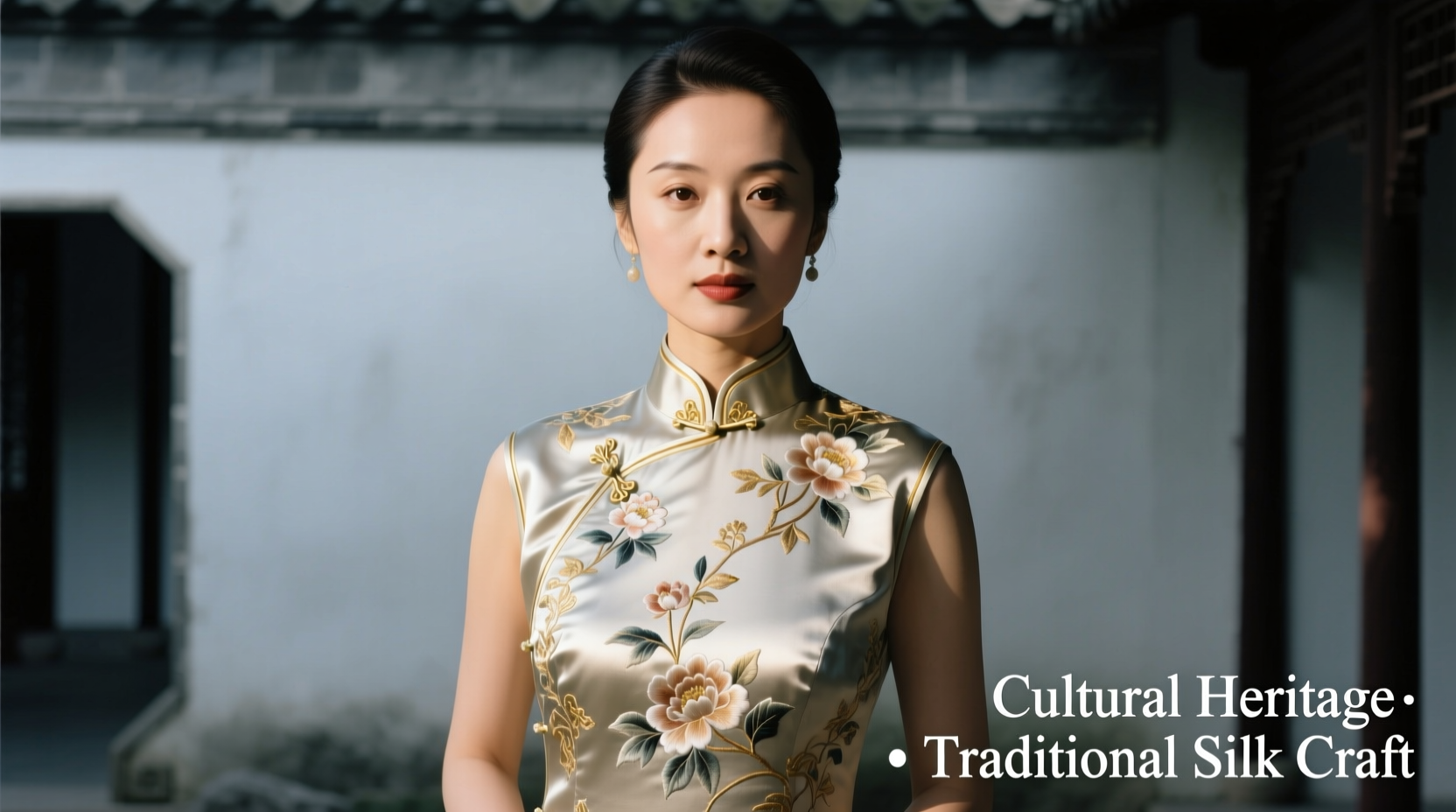
The 1930s Shanghai Qipao is famously cut on the bias (at a 45-degree angle to the selvedge) to allow the woven silk to stretch and cling to the body's contours. Never hang a bias-cut silk Qipao on a wire or thin wooden hanger. Gravity will pull the bias threads downward, causing the hemline to stretch, warp, and develop permanent 'dimples' at the shoulders. For long-term storage, Qipaos should be gently rolled around acid-free tissue paper tubes or folded with tissue padding at the crease points to prevent fiber breakage. If you must hang a Qipao for short-term display, use a wide, heavily padded hanger covered in unbleached cotton muslin.
Storing Hanfu Robes and Ruqun
Traditional Hanfu features wide sleeves and long, flowing skirts that are prone to tangling and creasing. Fold the garments along their natural seam lines. Place sheets of acid-free, unbuffered tissue paper between the folds. Buffered tissue (which contains calcium carbonate) should be avoided for silk, as the alkaline buffer can migrate into the protein fibers over time. Store the folded garments in breathable cotton canvas archival boxes, avoiding plastic bins which trap moisture and encourage mildew growth.
Maintenance Cost and Care Matrix
Understanding the financial commitment of maintaining these garments is crucial for collectors. Below is a matrix detailing the care requirements and estimated professional conservation costs for common female Chinese traditional garments.
| Garment Type | Primary Fabric | Home Care Feasibility | Professional Cleaning Cost (USD) |
|---|---|---|---|
| Mamianqun (Pleated Skirt) | Jacquard Silk / Brocade | Moderate (Requires basting) | $65 - $120 |
| Qipao (Bias-Cut) | Silk Charmeuse / Crepe | High (Hand-washable) | $45 - $85 |
| Aoqun (Lined Jacket/Skirt) | Song Brocade / Cotton | Low (Dry-clean only) | $90 - $150 |
| Xiangyunsha Ruqun | Gambiered Canton Gauze | Low (Spot-clean only) | $110 - $180 |
| Embroidered Ceremonial Xiapei | Silk Satin / Goldwork | None (Conservator only) | $250 - $400+ |
Note: Costs reflect specialized textile dry-cleaning and conservation services in major metropolitan areas. Standard commercial dry-cleaning is not recommended for historical replicas.
Cultural Stewardship and Long-Term Preservation
Caring for traditional garments is an act of cultural stewardship. These pieces are not merely costumes; they are living artifacts that connect the wearer to centuries of weaving, dyeing, and tailoring traditions. When dealing with severe staining, structural tears, or fraying Pankou (frog fasteners), it is imperative to seek out professional textile conservators rather than local tailors who may lack an understanding of historical construction techniques.
'The preservation of historical dress is not about freezing a garment in time, but about managing its aging process with respect for the original artisan's intent and the cultural lineage it represents.' — Principles adapted from the Victoria and Albert Museum Conservation Department.
By adhering to these specialized washing, pleating, and storage protocols, you ensure that your collection of Hanfu and Qipao remains vibrant, structurally sound, and culturally respected for generations to come. Always prioritize the integrity of the fiber over the convenience of modern laundering, and when in doubt, consult a certified textile conservator.