Chinese Male Hanfu Beginner Guide
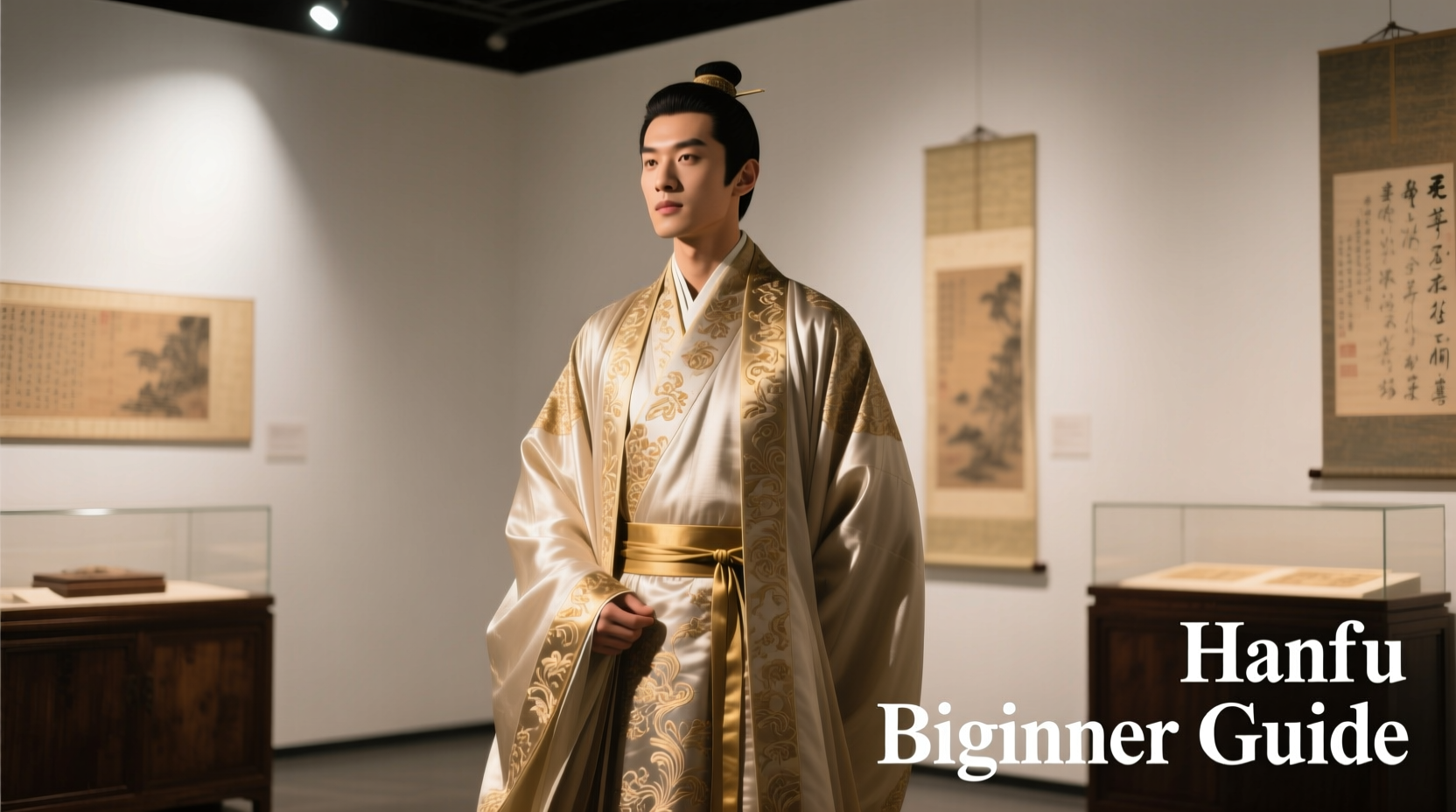
The global resurgence of traditional clothing has brought the Hanfu Yundong (Hanfu Movement) into the international spotlight. While women's styles like the ruqun and aoqun often dominate social media feeds, Chinese male hanfu offers an equally rich, structurally fascinating, and deeply philosophical sartorial tradition. For the modern man looking to explore his heritage or simply appreciate the engineering of ancient Asian garments, navigating the world of men's hanfu requires an understanding of historical silhouettes, strict cultural protocols, and fabric mechanics.
This beginner’s guide strips away the confusion of costume dramas and provides a grounded, respectful, and highly detailed introduction to authentic Chinese male hanfu.
The Philosophy of Flat Cutting and the 'Jiaoling Youren'
Unlike Western tailoring, which relies on darts, seams, and structured shoulders to mold fabric to the three-dimensional human body, traditional Chinese garment construction is based on flat cutting. Fabric is woven on narrow looms and pieced together using straight seams. This results in a garment that lies completely flat when unfastened, symbolizing harmony, fluidity, and a lack of restriction on the body's natural energy (qi).
The defining characteristic of almost all Chinese male hanfu is the jiaoling youren (交领右衽), or the cross-collar with the right lapel. In this configuration, the left side of the garment crosses over the right side, and the collar forms a 'y' shape at the neck. This is not merely an aesthetic choice; it is a foundational pillar of Han cultural identity.
'Without Guan Zhong, we should be wearing our hair unbound, and folding our robes to the left.'
— Confucius, The Analects (14.17)
As Confucius noted, folding the robe to the left (zuoren) was historically associated with non-Han ethnic groups or, more critically, the dressing of the deceased for burial. Therefore, ensuring your left lapel crosses over your right is the single most important rule of wearing hanfu correctly.
Four Essential Silhouettes for the Modern Man
Men's hanfu is generally categorized by its historical era and social function. While the Han (202 BCE – 220 CE), Tang (618–907 CE), and Song (960–1279 CE) dynasties offer beautiful scholarly robes, the Ming Dynasty (1368–1644 CE) provides the most structured and popular silhouettes for modern menswear. According to The Metropolitan Museum of Art's overview of Ming Dynasty aesthetics, this era was marked by a revival of classical Han forms blended with robust, authoritative tailoring.
1. The Scholar’s Elegance: Lanshan (襕衫)
Originating in the Tang and Song dynasties, the Lanshan is a one-piece robe characterized by a wide, dark hem (lan) sewn near the bottom. Historically worn by students and scholars, it features a round or cross collar and wide sleeves. It is an excellent entry-level garment for men attending tea ceremonies, academic conferences, or cultural festivals, as it projects intellectual refinement without the heaviness of court attire.
2. The Martial Swagger: Yisan (曳撒) and Feiyufu (飞鱼服)
For those seeking a more commanding, masculine silhouette, the Ming Dynasty Yisan is unmatched. Influenced by Mongol equestrian clothing, the Yisan features a cross-collar top that is sewn to a pleated skirt at the waist, often with side slits for mobility. A famous variation is the Feiyufu (Flying Fish Robe), an imperial guard uniform adorned with the feiyu (a mythical dragon-like fish) motif. Today, high-quality brocade Yisan robes are the centerpiece of men's hanfu collections, offering a broad-shouldered, heroic aesthetic.
3. The Ancient Classic: Zhiju Shenyi (直裾深衣)
The Shenyi (deep robe) connects the upper and lower body in a single piece, symbolizing the unity of heaven and humanity. The Zhiju (straight hem) variant, popular during the Han Dynasty, features a straight lower edge rather than a curved one. It is typically worn with a wide sash and is favored for solemn ancestral rites, traditional coming-of-age ceremonies (Guan Li), and formal weddings.
4. The Practical Laborer: Duanda (短打)
Not all historical men were scholars or generals. The Duanda (or Shuhe) consists of a short, cross-collar jacket paired with loose-fitting trousers bound at the calves or ankles. This is the hanfu of the working class, martial artists, and travelers. It is highly practical for modern summer wear, outdoor hiking, or martial arts practice, usually crafted from breathable cotton or linen.
Fabrics, Weaves, and Seasonal Adaptations
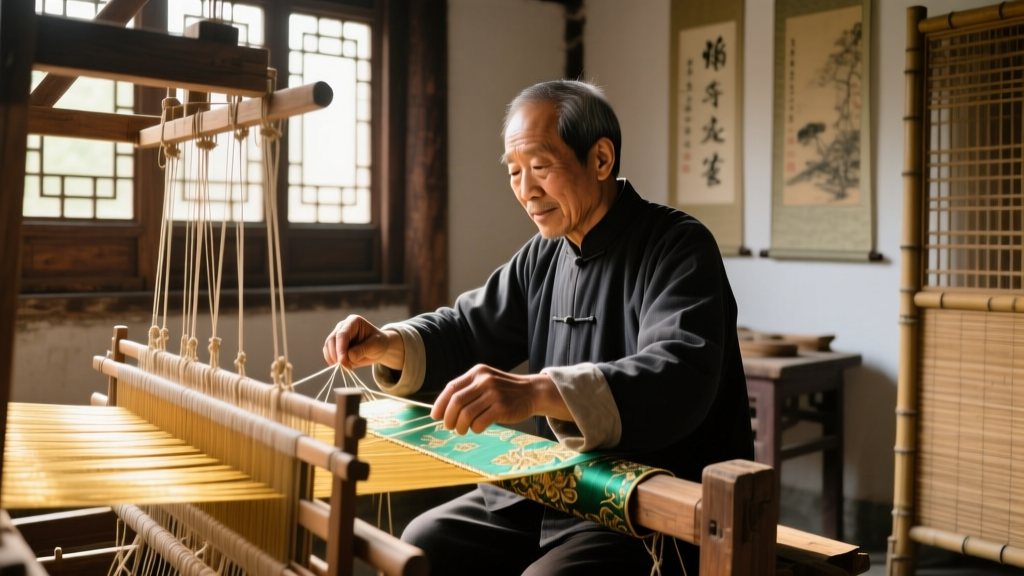
Authenticity in hanfu extends beyond the cut; it relies heavily on textile choice. The China National Silk Museum in Hangzhou preserves centuries of weaving techniques that modern hanfu makers strive to replicate.
- Spring/Summer: Ramie, linen, and lightweight cotton are standard for Duanda and casual Lanshan. For luxury summer wear, Xiangyunsha (gambiered Canton gauze) is highly prized. This silk is dyed with plant tannins and river mud, resulting in a cool, crisp, water-resistant fabric that rustles softly when walking.
- Autumn/Winter: Heavyweight silks, wool blends, and Zhijin (gold-woven brocade) are utilized for Yisan and outer coats like the Pifeng (cloak) or Dahu (sleeveless vest). The structural stiffness of brocade helps maintain the dramatic, wide-shouldered shape of Ming-style menswear.
Market Guide: Pricing and Sourcing Authentic Hanfu
Buying Chinese male hanfu requires navigating a market flooded with cheap 'ancient-style' costumes (gufeng) versus historically accurate garments. True hanfu brands utilize traditional pattern drafting and natural fibers. Below is a realistic pricing framework for men's garments in the current market.
| Tier | Materials & Construction | Typical Garments | Price Range (USD) |
|---|---|---|---|
| Entry-Level | Polyester-cotton blends, machine embroidery, glued collars. | Basic Duanda, simple Lanshan, costume-grade Yisan. | $40 – $85 |
| Mid-Tier (Enthusiast) | 100% Cotton, linen, rayon, woven jacquard, proper flat-felled seams. | Accurate Zhiju, daily-wear Yisan, lined winter robes. | $90 – $220 |
| High-End (Artisan) | Mulberry silk, real Zhijin brocade, Xiangyunsha, hand-woven details. | Custom Feiyufu, formal wedding Shenyi, luxury outerwear. | $300 – $1,200+ |
Sourcing Tip: While international retailers exist, the most authentic and reasonably priced garments are sourced directly from specialized Taobao brands (such as Shisan Yu, Zhuangzi, or Hantime) via purchasing agents. Always check the product details for fabric composition and look for the term 'Zhengtong Hanfu' (正统汉服 - orthodox hanfu) to ensure historical accuracy rather than theatrical costume design.
Completing the Look: Headwear and Footwear
A hanfu outfit is considered incomplete without proper headwear and footwear. Historically, a man's hair was never cut but tied up. Today, men can use a Guan (crown/cap) or a Jin (cloth wrap) to secure a topknot. The Wangjin (a netted hairpiece popular in the Ming dynasty) is an excellent, historically accurate choice for everyday wear.
For footwear, avoid modern sneakers. Traditional cloth boots with upturned toes (Yuntou Xie) or simple black cloth shoes provide the necessary visual anchor for the flowing hemlines of the robes.
References and Further Study
For those wishing to study the historical textiles and patterns that inform modern Chinese male hanfu, the following institutions offer invaluable archives:
- The Metropolitan Museum of Art: Ming Dynasty Art and Textiles
- China National Silk Museum (Hangzhou)
- Zhou, Xun, and Gao Chunming. 5000 Years of Chinese Costumes. China Book Press, 1987. (A foundational academic text on the evolution of the cross-collar and deep robe).