Hanfu, Qipao and Silk Craft: Chinese Dress Guide

Decoding the "Chinese Kimono" Name: Beyond the Misnomer
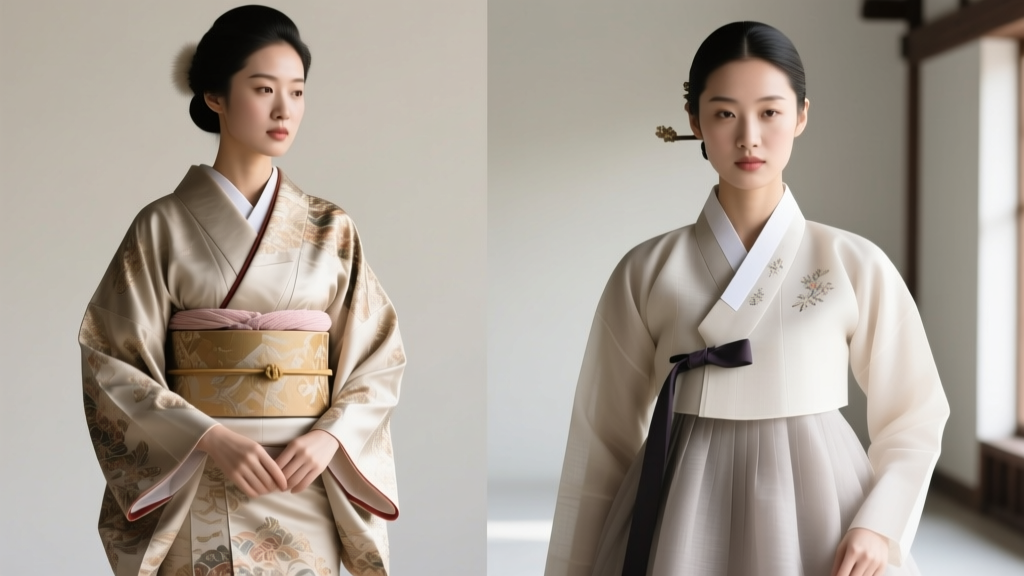
When Western consumers and fashion enthusiasts search for the chinese kimono name, they are often inadvertently conflating Japan's iconic national garment with China's vast and complex sartorial history. The word kimono (着物) simply translates to "thing to wear" in Japanese and is exclusive to Japan's cultural sphere. China, possessing one of the oldest continuous textile traditions in human history, does not have a single "Chinese kimono." Instead, traditional Chinese clothing is categorized into distinct garments defined by dynasty, ethnicity, and tailoring philosophy.
To truly understand Chinese traditional garments, we must discard the umbrella term of the kimono and explore the authentic names, structural engineering, and master-level silk craftsmanship that define China's native dress. This deep dive explores the true names of Chinese garments and the extraordinary textiles that bring them to life.
The True Names: Hanfu and Qipao
The search intent behind the "Chinese kimono" usually points to one of two vastly different garments: the ancient, flowing robes of the Han majority, or the form-fitting, tailored dresses of the 20th century.
Hanfu (汉服): The Ancient Han Tradition
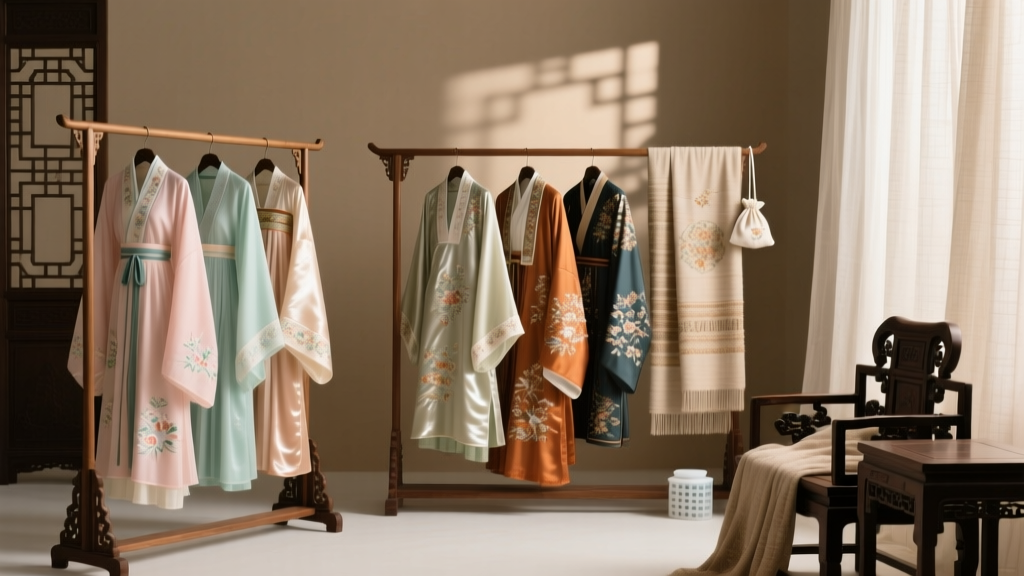
Hanfu translates directly to "clothing of the Han people." This is the traditional dress system worn by China's Han majority for over three millennia, spanning from the legendary Yellow Emperor to the early Qing Dynasty (1644). Hanfu is not a single robe but a complex system of garments, most notably the Ruqun (a top and pleated skirt ensemble) and the Shenyi (a deep, one-piece robe). Hanfu is characterized by its wide sleeves, flowing drape, and the strict cultural protocol of Jiaoling Youren—the cross-collar wrapping left over right. Wrapping right over left (Zuoren) is traditionally reserved for burial garments and mourning.
Qipao (旗袍) / Cheongsam: The Tailored Silhouette
Often misidentified by foreigners as a "Chinese kimono" due to its status as a cultural staple, the Qipao (known as Cheongsam in Cantonese) is a relatively modern invention. Evolving from the loose, floor-length robes of the Manchu Bannermen during the Qing Dynasty, the Qipao was radically reimagined in 1920s and 1930s Shanghai. Tailors introduced Western darting, set-in sleeves, and high side slits, transforming it into the form-fitting, high-collared silhouette recognized globally today.
Master Textiles: The Fabric of Chinese Craftsmanship
The soul of both Hanfu and Qipao lies in Chinese silk weaving and dyeing techniques. According to the China National Silk Museum, China's mastery of sericulture dates back over 5,000 years. Today, heritage artisans preserve highly specialized regional textiles that dictate the drape, sheen, and cultural weight of the garments.
Xiangyunsha: The Mud-Dyed Silk of Guangdong
Often used for premium, breathable Hanfu and summer Qipaos, Xiangyunsha (Gambiered Canton Gauze) is a marvel of natural chemistry. Artisans in Guangdong dye raw mulberry silk in the tannin-rich juice of the Dioscorea cirrhosa (wild yam) up to 30 times. The fabric is then coated in iron-rich river mud. The chemical reaction between the yam tannins and the mud's iron ions creates a dark, crackling glaze on one side of the fabric, while the reverse remains a warm rust-brown. The result is a crisp, water-resistant silk that rustles softly when worn and naturally repels insects.
Nanjing Yun Brocade: Imperial Cloud Weaving
For ceremonial Hanfu and luxury Qipaos, Yun Brocade (Cloud Brocade) represents the zenith of Chinese weaving. Recognized by UNESCO Intangible Cultural Heritage, this Nanjing-based craft utilizes massive wooden draw-looms operated by two weavers simultaneously. Yun brocade incorporates peacock feather yarns, gold leaf threads, and silver foil. The technique, known as Zhuanghua (swivel weaving), allows for intricate, discontinuous weft patterns that look as though they are floating like clouds on the silk ground. Historically reserved for imperial dragon robes, it remains one of the most expensive textiles in the world.
Song Brocade: The Scholar's Silk
Originating from Suzhou, Song Brocade is softer, more pliable, and less ostentatious than Yun brocade. Characterized by its geometric backgrounds and subtle, matte-finish motifs, it is the preferred textile for elegant, everyday Qipaos and refined Hanfu outer layers. Its structural integrity makes it ideal for the precise tailoring required in modern Qipao construction.
Structural Engineering: Flat-Cutting vs. Form-Fitting
The most profound difference between Chinese garments and the Japanese kimono lies in their structural engineering and relationship to the human body.
Hanfu: The Philosophy of Pingmian Caijian
Hanfu relies on Pingmian Caijian (flat-plane cutting). Fabric is cut in straight lines and folded, utilizing the entire width of the silk bolt without waste. There are no shoulder seams; the front and back are often cut from a single continuous piece of fabric. The garment is shaped entirely by the wearer's body and secured with woven silk ties rather than buttons, creating a structural drape that flows outward, obscuring the body's natural contours in favor of a spiritual, ethereal silhouette.
Qipao: The Architecture of the Body
Conversely, the modern Qipao is an exercise in structural tailoring. It requires precise measurements, bust and waist darts, and a shaped armhole. The defining hardware of the Qipao is the Pankou—intricate, hand-knotted frog buttons made from silk-wrapped wire or stiffened fabric. A master tailor will spend hours crafting a single Pankou knot in the shape of a plum blossom or a butterfly, which serves as both a functional fastener at the Mandarin collar (Yuanling) and a focal point of artistic expression.
Comparative Analysis: Garment Construction & Textile Data
| Garment Name | Primary Era / Origin | Signature Fabric | Construction Method | Fastening System |
|---|---|---|---|---|
| Hanfu (Ruqun) | Antiquity - Ming Dynasty | Crepe de Chine, Xiangyunsha | Flat-plane cutting, no darts | Woven silk sashes and ties |
| Qipao (Cheongsam) | 1920s Shanghai / Republic | Song Brocade, Heavy Silk Satin | Western darting, set-in sleeves | Pankou (frog buttons), hidden zippers |
| Tangzhuang | Modern (Qing/APEC inspired) | Brocade, Cotton blends | Structured, padded shoulders | Pankou (frog buttons) |
| Kimono (For Contrast) | Japan (Heian - Edo) | Nishijin-ori, Yuzen-dyed Silk | Straight seams, T-shaped | Obi belt, no buttons |
Acquisition Guide: Pricing and Sourcing Authentic Pieces
For collectors and cultural enthusiasts seeking authentic Chinese garments, understanding the market tiers is essential to avoid mass-produced synthetic imitations.
- Entry-Level / Mass Market ($30 - $90 USD): Typically made from polyester blends or synthetic chiffon. Commonly found on e-commerce platforms. While acceptable for casual Hanfu cosplay or festivals, these lack the breathability and drape of true silk.
- Mid-Tier Artisan ($150 - $500 USD): Genuine mulberry silk, often machine-woven but featuring traditional motifs. Brands based in Hangzhou and Suzhou offer excellent ready-to-wear Qipaos and Hanfu sets using authentic crepe and satin weaves.
- Bespoke & Heritage ($800 - $3,500+ USD): Custom-tailored Qipaos utilizing heritage Song Brocade or hand-dyed Xiangyunsha. Bespoke Hanfu featuring hand-embroidery (Su Xiu or Suzhou embroidery) and authentic Yun brocade accents fall into this tier. These are commissioned directly from master tailors in Shanghai's Changle Road district or specialized ateliers in Nanjing.
"To wear Chinese traditional clothing is to wear the geography of its origin. The mud of the Pearl River, the looms of Nanjing, and the tailoring needles of Shanghai are woven into every seam."
Cultural Protocol and Modern Revival
The modern Hanfu Movement (Hanfu Yundong) has sparked a massive revival among Chinese youth, reclaiming these garments from the realm of historical costume and integrating them into daily streetwear, tea ceremonies, and coming-of-age rituals. When wearing Hanfu, adhering to the Jiaoling Youren (left over right) collar rule remains a vital sign of cultural respect. Similarly, a well-fitted Qipao is considered a garment of empowerment and elegance, frequently worn at diplomatic events, weddings, and the Lunar New Year.
By moving past the inaccurate "Chinese kimono" search term, enthusiasts can engage deeply with the true names—Hanfu and Qipao—and appreciate the unparalleled textile engineering that makes Chinese traditional garments a cornerstone of global sartorial heritage. For further academic research on East Asian textile evolution, resources provided by The Metropolitan Museum of Art's Heilbrunn Timeline of Art History offer invaluable visual archives of surviving Ming and Qing dynasty textiles.