A Guide to Chinese Hanfu: Regional Variations & Substyles

The Living Tapestry of Chinese Hanfu
When discussing traditional Asian garments, the term chinese hanfu refers specifically to the historical clothing systems of the Han Chinese people, spanning over three millennia. Distinct from the Manchu-influenced qipao or cheongsam of the Qing dynasty, Hanfu is characterized by its flat-pattern cutting, flowing silhouettes, and profound philosophical symbolism. However, Hanfu is not a monolith. The contemporary Hanfu Movement (Hanfu Yundong), which gained momentum in the early 2000s, has revived a vast array of regional variations and historical substyles. Today, enthusiasts and artisans navigate a complex landscape of dynasty-specific aesthetics, regional manufacturing hubs, and niche stylistic interpretations that reflect both ancient traditions and modern cultural pride.
Historical Dynasties as Modern Substyles
In the modern Hanfu community, substyles are primarily categorized by the historical dynasties they emulate. Each era introduced distinct tailoring techniques, fabric preferences, and silhouette structures that dictate how the garments are worn today.
Tang Dynasty: The Ruqun and Banbi (Opulence and Silk Road Influence)
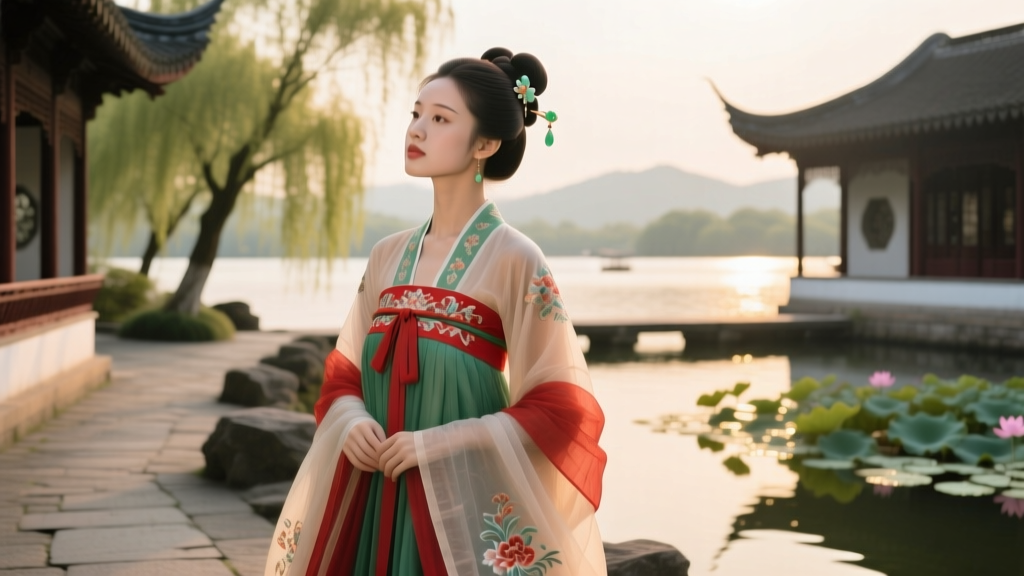
The Tang Dynasty (618–907 CE) represents a golden age of cosmopolitan exchange, heavily influencing the Qixiong Ruqun (chest-high skirt and top) and the Banbi (half-sleeve jacket). Tang substyles are characterized by their opulence, vibrant color palettes, and wider sleeves. The skirts are often tied high above the bust, secured with wide silk sashes, reflecting a historical era of openness and Silk Road cultural integration. According to textile archives at The Metropolitan Museum of Art, Tang-era silk weaving techniques like kexi (silk tapestry) laid the groundwork for the heavily patterned brocades favored in this substyle today.
Song Dynasty: The Beizi and Minimalist Elegance
Shifting to the Song Dynasty (960–1279 CE), the aesthetic pivots toward Neo-Confucian restraint. The defining garment is the Beizi, a long, open-front coat with narrow, straight sleeves and side slits. Song substyles favor subdued, earthy tones, minimalist geometric embroidery, and lightweight, breathable fabrics like ramie and fine gauze. This substyle is highly popular for everyday modern wear and tea ceremonies due to its understated elegance and practical silhouette.
Ming Dynasty: The Aoqun and Mamianqun (Structure and Tailoring)
The Ming Dynasty (1368–1644 CE) introduced structured layering and the iconic Mamianqun (horse-face skirt). The Aoqun substyle features a lined, often waist-length jacket (Ao) with a standing collar (Liling) and metal snap buttons, paired with the heavily pleated Mamianqun. The skirt's construction is an engineering marvel: it consists of two overlapping flat panels in the front and back, with deep, structured knife pleats on the sides. This substyle is currently the most dominant in the winter Hanfu market, as the layered, lined garments provide warmth while maintaining a dignified, architectural silhouette.
Modern Regional Hubs: Where Hanfu is Made and Worn
The production and styling of chinese hanfu are deeply tied to specific regional hubs in China, each contributing a unique flavor to the market in terms of craftsmanship, price, and cultural integration.
Chengdu (Sichuan): The Cultural and Styling Capital
Chengdu is widely recognized as the cultural epicenter of the modern Hanfu movement. The city's streets, particularly around the Wuhou Shrine and Jinli Ancient Street, serve as open-air runways. Chengdu is famous for popularizing the Wuxia (martial arts) and Jianghu (wanderer) substyles, characterized by practical, narrow sleeves, leather bracers, and bamboo hats. The city boasts hundreds of Hanfu rental and styling studios, making it the premier destination for immersive, historically styled photography.
Hangzhou and Suzhou: The Silk Weaving Heartlands
For high-end, artisanal Hanfu, the Jiangnan region—specifically Hangzhou and Suzhou—remains unrivaled. These cities are the historical centers of Chinese silk production. Artisans here specialize in Songjin (Song brocade) and intricate embroidery techniques like Suzhou Su Xiu. Garments sourced from these regions often feature hand-woven cloud patterns and real gold-leaf thread integration. The China National Silk Museum in Hangzhou continues to preserve and study these ancient weaving techniques, directly inspiring modern luxury Hanfu brands that cater to collectors and brides.
Cao County (Shandong): The Mass-Market Production Engine
While Hangzhou produces luxury, Cao County in Shandong province is the undisputed engine of mass-market Hanfu. Producing an estimated 30% to 40% of all Hanfu sold on Chinese e-commerce platforms like Taobao, Cao County specializes in affordable, machine-embroidered garments using polyester and synthetic silk blends. This region has democratized Hanfu, dropping the entry price to under $30 USD and allowing students and casual enthusiasts to participate in the movement without a massive financial barrier.
Niche Substyles in the Contemporary Movement
Beyond strict historical reenactment, modern Hanfu has splintered into fantasy and lifestyle substyles driven by pop culture, literature, and regional aesthetics.
- Xianxia (Immortal Hero) Aesthetic: Inspired by fantasy dramas and Daoist mythology, this substyle utilizes ultra-wide sleeves, floor-sweeping skirts, and gradient-dyed chiffon or organza. The colors are often ethereal pastels or stark whites, designed to mimic the flow of wind and water.
- Jinjiang / Minnan Regional Style: A niche revival focusing on the specific headwear and jacket styles of the Minnan region in Fujian province, often incorporating the Zanhua (floral headdress) tradition, where vibrant, fresh, or silk flowers are woven into intricate updos.
- Academic / Scholar Style: Emulating the literati of the Ming and Song dynasties, this substyle features the Lanshan (scholar's robe) with its distinctive black-edged hems and Futou (scholar's cap), favored for graduation ceremonies and formal academic gatherings.
Fabric, Construction, and Sourcing Guide
Understanding the material composition and construction methods is vital for buyers looking to invest in authentic chinese hanfu. Below is a comparative framework to guide sourcing decisions based on substyle and regional production.
| Substyle / Dynasty | Key Garments | Primary Fabrics | Avg. Price Range (USD) | Best Regional Source |
|---|---|---|---|---|
| Tang (Opulent) | Qixiong Ruqun, Banbi | Heavy Silk Brocade, Satin | $80 - $250 | Suzhou (Artisan) |
| Song (Minimalist) | Beizi, Song-style Ku | Linens, Ramie, Light Gauze | $45 - $120 | Hangzhou / Guangzhou |
| Ming (Structured) | Aoqun, Mamianqun | Wool Blends, Jacquard, Heavy Cotton | $60 - $300+ | Cao County (Budget) / Nanjing (Luxury) |
| Wuxia (Martial) | Narrow-sleeve Ruqun, Bracers | Cotton, Faux Leather, Hemp | $35 - $90 | Chengdu Studios |
Cultural Protocols and Wearing Etiquette
Wearing Hanfu requires adherence to specific cultural protocols, the most critical being the Jiaoling Youren rule. This dictates that the left side of the collar must cross over the right side, symbolizing the triumph of life (yang) over death (yin). Crossing the right over the left (Zuoren) is strictly reserved for dressing the deceased and is considered highly inauspicious in daily wear. Furthermore, traditional Hanfu lacks pockets, necessitating the use of regional accessories like embroidered pouches or wide-sleeve storage. Footwear also plays a role; while modern wearers often use discreet leather shoes, traditionalists seek out Yuntouxie (cloud-head shoes) with upturned toes, beautifully preserved in collections at institutions like the Victoria and Albert Museum. By respecting these structural and philosophical rules, wearers honor the deep cultural lineage embedded in every stitch of the garment.