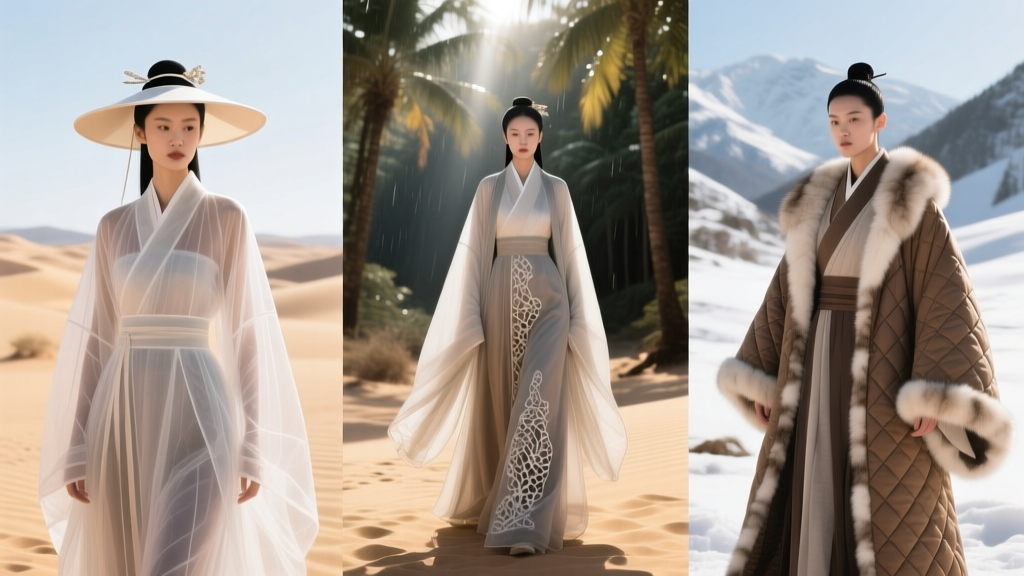
The Traditional Chinese Garment: Regional Variations and Substyles
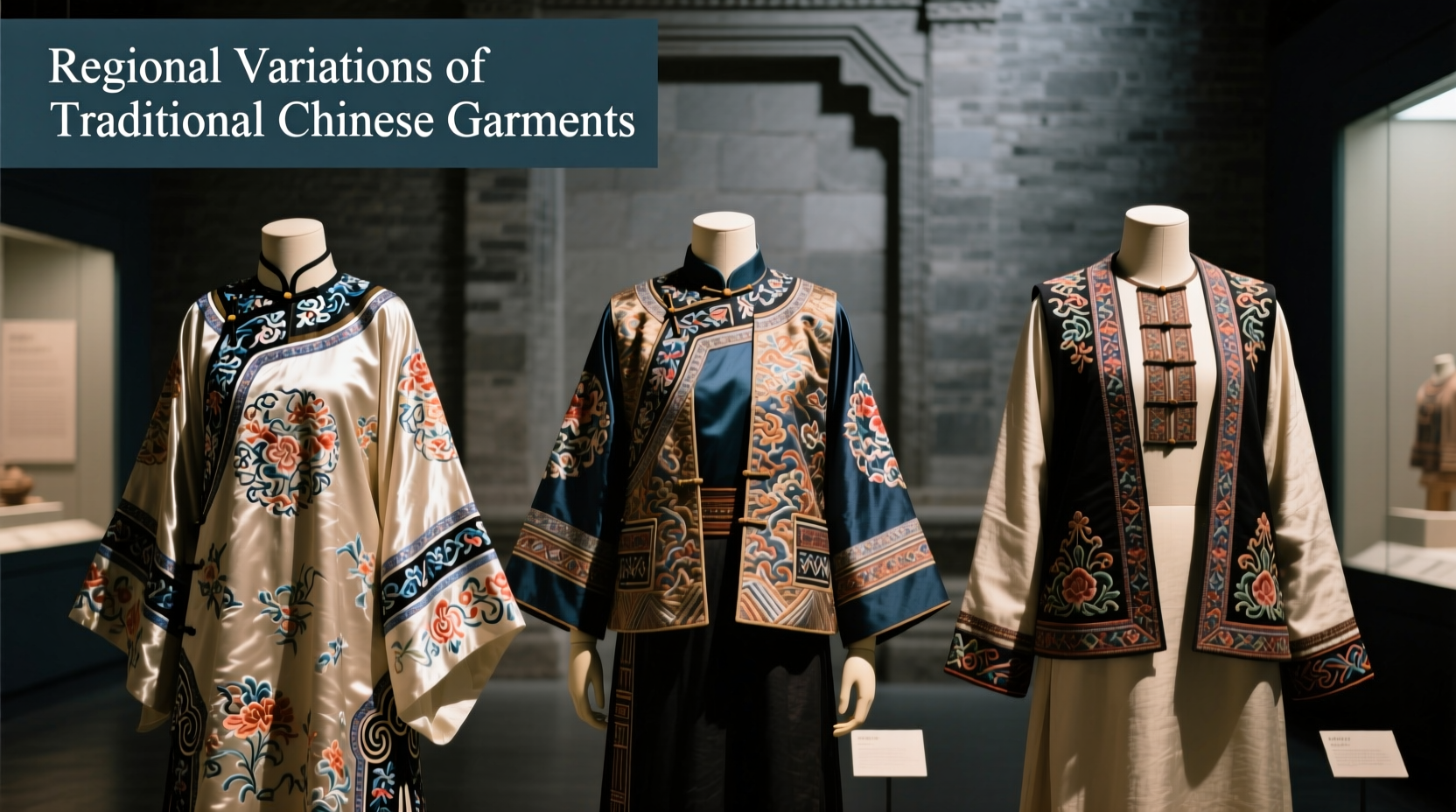
The Myth of a Monolithic Chinese Garment
When global audiences envision a traditional chinese garment, the mind often defaults to the ubiquitous Qipao (Cheongsam) or a generalized, pan-dynastic interpretation of Hanfu. However, China’s vast topography—ranging from the arid, freezing northern steppes to the humid, tropical southern coastlines—has historically demanded radically different textile solutions. The evolution of the chinese garment is not a single linear narrative, but a complex tapestry of regional substyles dictated by microclimates, indigenous agriculture, and local philosophical aesthetics.
Today’s Hanfu revival movement (Hanfu Yundong) has sparked a renewed academic and artisanal interest in these hyper-local variations. To truly understand Chinese sartorial history, one must look beyond the imperial courts of Beijing and explore the distinct regional silhouettes that define the nation's textile heritage.
Northern Silhouettes: Structure, Warmth, and the Mamianqun
The northern plains of China, encompassing regions around Beijing, Shandong, and Henan, experience harsh, biting winters and dusty springs. Consequently, the traditional chinese garment of the North prioritizes structural layering, wind resistance, and heavy insulation.
Architectural Pleating of the Ming Dynasty
The quintessential northern silhouette is heavily influenced by the Ming Dynasty (1368–1644), most notably through the Aoqun (padded jacket and skirt) combination. The centerpiece of this ensemble is the Mamianqun (horse-face skirt). Unlike Western pleated skirts that gather uniformly around the waist, the Mamianqun is a marvel of flat-pattern engineering. It features two flat, overlapping front and back panels (the 'horse faces') flanked by heavily pleated side panels.
- Construction: The pleats are tightly bound at the waistband but swing outward during movement, allowing for ease of walking while maintaining a modest, structured appearance when standing still.
- Textiles: Northern artisans historically utilized Zhi Jin (brocade) and heavy silks woven with metallic threads. The waistband was often constructed from a contrasting, durable cotton or linen to reduce friction and prevent the heavy silk from slipping.
- Layering: The Pi Feng (cape-like cloak) and the Bijia (sleeveless padded vest) were essential outer layers, often lined with rabbit or fox fur for the elite, and raw cotton or hemp wadding for commoners.
Jiangnan Elegance: The Water Town Aesthetic
South of the Yangtze River lies Jiangnan, a region characterized by its labyrinthine water towns, misty rains, and deep literary traditions. The chinese garment of Jiangnan reflects the region's identity: ethereal, refined, and deeply connected to the arts.
Song Dynasty Minimalism and Su Xiu Embroidery
While the North favored Ming opulence, the Jiangnan aesthetic frequently draws upon the restrained elegance of the Song Dynasty (960–1279). The Ruqun (a short, thin upper garment paired with a high-waisted skirt) is the dominant silhouette here. The collar styles, such as the Jiao Ling You Ren (cross-collar, right lapel), are cut to elongate the neck and create a slender, weeping-willow profile.
The true distinction of the Jiangnan garment lies in its surface design. Su Xiu (Suzhou embroidery) transforms plain silk crepe into wearable art. Unlike the bold, geometric motifs of northern brocades, Su Xiu utilizes split silk threads—sometimes splitting a single thread into 1/64th of its original thickness—to render photorealistic koi fish, plum blossoms, and misty landscapes. According to the China National Silk Museum, the sericulture techniques developed in the Lake Tai region allowed for the creation of Luodi (gauze) and Luo (leno-weave silk), fabrics that possess a translucent, water-like drape perfect for the humid Yangtze summers.
Lingnan and the South: Pragmatism in Tropical Heat
The Lingnan region (modern-day Guangdong and Guangxi) and the Fujian coast present a completely different set of environmental challenges: high humidity, intense UV radiation, and monsoon rains. A heavy silk chinese garment would be entirely impractical here, leading to the development of highly specialized, sweat-wicking textiles.
Xiangyunsha and the Alchemy of River Mud
The crown jewel of Lingnan textile heritage is Xiangyunsha (Gambiered Canton Gauze). Recognized by UNESCO as an Intangible Cultural Heritage, Xiangyunsha is not merely woven; it is alchemically transformed. Artisans in the Shunde district weave a highly porous silk leno, which is then repeatedly soaked in the tannin-rich juice of the Dioscorea cirrhosa (shulang) tuber.
'The beauty of the traditional Chinese garment lies not in a single, unified silhouette, but in its profound dialogue with local geography, climate, and indigenous agriculture.' — Curatorial notes on regional textiles, Victoria and Albert Museum.
After dozens of sun-baking cycles, the fabric is coated in iron-rich river mud from the Pearl River Delta. The chemical reaction between the tannins and the iron creates a unique, dual-toned fabric: glossy and waterproof black on one side, and a warm, matte ochre on the other. Xiangyunsha is naturally antibacterial, UV-resistant, and becomes softer and more lustrous with wear, making it the ultimate luxury summer chinese garment.
Hakka and Minnan Folk Adaptations
Among the Hakka and Minnan populations of the deep south, indigo-dyed ramie and hemp were historically favored over silk. The Dajin Shan (large lapel shirt) of the Minnan region features wide, cropped sleeves to facilitate agricultural labor in the wet rice paddies, while the iconic Hakka bamboo sun-hats (Liangmao) were paired with durable, dark blue calico trousers designed to resist staining from red laterite soils.
Comparative Matrix: Regional Substyles and Textile Adaptations
To fully grasp the diversity of the chinese garment, one must compare the structural and material choices across these distinct climatic zones. The following table outlines the primary variations:
| Region | Primary Garment Type | Key Textile & Fabric | Climate Adaptation | Modern Price Range (USD) |
|---|---|---|---|---|
| North (Beijing/Shandong) | Mamianqun & Aoqun | Zhuanghua Brocade, Heavy Silk | Wind-resistant, insulated layering | $60 - $250 |
| Jiangnan (Suzhou/Hangzhou) | Ruqun & Beizi | Silk Gauze (Luo), Crepe de Chine | Breathable, lightweight, drapes in humidity | $120 - $500+ |
| Lingnan (Guangdong) | Qungua, Tangzhuang | Xiangyunsha, Ramie, Linen | Sweat-wicking, UV-blocking, quick-drying | $200 - $800+ |
| Southwest (Guizhou/Yunnan) | Pleated Batik Skirts | Indigo-dyed Cotton, Hemp | Durable for mountainous terrain, thermal regulation | $80 - $300 |
Sourcing and Valuation: A Buyer’s Framework
For collectors, historians, and enthusiasts looking to acquire an authentic regional chinese garment, understanding the modern market is crucial. The proliferation of fast-fashion 'Hanfu' on global e-commerce platforms has flooded the market with polyester blends that ignore historical construction techniques.
When evaluating a piece, apply the following framework:
- Inspect the Weave and Drape: Authentic Jiangnan Luo silk features a visible leno weave (twisted warp threads) that creates natural micro-pores. If the fabric is entirely opaque and stiff, it is likely synthetic.
- Examine the Mamianqun Pleats: A high-quality northern-style skirt will have heat-set or hand-stitched pleat anchors near the waistband to maintain structural integrity. The flat panels should align perfectly without gaping when the wearer is in motion.
- Verify Xiangyunsha Authenticity: Genuine Gambiered Canton Gauze has a distinct, earthy scent reminiscent of sweet potatoes and damp earth. It should feel cool to the touch and produce a subtle 'rustling' sound (often called the 'sound of silk') when walked in.
For museum-quality reproductions and artisanal pieces, buyers should look to established heritage brands in Hangzhou and Guangzhou, or consult the archives and retail affiliates of institutions like the Metropolitan Museum of Art's Asian Textile collections for historical reference points before making high-value investments.
Preserving the Living Heritage of Chinese Dress
The study of the traditional chinese garment is not merely an exercise in historical archiving; it is an engagement with a living, breathing cultural renaissance. Contemporary Chinese designers and rural artisan cooperatives are actively collaborating to revive endangered techniques, from the mud-dyeing vats of Shunde to the draw-looms of Nanjing.
By recognizing and respecting the profound regional variations of Chinese dress, we move beyond superficial aesthetics. We begin to appreciate the chinese garment as a brilliant, localized response to the human experience—where every pleat, stitch, and dye bath tells the story of the land and the people who shaped it.