Decoding Traditional Chinese Fashion: Fabric and Craftsmanship

The Loom as the Canvas: Understanding Chinese Textile Heritage
When discussing traditional Chinese fashion, the global eye is often drawn to the sweeping silhouettes of the Hanfu (汉服) or the tailored elegance of the Qipao (旗袍). However, to truly understand the cultural and historical weight of these garments, one must look past the cut and examine the cloth. In Chinese sartorial history, the fabric is not merely a medium; it is the message. The value, social standing, and philosophical alignment of the wearer were historically encoded in the weave, the dye, and the stitch.
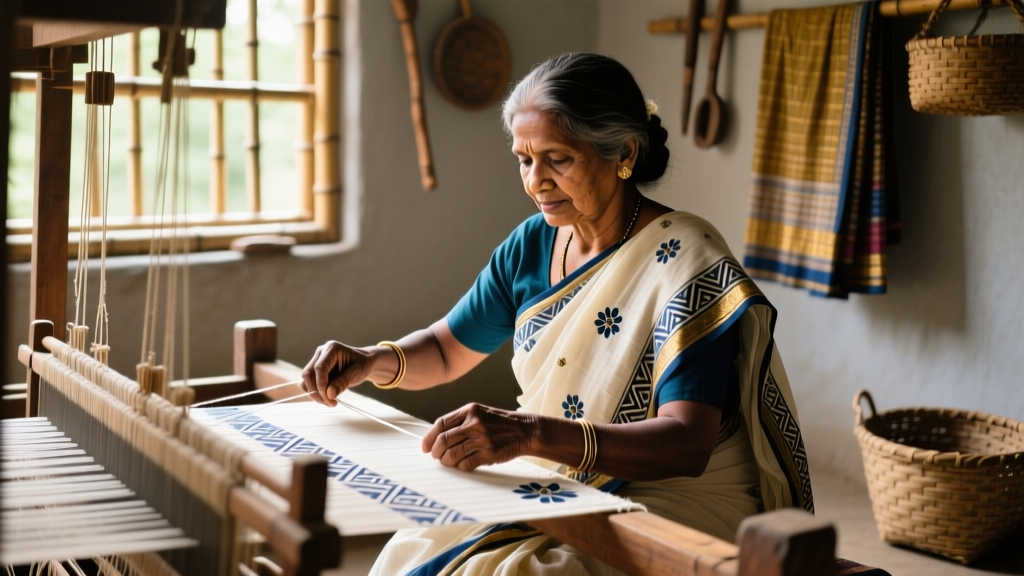
Unlike Western tailoring, which relies on darts, pleats, and bias cuts to mold fabric to the human form, traditional Chinese garment construction is rooted in flat-pattern cutting. This approach reveres the integrity of the woven textile. The loom's width—historically around 60 to 70 centimeters—dictated the proportions of the sleeves and bodice, resulting in the distinctive cross-collared, wide-sleeved structures of Hanfu. To appreciate Chinese fashion is to appreciate the profound mastery of sericulture, natural dyeing, and hand-embroidery that has evolved over five millennia.
The Foundation: Silk Weaving Techniques in Historical Garments
The bedrock of Chinese fashion is silk. According to the Metropolitan Museum of Art's Heilbrunn Timeline of Art History, China's mastery of sericulture and silk weaving was a closely guarded state secret for centuries, forming the economic backbone of the Silk Road. The terminology of Chinese silk is vast, but four primary weaves dominate historical fashion:
Luo (罗) and Sha (纱): The Breath of Summer
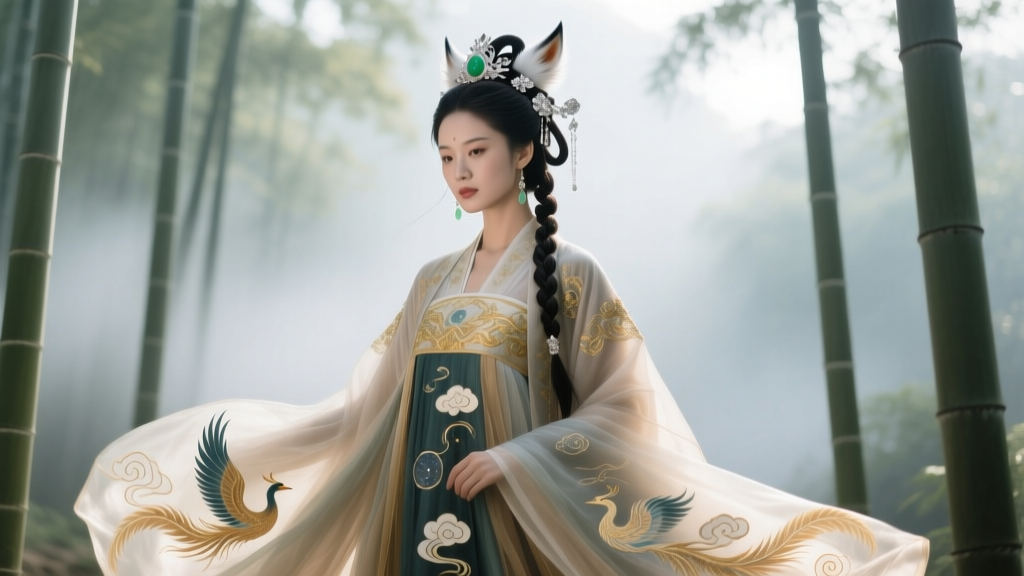
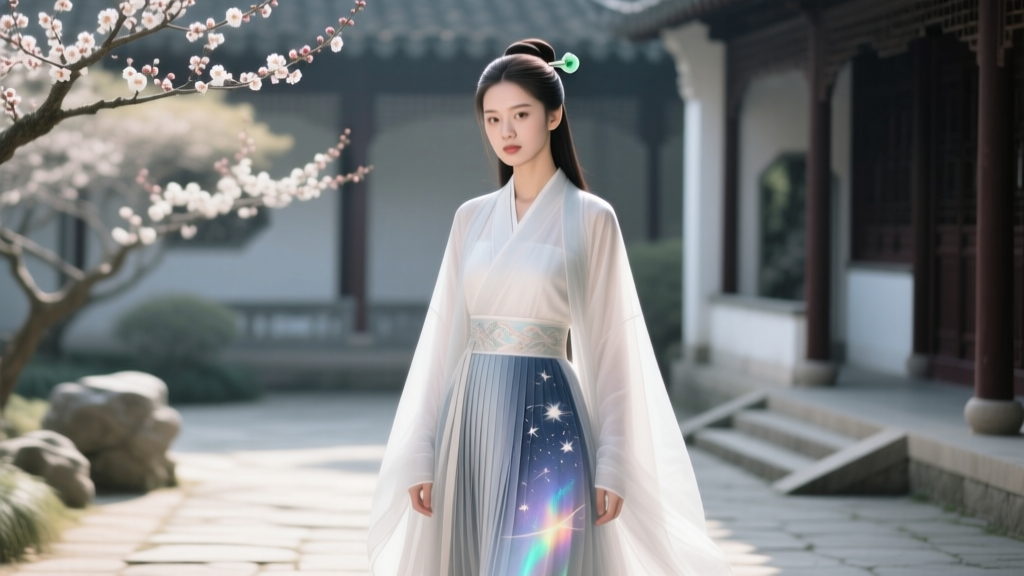
For the sweltering summers of the Yangtze River basin, artisans developed Luo (gauze) and Sha (crepe). These weaves involve twisting the warp threads, creating microscopic pores in the fabric that allow for exceptional breathability while maintaining structural stiffness. During the Tang and Song dynasties, lightweight gauze robes were layered to create an ethereal, translucent effect that was highly prized in court fashion.
Duan (缎) and Jin (锦): The Weight of Formality
For winter garments and formal court attire, Duan (satin) and Jin (brocade) were utilized. Satin weaves allow the warp or weft threads to float over the surface, creating a lustrous, reflective face that catches the light. Yunjin (Cloud Brocade) from Nanjing is perhaps the most prestigious, utilizing peacock feather filaments and gold leaf wrapped around silk cores. A single meter of authentic, hand-loomed Yunjin can take months to produce and commands prices exceeding 50,000 CNY ($7,000 USD).
Regional Masterpieces: Xiangyunsha and Kesi Tapestry
Beyond standard weaves, specific regional techniques represent the pinnacle of Chinese fashion craftsmanship, merging local geography with textile science.
Xiangyunsha (香云纱): The Alchemy of Mud and Tannin
Originating in the Shunde district of Foshan, Guangdong, Xiangyunsha (fragrant cloud silk) is a marvel of natural chemical engineering. The fabric is dyed using the tannin-rich juice of the Dioscorea cirrhosa tuber, then coated with iron-rich river mud. The reaction between the tannin and iron creates a striking dual-tone fabric: a deep, glossy black on one side and a warm, earthy brown on the other. The process requires intense sunlight and can only be done between March and November. Today, authentic hand-processed Xiangyunsha ranges from 1,200 to 3,500 CNY ($165–$480 USD) per meter. It is highly prized for modern Qipao and high-end Hanfu due to its crisp drape, water resistance, and antimicrobial properties.
Kesi (缂丝): Painting with Thread
Kesi, translating to "cut silk," is a tapestry weave technique where the weft threads are turned back at the edges of color blocks, creating tiny slits that resemble cut paper. As documented by the Victoria and Albert Museum, this weft-faced plain weave allows for incredible detail, making it the preferred medium for reproducing intricate calligraphy and landscape paintings on imperial robes. Because the weaver must manually pack down each colored thread with a bamboo comb, Kesi is painstakingly slow. It is priced by the square inch, with master artisan panels frequently exceeding $1,000 USD for a garment-sized yoke.
The Language of Threads: The Four Great Embroideries
While weaving provides the canvas, embroidery provides the vocabulary. Chinese fashion utilizes needlework to convey blessings, social rank, and philosophical concepts. The tradition is broadly categorized into the "Four Great Embroideries" (四大名绣), each with distinct regional characteristics and stitch repertoires.
| Embroidery Style | Region | Key Characteristics | Common Motifs |
|---|---|---|---|
| Su Xiu (苏绣) | Suzhou, Jiangsu | Exceptional fineness; uses silk threads split into 1/48th of their original thickness. Famous for double-sided embroidery. | Koi fish, peonies, cats, delicate landscapes. |
| Xiang Xiu (湘绣) | Hunan Province | Bold colors, high contrast, and textured stitches. Often incorporates velvet and metallic threads. | Tigers, lions, dramatic flora, mythical beasts. |
| Yue Xiu (粤绣) | Guangdong (Canton) | Dense, vibrant, and heavily padded. Frequently uses gold and silver couched threads for a 3D relief effect. | Dragons, phoenixes, lychees, theatrical costumes. |
| Shu Xiu (蜀绣) | Sichuan Province | Smooth, bright, and characterized by over 130 distinct needle techniques. Highly durable. | Pandas, lotus flowers, bamboo, carp. |
Su embroidery, recognized on the UNESCO Representative List of the Intangible Cultural Heritage of Humanity, represents the absolute zenith of needlecraft. A master embroiderer in Suzhou might spend three years completing a single ceremonial Mamianqun (horse-face skirt), utilizing the "Sanfen" (three-split) thread technique to render the gradient of a koi fish's scales so realistically that it appears wet.
The Qipao Transition: Tailoring Meets Tradition
The evolution of the Qipao in the 1920s and 1930s Shanghai marked a pivotal shift in Chinese fashion craftsmanship. As the garment transitioned from a loose, A-line Manchu robe to a form-fitting, Western-inspired silhouette, the traditional flat-cut philosophy was challenged. Tailors began introducing darts, set-in sleeves, and side slits.
This structural shift forced a change in textile application. Heavy, stiff brocades that draped beautifully in Hanfu were unsuited for the tight curves of the modern Qipao. Artisans began favoring lighter, high-twist silk crepes and bias-cut satins that could stretch and contour. Furthermore, the placement of embroidery shifted from horizontal hem bands to vertical, asymmetrical layouts that elongated the figure, demonstrating how Western tailoring techniques were synthesized with indigenous Chinese needlecraft.
Sourcing Authentic Textiles: A Buyer’s Framework
For collectors, designers, and cultural enthusiasts looking to source authentic Chinese fashion textiles, navigating the modern market requires a discerning eye. Mass-produced "silk" is often a blend of polyester and rayon. Use this framework to ensure authenticity:
- The Burn Test: Authentic silk burns slowly, smells like burnt hair, and leaves a crushable, dark ash. Synthetics melt, smell like plastic, and form a hard bead.
- Seek Out Cooperatives: Purchase directly from recognized artisan hubs. For Xiangyunsha, look for certifications from the Shunde Xiangyunsha Heritage Association. For Su embroidery, the Suzhou Embroidery Institute (Suzhou Zhenhu Embroidery Town) is the gold standard.
- Understand Pricing Floors: Authentic hand-embroidered silk panels will never be cheap. If a fully embroidered Qipao is listed for under 3,000 CNY ($420 USD), the embroidery is almost certainly machine-made or done with synthetic rayon threads.
- Examine the Reverse: In high-end hand embroidery, the reverse side of the fabric should be nearly as neat as the front, with no chaotic loops or knotting. Machine embroidery leaves a dense, uniform web of backing threads.
Preserving the Loom: The Future of Chinese Craftsmanship
The survival of traditional Chinese fashion relies on the transmission of these complex skills to the next generation. Institutions like the China National Silk Museum in Hangzhou and various provincial intangible heritage workshops are actively working to digitize ancient weave structures and subsidize apprenticeships.
Contemporary Chinese fashion designers are increasingly returning to these heritage textiles, not as historical costumes, but as living materials. By integrating Xiangyunsha and Kesi into modern, wearable silhouettes, they ensure that the looms of Guangdong and Suzhou continue to clatter, preserving a textile legacy that remains as vital and breathtaking today as it was a thousand years ago.