Chinese Dressing Style: A Guide to Regional Variations

The Myth of a Monolith: Defining the Chinese Dressing Style
When global audiences search for a traditional chinese dressing style, they often envision a singular, homogenized aesthetic—perhaps a vibrant red Qing-dynasty qipao or a generic, flowing silk robe. However, the historical and cultural reality of Hanfu (汉服, traditional Han Chinese clothing) and regional folk dress is profoundly diverse. Spanning thousands of years and distinct climatic zones, the Chinese sartorial landscape is a mosaic of regional substyles, specialized weaving techniques, and localized dyeing protocols.
To understand the true depth of Chinese sartorial heritage, one must look beyond the imperial courts of Beijing and examine the distinct regional hubs that shaped everyday dress, scholarly attire, and ceremonial wear. From the humid, subtropical landscapes of Lingnan to the silk-producing water towns of Jiangnan, geography and climate dictated not just the weight of the fabric, but the very chemistry of the dyes and the geometry of the cuts.
This guide deconstructs the regional variations of the Chinese dressing style, offering a deep dive into historical construction, textile chemistry, and a modern buyer’s framework for sourcing authentic regional garments today.
Northern Plains vs. Southern Water Towns: Climate and Construction
The most fundamental divide in historical Chinese dress is the geographical and climatic boundary between the Northern Plains and the Southern water towns. This divide is most visibly articulated in the layering systems and the structural geometry of skirts and robes.
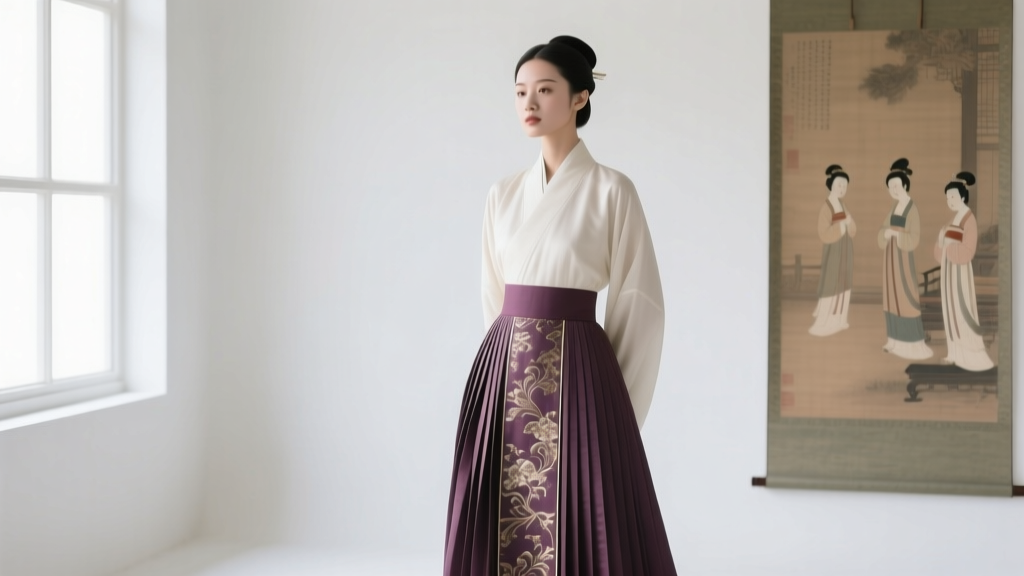
In the North, particularly during the Ming Dynasty (1368–1644), the harsh winters necessitated heavy layering and wind-resistant structures. The signature garment of this region was the Mamianqun (马面裙, horse-face skirt). While popular across China, the Northern variation utilized heavier wool-blends, stiffened cottons, and dense brocades. The Mamianqun is an engineering marvel: it consists of two overlapping rectangular panels with flat fronts and backs, and heavily pleated sides. The waistband, or yaolan, was traditionally made of white cotton or linen to provide grip against the undergarments, a practical detail often missed in modern mass-market reproductions.
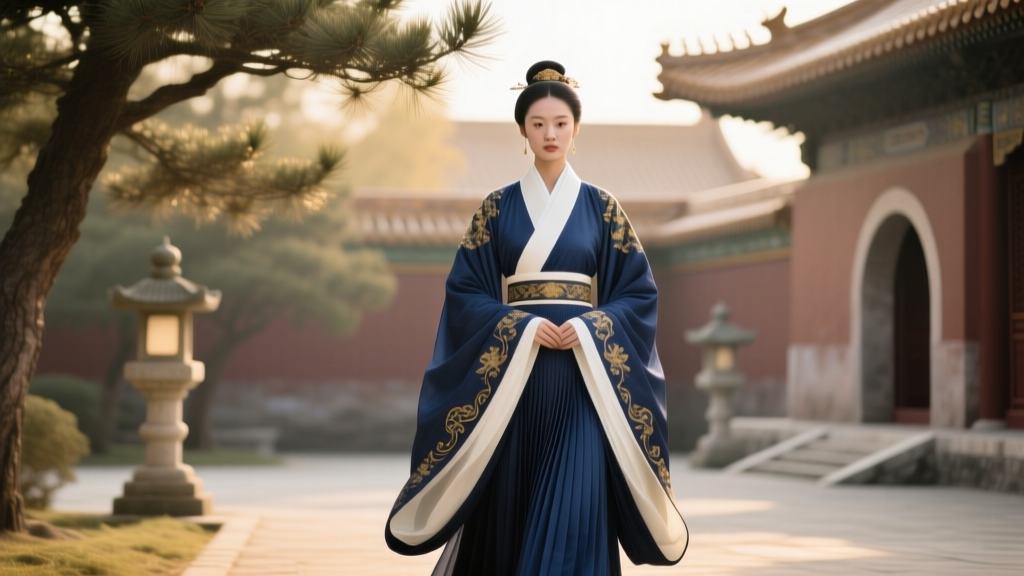
Conversely, the Southern regions, particularly around the Yangtze River Delta, favored breathability and fluid drape. The Song Dynasty (960–1279) aesthetic, which remains highly influential in Southern dressing styles, prioritized the Ruqun (襦裙, blouse-and-skirt ensemble) and the Beizi (褙子, a parallel-collar overcoat). Southern garments utilized lightweight gauzes, leno-weave silks, and raw silks that allowed for air circulation in the humid subtropical summers. The collars were often narrower, and the sleeves were tailored to be more restrictive and elegant, reflecting the scholarly, literati culture of the Jiangnan region.
The Lingnan Aesthetic: Xiangyunsha and Mud-Dyeing
Moving further south to the Lingnan region (modern-day Guangdong and Guangxi), we encounter one of the most unique and chemically complex textile traditions in the world: Xiangyunsha (香云纱), or Gambiered Canton Gauze. This fabric is the cornerstone of the traditional Cantonese dressing style and represents a perfect synthesis of local agriculture and sartorial need.
Xiangyunsha is created through a grueling, multi-step process that can only be executed in the specific humidity and sunlight of the Pearl River Delta. Plain silk gauze is repeatedly dipped in the astringent juice of the Dioscorea cirrhosa (gambier yam), which is rich in tannins. The silk is then laid out on grass to bake in the intense southern sun. The final, crucial step involves spreading river mud—harvested from specific iron-rich estuaries—over the fabric. The chemical reaction between the iron in the mud and the tannins in the gambier juice creates a dark, lustrous, and water-resistant coating on one side of the fabric, while the reverse remains a rich, earthy brown.
According to the China National Silk Museum, this process results in a textile that is naturally antibacterial, quick-drying, and highly resistant to wrinkling, making it the ultimate luxury fabric for humid climates. Today, an authentic, hand-processed Xiangyunsha garment commands premium prices, often starting at $300 USD and exceeding $1,500 USD for master-weaver pieces.
Jiangnan Silk and the Scholar-Official Look
The Jiangnan region (south of the Yangtze River, encompassing Suzhou and Hangzhou) is the historical epicenter of Chinese sericulture. The dressing style here is inextricably linked to the scholar-official class and the refined aesthetics of the literati. The hallmark of Jiangnan dress is not just the use of silk, but the specific application of Kesi (刻丝, cut silk) tapestry and Song Brocade (宋锦).
Kesi is a painstaking weaving technique where the weft threads are cut and turned back at the edge of a color block, creating a slight slit in the fabric that resembles a carving. This allowed for highly detailed, painterly motifs—such as cranes, plum blossoms, and calligraphy—to be integrated directly into the weave of a robe or a Mamianqun panel, rather than embroidered on top. The resulting garment is lightweight, reversible, and possesses a distinct acoustic 'whisper' when the wearer moves.
As noted by the Victoria and Albert Museum's Asian Textile Collections, Jiangnan silks were heavily regulated by sumptuary laws during the Ming and Qing dynasties, with specific brocade patterns reserved strictly for imperial family members or high-ranking officials based in the southern capitals. Today, the 'Jiangnan style' in the modern Hanfu revival is characterized by muted, elegant color palettes (celadon, lotus pink, ink black) and an emphasis on intricate, woven textures rather than loud, surface-level embroidery.
Anatomy of Regional Garments: A Comparative Matrix
To better understand the practical differences between these regional substyles, the following matrix outlines the core construction elements, primary textiles, and modern market pricing for authentic regional garments.
| Region / Substyle | Signature Garment | Primary Textile & Technique | Climate Adaptation | Authentic Price Range (USD) |
|---|---|---|---|---|
| Northern Plains (Ming Aesthetic) | Heavy Mamianqun (Horse-face skirt), Padded Ao (Jacket) | Zhijin (Gold-woven brocade), heavy wool-blends, stiffened cotton | Wind-resistant, thermal retention, structured layering | $80 - $400 |
| Jiangnan (Song/Scholar Aesthetic) | Beizi (Overcoat), Song-style Ruqun, Kesi robes | Song Brocade, Kesi (cut silk tapestry), lightweight raw silk | Breathable, fluid drape, UV protection via dense weaves | $150 - $1,200+ |
| Lingnan (Cantonese Aesthetic) | Xiangyunsha robes, Cantonese embroidered shawls | Gambiered Canton Gauze (tannin and iron-mud dyed silk) | Water-resistant, antibacterial, rapid moisture-wicking | $300 - $1,500+ |
| Southwest (Sichuan/Shu Aesthetic) | Shu Brocade Banbi (Half-sleeve jacket), pleated skirts | Shu Brocade (vibrant, warp-faced compound weave) | Durable, vibrant color retention in overcast climates | $120 - $600 |
The Modern Hanfu Revival: Regional Hubs and Substyles
The contemporary Hanfu movement has not merely replicated historical garments; it has birthed new regional substyles based on modern manufacturing hubs and local cultural inclinations. When sourcing a chinese dressing style today, buyers are generally choosing between two dominant modern hubs: Chengdu (Sichuan) and Hangzhou (Zhejiang).
Chengdu (The Sichuan Hub): Known for its bold, romantic, and highly ornate aesthetic. Garments produced in the Chengdu Hanfu hub frequently utilize Shu Brocade and heavy, multi-thread embroidery. The 'Sichuan style' favors dramatic, sweeping sleeves, high-contrast color blocking, and elaborate hair accessories. It is the preferred style for ceremonial wear, weddings, and high-impact photography. However, the heavy embroidery can make these garments cumbersome for daily wear.
Hangzhou (The Jiangnan Hub): The epicenter of the 'daily Hanfu' (日常汉服) movement. Hangzhou-based brands focus on integrating traditional silhouettes with modern, practical fabrics. You will find Mamianqun made from washable polyester-crepe blends, and Song-style Beizi tailored to fit over modern turtlenecks. The Hangzhou style prioritizes the 'literati' aesthetic: understated elegance, hidden weaving patterns, and a focus on the drape and movement of the fabric rather than surface decoration.
The Metropolitan Museum of Art's Heilbrunn Timeline on Ming Dynasty Art highlights how historical trade routes allowed these regional textiles to cross-pollinate. Today, the internet has accelerated this cross-pollination, allowing a buyer in London or New York to purchase a Sichuan-embroidered jacket paired with a Hangzhou-woven Mamianqun, creating a personalized, pan-regional Chinese dressing style.
Sourcing Authentic Regional Pieces: A Buyer’s Framework
Navigating the market for traditional Chinese garments requires a discerning eye, as the influx of mass-produced 'ancient-style' (古风, Gu-feng) costumes often obscures authentic, culturally accurate Hanfu. Use this framework to ensure you are investing in genuine regional craftsmanship.
- Check the Weft and Warp: Authentic regional brocades (like Song or Shu brocade) are woven, not printed. If you turn the fabric inside out, the pattern should be visible (though sometimes with inverted colors or floating threads). Printed patterns that only exist on the surface are indicative of cheap, mass-market costume wear.
- Examine the Waistband (Yaolan): In a historically accurate Mamianqun, the waistband should be made of a different, usually more utilitarian fabric (like cotton or linen) than the skirt body. This provides necessary friction to keep the heavy skirt tied securely. If the waistband is made of the same slippery brocade as the skirt, it is a modern costume shortcut that will result in the skirt slipping down during wear.
- Verify the Xiangyunsha Origin: True Gambiered Canton Gauze has a distinct, slightly earthy scent and a characteristic 'crackle' sound when manipulated. The dark side should have a subtle, uneven luster that proves it was sun-baked and mud-coated by hand, rather than chemically dyed in a factory vat. Always look for the geographical indication (GI) certification from Guangdong textile cooperatives.
- Understand the Pricing Floor: While basic, accurate Hanfu can be found for $30 to $60 USD, be highly skeptical of 'silk' garments priced under $100. Authentic regional silks, particularly those utilizing traditional looms and natural dyes, require immense labor. Expect to pay a minimum of $150 for entry-level authentic silk, and upwards of $500 for specialized regional weaves like Kesi or authentic Xiangyunsha.
'To wear Hanfu is not merely to put on a costume of the past, but to wrap oneself in the geography of China. The mud of the Pearl River, the mulberry leaves of Suzhou, and the gold threads of the Northern looms are all present in the drape of the fabric.'
— Textile Conservator, China National Silk Museum
Ultimately, mastering the traditional Chinese dressing style requires moving past the monolith. By understanding the regional variations—from the structured, wind-defying pleats of the Northern Mamianqun to the mud-dyed, sweat-wicking brilliance of Lingnan Xiangyunsha—collectors and enthusiasts can build a wardrobe that is not only visually stunning but deeply rooted in the diverse, living history of Asian textile arts.