Chinese Dresses: Hanfu, Qipao Guide

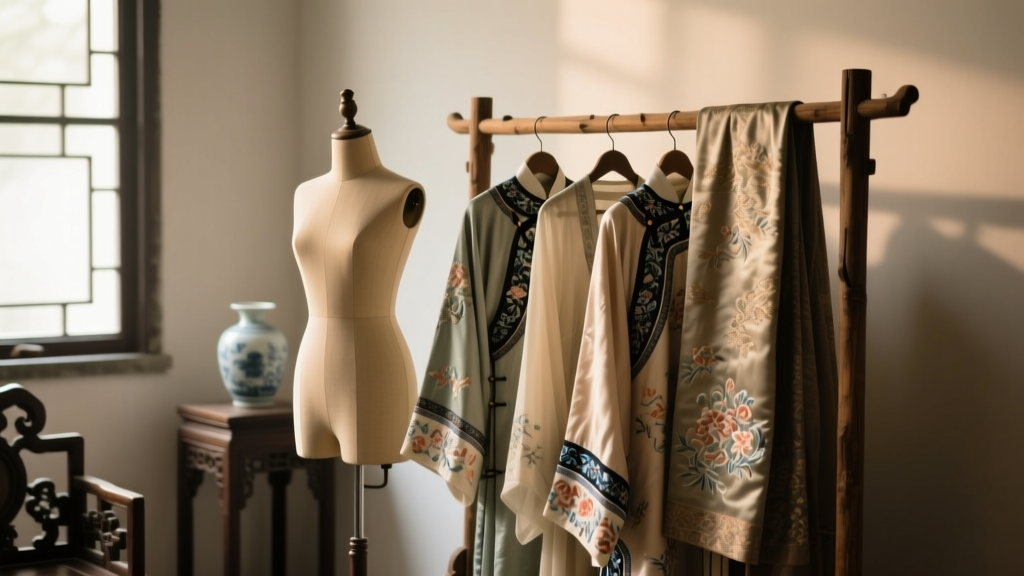
When exploring the rich tapestry of Asian sartorial history, a common question arises: what are Chinese dresses called? The answer is not a single term, but rather a fascinating timeline of evolving silhouettes, regional textiles, and philosophical tailoring. Unlike Western fashion, which often centered on cutting fabric to fit the body's curves, traditional Chinese garment construction historically relied on flat-pattern cutting, draping, and intricate surface embroidery to convey status, morality, and cosmic harmony.
To truly understand Chinese traditional clothing, we must look beyond the modernized stereotypes and explore the foundational garments that have shaped the culture for millennia. From the flowing robes of the Han Dynasty to the tailored elegance of 1920s Shanghai, here is your comprehensive cultural guide to Chinese dresses.
The Hanfu (汉服): The Ancient Foundation of Han Clothing
Before the 20th century, the traditional clothing of the Han Chinese people was collectively known as Hanfu (汉服), which translates literally to 'Han clothing.' Originating in the Huangdi (Yellow Emperor) period and solidifying during the Zhou Dynasty (1046–256 BCE), Hanfu is not a single dress, but a complex system of garments governed by strict sumptuary laws and Confucian rituals.
Anatomy and Construction of the Hanfu
The defining characteristic of the Hanfu is the Jiaoling Youren (交领右衽), meaning a crossed collar that wraps to the right. The left lapel always crosses over the right lapel. In traditional Chinese cosmology, the left represents Yang (life, the living, the east), while the right represents Yin (death, the west). Wrapping the garment left-over-right was a profound symbol of respecting life and maintaining cosmic order. Conversely, Zuoren (wrapping right-over-left) was strictly reserved for dressing the deceased for burial.
Key historical variations of the Hanfu include:
- Ruqun (襦裙): A two-piece ensemble consisting of a short, cross-collared top (Ru) and a high-waisted, flowing wrap skirt (Qun). This was the standard daily wear for women for over two thousand years.
- Shenyi (深衣): A 'deep robe' that connects the top and bottom into a single, flowing garment, symbolizing the unity of heaven and earth. It was heavily favored by scholars and officials.
- Mamianqun (马面裙): The 'horse-face skirt,' popularized during the Ming Dynasty (1368–1644). It features flat front and back panels with heavily pleated sides, allowing for ease of movement while maintaining a structured, regal silhouette.
According to the Metropolitan Museum of Art's Heilbrunn Timeline of Art History, the drape and volume of Hanfu were designed to conceal the body's physical form, emphasizing instead the wearer's moral character and social harmony through graceful, sweeping movements.
The Qipao (旗袍) and Cheongsam: The Modern Icon
When most of the Western world asks what Chinese dresses are called, they are usually picturing the Qipao (旗袍) or Cheongsam. While these terms are often used interchangeably in English, they have distinct linguistic and historical roots. 'Qipao' is the Mandarin term, originating from the Manchu 'Banner robes' (Chenyi) worn during the Qing Dynasty (1644–1912). 'Cheongsam' is the Cantonese translation (长衫), meaning 'long shirt,' which became popularized globally through Hong Kong and Shanghai tailors.
The Shanghai Evolution
The original Qing Dynasty Manchu robes were loose, boxy, and A-lined, designed to conceal the figure and provide warmth for nomadic horseback riding. However, in the 1920s and 1930s, the Qipao underwent a radical transformation in Shanghai. Influenced by Western tailoring techniques, Shanghai socialites and students adopted a form-fitting silhouette with high, stiff Mandarin collars, cap sleeves, and daring thigh-high side slits.
Authentic, high-end Qipaos are masterclasses in bespoke tailoring. They feature:
- Pankou (盘扣): Intricate, hand-knotted frog buttons made from silk cords, often shaped like lotuses, butterflies, or longevity knots. A bespoke Qipao may feature up to a dozen hand-tied Pankou closures.
- Xiangyunsha (香云纱): Also known as Gambiered Canton Gauze, this is one of the most expensive and labor-intensive silks in the world. Dyed with river mud and the juice of the薯莨 (Dioscorea cirrhosa) plant, it yields a rustling, water-resistant fabric that can cost upwards of $150 per yard.
- Flat-Pattern Cutting: Despite its tight fit, a traditional Qipao is cut from a single piece of fabric with minimal darts, relying on the natural stretch of the bias-cut silk and strategic side slits for mobility.
'The Qipao is not merely a dress; it is a sartorial negotiation between traditional Chinese modesty and the liberated, cosmopolitan modernity of 1930s Shanghai.' — Curatorial notes on 20th-century Chinese textiles, Victoria and Albert Museum.
The Tang Suit (唐装): A Historical Misnomer
Another garment frequently encountered is the Tang Suit (Tangzhuang). Despite its name, it has no historical connection to the Tang Dynasty (618–907 CE). The name stems from the fact that early Chinese diaspora communities were known as 'Tang people,' and their neighborhoods as 'Chinatowns' (Tangrenjie).
The modern Tang Suit is actually derived from the Magua (马褂), a Manchu horse-riding jacket from the Qing Dynasty. It is characterized by a symmetrical front opening (Duijin), a short Mandarin collar, and faux-knotted buttons. Today, it is predominantly worn during the Lunar New Year or by politicians at international summits to project a unified, pan-Chinese cultural identity, rather than as everyday historical dress.
Comparative Guide: Chinese Garments at a Glance
To help collectors, historians, and buyers navigate the market, here is a structured comparison of China's most prominent traditional garments, including current market pricing for authentic pieces.
| Garment Name | Era / Origin | Defining Construction Features | Modern Usage | Average Price (USD) |
|---|---|---|---|---|
| Hanfu (Ruqun) | Antiquity – Ming Dynasty | Crossed collar (left over right), wide sleeves, sash-tied, no buttons. | Hanfu movement streetwear, festivals, photography. | $60 – $350 |
| Qipao / Cheongsam | 1920s Shanghai (Manchu roots) | Form-fitting, high Mandarin collar, side slits, Pankou frog buttons. | Weddings, formal galas, diplomatic events. | $150 – $3,000+ |
| Mamianqun | Ming Dynasty | Horse-face skirt, flat front/back panels, deep side pleats. | Everyday Hanfu fashion, modern office styling. | $45 – $200 |
| Tang Suit (Magua) | Qing Dynasty (Modern revival) | Symmetrical front opening, short collar, brocade fabrics. | Lunar New Year, elder family gatherings. | $50 – $150 |
Cultural Protocols: Wearing and Respecting the Garments
Understanding what Chinese dresses are called is only the first step; knowing how to wear them respectfully is equally vital. The contemporary Hanfu Yundong (Hanfu Movement), which began in the early 2000s among Chinese youth, has revitalized interest in these garments, bringing strict historical protocols back into public consciousness.
Color Symbolism and Occasion
In traditional Chinese culture, color is deeply tied to the Wu Xing (Five Elements) theory. While modern Westerners may wear white to a wedding, in traditional Chinese contexts, pure white and unbleached hemp were historically associated with mourning and funerals. Conversely, crimson and vermilion reds represent fire, joy, and prosperity, making them the mandatory colors for bridal Qipaos and Lunar New Year Tang suits. Yellow and gold were historically restricted to the Imperial family; wearing them in the presence of the Emperor during the Ming or Qing dynasties was a treasonous offense.
Sourcing Authentic Garments
For those looking to purchase authentic pieces, avoid mass-produced costume shops. Instead, seek out artisan cooperatives in Suzhou for Suxiu (Suzhou embroidery) Qipaos, or specialized Hanfu tailors in Hangzhou who utilize traditional jacquard looms and natural ramie fibers. Institutions like the Peabody Essex Museum frequently highlight the importance of preserving these regional textile techniques, noting that the survival of traditional Chinese dress relies on supporting living artisans rather than buying synthetic, factory-made approximations.
Conclusion
So, what are Chinese dresses called? They are the Hanfu of the ancients, the Qipao of the modernists, and the Mamianqun of the scholars. Each garment is a wearable archive of Chinese philosophy, trade history, and artistic mastery. By learning their true names, their construction, and their cultural protocols, we do more than just identify a piece of clothing—we honor a continuous, living tradition that has draped civilizations for over three millennia.