Chinese Dress Styles: Symbolism & Meaning

The Language of Silk: Beyond Aesthetics
To view traditional Chinese clothing merely as fashion is to misread a complex, wearable text. For millennia, Chinese dress styles have functioned as a visual language, encoding the wearer’s social standing, philosophical beliefs, and cosmological alignment. Rooted in Confucian propriety (li) and Daoist harmony with nature, the cut, color, and embroidery of a garment were historically regulated by sumptuary laws and deeply tied to the universe’s natural order.
According to the Metropolitan Museum of Art’s Asian Art Department, the evolution of Chinese textiles and silhouettes reflects a continuous dialogue between indigenous Han traditions and the influences of neighboring nomadic cultures. Today, as global interest in these garments surges, understanding the profound symbolism woven into Chinese dress styles is essential for wearing them with cultural respect and historical accuracy.
Core Chinese Dress Styles and Their Symbolic Foundations
Hanfu (汉服): The Cosmos in Cut and Drape
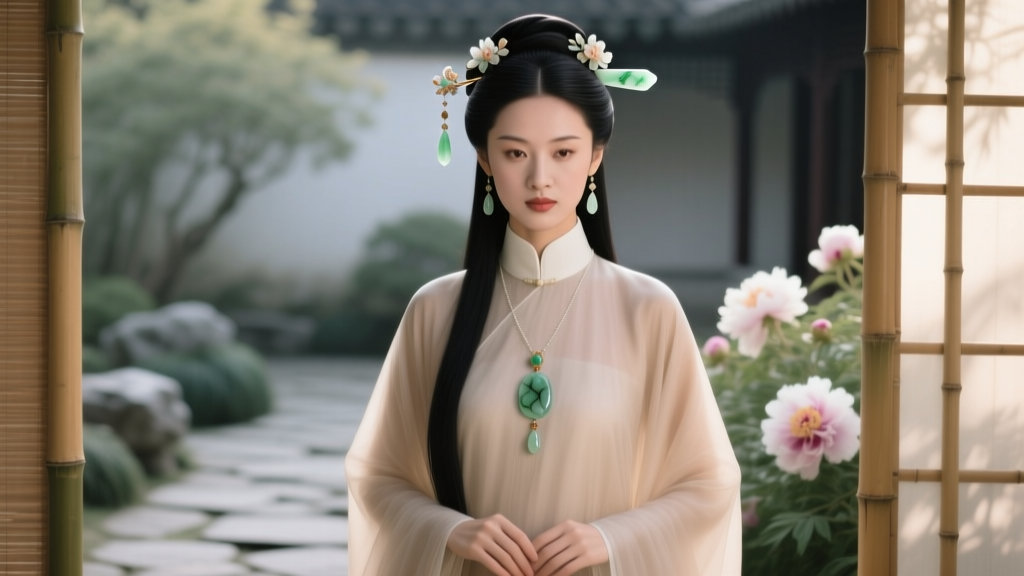
Hanfu, the traditional dress of the Han Chinese, is defined by its structural philosophy rather than a single silhouette. The most fundamental rule of Hanfu is jiaoling youren (cross-collar, right lapel). The left lapel must always cross over the right. In traditional Chinese cosmology, the left represents Yang (life, light, and the living), while the right represents Yin (death, darkness, and the spirit world). Dressing right-over-left is strictly reserved for the deceased or specific historical periods of foreign conquest.
The Shenyi (deep robe), a prominent Hanfu style, is constructed from exactly twelve panels of fabric, symbolizing the twelve months of the year and the twelve earthly branches. The upper and lower garments are cut separately to represent Heaven and Earth, then sewn together to symbolize the unity of the cosmos and the harmony of humanity within it.
Qipao / Cheongsam (旗袍): Modernity Meets Tradition
While the Qipao is globally recognized as the quintessential Chinese dress, its origins lie in the loose, full-length qizhuang (banner robes) worn by Manchu women during the Qing Dynasty (1636–1912). The modern, form-fitting Qipao emerged in 1920s Shanghai, blending Western darting and tailoring techniques with traditional Chinese symbolism.
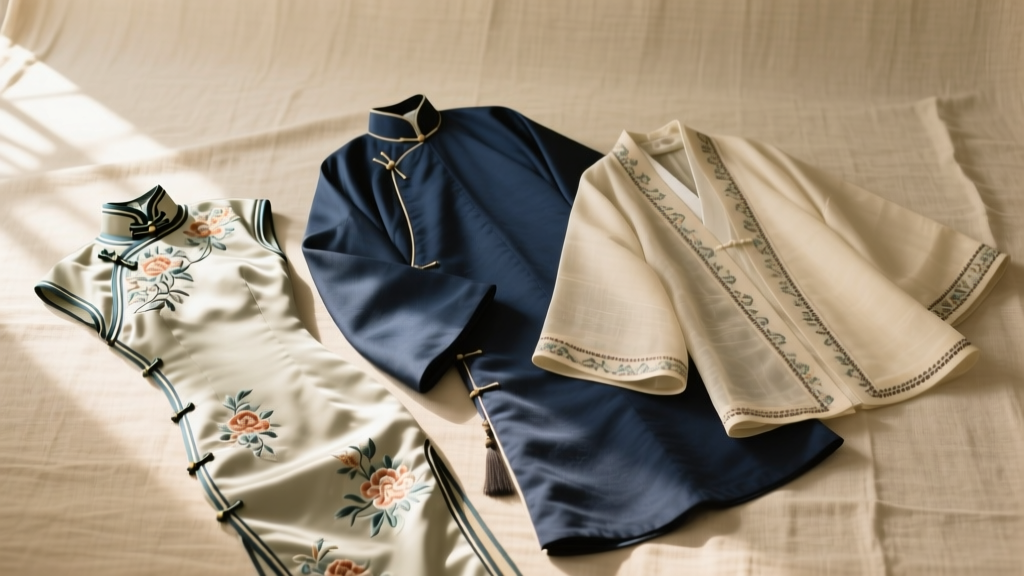
Despite its modernized silhouette, the Qipao retains the pankou (frog buttons). These hand-knotted fasteners are never merely functional; they are highly symbolic. A butterfly pankou signifies romance and marital joy, while a lotus knot represents spiritual purity. The high, stiff collar (lingtou) was designed to enforce an upright, dignified posture, reflecting Confucian ideals of physical and moral rectitude.
Tangzhuang (唐装): The Auspicious Tang Suit
Despite its name referencing the Tang Dynasty, the modern Tangzhuang actually evolved from the Manchu magua (riding jacket). It gained massive international visibility during the 2001 APEC summit in Shanghai. The Tangzhuang is heavily symbolic of longevity and good fortune, frequently featuring woven brocade patterns of the shou (longevity) character or intricate ruyi (cloud) motifs along the lapels.
Color Theory and the Five Elements (Wu Xing)
Color in traditional Chinese dress is not an arbitrary aesthetic choice; it is governed by the Wu Xing (Five Elements) philosophy. Each element corresponds to a specific color, season, direction, and cosmic energy. Wearing the correct color was historically believed to align the wearer with the heavens and attract specific energies.
| Element | Color | Season & Direction | Symbolic Meaning & Usage |
|---|---|---|---|
| Fire | Red (赤) | Summer / South | Joy, prosperity, and vitality. Mandatory for weddings and Lunar New Year to ward off evil spirits (nian). |
| Earth | Yellow (黄) | Late Summer / Center | Imperial power, neutrality, and the center of the universe. Historically restricted exclusively to the Emperor. |
| Wood | Green/Blue (青) | Spring / East | Growth, renewal, and harmony with nature. Often worn by scholars and literati. |
| Metal | White (白) | Autumn / West | Purity, but primarily associated with mourning, death, and the spirit world. Worn at funerals. |
| Water | Black (黑) | Winter / North | Wisdom, the heavens, and solemnity. Used in formal sacrificial rites and high-level court dress. |
Motif Lexicon: What the Embroidery Actually Says
The embroidery on Chinese garments operates as a rebus, where visual puns and homophones convey complex blessings. The Victoria and Albert Museum’s extensive research on Chinese dragon robes highlights how court officials and commoners alike used specific motifs to manifest their aspirations.
- The Dragon (Long) and Phoenix (Fenghuang): The ultimate symbol of Yin and Yang balance. The five-clawed dragon represented the Emperor (Yang), while the phoenix represented the Empress (Yin). Together on a wedding Qipao or Hanfu, they guarantee a harmonious and powerful marriage.
- The Peony (Mudan): Known as the “King of Flowers,” the peony is the undisputed symbol of wealth, honor, and aristocratic status. It is frequently paired with rockeries to symbolize enduring prosperity.
- The Bat (Fu): In Mandarin, the word for bat (fu) is a homophone for “good fortune.” A motif featuring five red bats represents the Wufu (Five Blessings): longevity, wealth, health, virtue, and a natural death.
- The Crane (He): A symbol of extreme longevity and high official rank. Cranes depicted flying among clouds represent a scholar’s ascent to the imperial court or a spiritual journey toward immortality.
- The Gourd and Vines: Because gourds contain many seeds and grow on long, winding vines, they symbolize the wish for “ten thousand generations of descendants” and enduring family lineage.
Wearing Chinese Dress Styles Today: Cultural Protocols
As traditional garments experience a massive revival among Gen Z and millennials via the Hanfu Movement and contemporary Qipao styling, navigating cultural protocols is vital. Misusing symbolic elements can cause unintended offense.
Wedding and Celebration Protocols
For weddings, red and gold are the undisputed standards. A bride wearing a Qungua (a traditional two-piece bridal Hanfu jacket and skirt) or a red Qipao is invoking the Fire element to ensure a joyous, prosperous union. White, black, and stark blue must be strictly avoided by wedding guests and the couple, as these are intrinsically linked to mourning and the Metal/Water elements of the afterlife.
Funeral and Mourning Protocols
In the event of a funeral, traditional mourning dress relies heavily on unbleached hemp, raw white cotton, and muted blues or blacks. Embroidery featuring vibrant flowers, dragons, or bats is considered highly inappropriate, as these motifs invite joy and fortune, clashing with the solemnity of the occasion.
“When wearing Hanfu or Qipao in a modern context, the most respectful approach is to understand the garment’s historical weight. You are not just putting on a dress; you are wrapping yourself in a philosophy.” — Textile Conservator, Asian Art Archive
Sourcing Authentic Pieces: Artisans and Price Guide
The market for Chinese dress styles is vast, ranging from mass-produced fast fashion to museum-quality bespoke tailoring. For those seeking authentic construction, correct symbolism, and high-quality natural fibers (like mulberry silk and ramie), knowing where to look is essential.
Hanfu Market and Pricing
The modern Hanfu market is dominated by specialized Chinese brands that employ historians to recreate Ming, Song, and Tang dynasty silhouettes.
- Entry-Level / Daily Wear ($60 – $150 USD): Brands like Shisanyu and Zhongling offer accurate cross-collar cuts and symbolic embroidery using durable polyester blends and cotton-linens. Excellent for beginners and casual cultural festivals.
- High-End / Historical Revival ($400 – $1,500+ USD): Minghuatang is widely considered the gold standard for Ming Dynasty revival Hanfu. They utilize traditional silk brocades (zhijin), real gold-leaf weaving, and historically accurate pleating for the Mamianqun (horse-face skirt). These are investment pieces often worn for formal ceremonies.
Qipao and Bespoke Tailoring
A true Qipao is defined by its flat-pattern cutting and hand-finished details. Mass-produced versions often use Western princess seams, which disrupt the traditional flow of the fabric.
- Ready-to-Wear Boutique ($150 – $400 USD): Brands like Blanc de Chine offer modernized, high-quality silk Qipaos with hand-tied pankou and subtle, culturally accurate motifs suitable for global formal events.
- Master Tailor Bespoke ($800 – $3,000+ USD): In Shanghai and Hong Kong, master tailors (such as those operating out of the historic Changle Road district) offer bespoke services. They will measure over 30 points on your body, carve custom pankou from silk cord, and source vintage Xiangyunsha (a highly prized, mud-dyed silk from Guangdong) to create a garment that perfectly aligns with your personal elemental needs and aesthetic desires.
Whether you are investing in a meticulously woven Ming Dynasty Shenyi or a sleek, modern silk Qipao, understanding the profound symbolism of Chinese dress styles transforms the act of dressing into a deeply meaningful cultural exchange. By respecting the cosmology, color theory, and motifs inherent in these garments, wearers honor the living history of one of the world’s oldest continuous civilizations.