Chinese Dress Names: Hanfu, Qipao & More

Beyond a Single Term: The Evolution of Chinese Sartorial Language
When enthusiasts, historians, and global fashion lovers search for a singular traditional Chinese dress name, they quickly discover that China’s sartorial history is far too vast, ancient, and ethnically diverse to be captured by a single moniker. Unlike the Japanese kimono or the Indian sari, which serve as umbrella terms for their respective national garments, Chinese traditional clothing is categorized by dynasty, ethnic origin, and specific garment architecture.
Understanding the correct terminology is not merely an exercise in semantics; it is a matter of cultural respect and historical accuracy. Conflating the garments of the Han majority with those of the Manchu rulers, or mistaking a 20th-century modernized silhouette for an ancient dynasty's robe, obscures the rich tapestry of Chinese civilization. This guide decodes the most prominent traditional Chinese dress names, detailing their construction, historical context, and modern market realities.
Hanfu (汉服): The Ancient Han Identity
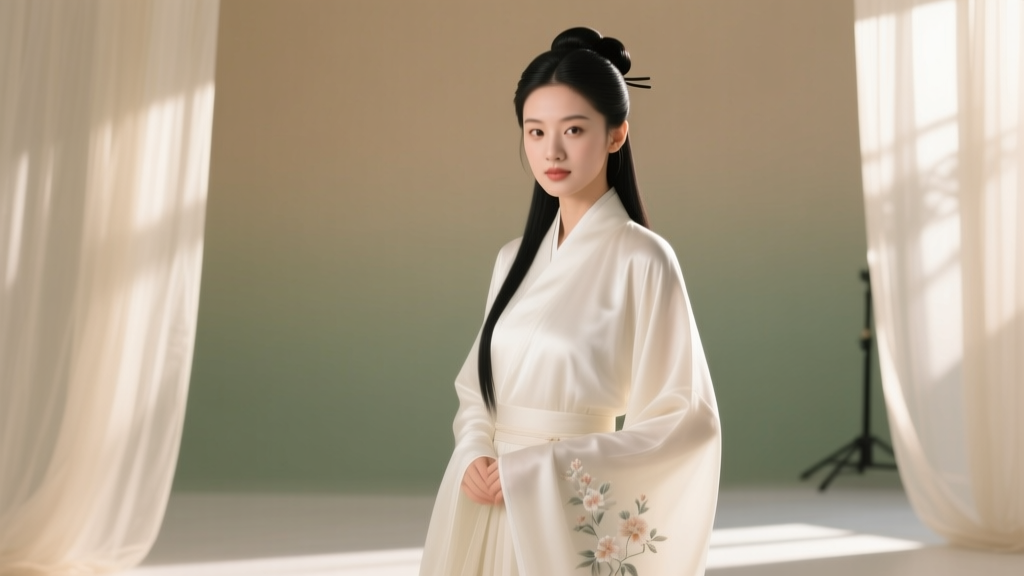
The term Hanfu translates literally to 'Han clothing,' referring to the historical dress of the Han Chinese people from the mythical Yellow Emperor era (circa 2700 BCE) up until the early Qing Dynasty (1644 CE). For centuries, Hanfu was suppressed under Manchu rule, but the early 21st century sparked a massive cultural revival known as the Hanfu Movement (Hanfu Yundong), reclaiming these garments as everyday and ceremonial wear.
The Architecture of the Cross-Collar
The defining characteristic of traditional Hanfu is the jiaoling youren—the cross-collar that wraps over the chest, with the left lapel crossing over the right. This rightward closure is deeply tied to traditional Chinese cosmology, where the left represents life and the yang principle. The garments are typically cut from wide bolts of silk or ramie without darts or tailoring, relying on flowing drapery and sashes to create the silhouette.
Key variations include the Ruqun (a blouse paired with a high-waisted skirt, popular in the Tang Dynasty) and the Shenyi (a deep, one-piece robe that connects the top and bottom, symbolizing the unity of heaven and humanity).
The Mamianqun (Horse-Face Skirt) Phenomenon
Among the most popular garments in the modern revival is the Mamianqun, or 'horse-face skirt.' Originating in the Song and Ming dynasties, this wrap skirt features flat, unpleated front and back panels (the 'horse faces') with deep, structured pleats on the sides. According to the Victoria and Albert Museum, Ming dynasty textiles often featured elaborate woven gold thread and auspicious motifs on these flat panels, making them highly prized artifacts of Chinese weaving technology.
- Entry-Level (Polyester/Machine-Printed): $30 – $60 USD
- Mid-Tier (Cotton/Linen/Jacquard Weaves): $80 – $180 USD
- Artisanal (Xiangyunsha Silk/Ming Reproductions): $300 – $1,200+ USD
The Qipao (旗袍) and Cheongsam: A Tale of Two Names
When Westerners ask for the traditional Chinese dress name, they are most often picturing the Qipao. However, the terminology shifts depending on the linguistic and geographic region.
'Qipao' is the Mandarin term, translating to 'banner robe,' referencing its origins among the Manchu Eight Banners of the Qing Dynasty. 'Cheongsam' is the Cantonese and Shanghainese pronunciation (zansam or cheung sam), meaning 'long shirt.' While used interchangeably in the West, 'Cheongsam' historically referred to the male garment, while 'Qipao' was the female equivalent. Today, Cheongsam is the preferred term in Hong Kong, Southern China, and overseas diaspora communities.
The Shanghai Tailoring Revolution
The original Qing dynasty Qipao was a loose, boxy, floor-length garment designed to conceal the female figure and accommodate horseback riding. The iconic, form-fitting silhouette we recognize today was born in 1920s and 1930s Shanghai. Tailors integrated Western techniques, such as the bias cut, darting, and set-in sleeves, transforming the Qipao into a symbol of the modern, emancipated 'New Woman.'
The construction of a bespoke Qipao is an exercise in meticulous engineering. It requires precise placement of pankou (intricate silk frog fasteners) and kaiqian (side slits) that allow for movement while maintaining a modest, unbroken line when standing. According to archives from The Metropolitan Museum of Art, the 1930s Shanghai Qipao represents a masterful synthesis of Chinese textile traditions and Art Deco modernism.
- Off-the-Rack (Standard Sizing/Synthetic Blends): $50 – $120 USD
- Custom Tailored (Local Asian Boutiques): $200 – $450 USD
- Master Artisan Bespoke (Silk Brocade/Hand-Rolled Edges): $800 – $2,500+ USD
Tangzhuang (唐装): The Misnamed 'Tang Suit'
The Tangzhuang, frequently marketed to tourists and Western buyers as the 'Tang Suit,' is perhaps the most linguistically misunderstood traditional Chinese dress name. Despite the 'Tang' moniker—which evokes the golden age of the Tang Dynasty (618–907 CE)—the garment has absolutely no historical connection to Tang dynasty clothing.
Instead, the Tangzhuang is a modern adaptation of the magua, a Manchu riding jacket worn during the Qing Dynasty. The name was popularized globally during the 2001 APEC summit in Shanghai, where world leaders were photographed wearing these brightly colored, silk-brocaded jackets featuring frog buttons and a Mandarin collar. Today, it is primarily worn by older generations during the Lunar New Year or as a uniform in traditional hospitality sectors.
Comparative Matrix: Decoding the Terminology
To navigate the complexities of Chinese sartorial history, refer to this structured breakdown of the most prominent garment names.
| Garment Name | Literal Translation | Ethnic / Historical Origin | Key Defining Feature | Primary Modern Context |
|---|---|---|---|---|
| Hanfu (汉服) | Han Clothing | Han Chinese (Pre-1644) | Cross-collar, right lapel, wide sleeves | Cultural revival, festivals, photography |
| Qipao (旗袍) | Banner Robe | Manchu (Qing Dynasty) | Mandarin collar, frog fasteners, side slits | Formalwear, weddings, diplomacy |
| Mamianqun (马面裙) | Horse-Face Skirt | Han Chinese (Song/Ming) | Flat front/back panels, side pleats | Everyday fashion, office wear, street style |
| Tangzhuang (唐装) | Tang Suit (Misnomer) | Manchu (Qing Magua) | Short jacket, center-front frog buttons | Lunar New Year, elder formalwear |
Cultural Protocols and Wearing Guidelines
Wearing traditional Chinese garments requires an understanding of cultural protocols, particularly regarding the jiaoling youren (collar crossing) rule in Hanfu. The left side must always cross over the right side for the living. Crossing the right over the left (youren reversed) is strictly reserved for dressing the deceased for burial. Wearing it incorrectly in public is considered highly inauspicious and deeply offensive to cultural traditionalists.
Furthermore, buyers should be mindful of fabric authenticity. The China National Silk Museum emphasizes the importance of preserving intangible cultural heritage, such as Xiangyunsha (gambiered Canton gauze) and Song Brocade. When investing in high-end traditional garments, always request certification of the silk's origin and the weaving technique to ensure you are supporting authentic artisan cooperatives rather than mass-produced synthetic knockoffs.
Finally, it is vital to remember that China is home to 55 recognized ethnic minorities, each with their own profound textile traditions—from the intricate indigo-dyed batik of the Miao people to the vibrant silk ikat of the Uyghur communities. While Hanfu, Qipao, and Tangzhuang dominate global search results, they represent only a fraction of the region's magnificent sartorial heritage.