Chinese Dress Hanfu Varieties: Tang, Song, and Ming Compared

When global audiences and textile enthusiasts search for a traditional Chinese dress Hanfu is often the umbrella term they encounter. However, unlike the globally recognized Qipao (Cheongsam)—which emerged in the 1920s from Manchu and Western tailoring influences—Hanfu (汉服) represents the indigenous, evolving sartorial system of the Han Chinese people spanning over three millennia. To understand Hanfu is to understand a complex matrix of dynastic aesthetics, philosophical rules, and master-level textile engineering.
At The Garment Atlas, we move beyond surface-level aesthetics. This comprehensive guide dissects the three most prominent and historically significant varieties of Hanfu worn in the modern revival movement: the opulent Tang, the minimalist Song, and the structured Ming. We will also decode construction protocols, fabric hierarchies, and provide a pragmatic buying guide for authentic garments.
Decoding the Terminology: Hanfu vs. Qipao
Before exploring dynastic varieties, it is vital to separate Hanfu from the Qipao. The Qipao is a form-fitting, one-piece garment characterized by a mandarin collar and asymmetrical frog closures. Hanfu, conversely, is defined by flat-pattern cutting (pingcai), wide sleeves, flowing skirts, and the absence of structured darts or buttons. Hanfu relies on a sophisticated system of sashes, ties, and overlapping lapels to secure the garment to the body, allowing the fabric to drape naturally according to the wearer's movements.
The Three Pillars of Hanfu Varieties
The modern Hanfu movement heavily focuses on recreating garments from the Tang, Song, and Ming dynasties. Each era reflects distinct socio-political climates, trade routes, and philosophical shifts.
1. Tang Dynasty (618–907 AD): Opulence and Cosmopolitan Flow
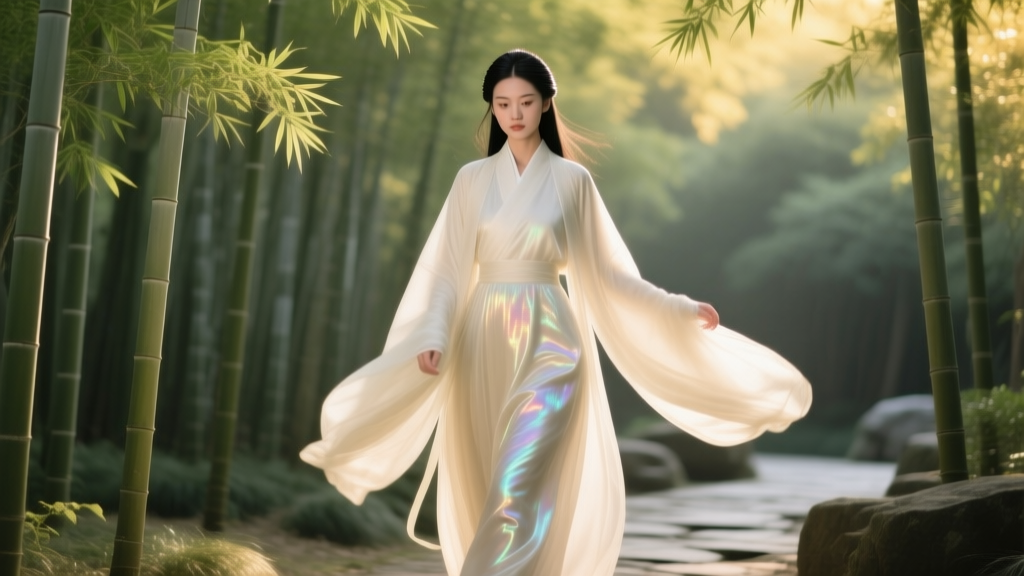
The Tang Dynasty was a golden age of Silk Road trade, resulting in garments that were vibrant, voluminous, and heavily influenced by Central Asian aesthetics. The defining silhouette for women was the Qixiong Ruqun (chest-high skirt), where a pleated skirt is tied high above the bust, paired with a short-sleeved or long-sleeved cropped jacket (Shan).
- Key Garments: Banbi (short-sleeved half-jackets), Pibo (long, flowing silk stoles draped over the arms).
- Fabrics & Colors: Lightweight silk gauzes, vibrant crimsons, ochres, and emerald greens. Patterns featured large, naturalistic peonies and auspicious beasts.
- Cultural Context: Tang clothing celebrated bodily freedom and cosmopolitan wealth. The Metropolitan Museum of Art's Heilbrunn Timeline notes that Tang elite women frequently adopted elements of foreign male riding dress, showcasing an era of remarkable gender fluidity in fashion.
2. Song Dynasty (960–1279 AD): Minimalist Elegance and Intellectual Restraint
In stark contrast to Tang exuberance, the Song Dynasty was heavily influenced by Neo-Confucianism, which prized restraint, intellect, and subtlety. The silhouettes became slender, elongated, and layered.
- Key Garments: The Beizi (a long, open-front coat with side slits and straight sleeves) worn over a Moxiong (tube-top style bodice) and a pleated skirt.
- Fabrics & Colors: Muted, earthy tones like celadon, pale plum, and ivory. The focus shifted from loud patterns to the exquisite texture of the weave, particularly Song Brocade and subtle pearl embellishments.
- Cultural Context: Song Hanfu is the preferred choice for modern scholars and tea ceremony practitioners due to its understated grace and ease of movement.
3. Ming Dynasty (1368–1644 AD): Structured Grandeur and the Mamianqun
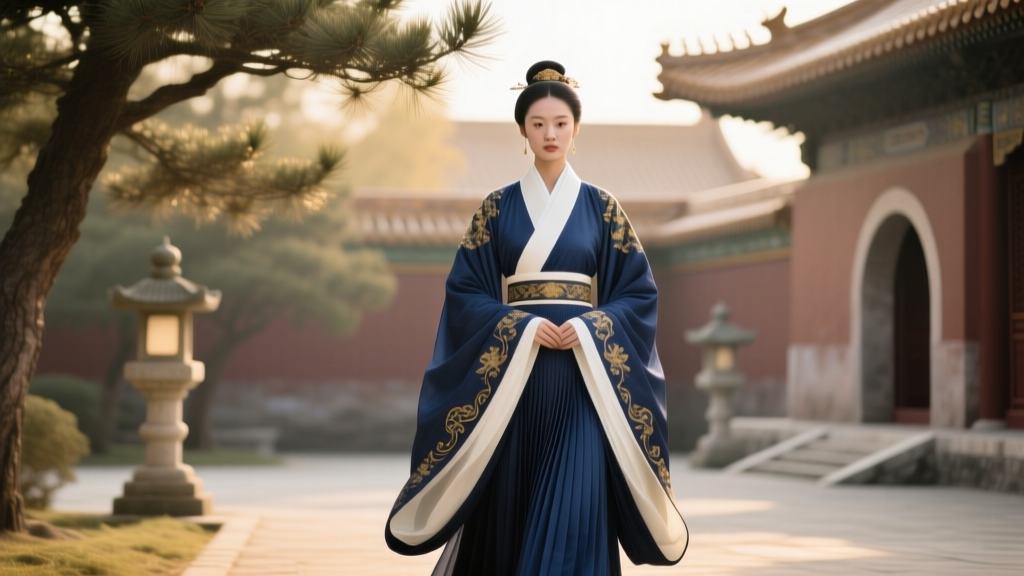
The Ming Dynasty sought to restore traditional Han Chinese culture after the Mongol-led Yuan Dynasty. Ming garments are heavily structured, featuring high collars, intricate metal clasps, and heavy, opulent fabrics. This era provides the most direct historical blueprint for modern Hanfu formal wear.
- Key Garments: The Aoqun (a lined, long-sleeved jacket worn over a skirt). The undisputed star of Ming Hanfu is the Mamianqun (horse-face skirt).
- The Mamianqun Construction: This skirt consists of two overlapping panels with flat, unpleated sections at the front and back (the "horse faces"), and deep, structured knife pleats on the sides. This design allowed for modesty while walking or riding, and is currently experiencing a massive surge in global fashion, often paired with modern knitwear.
- Fabrics & Colors: Heavy silks, gold-leaf weaving, and Xiangyunsha (gambiered Canton gauze). Colors included deep indigos, imperial yellows, and rich burgundies.
Sacred Construction: The Rules of the Lapel
To wear Hanfu correctly, one must understand the foundational rule of Jiaoling Youren (交领右衽)—the intersecting collar with the right lapel. In Han Chinese tradition, the left side of the garment must always cross over the right side, securing on the wearer's right hip.
"The left-over-right lapel was considered the mark of civilization and the living. Conversely, crossing the right over the left (Zuoren) was strictly reserved for dressing the deceased for burial, or was associated with surrounding nomadic tribes. Getting this wrong is considered a profound cultural faux pas."
Furthermore, authentic Hanfu utilizes a flat-cutting system. Unlike Western tailoring, which cuts fabric to conform to the body's curves using darts and seams, Hanfu is cut from whole, rectangular looms of fabric. The garment only achieves its three-dimensional drape when tied onto the human body, reflecting a Daoist philosophy of harmony between the wearer and the natural flow of the textile.
Hanfu Buying Guide: Price Tiers and Authenticity
The modern Hanfu market is vast, ranging from mass-produced costume replicas to museum-grade artisan weaves. Below is a structured comparison to help buyers navigate the market.
| Market Tier | Price Range (USD) | Fabric & Construction | Recommended Use |
|---|---|---|---|
| Entry-Level (e.g., Taobao fast-fashion) | $30 – $80 | Polyester blends, machine embroidery, glued appliques. Often lacks historical accuracy in collar angles. | Cosplay, casual festivals, first-time buyers. |
| Mid-Tier (e.g., Shisanyu, Tinghan) | $120 – $350 | Rayon, cotton-linen blends, basic jacquard weaves. Accurate historical patterning and proper tie placements. | Tea ceremonies, cultural events, daily streetwear. |
| Artisan Bespoke (e.g., Minghuatang) | $600 – $3,000+ | Pure mulberry silk, genuine Kesi (cut silk tapestry), Xiangyunsha, hand-woven gold threads. Museum-replica accuracy. | Weddings, heirloom collecting, formal galas. |
Note: When purchasing high-end Ming-style garments, consult resources like the China National Silk Museum in Hangzhou to verify the authenticity of complex weaves like Song Brocade or Kesi tapestry.
Cultural Protocols and Modern Etiquette
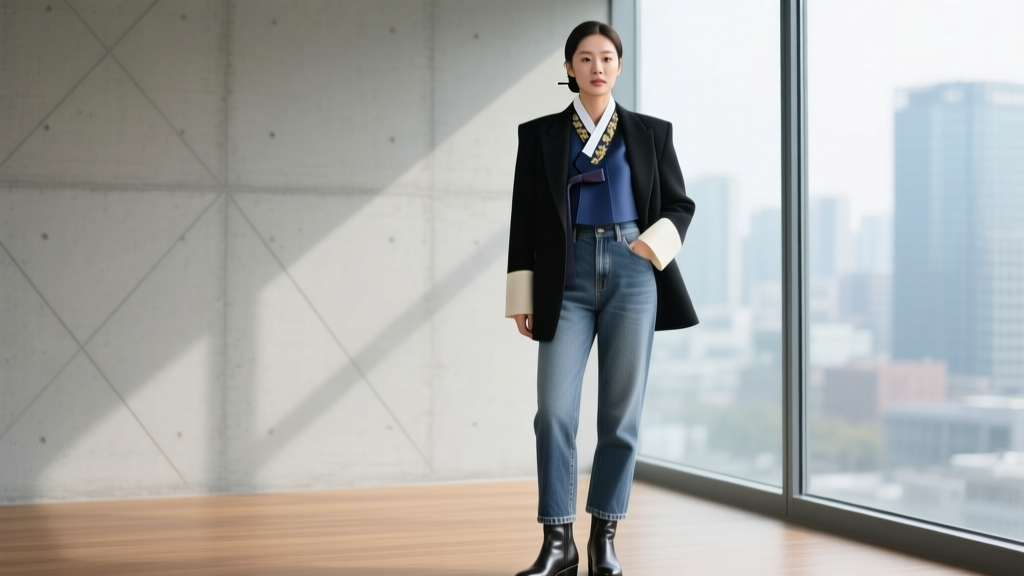
As Hanfu transitions from historical artifact to living streetwear, certain cultural protocols remain vital. First, avoid wearing unhemmed, pure white garments with raw edges, as this mimics traditional mourning attire (Sangfu). Second, when tying the sash, ensure the knots are secure but not restrictive; the garment should glide with your stride.
Finally, the modern Hanfu movement is deeply tied to cultural reclamation. According to exhibitions documented by the Victoria and Albert Museum's Asian Department, the appreciation of historical Asian dress requires acknowledging the socio-political weight these garments carry. Wearing a Ming-style Mamianqun or a Tang Qixiong Ruqun is not merely a fashion statement; it is an act of participating in a living, breathing continuum of Han Chinese heritage.
Final Thoughts on Building a Hanfu Wardrobe
Building an authentic Hanfu wardrobe requires patience and an appreciation for textile history. For beginners, a Song Dynasty Beizi paired with a modern pleated skirt offers a gentle, elegant introduction to the silhouette. For those attending formal cultural events, investing in a bespoke Ming Dynasty Aoqun woven with authentic Xiangyunsha silk provides a profound connection to the master artisans keeping these ancient looms active today. By understanding the distinct varieties, construction rules, and historical contexts, you can wear Hanfu with the respect and elegance it inherently demands.