Hanfu in Chinese Costume Dramas

The global explosion of the Chinese costume drama series has done more than just captivate audiences with epic storylines; it has ignited a worldwide revival of traditional Han clothing, known as Hanfu (汉服). From sweeping historical epics set in the Tang Dynasty to the ethereal realms of Xianxia (fantasy martial arts), screen wardrobes offer a mesmerizing window into China's sartorial past. However, separating cinematic fantasy from historical reality requires a deep understanding of garment construction, regional textiles, and dynastic sumptuary laws.
In this comprehensive guide, we decode the garments seen in popular television, comparing the varieties of Hanfu across major dynasties and evaluating their historical accuracy for enthusiasts and collectors alike.
The Core Rule: Jiaoling Youren and Screen Anachronisms
Before analyzing specific dynasties, one must understand the foundational rule of Hanfu: Jiaoling Youren (交领右衽), or the 'crossed collar with the left lapel over the right.' This structural element is deeply tied to traditional Chinese cosmology and cultural identity. In many early or lower-budget Chinese costume drama series, wardrobe departments occasionally make the fatal error of crossing the collar right-over-left (a style historically reserved for the deceased) or anachronistically incorporating Qing Dynasty Mandarin collars (Yuanling) into pre-17th-century settings. Authentic historical dramas, such as The Longest Day in Chang'an, strictly adhere to Jiaoling Youren and period-accurate tailoring.
Dynasty by Dynasty: Comparing Hanfu Varieties on Screen
Tang Dynasty (618–907 AD): Opulence, High Waists, and Silk Brocades
The Tang Dynasty represents a golden age of cosmopolitan exchange, and its screen depictions are characterized by bold colors, voluminous silhouettes, and exposed shoulders. The signature garment is the Qixiong Ruqun (齐胸襦裙), a high-waisted skirt tied above the bust, often paired with a Banbi (半臂), or half-sleeve jacket.
Screen vs. Reality: Dramas often use lightweight, sheer synthetics to create a 'floating' effect for Tang court ladies. Historically, Tang nobility favored heavy, structured silks. According to the China National Silk Museum, Tang weavers specialized in Jin (锦 - polychrome brocade) and Luo (罗 - intricate gauze). A historically accurate Tang Qixiong Ruqun made from genuine mulberry silk brocade will drape heavily, contrasting sharply with the bouncy organza often seen on screen.
Song Dynasty (960–1279 AD): Minimalist Sophistication
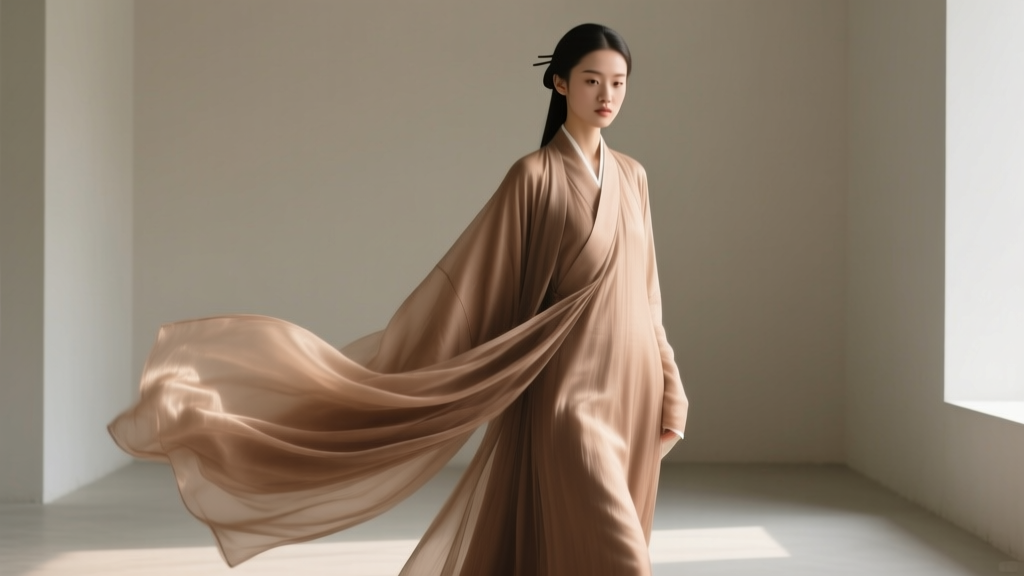
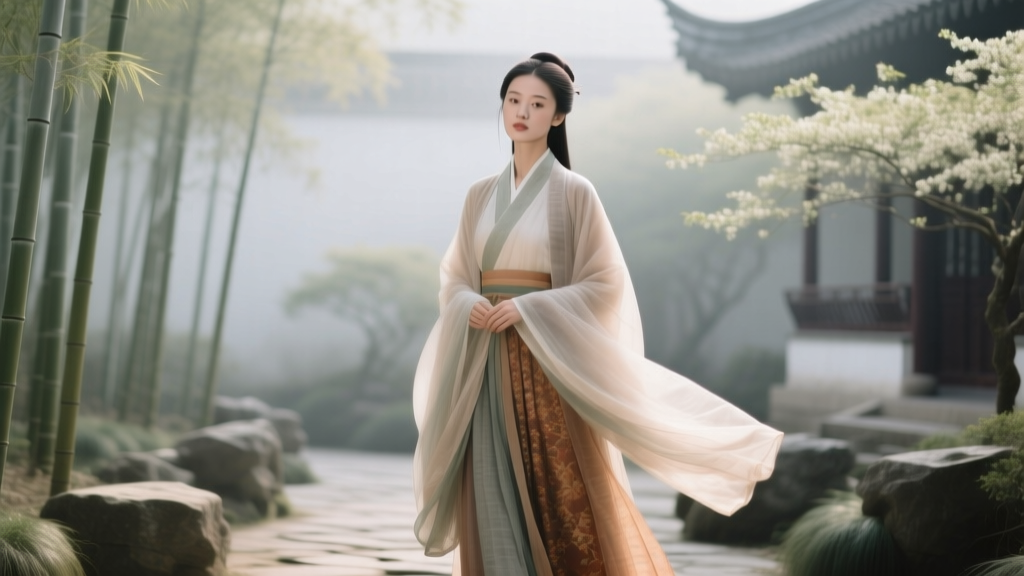
In stark contrast to Tang exuberance, the Song Dynasty favored intellectual minimalism and slender silhouettes. The defining garment is the Beizi (褙子), a long, open-front coat with straight, narrow sleeves, worn over a pleated skirt and inner top.
Screen vs. Reality: Costume dramas set in the Song era (like The Story of Minglan) excel in showcasing muted, elegant palettes—celadon greens, pale blues, and soft ivories. The construction of the Song Beizi relies on precise, narrow cutting rather than excessive embroidery. The Metropolitan Museum of Art's Asian Textile collection highlights the Song mastery of Kesi (cut silk tapestry) and subtle crepe weaves (Zhou), which provided texture without visual clutter.
Ming Dynasty (1368–1644 AD): Structured Grandeur and the Aoqun
Ming Dynasty Hanfu is highly structured, featuring the iconic Aoqun (袄裙) ensemble: a lined or padded top (Ao) worn over a Mamian Qun (马面裙 - horse-face skirt). The skirt features flat front and back panels with deep, structured pleats on the sides.
Screen vs. Reality: Historical accuracy in Ming dramas is often visually stunning but occasionally exaggerates the stiffness of the garments. The Ming era saw the peak of Yunjin (cloud brocade) and Zhuanghua (polychrome woven silk) weaving. Furthermore, dramas featuring imperial guards accurately depict the Feiyufu (飞鱼服 - flying fish robe), a highly regulated, embroidered garment denoting elite Jinyiwei status, as documented by The Palace Museum in Beijing.
Xianxia Fantasy vs. Historical Fiction
It is crucial to distinguish between historical dramas and Xianxia (immortal hero) fantasy series. Xianxia wardrobes are not bound by historical sumptuary laws. They frequently feature:
- Excessive Layering: Multiple sheer, unstructured layers of organza and tulle designed to catch studio wind machines.
- Anachronistic Accessories: Intricate metal corsets, leather bracers, and modern fantasy hairpieces that have no basis in Han antiquity.
- Color Coding: Strict color-coding (e.g., pristine white for righteous sects, black/crimson for demonic cultivators) which is a modern cinematic trope rather than a historical reality.
While Xianxia costumes are breathtaking works of modern fantasy design, they should not be confused with or purchased as authentic historical Hanfu.
Comparative Analysis: Screen Depictions vs. Authentic Replicas
| Dynasty | Signature Garment | Typical Screen Fabric | Historical Reality | Modern Replica Price (USD) |
|---|---|---|---|---|
| Wei/Jin | Zaju Shanshan (Miscellaneous Hem Robe) | Sheer polyester chiffon | Structured hemp, ramie, and early silk weaves | $60 - $150 |
| Tang | Qixiong Ruqun (Chest-high Skirt) | Lightweight satin, synthetic organza | Heavy silk brocade (Jin), complex gauze (Luo) | $120 - $400 |
| Song | Beizi (Open-front Coat) | Cotton blends, matte synthetics | Silk crepe (Zhou), subtle Kesi tapestry accents | $80 - $250 |
| Ming | Mamian Qun (Horse-face Skirt) | Stiff polyester brocade, nylon blends | Mulberry silk, Zhuanghua weaving, heavy lining | $150 - $800+ |
Sourcing Authentic Hanfu Inspired by Your Favorite Dramas
For viewers inspired to purchase their own garments, navigating the market requires an understanding of quality tiers. The modern Hanfu movement is largely driven by specialized Taobao and Tmall boutiques that employ traditional weaving techniques.
Entry-Level and Daily Wear ($50 - $150)
Brands like Shisanyu and Chun Xia Qiu Dong offer machine-woven polyester and cotton blends. These are excellent for beginners and daily wear, offering the correct historical silhouettes (like the Ming Mamian Qun) without the prohibitive cost of pure silk.
Museum-Grade and Silk Brocades ($300 - $1,500+)
For collectors seeking the exact opulence seen in high-budget Tang or Ming dramas, look for boutiques specializing in Xiangyunsha (香云纱 - Canton gauze, a mud-dyed silk) or genuine Yunjin brocade. These garments are often woven on traditional wooden looms and feature hand-stitched hems and authentic metal thread embroidery.
Cultural Impact and the Modern Hanfu Movement
The Chinese costume drama series has acted as a powerful catalyst for cultural reclamation. Young adults across Asia and the diaspora are no longer viewing these garments as mere theatrical costumes, but as living sartorial heritage. By understanding the distinct differences between the structured elegance of the Ming Dynasty, the minimalist grace of the Song, and the cosmopolitan flair of the Tang, enthusiasts can engage with Hanfu not just as a fashion trend, but as a profound connection to centuries of textile engineering and cultural identity.