Chinese Clothing Traditional Men: 2026 Buyer's Guide
The Global Resurgence of Menswear Heritage
The landscape of heritage menswear has expanded significantly over the last decade, moving beyond Western tailoring to embrace global sartorial traditions. When searching for chinese clothing traditional men styles, modern buyers are met with a rich tapestry of options ranging from ancient scholarly robes to refined 20th-century jackets. In 2026, the accessibility of these garments has never been higher, thanks to specialized international shipping, artisan cooperatives opening to global markets, and a renewed domestic pride in historical dress.
However, navigating this market requires cultural literacy. The term "traditional Chinese clothing" is an umbrella that spans thousands of years and multiple dynasties, each with distinct silhouettes, construction methods, and cultural protocols. This comprehensive buying guide will decode the terminology, outline authentic construction markers, and provide a practical framework for sourcing high-quality garments.
Core Garments: Navigating the Terminology
To shop effectively, one must first understand the distinct categories of menswear. The market is broadly divided into pre-Qing dynasty revival wear, Qing and Republican-era garments, and modern festive adaptations.
Hanfu (汉服): The Pre-Qing Revival
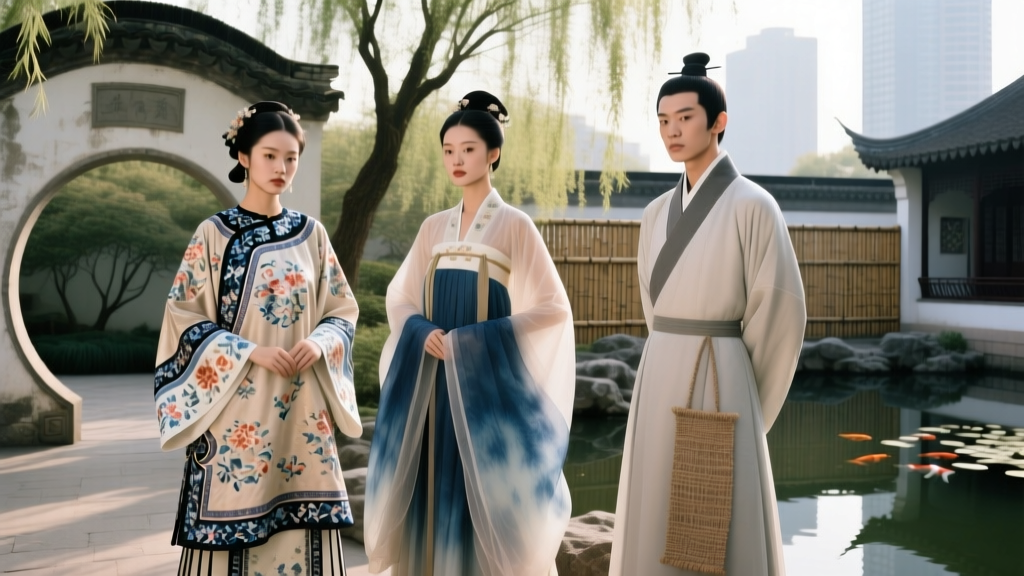
Hanfu refers to the historical clothing of the Han Chinese, spanning from the mythical Yellow Emperor to the early 17th century. For men, the most prominent and historically accurate silhouettes available today include:
- Daopao (道袍): A wide-sleeved, cross-collared scholar's robe featuring side slits with hidden pendulum hems (bai). It is elegant, modest, and highly versatile for modern wear.
- Shenyi (深衣): A "deep robe" where the upper and lower garments are sewn together, symbolizing the unity of heaven and humanity. Often worn for formal ceremonies or coming-of-age rituals.
- Zhiduo (直裰): Similar to the Daopao but with open side slits, historically favored by monks and literati for its ease of movement.
Cultural Protocol: Authentic Hanfu strictly adheres to the jiaoling youren rule—the left lapel must cross over the right. Reversing this (left over right) is historically reserved for mourning or burial rites and is a major faux pas in the Hanfu community.
Changshan (长衫) & Magua (马褂): The Republican Silhouette
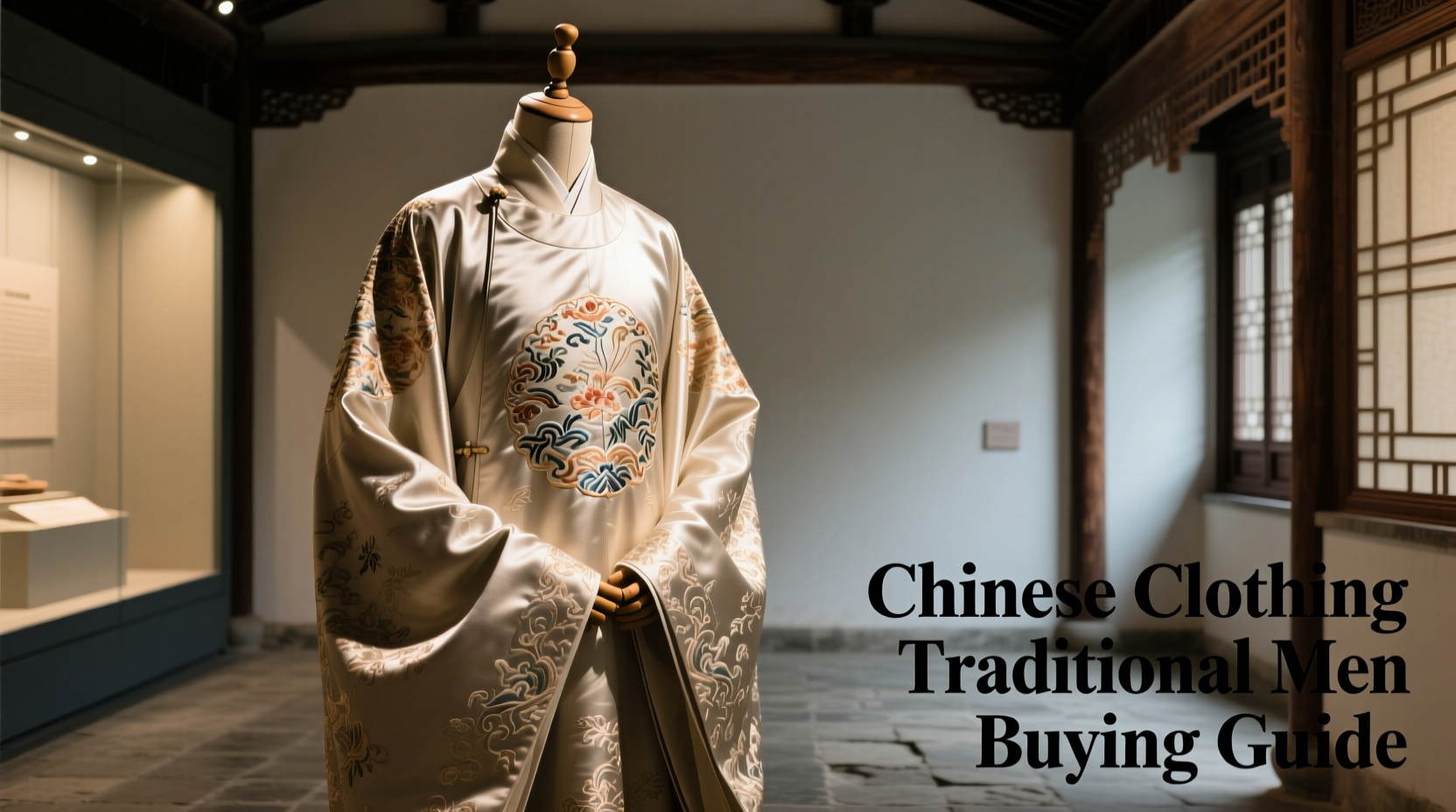
Emerging from the Qing Dynasty and solidifying during the Republican era (1912–1949), the Changshan is a long, mandarin-collared gown. It became the uniform of intellectuals, writers, and scholars—most notably figures like Lu Xun. It is typically paired with a Magua, a shorter, waist-length riding jacket. This combination represents a bridge between imperial tradition and modern pragmatism, characterized by its sleek, columnar silhouette and subtle silk brocade patterns.
Tangzhuang (唐装): The Festive Staple
Despite its name implying a connection to the Tang Dynasty, the Tangzhuang is actually a 20th-century adaptation of the Qing-era Magua. It gained massive global visibility during the 2001 APEC summit in Shanghai. Characterized by its mandarin collar, frog fasteners (pankou), and often vibrant red or gold brocade, it is primarily purchased today for Lunar New Year celebrations, weddings, and cultural festivals.
Textile Authenticity and Construction Markers
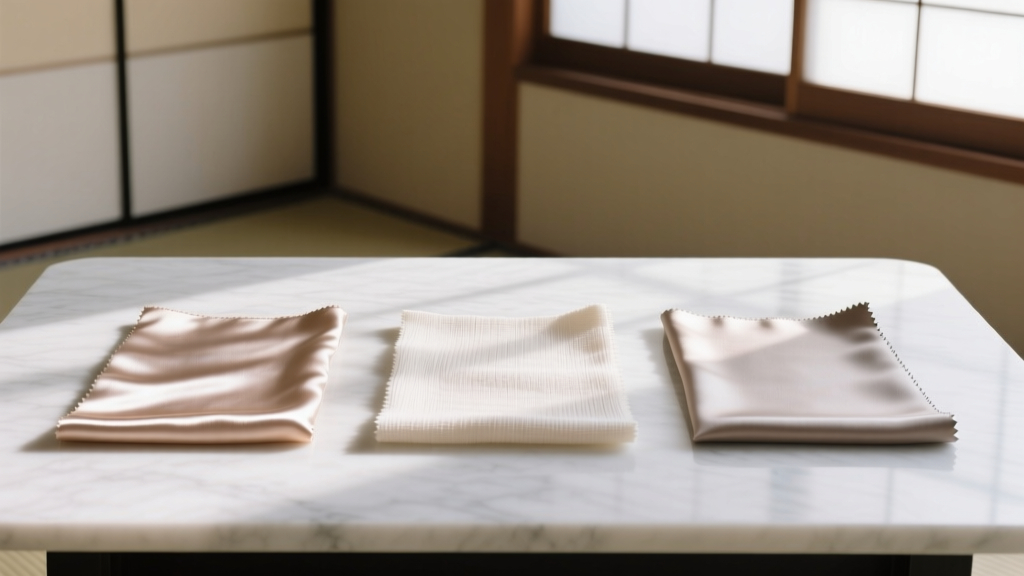
When investing in traditional garments, the fabric dictates both the aesthetic drape and the historical accuracy. Mass-market costumes often rely on stiff polyester brocades that trap heat and lack the fluid movement required for traditional flat-pattern cutting.
Authentic pieces utilize natural fibers. Look for Xiangyunsha (Gambiered Canton Gauze), a highly prized, heritage-listed silk dyed using river mud and the juice of the Dioscorea cirrhosa plant. It produces a distinctive crackled, leather-like texture that is breathable and water-resistant. According to the China National Silk Museum, the preservation of these complex dyeing techniques is vital to the integrity of high-end traditional menswear.
Furthermore, traditional Chinese garments utilize T-shaped flat pattern cutting. Unlike Western tailoring, which relies on darts and curved seams to map the body's contours, traditional garments are cut from straight looms of fabric. The drape is created by the weight of the silk or linen and the way it is belted or layered, allowing the garment to fold neatly and adapt to various body types.
The Sizing Matrix: East vs. West
One of the most significant hurdles for international buyers is sizing. Traditional garments are not sized like Western suits. Because of the flat-cutting method, the critical measurements are not chest or waist, but rather shoulder width and sleeve span.
- Drop Shoulders: Many Hanfu and Changshan designs feature drop shoulders where the seam falls down the upper arm. If your shoulder measurement is over 18 inches (46 cm), you must seek out brands that offer "extended" or "custom" sizing, as standard Asian sizing often maxes out at a 17-inch shoulder.
- Length Proportions: A Changshan should traditionally end just above the ankle bone. Buyers over 6'0" (183 cm) will likely need to utilize bespoke tailoring services or specific Taobao vendors who cater to "tall and broad" (gao da) demographics.
Sourcing Authentic Pieces: Retailers and Tailors
Finding genuine, high-quality garments requires looking beyond generic e-commerce marketplaces. Here is where to shop in 2026:
1. Direct-from-Artisan Platforms (Taobao & Tmall)
The most authentic and affordable Hanfu and Changshan are found on Chinese domestic platforms. Brands like Zhongling and Shisanyu offer museum-grade historical accuracy. International buyers can access these via proxy shopping agents (like Superbuy or CSSBuy), which provide warehouse quality-control photos before shipping globally.
2. Bespoke Tailors in Shanghai and Suzhou
For a perfectly fitted Changshan or a luxurious silk Magua, bespoke tailoring is unparalleled. Shanghai's Changle Road and Maoming South Road remain hubs for master tailors who specialize in Republican-era menswear. Many of these shops now offer remote consultation via WeChat, allowing international clients to submit precise measurements for custom-cut garments.
3. Antique and Vintage Dealers
For collectors, sourcing late-Qing or Republican-era robes offers a direct link to history. The Victoria and Albert Museum's Asian Collections provides excellent visual references for identifying authentic 19th-century embroidery motifs, such as the mang (four-clawed dragon) or auspicious bats. When buying antiques on platforms like Etsy or specialized auction houses, always request UV light photos to check for silk shattering (dry rot) and verify the condition of the delicate metallic threads.
Investment Tiers: 2026 Pricing Framework
Understanding the price-to-quality ratio is essential to avoid overpaying for synthetic costumes or underestimating the cost of genuine silk brocade. Below is a benchmark pricing guide for men's traditional garments in 2026.
| Garment Type | Entry-Level (Mass Market) | Mid-Tier (Artisan/Silk) | Bespoke / Antique |
|---|---|---|---|
| Hanfu (Daopao/Shenyi) | $45 - $90 USD | $120 - $250 USD | $300 - $600+ USD |
| Changshan (Long Gown) | $60 - $110 USD | $150 - $300 USD | $400+ USD (Bespoke) |
| Tangzhuang (Jacket) | $30 - $70 USD | $90 - $180 USD | $250+ USD (Brocade) |
| Xiangyunsha Pieces | N/A | $200 - $400 USD | $500 - $1,200+ USD |
Styling for the Modern Wardrobe
Integrating traditional Chinese menswear into a contemporary wardrobe requires a balanced approach. A full, historically accurate Hanfu ensemble is best reserved for cultural festivals, tea ceremonies, or formal heritage events. However, elements like a linen Changshan can be layered over modern turtlenecks and tailored trousers for a sophisticated, avant-garde winter look. Similarly, a minimalist, unlined cotton Magua functions beautifully as a lightweight summer overshirt.
As the appreciation for global heritage garments continues to grow, investing in traditional Chinese menswear is not just a sartorial choice, but an engagement with centuries of textile artistry, philosophical design, and living cultural history. By prioritizing authentic fabrics, respecting historical construction, and supporting master artisans, buyers can build a wardrobe that honors the profound legacy of Asian traditions.