Decoding Every Traditional Chinese Clothing Name And Meaning

The Etymology of Han Dress: Beyond the Word Hanfu
When exploring the vast wardrobe of Chinese antiquity, understanding a specific traditional Chinese clothing name requires more than simple translation; it demands an understanding of cosmology, dynastic history, and social philosophy. The umbrella term Hanfu (汉服) literally translates to 'Han clothing,' referring to the traditional dress of the Han ethnic majority. However, 'Hanfu' is a modern revivalist term popularized in the early 2000s. Historically, garments were classified by their structural cut, occasion, and the wearer's social rank.
In classical Chinese sartorial language, the upper garment is generally referred to as Yi (衣), while the lower skirt is called Chang (裳). The separation of upper and lower garments was not merely a matter of tailoring convenience; it symbolized the fundamental Daoist and cosmological duality of Heaven (upper) and Earth (lower). As noted by curators at the Smithsonian National Museum of Asian Art, the strict adherence to these structural names reinforced the wearer's alignment with the natural order and imperial hierarchy.
A Glossary of the Most Common Traditional Chinese Clothing Names
To navigate the historical and contemporary Hanfu movement, one must understand the precise terminology used by artisans and historians. Below is a structured breakdown of foundational garment names, their literal translations, and their cultural significance.
| Garment Name (Pinyin / Hanzi) | Literal Translation | Primary Historical Era | Key Symbolism & Function |
|---|---|---|---|
| Ruqun (襦裙) | Jacket and Skirt | Warring States to Ming | Represents the Heaven/Earth duality; standard daily wear for women. |
| Shenyi (深衣) | Deep Robe | Zhou to Han Dynasty | Wraps the body fully; symbolizes moral integrity and Confucian virtue. |
| Aoqun (袄裙) | Lined Jacket and Skirt | Ming Dynasty | Heavier outerwear for winter; reflects modesty and structural rigidity. |
| Qipao (旗袍) | Banner Robe | Qing Dynasty to Republic | Originally loose Manchu dress; evolved to symbolize modern female emancipation. |
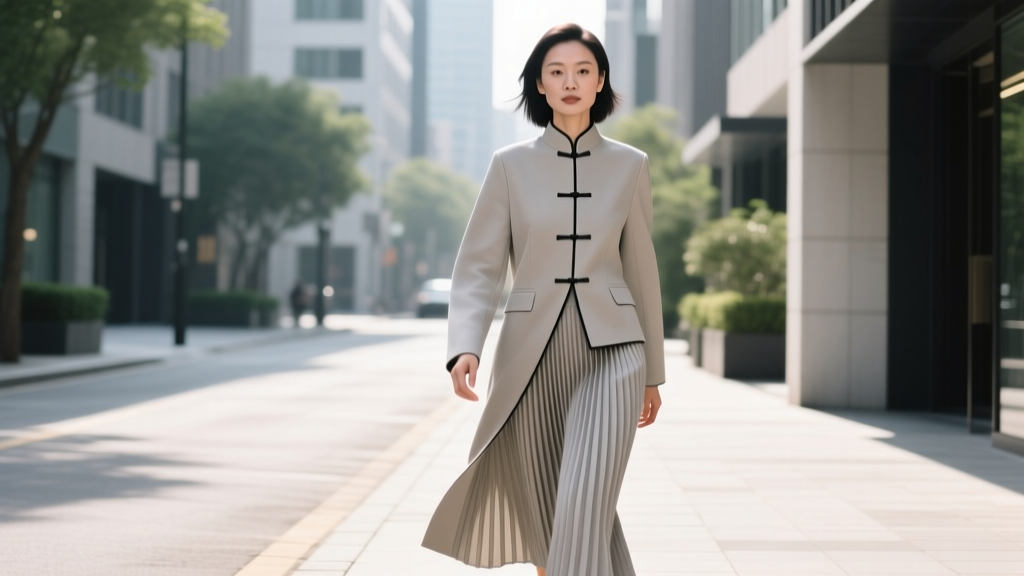
| Tangzhuang (唐装) | Tang Attire | Modern (Late 20th C.) | Based on Qing-era riding jackets; symbolizes diaspora identity and festive joy. |
| Xiuhefu (秀禾服) | Xiuhe Clothing | Modern (Late 20th C.) | Heavily embroidered bridal jacket and skirt; symbolizes prosperity and fertility. |
Ruqun and Aoqun: The Skirt and Jacket Paradigm
The Ruqun is perhaps the most enduring silhouette in Chinese fashion history. The 'Ru' is a short, often cross-collared blouse, while the 'Qun' is a high-waisted, pleated skirt. The defining feature of the Ru is the jiaoling youren (交领右衽) — the cross-collar that always wraps left over right. Wrapping right over left was historically reserved for the deceased or 'barbarian' tribes, making the left-over-right lapel a profound marker of Han cultural identity and life force.
During the Ming Dynasty, the Ruqun evolved into the Aoqun. The 'Ao' is a thicker, lined, or padded jacket with distinctive curved collars and side slits. Ming Dynasty Aoqun often utilized Song Brocade or heavy silks, featuring woven motifs of peonies (wealth) and cranes (longevity). Today, authentic Ming-style Aoqun crafted from genuine mulberry silk and hand-woven brocade by artisan cooperatives in Suzhou typically range from $250 to $600 USD, reflecting the intensive labor of traditional Jacquard-style wooden looms.
Shenyi: The Deep Robe of Scholars
Unlike the two-piece Ruqun, the Shenyi is a one-piece robe where the upper and lower fabrics are sewn together at the waist, though they are cut separately to maintain the symbolic Heaven/Earth divide. The name 'Deep Clothing' implies that the robe wraps deeply and securely around the body, hiding the wearer's form and promoting modesty.
According to the Liji (Book of Rites), the Shenyi was constructed using exactly 12 panels of fabric, representing the 12 months of the lunar year. The cuffs were rounded to symbolize heaven, while the collar was squared to symbolize earth. Wearing a Shenyi was a physical manifestation of Confucian morality. Today, the Shenyi remains popular among scholars, tea masters, and practitioners of traditional Chinese instruments like the Guqin. A high-quality linen or raw silk Shenyi, dyed using traditional plant-based methods like indigo or lotus root, costs between $120 and $300 USD.
Qipao and Cheongsam: The Banner Robe Evolution
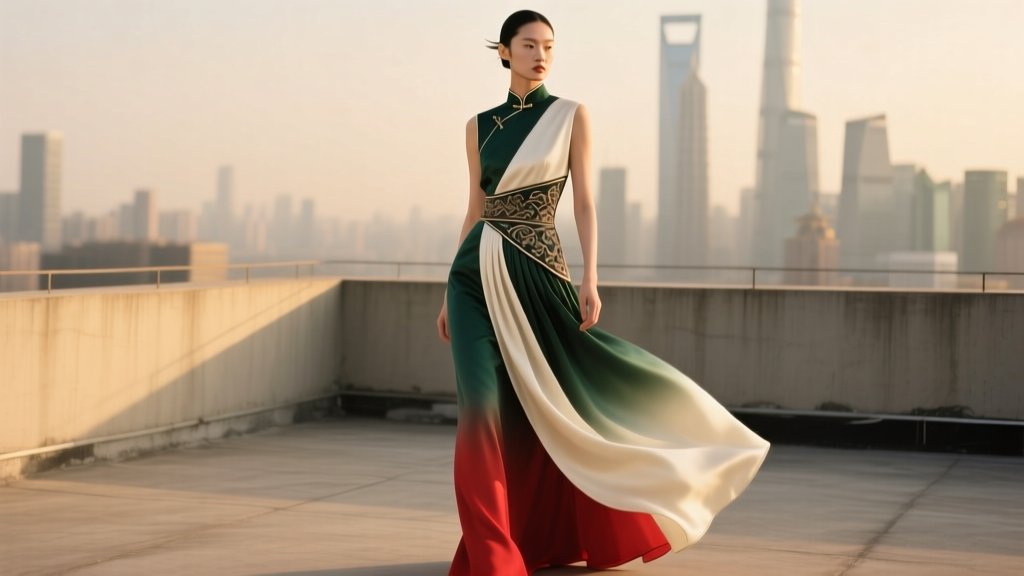
While Hanfu represents the Han majority, the Qipao (known in Cantonese as Cheongsam, meaning 'long shirt') originates from the Manchu 'Banner' system of the Qing Dynasty (1644–1912). Originally, the Qipao was a loose, straight, floor-length robe designed to conceal the figure and accommodate horseback riding. It was only in the 1920s and 1930s in Shanghai that the garment was radically tailored by Western-trained seamstresses to include darts, set-in sleeves, and high side slits.
The naming convention here is deeply political and historical. 'Qipao' retains the Mandarin reference to the Manchu Banners (Qi), while 'Cheongsam' reflects its commercial explosion in Cantonese-speaking hubs. For those sourcing a traditional Qipao, bespoke tailors in Hong Kong and Shanghai charge anywhere from $800 to over $3,000 USD for garments featuring hand-rolled hems, Pankou (knotted frog closures), and Xiangyunsha (Gambiered Canton Gauze) — a highly prized, mud-dyed silk recognized as an intangible cultural heritage.
Cosmology and Construction: How Names Dictate Design
The naming of Chinese garments often extends to the specific components and accessories that complete the silhouette. For instance, the Bixi (蔽膝), or 'knee cover,' was a decorative apron worn over the skirt by nobility and officials. Its name literally describes its function, but its presence indicated imperial favor and bureaucratic rank. Similarly, the Pibo (披帛) — a long, flowing silk shawl draped over the arms during the Tang Dynasty — translates to 'draped silk.' The Pibo did not serve a structural purpose; rather, its name and ethereal movement were designed to mimic the celestial ribbons worn by flying apsaras in Buddhist murals, elevating the wearer to a divine, otherworldly status.
When enthusiasts search for a specific traditional Chinese clothing name online, they must also understand the naming of textiles. A garment named Mamianqun (Horse-Face Skirt) does not imply the use of animal materials; rather, the 'horse-face' refers to the flat, unpleated front and back panels of the skirt that resemble the architectural 'horse-face' buttresses of ancient Chinese city walls. This structural naming convention highlights how Chinese fashion was deeply intertwined with engineering and architecture.
Sourcing Authentic Garments: Price Ranges and Artisan Cooperatives
The modern Hanfu revival has created a booming market, but it has also led to a proliferation of historically inaccurate, mass-produced costumes. When purchasing garments based on their traditional names, buyers should look for specific markers of authenticity. According to research and collections documented by The Metropolitan Museum of Art's Asian Art Department, historical garments relied on natural fibers, specific weaving techniques, and precise geometric cutting rather than modern Western darting.
Here is a practical buying framework based on garment names and material authenticity:
- Entry-Level / Mass Market ($30 - $80 USD): Usually made of polyester chiffon or synthetic brocade. While the silhouette (like a basic Ruqun) may be correct, the fabric lacks the breathability and drape of historical textiles. Suitable for casual festivals or photography.
- Mid-Tier / Artisan Crafted ($150 - $400 USD): Garments utilizing genuine cotton, linen, and cultivated silk. Look for cooperatives in Hangzhou and Suzhou that specialize in traditional embroidery (Su embroidery) and natural dyeing. The Mamianqun at this price point will feature proper woven patterns rather than printed graphics.
- Bespoke / Heritage Tier ($500 - $2,000+ USD): Custom-tailored Shenyi or Ming-style Aoqun utilizing heritage textiles like Song Brocade, Yun Brocade, or Xiangyunsha. These pieces are often made by master tailors who adhere strictly to historical cutting methods, avoiding Western seams entirely to preserve the integrity of the fabric's grain and the garment's philosophical geometry.
Understanding the true meaning behind a traditional Chinese clothing name transforms the act of wearing these garments from mere costuming into a profound engagement with thousands of years of philosophy, art, and social history. Whether donning the scholarly Shenyi or the elegant Ming Aoqun, the wearer becomes a living canvas of Chinese cosmology.