Chinese Clothing History: Hanfu, Qipao & Tang Suits
The Evolution of Silhouette: A Dynastic Timeline
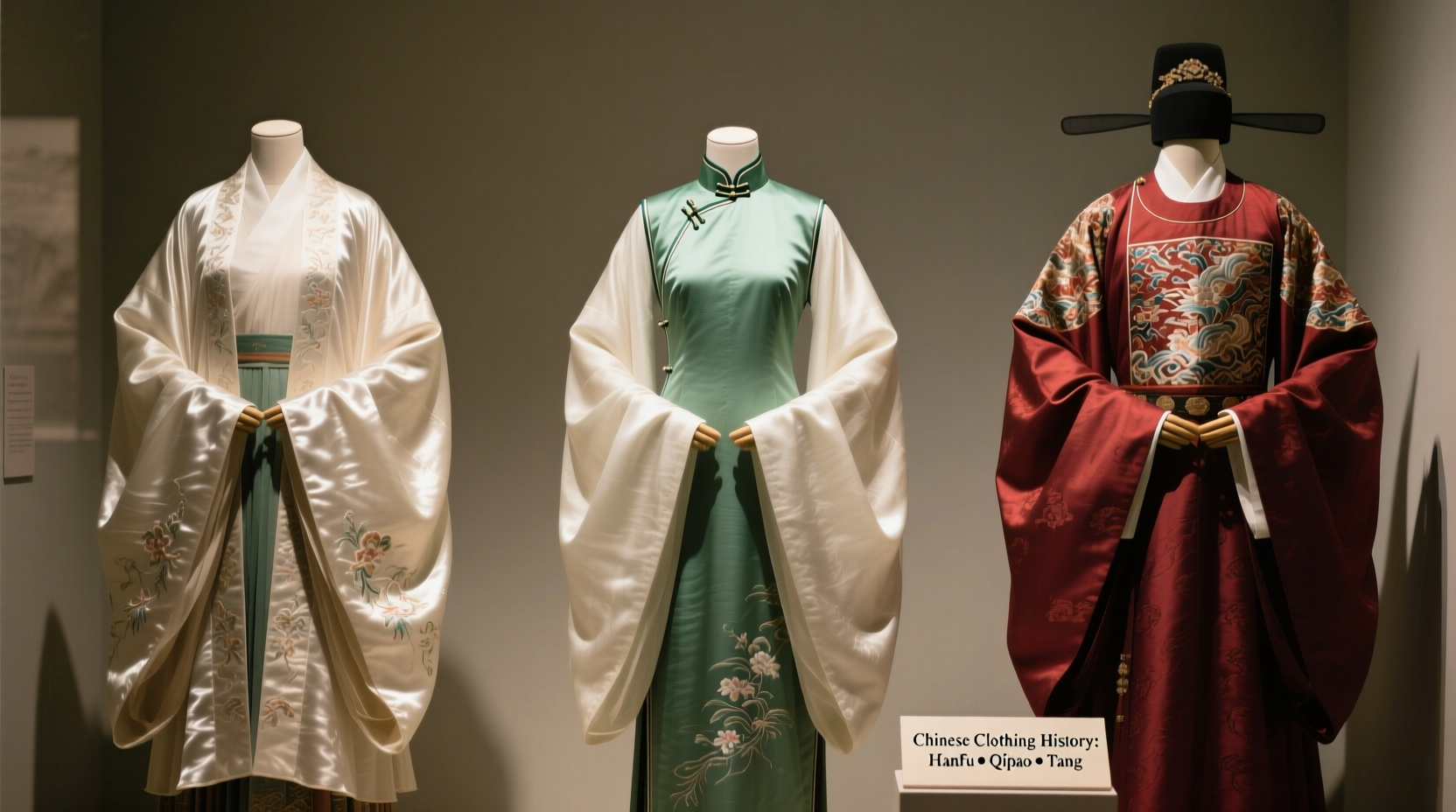
Understanding Chinese clothing history requires moving beyond the monolithic view of 'traditional dress' and recognizing a vast, evolving sartorial landscape shaped by dynastic shifts, trade, and philosophy. From the flowing, unstructured drapery of the Han Dynasty to the tailored, form-fitting silhouettes of 20th-century Shanghai, Chinese garments are profound markers of cultural identity, social status, and cosmological belief. According to the Metropolitan Museum of Art's Asian Textile archives, the evolution of Chinese dress is characterized by a continuous dialogue between indigenous Han traditions and the influences of nomadic and foreign cultures.
This comparative guide explores the three most prominent garments in the modern cultural consciousness—Hanfu, the Qipao, and the Tang Suit—detailing their historical origins, construction nuances, and contemporary buying frameworks.
Hanfu (汉服): The Foundation of Chinese Clothing History
Hanfu refers to the historical clothing of the Han Chinese, worn from the legendary Yellow Emperor era (c. 2700 BCE) until the mid-17th century, when the Qing Dynasty enforced the Manchu queue and dress codes. The modern Hanfu Yundong (Hanfu Movement) has revived these garments, emphasizing historical accuracy and traditional craftsmanship.
Construction and Varieties
The defining feature of Hanfu is the Jiaoling Youren (cross-collar, right lapel). The left side of the garment always crosses over the right, securing at the right side of the body. In traditional Chinese cosmology, left represents life and yang, while right represents death and yin; reversing this (left-over-right) was strictly reserved for the deceased.
- Ruqun (襦裙): A two-piece ensemble consisting of a short upper garment (ru) and a long wrap skirt (qun). Popular among women during the Tang and Song dynasties.
- Shenyi (深衣): A one-piece full-body robe that connects the upper and lower garments, symbolizing the unity of heaven and humanity. Often worn by scholars and officials.
- Mamianqun (马面裙): The 'horse-face skirt,' originating in the Song and Ming dynasties. It features flat front and back panels with heavily pleated sides, allowing for ease of movement while riding horseback.
Fabric Composition: High-end Hanfu utilizes Xiangyunsha (gambiered Canton gauze), a complex silk dyed with river mud and yam juice, creating a waterproof, rustling fabric that can cost upwards of $300 to $800 per yard. Standard everyday Hanfu is often made from linen, cotton, or lightweight mulberry silk (typically 12 to 16 momme weight).
The Qipao (旗袍): Republican Era Tailoring
While deeply embedded in modern Chinese clothing history, the Qipao (or Cheongsam) is a relatively recent invention. It evolved from the Changpao (long robe) worn by Manchu women during the Qing Dynasty (1644–1912). The modern Qipao emerged in 1920s Shanghai, blending traditional Manchu silhouettes with Western tailoring techniques.
From Banner Robe to Modern Silhouette
Early Republican-era Qipao were loose, A-line garments that obscured the body's shape, reflecting modesty norms. By the 1930s, Shanghai tailors introduced Western darts, set-in sleeves, and shoulder pads, creating the iconic form-fitting silhouette. The Victoria and Albert Museum's Asian dress collections highlight how Shanghai's cosmopolitan tailors integrated European wool crepes and Art Deco geometric prints into traditional silk brocades.
Key Construction Elements:
- Pankou (盘扣): Hand-knotted frog fasteners made from silk cords. A high-quality bespoke Qipao will feature intricate, thematic Pankou (e.g., floral or butterfly shapes) rather than mass-produced plastic knots.
- Kaicha (开衩): The side slits. In traditional tailoring, the slit should not extend higher than the knee when standing, maintaining modesty while allowing movement.
- Yuanling (圆领): The iconic high, stiff collar, often reinforced with interfacing to frame the face elegantly.
The Tang Suit (唐装): A Modern Synthesis
Despite its name, the Tang Suit has no direct connection to the Tang Dynasty (618–907 CE). It is a modern adaptation of the Qing Dynasty Magua (a short, center-front riding jacket worn by Manchu men), updated with Western raglan sleeves and shoulder pads. The garment was globally popularized during the 2001 APEC Summit in Shanghai, when world leaders wore matching silk Magua-style jackets.
Design and Cultural Context
The Tang Suit features a Duijin (center-front opening) secured by simple knotted buttons. It is almost exclusively woven from Zhijin (gold-woven brocade) or heavy satin, often featuring the Tuanhua (circular floral motif) or the 'Fu' (fortune) character. Today, it is primarily worn by older generations during the Lunar New Year or by grooms in traditional wedding ceremonies.
Comparative Analysis: Fabrics, Fastenings, and Occasions
| Garment | Era of Origin | Collar & Closure | Primary Fabric | Modern Occasion | Average Price Range (USD) |
|---|---|---|---|---|---|
| Hanfu | Han to Ming (c. 200 BCE - 1644 CE) | Cross-collar, right lapel; sash ties | Mulberry silk, Xiangyunsha, linen | Festivals, tea ceremonies, daily wear (revivalists) | $50 - $250 (Ready-to-wear); $500+ (Bespoke) |
| Qipao | 1920s (Republican Era) | Mandarin collar; Pankou (frog knots) | Silk brocade, velvet, wool crepe | Weddings, formal dinners, corporate events | $150 - $400 (Machine); $800 - $3,000 (Bespoke) |
| Tang Suit | Late 20th Century (based on Qing Magua) | Stand collar, center-front; simple knots | Synthetic brocade, heavy satin | Lunar New Year, groomsmen, political summits | $40 - $120 (Mass market); $200+ (Tailored) |
Sourcing Authentic Garments: Price Ranges and Artisans
When investing in garments rooted in Chinese clothing history, understanding the difference between mass-produced costume wear and artisanal tailoring is critical. For Hanfu, reputable brands like Shisanyu and Minghuatang offer historically accurate patterning based on excavated textile artifacts, with prices ranging from $80 for a basic cotton Ruqun to over $600 for a Ming-style woven-gold Mamianqun.
For a Qipao, true quality lies in the bespoke process. In Shanghai's former French Conception, master tailors still practice the 'Hongxiang' method, requiring up to 36 distinct body measurements and three separate fittings. A bespoke silk Qipao from a heritage tailor will typically start at $800 and can exceed $3,000 if hand-embroidered with Suzhou silk thread. Buyers should inspect the interior seams; a high-quality Qipao will feature hand-rolled hems and silk-bound inner edges, preventing the brocade from fraying.
The Peabody Essex Museum notes that historical Chinese textiles were valued not just for their cut, but for the auspicious symbolism woven directly into the fabric. When sourcing vintage or high-end replicas, look for continuous weaves where the motif is integrated into the loom process, rather than cheap surface-level screen printing.
Cultural Protocols for Wearing Historical Dress
Wearing traditional Chinese garments requires an understanding of cultural protocols to avoid unintended disrespect.
- The Lapel Rule: Never wear a Hanfu with the right lapel crossing over the left (Zuoren). This is universally recognized in Han culture as the dress of the deceased or a sign of barbarism in ancient texts.
- Color Symbolism: Avoid wearing unadorned, pure white or unhemmed raw linen garments to celebratory events like weddings or the Lunar New Year. In traditional Chinese culture, white and raw hems are strictly associated with mourning and funerals. Conversely, red symbolizes joy and vitality, while yellow was historically reserved for the imperial family.
- Undergarments and Modesty: The Qipao's high slits require specific undergarments. Historically, women wore tailored silk slip dresses or specialized modesty shorts. Wearing a Qipao without appropriate slipwear is considered a breach of traditional modesty protocols.
'Textiles in Chinese history were never merely functional; they were canvases for philosophical ideals, social hierarchies, and cosmic alignment. To wear them today is to participate in a living dialogue with the past.' — Curatorial notes on Asian Textile Conservation.
Whether you are drawn to the scholarly elegance of the Ming Dynasty Shenyi, the cosmopolitan glamour of a 1930s Shanghai Qipao, or the festive warmth of a Tang Suit, understanding the deep historical context of these garments elevates them from mere fashion to profound cultural artifacts.